Sleep When It's Too Hot: A Summer Bedtime Routine That Still Works
Hot bedrooms and late sun wreck summer sleep — and a tired child means harder days. Here's how to adapt the bedtime routine for heat without losing the structure that makes sleep happen.
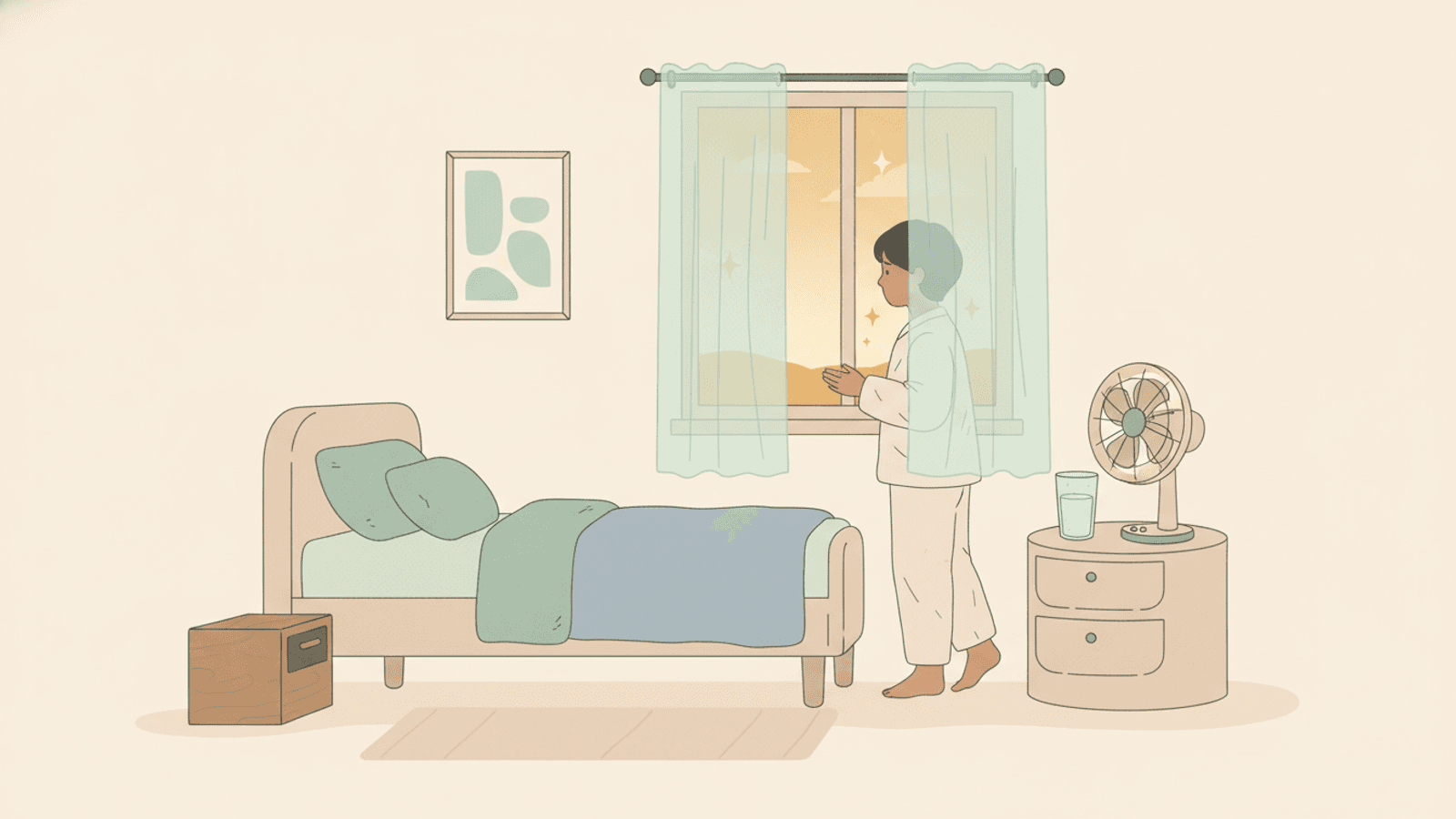
Navigating bedtime during a heatwave can be challenging, but a successful summer bedtime routine heat strategy involves focusing on pre-cooling the sleep environment and adapting your existing evening sequence with lighter options. By prioritizing a cool, dark room and gentle adjustments to comfort, children can still find rest even when temperatures soar.
Why Summer Heat and Light Wreck Sleep
Summer, with its long, bright days and often warmer nights, brings a unique set of challenges to our carefully crafted family routines, especially when it comes to sleep. For many children, the shift is noticeable, but for those with ADHD or autism, these changes can be particularly disruptive. Understanding why summer often spells bedtime trouble is the first step towards managing it effectively.
Our bodies are incredible machines, designed to follow natural rhythms. One of the most critical aspects of initiating sleep is a slight drop in our core body temperature. As evening approaches, our internal thermostat naturally dips, signaling to the brain that it’s time to wind down. When the ambient temperature remains high, this natural cooling process is hindered. It becomes much harder for a child to feel sleepy and stay asleep if their body is constantly working to regulate its temperature.
Then there’s the light. Our sleep-wake cycle, or circadian rhythm, is heavily influenced by light exposure. Melatonin, the hormone that makes us feel sleepy, is produced when darkness falls. In Sweden, where summer evenings stretch on seemingly forever, natural light can persist well into what should be bedtime hours. This extended daylight suppresses melatonin production, making it harder for children to feel naturally drowsy. Their bodies simply aren’t getting the usual cue that it’s time to sleep.
For children with ADHD or autism, these factors can be amplified. Many children with autism experience heightened sensory sensitivities, meaning that even a slight increase in room temperature or an unfamiliar texture of bedding can cause significant discomfort. Routine and predictability are also paramount for many children with ADHD or autism, and the summer’s disruption of established schedules – later sunsets, holiday excitement, changes in daily activities – can throw their internal clocks and emotional regulation into disarray. The combination of physical discomfort from heat and the mental challenge of adjusting to disrupted routines can make bedtime a truly trying experience for everyone involved.
Cool the Room First: Your Evening's Secret Weapon
Before you even begin the bedtime routine, focus on making the sleep environment as cool and comfortable as possible. This proactive approach can make a world of difference when battling the summer heat.
Ventilate Strategically: During the day, keep blinds and curtains closed to block out direct sunlight and prevent heat build-up. Once the sun sets and the outside air cools (often in the late evening or early morning), open windows and doors on opposite sides of the house to create a cross-breeze. This allows hotter indoor air to escape and cooler air to circulate. If safe, leave windows slightly ajar overnight to maintain airflow.
Embrace the Fan: A simple electric fan can be incredibly effective. Don’t aim it directly at your child’s face all night, but use it to circulate air in the room. A clever trick is to place a bowl of ice or a frozen water bottle in front of the fan; as the ice melts, the fan will blow cooler, slightly humidified air into the room. Ensure the fan is stable and positioned safely away from curious hands.
Lightweight Bedding: Swap heavy duvets for a single cotton sheet or a thin muslin blanket. Natural fibres like cotton and linen are breathable and help to wick away moisture, keeping your child feeling cooler. For babies, ensure they are just in a light sleepsuit or even just a nappy, with a single sheet loosely tucked over them if needed.
Hydration Station: Encourage your child to drink plenty of water throughout the day. Offer a small, insulated bottle of cool water by their bedside, so they can take sips if they wake up feeling thirsty. A cool, damp cloth can also be a wonderful comfort; keep one in the fridge during the day and place it on their forehead or neck as they settle down.
Keep the Routine, Adapt the Details
Consistency is king when it comes to bedtime routines, especially for children who thrive on predictability. Don't throw your entire routine out the window just because of the heat. Instead, keep the familiar sequence of events, but adapt the specifics to better suit warmer temperatures. This provides the psychological comfort of routine while physically addressing the heat.
Maintain the Sequence: Stick to the same order of activities – bath, stories, quiet time, cuddles. This predictability signals to your child’s brain that sleep is approaching, regardless of the temperature outside. Children, particularly those with ADHD or autism, rely heavily on these consistent cues.
Lighter Pyjamas: Opt for loose-fitting, light cotton pyjamas, or even just underwear or a nappy for very hot nights. The goal is to wear as little as comfortably possible to allow the skin to breathe and heat to dissipate.
Cooler Bath or Shower: Instead of a warm bath, offer a lukewarm shower or bath just before bed. It should be cool enough to bring down their body temperature slightly, but not so cold that it’s a shock to their system, which can be stimulating rather than relaxing. A lukewarm bath can be a wonderfully soothing way to transition from a hot day to a cooler night.
Dim the Lights Earlier: Even with long Nordic evenings, begin dimming lights around the house an hour or two before bedtime. Use blackout blinds or thick curtains in your child's room to create an artificial night. This helps to kickstart melatonin production, regardless of how bright it still looks outside.
Quiet Activities: Avoid vigorous play or screen time close to bedtime. Instead, engage in calm, low-energy activities like reading books together, listening to soft music, or quiet puzzles. This helps their mind and body wind down without generating more heat or overstimulation.
A Sample Hot-Night Wind-Down
Let’s put these adaptations into practice with a gentle, summer-friendly wind-down sequence:
60 minutes before bedtime: Begin dimming lights. Engage in quiet play or reading. Offer a cool glass of water.
30 minutes before bedtime: Lukewarm bath or shower. Dress in lightest pyjamas or just underwear. Apply a cool, damp cloth to neck or forehead if desired.
15 minutes before bedtime: Move to the pre-cooled bedroom. Read a story (perhaps with a torch if it helps create a cozy, dark atmosphere). Gentle cuddles and quiet conversation.
Bedtime: Lights out (with blackout curtains firmly in place). Ensure fan is on if needed, pointed to circulate air. Reassure your child that you are there if they need anything.
When the Child Still Cannot Settle
Despite your best efforts, there will be nights when the heat is just too relentless, or your child's system is simply overwhelmed. On these occasions, it’s important to lower your expectations and focus on calm and comfort, rather than chasing perfect sleep.
It’s hard for everyone to sleep in extreme heat, and children are no exception. Acknowledge their discomfort and your own frustration. Instead of stressing about the ideal bedtime or the exact amount of sleep, focus on creating a peaceful and supportive environment. Sometimes, simply knowing you’re there, understanding their struggle, is the greatest comfort you can offer.
If your child is still struggling to settle, here are a few gentle strategies:
Re-dampen the cloth: A fresh, cool cloth on the forehead or wrists can provide immediate, temporary relief.
Sips of water: Offer small sips of cool water to help them rehydrate and cool down internally.
Gentle touch: A calming back rub, a stroke of their hair, or just holding their hand can be very soothing.
Quiet company: Sometimes, simply sitting quietly in the room with them for a few extra minutes, without pressure to sleep, can help them relax enough to drift off.
Remember, this period of intense heat won't last forever. By being adaptable, patient, and consistent with the core elements of your routine, you're not just helping your child sleep; you're teaching them resilience and showing them that even when things are difficult, you can navigate challenges together with warmth and understanding. You've got this!
Read more
Frequently asked questions
How hot is too hot for a child to sleep?
Generally, indoor temperatures between 18-21°C (65-70°F) are ideal for sleep. When temperatures rise consistently above 24-25°C (75-77°F), it becomes increasingly challenging for children to fall asleep and stay asleep comfortably, as their body struggles to cool down naturally.
Should I keep the same bedtime in summer even when it is light outside?
Yes, maintaining a consistent bedtime, even with lighter evenings, is crucial for preserving your child's internal clock and sleep routine. Use blackout curtains to create a dark environment, signaling to their brain that it's time for sleep, regardless of the sun.
Is a fan safe to use in a child’s room overnight?
Yes, a fan is generally safe to use overnight in a child's room, provided it's placed safely away from direct reach and not aimed directly at the child for extended periods. It can help circulate air and create a cooling breeze, often making the room feel more comfortable.
My child kicks off all bedding when it is hot — what can I do?
This is a common response to overheating. Instead of heavy duvets, offer a light cotton sheet or a muslin blanket, which provides a sense of security without adding significant warmth. You can also dress them in just a nappy or light cotton underwear, knowing that kicking off a single sheet won't lead to them being completely uncovered and cold later.
Does heat affect children with ADHD or autism more?
Children with ADHD or autism can indeed be more sensitive to sensory input like heat, making them more prone to discomfort and sleep difficulties in warm weather. Disruptions to routine caused by heat can also be particularly unsettling, so maintaining consistency in other aspects of their bedtime can be extra important.