Teaching Children to Save Money: A Practical Guide
Learning to save is one of the most useful life skills you can give a child, and it’s built from small, repeated experiences. Here is how to teach saving, money they control, the save-spend-give method, and a few mistakes worth letting them make.
Learning to save is one of the most useful life skills you can give a child — and unlike many lessons, it’s built almost entirely from small, repeated, hands-on experiences. You don’t teach it with a lecture; you teach it with real money, real choices, and a few real mistakes. Here is how to help your child become a saver.
Why teaching saving matters
Saving teaches far more than money. It builds patience and delayed gratification — the ability to choose a bigger reward later over a small one now — which is one of the strongest predictors of how children do later in life. It builds confidence with money, the habit of planning ahead, and the simple, satisfying experience of setting a goal and reaching it. Start while the sums are tiny and the stakes are low, and the habits have years to grow.
Start with money they control
The single most important step is giving a child a small amount of money that’s genuinely theirs to manage — pocket money, an allowance, or money they’ve earned. You can’t learn to handle money you never hold. Once it’s truly theirs, the choices become real, and so do the lessons: a saved coin and a spent one start to mean something.
Make saving visible
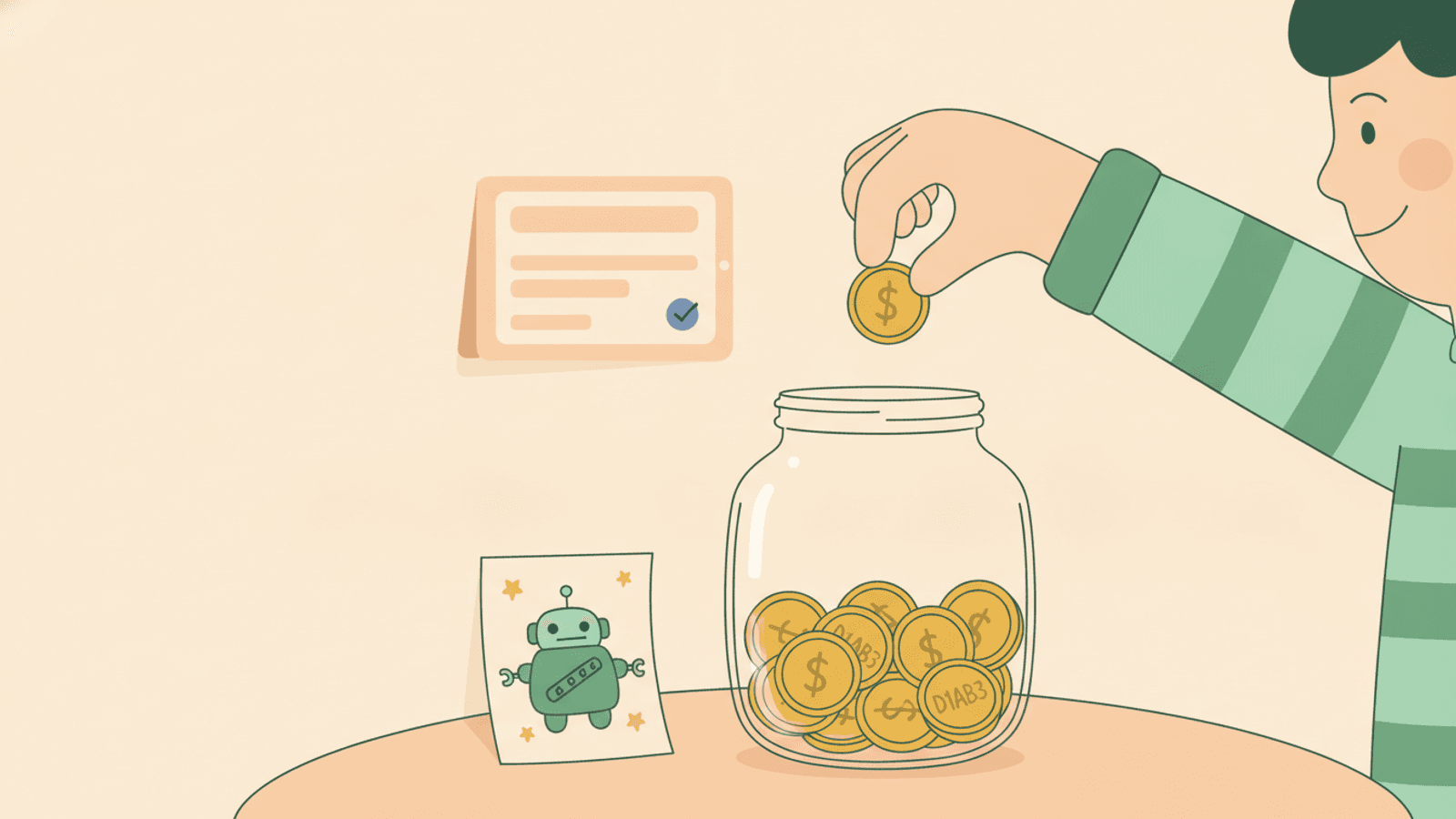
- Use a clear jar so they can watch their savings physically grow.
- Set a savings goal they actually want — saving for nothing in particular is hard.
- Break the goal into visible steps so progress feels real.
- Consider matching some of what they save, to reward the habit early on.
- Celebrate milestones along the way, not just the finish line.
Save, spend, give
A simple and popular approach is to split money into three: some to spend now, some to save for something bigger, and some to give or share. Three labelled jars or pots make it concrete. It teaches that money has more than one job, and that saving and generosity are normal parts of having money — not afterthoughts you get to only if there’s something left.
Teaching delayed gratification
Saving is really the skill of waiting — choosing a bigger reward later over a small one now. Help your child pick a goal they genuinely want, work out roughly how long it will take, and track progress somewhere they can see it. The day they buy it with their own saved money teaches more than any lecture could: waiting paid off, and they did it themselves.
Let them make mistakes
Resist the urge to rescue. If your child blows all their money on sweets and then can’t afford the toy they wanted, that disappointment is the lesson — and it’s far gentler now, with small sums, than later in life with big ones. Don’t lecture or say “I told you so”; just let the natural consequence land quietly, and they’ll think harder next time.
Talk about money and model it
Children learn money habits mostly by watching. Talk openly and in an age-appropriate way about saving up, waiting for things, and making choices — “we’re saving for the holiday, so not this month.” Let them see you save, compare prices, and resist the occasional impulse buy. Your everyday example teaches more than any formal lesson, for better or worse, so let it be a good one.
A guide by age
- Young children — coins in a clear jar, one short-term goal, and lots of praise for every coin saved.
- Primary age — the save-spend-give split, a goal chart, and simple talks about wants versus needs.
- Older children and tweens — bigger goals, maybe a savings account or kids’ banking app, chances to earn extra, and basic budgeting.
Children with ADHD
Waiting is especially hard for children who live firmly in the now, so saving asks a lot of them. Make it as visual and immediate as you can — a clear jar, a progress bar, frequent small milestones rather than one distant goal — and celebrate every step. Shorter savings goals and visible progress turn an abstract wait into something concrete enough to actually stick with.
The takeaway
Learning to save is built from small, repeated experiences: money that’s genuinely theirs, a goal they care about, the freedom to make mistakes, and your steady everyday example. Start small and start young, keep it visible, and let the wins — and the lessons — be their own. The habits you build now will serve them for life.
Read more
Frequently asked questions
At what age can children start learning to save?
As soon as they understand that coins buy things — often around four or five. Start with a clear jar and a single small goal, and build up to save-spend-give pots and longer savings goals as they grow.
How do I teach my child to save money?
Give them a small amount that’s genuinely theirs, make saving visible with a clear jar and a goal they want, consider matching what they save, and let them experience both the satisfaction of reaching a goal and the lesson of spending it all too soon.
What is the save-spend-give method?
Splitting a child’s money into three parts — some to spend now, some to save for something bigger, and some to give or share. Three labelled jars make it concrete and teach that money has more than one purpose.
Should I let my child spend all their money?
Within reason, yes. Letting them spend it all and then miss out on something they wanted is a powerful, gentle lesson while the sums are small. Resist rescuing or lecturing, and let the natural consequence do the teaching.
How can I help a child with ADHD learn to save?
Make it as visual and immediate as possible: a clear jar or progress bar, short-term goals rather than distant ones, and frequent small milestones to celebrate. Waiting is harder for them, so keep progress concrete and the payoff in sight.