When Rewards Stop Working: How to Get a Reward System Going Again
You set up a reward system, it worked beautifully — for a while. Then the stickers stopped landing and you’re back to nagging. This is incredibly common, and rarely means rewards don’t work. Usually something specific has gone stale. Here’s how to fix it.
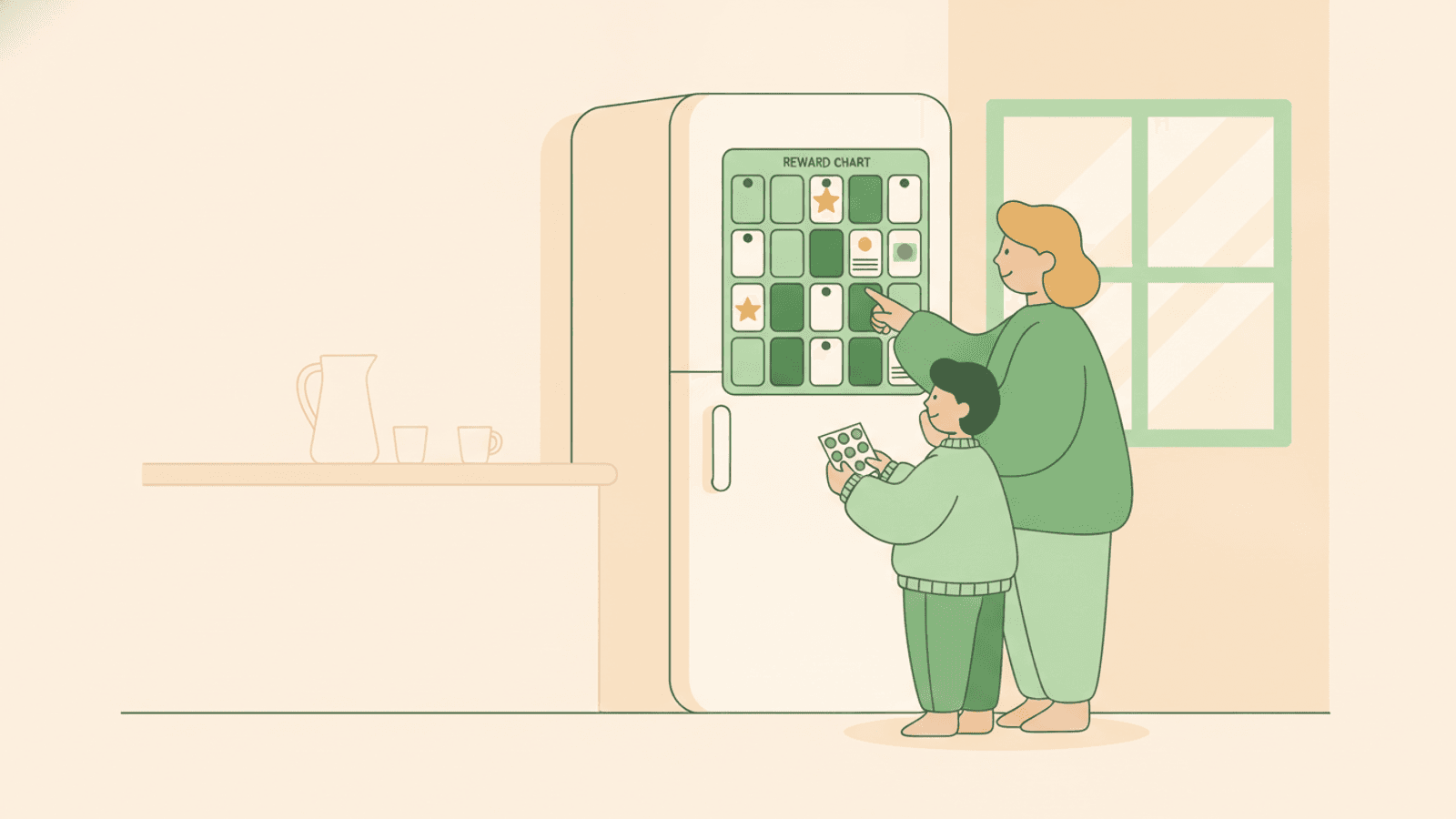
You set up a reward system, and it worked beautifully — for a while. Then the stickers stopped landing, the points lost their shine, and you’re right back to nagging. This is incredibly common, and it rarely means rewards “don’t work.” Usually something specific has gone stale, and it can be fixed. Here is how to diagnose what’s happened and get the system going again.
Why rewards lose their power
Rewards fade for a handful of predictable reasons. The reward has become boring or simply expected; the goal got too easy or too hard; the child has outgrown it; the novelty wore off; or — quietly — the system slipped and became inconsistent. Sometimes the behaviour has genuinely become a habit and the reward is no longer doing anything, which is success, not failure. The fix depends on which of these is actually going on.
First, check it’s not just inconsistency
Before changing anything, ask honestly whether the system is still being run as designed. The most common reason a reward “stops working” is that it quietly stopped being applied — stars given late or forgotten, rewards promised but not delivered, the chart gathering dust on the fridge. If that’s what’s happened, the fix isn’t a clever new system; it’s restarting the old one properly and consistently.
Refresh the rewards
- Change what’s on offer — a reward that thrilled them in spring may bore them by summer.
- Involve your child in choosing the new rewards; they know what they want now.
- Swap things for experiences, or experiences for things, to break the routine.
- Add a surprise or mystery element — a sealed envelope, a lucky dip.
- Offer a menu they pick from, so the reward always feels like their choice.
Adjust the challenge
Motivation lives in the sweet spot between too easy and too hard. If your child is hitting every target effortlessly, the system has nothing left to offer — raise the bar or move on to a new behaviour. If they’re never hitting it, it’s too hard and they’ve quietly given up; make it easier so they can taste success again. Re-calibrate the challenge to where your child actually is now, not where they were when you set it up.
Shorten the loop
If a reward feels too far away, it stops motivating — especially for younger or neurodivergent children. Bring the reward closer in time: reward daily instead of weekly, or in the moment instead of at the end of the day. A smaller reward sooner almost always beats a bigger one later, because a child has to be able to feel the connection between what they did and what they got.
Maybe it’s worked — let it fade
Sometimes a reward “stops working” simply because the behaviour has become automatic. Your child brushes their teeth now without thinking about the star at all. That is the whole point of a reward system. When a habit is genuinely established, you can quietly retire that target and move the system on to something they still find hard. The reward didn’t fail — it did its job and worked itself out of one.
Lean less on rewards, more on connection
If you find yourself constantly escalating rewards just to get cooperation, that’s a sign to rebalance rather than offer more. Pair the system with praise, with autonomy and choice, and with the natural payoff of the behaviour itself. And check the basics — is your child tired, overwhelmed, or struggling with something underneath? No reward overcomes an unmet need. Rewards work best as one tool among several, not the only lever you pull.
Children with ADHD or autism
Neurodivergent children habituate to rewards especially quickly and need more novelty and variety to stay engaged. Rotate rewards often, keep them immediate, and vary the system before it goes stale rather than after. Don’t be surprised if what worked last month needs refreshing this month — that’s the nature of these brains, not a failure of your effort. Frequent small changes are what keep a system alive for them.
The takeaway
A reward system going flat isn’t the end of the road — it’s feedback. Check it’s being run consistently, refresh what’s on offer, re-tune the challenge, bring the reward closer in time, and notice when a behaviour has simply become a habit you can let go of. Reward systems aren’t set-and-forget; they’re living things you adjust as your child grows.
Read more
Frequently asked questions
Why did my child’s reward chart stop working?
Usually one of a few things: the reward got boring or expected, the goal became too easy or too hard, the novelty wore off, the system slipped into inconsistency, or the behaviour has actually become a habit. Each has a simple fix once you spot which it is.
How do I make a reward system motivating again?
Refresh the rewards with your child’s input, re-tune the challenge so it’s neither too easy nor too hard, bring the reward closer in time, and make sure you’re applying the system consistently. Small changes often revive it.
Should I keep increasing the rewards?
Be careful. Constantly escalating rewards just to get cooperation is a sign to rebalance, not to offer more. Pair rewards with praise, autonomy and connection, and check whether an unmet need like tiredness or overwhelm is really the issue.
Is it bad that I keep having to change the rewards?
No, it’s normal — especially for children with ADHD, who habituate quickly. Reward systems aren’t set-and-forget; rotating rewards and adjusting targets as your child grows is exactly how you keep them working.
When should I stop using a reward for a behaviour?
When the behaviour has become a habit your child does without thinking about the reward. That’s success. Quietly retire that target and move the system on to something they still find difficult.