Wind down
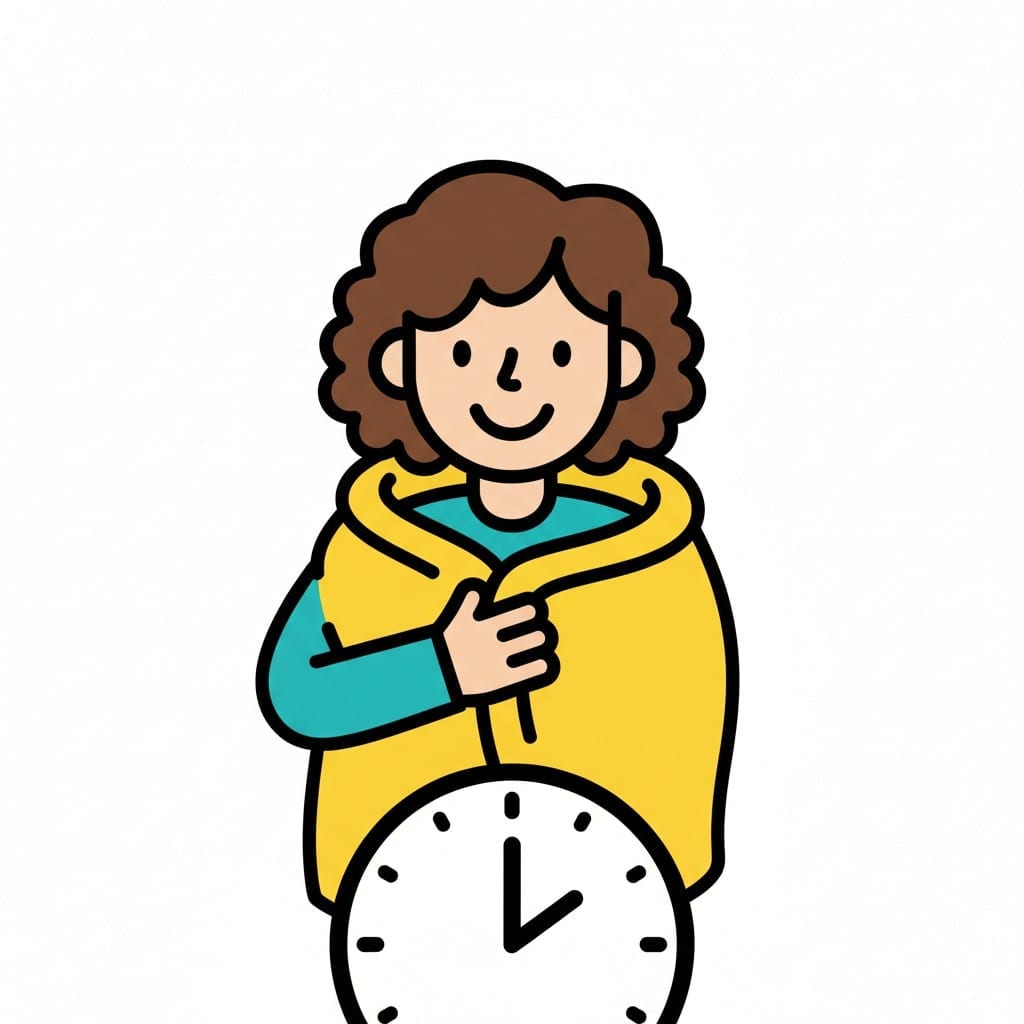
The body should shift from high gear to low, but the brain wants the opposite while lamps and voices are still buzzing. The pictures below make the wind‑down visible so the child sees where it leads.
 ♀
♀Wind down
A person with curly brown hair is wrapped in a yellow blanket and smiling. A clock is visible in the foreground.
About this visual support
Many children find their second wind right as the evening begins. Games, siblings, lamps and racing thoughts are still at full volume while the adult world expects sleepy. That collision is not defiance, it is a body that does not know it is supposed to come down.
Visual support for winding down works because it shows where the evening is heading without words. Seeing a row of pictures — dim the ceiling light, change into soft trousers, a book on the sofa, water, bed — lets the child prepare step by step instead of being cut off mid‑play. The descent becomes predictable, and predictability lowers the pulse.
One practical tip: make the first wind‑down picture something the child gets to start themselves, not something you ask them to do. Choosing to switch off the ceiling light or pull the blind makes them feel they are opening the evening rather than being stopped by it. To pair the cards with a gentle timer and the same order every night, build the flow inside Routined.
Use this image in a schedule
Build your own visual schedule with this image and download it as a print-ready PDF. Completely free.

More similar visual supports

Cozy Friday
A person wearing a hoodie, wrapped in a blanket, holds a steaming mug. A calenda...

Light candle
A person holds a long lighter and lights a white candle on a small plate.

Evening
A crescent moon and three stars in a dark blue night sky over rolling hills with...

Summer evening
A child sits on the grass at sunset among flowers and a moon.
Watch a Movie and Relax
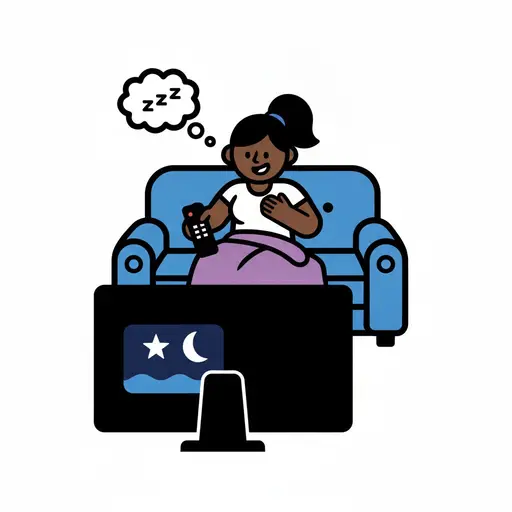
A girl sits relaxed on the couch holding a remote and watching a movie on the TV...
Weekend cozy time
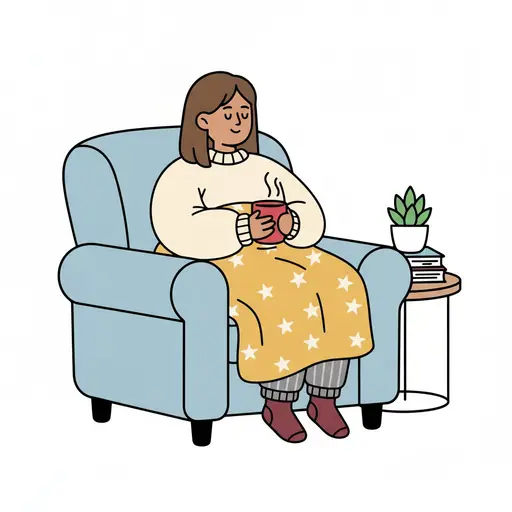
A person relaxes in an armchair with a blanket and a warm drink.
Weekend evening
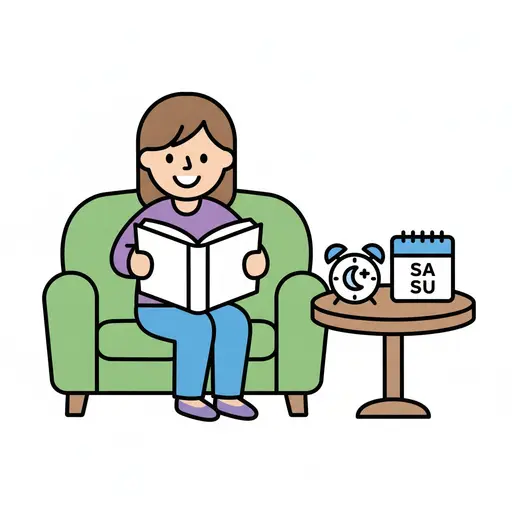
A smiling person sits in a green armchair reading an open book, beside a table w...

Weekend evening routine
A woman relaxes with her phone next to a calendar showing Saturday and Sunday an...
Take the visual supports with you
In Routined you build schedules from these pictures, add timers and voice instructions, and your child follows the day on their own.


* 14-day free trial included for new users.