Put away clothes
Putting away clothes is not one task, it is several stacked together: folding, sorting by type, opening drawers and remembering what lives where. The steps below take them one at a time.
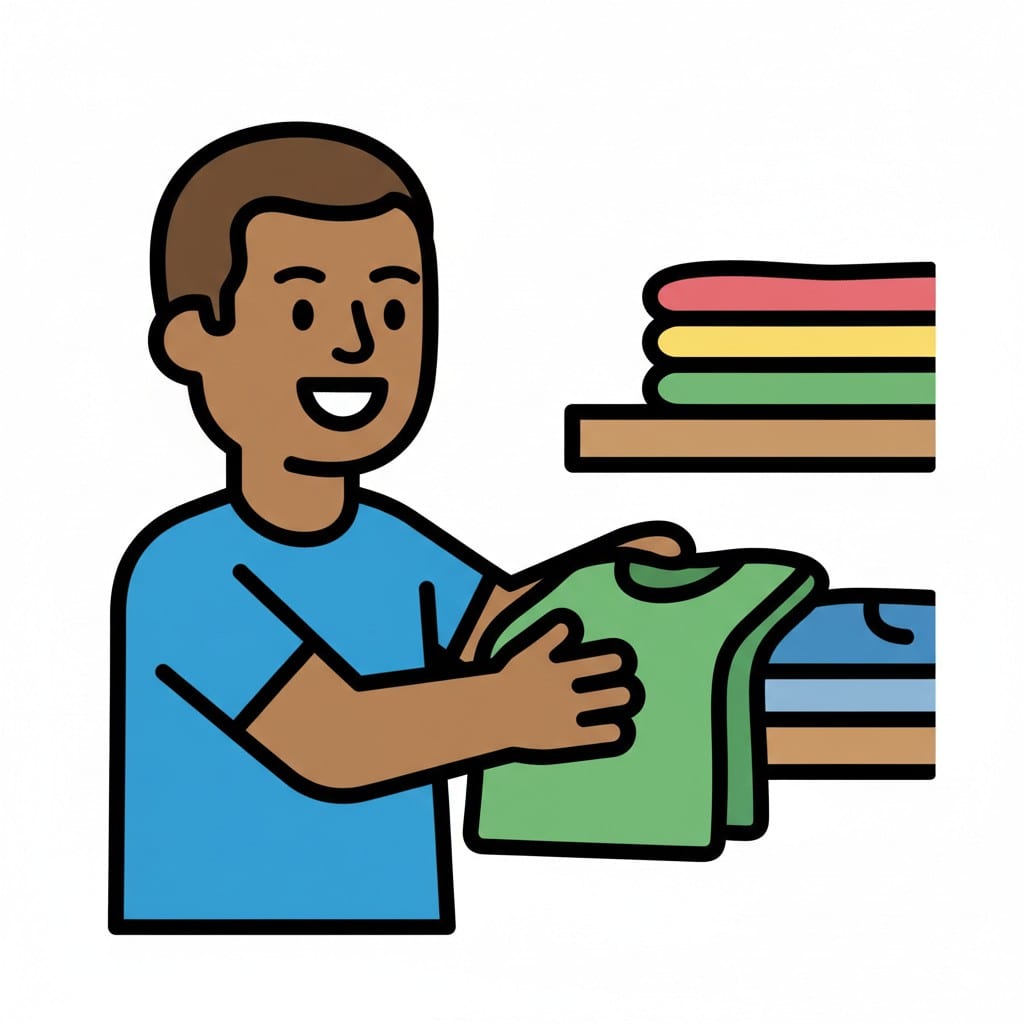 ♂
♂Man placing a shirt on the shelf
A man in a blue t-shirt places a green shirt on a shelf where folded clothes are already stacked.
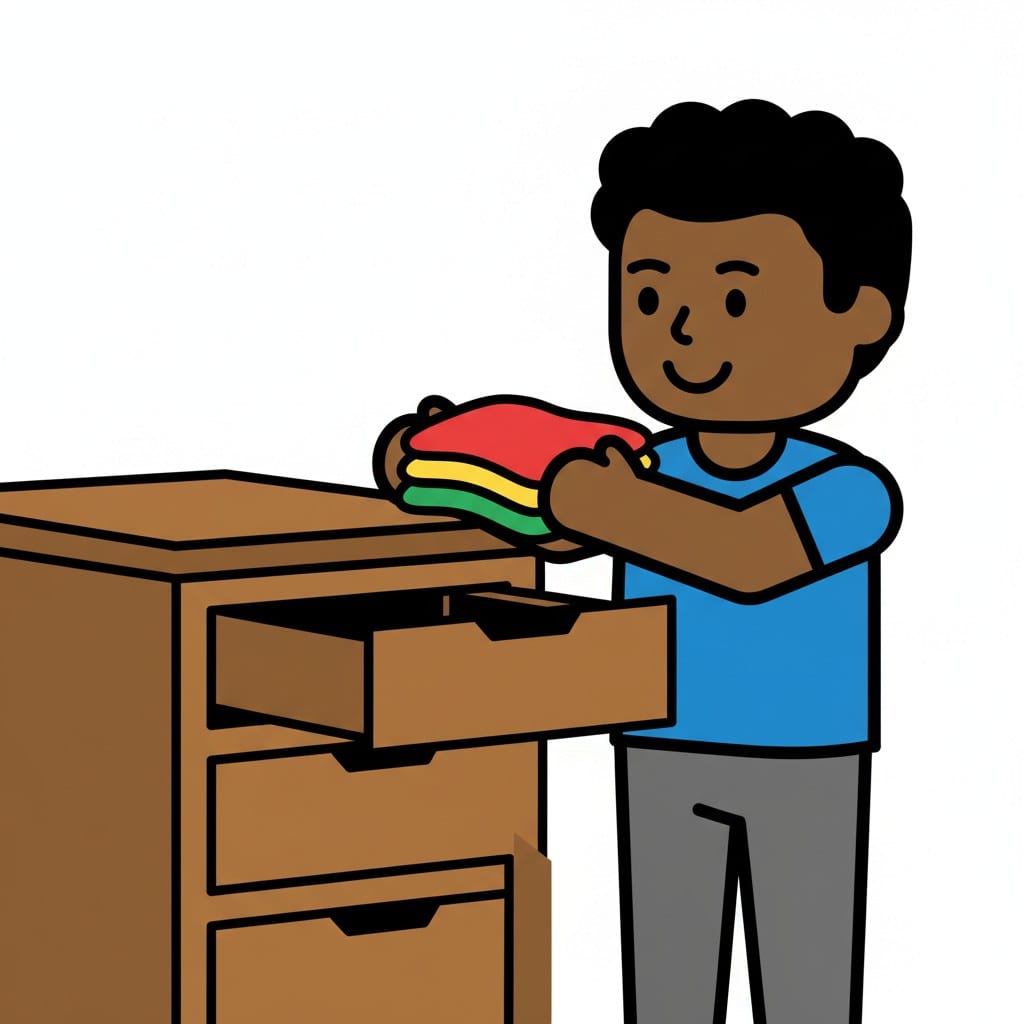 ♂
♂Boy putting clothes into a drawer
A boy in a blue t-shirt lowers a pile of folded red, yellow and green clothes into an open wooden drawer.
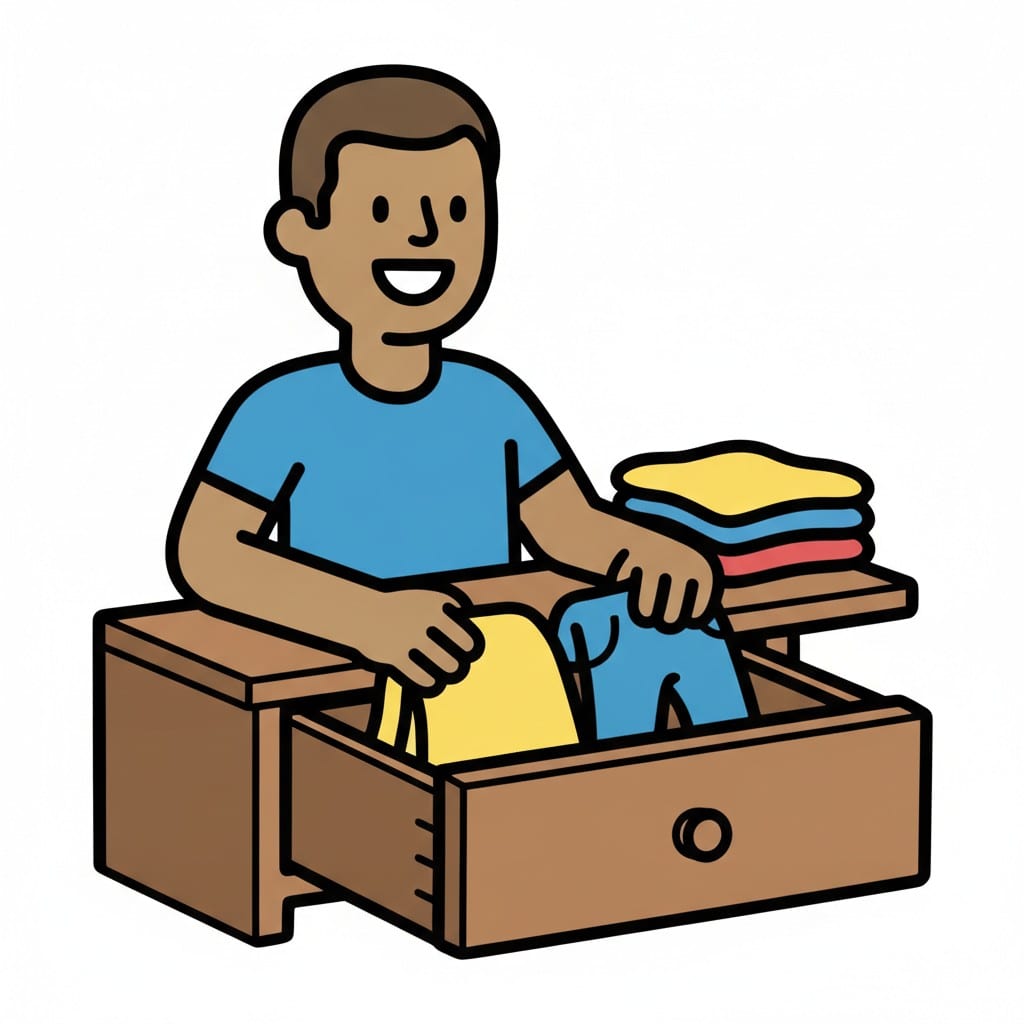 ♂
♂Man filling a drawer with folded clothes
A man in a blue t-shirt lowers yellow and blue garments into a pulled-out drawer, with a neat stack of folded clothes beside him.
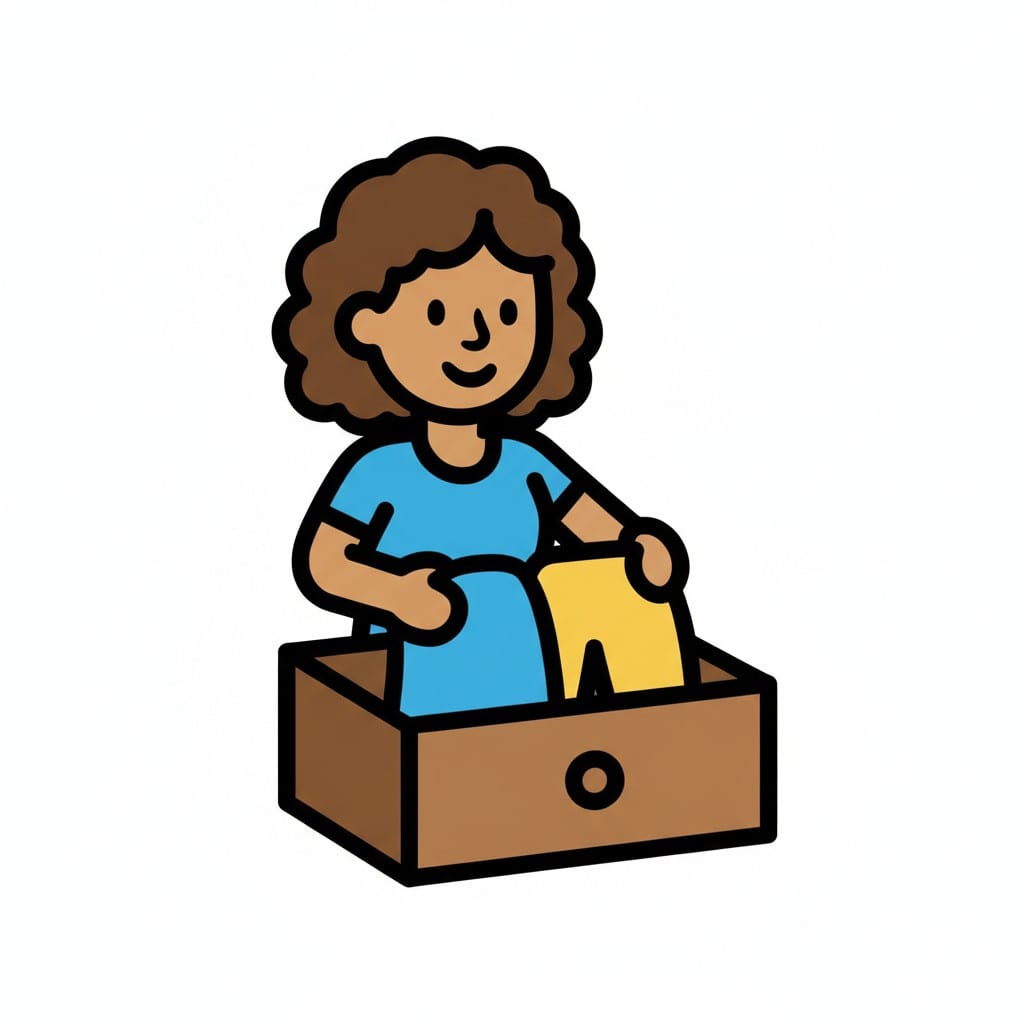 ♀
♀Put away clothes
A person puts yellow clothes into a brown drawer.
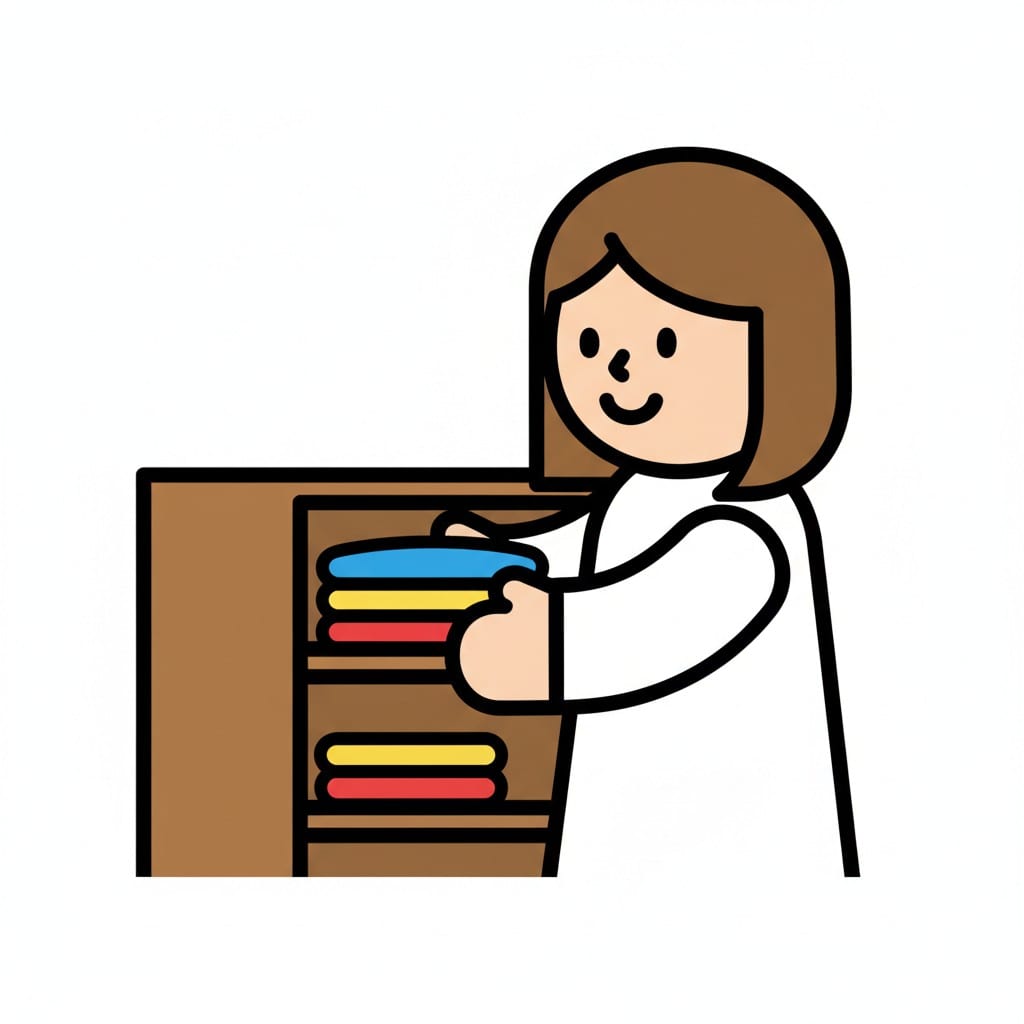 ♀
♀Woman placing folded clothes in the cupboard
A woman sets a stack of folded blue, yellow and red clothes onto a shelf inside a wooden cupboard.
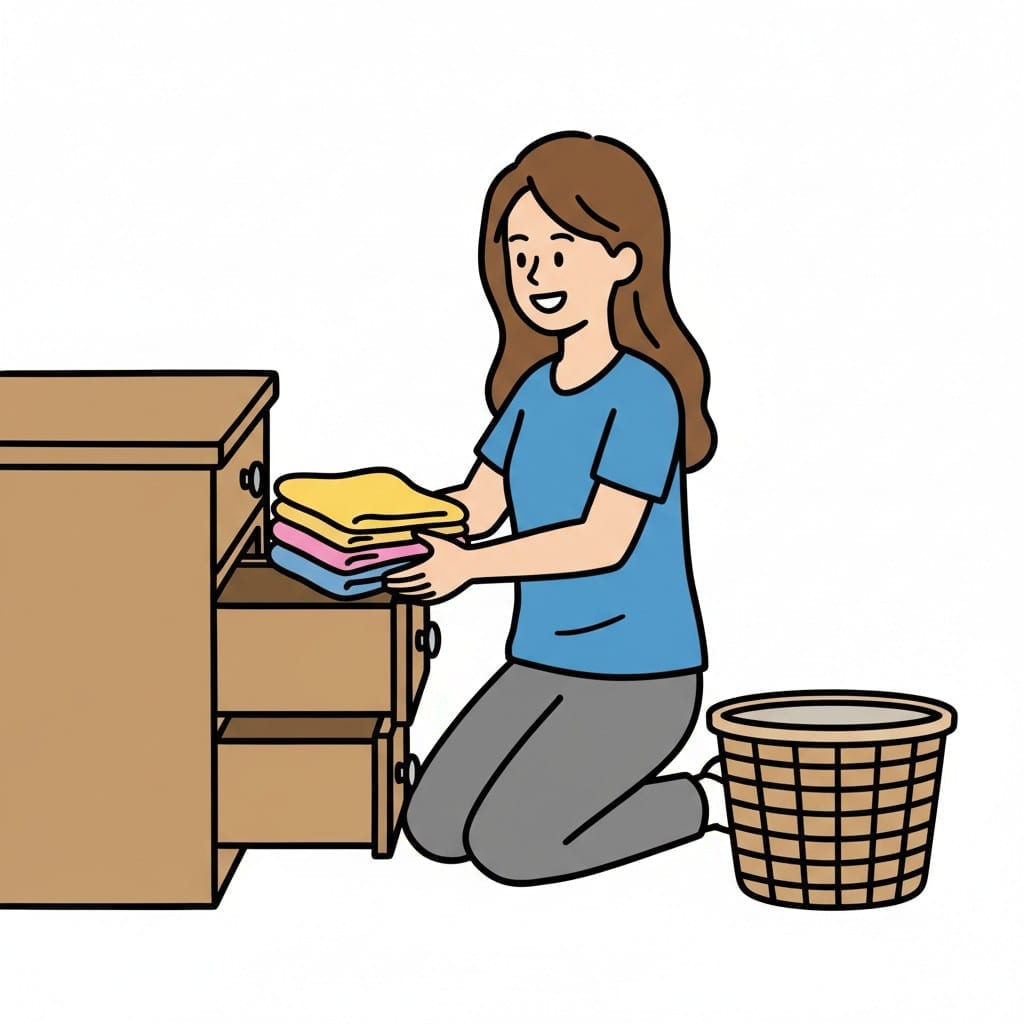 ♀
♀Woman filling a drawer beside a laundry basket
Kneeling at a chest of drawers, a woman places folded yellow, pink and blue clothes into an open drawer with a laundry basket next to her.
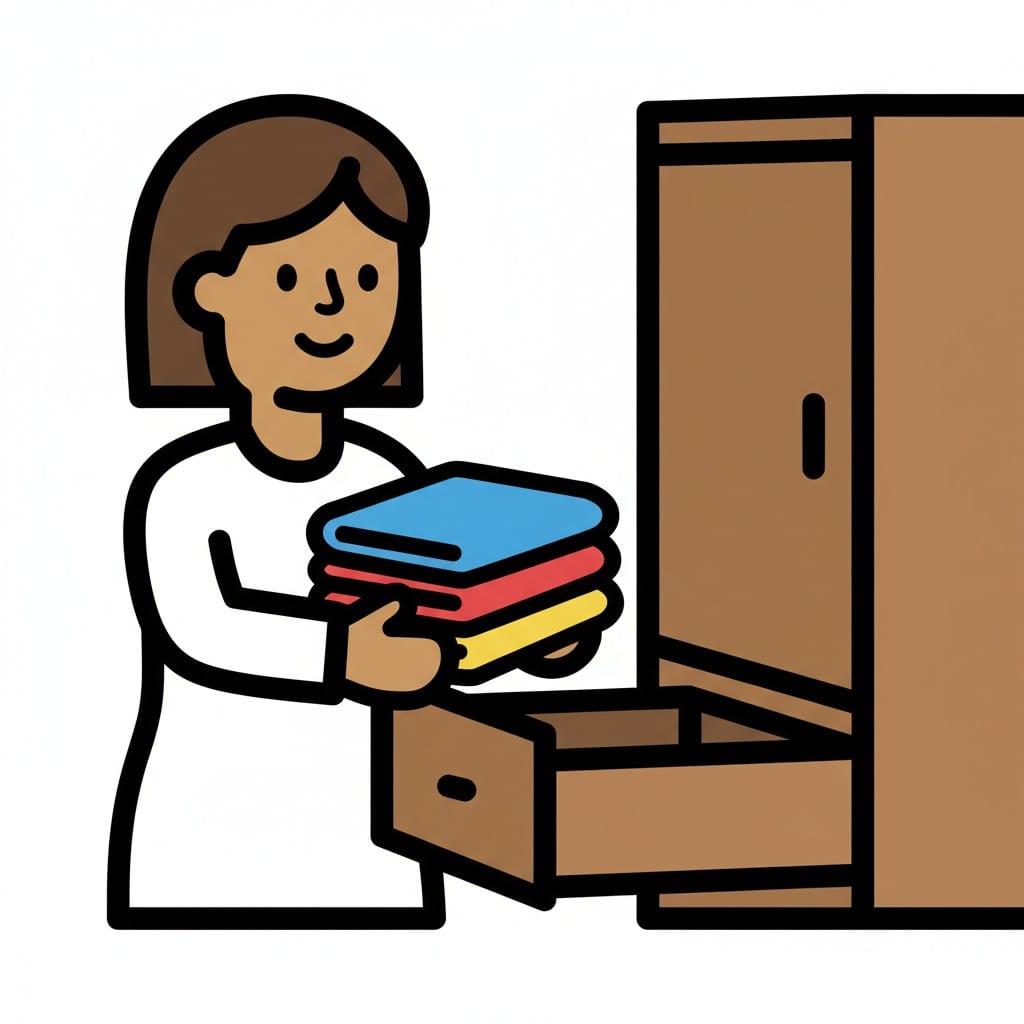 ♀
♀Woman carrying clothes to the wardrobe
A woman holds a stack of folded blue, red and yellow clothes in front of an open drawer in a tall wooden wardrobe.
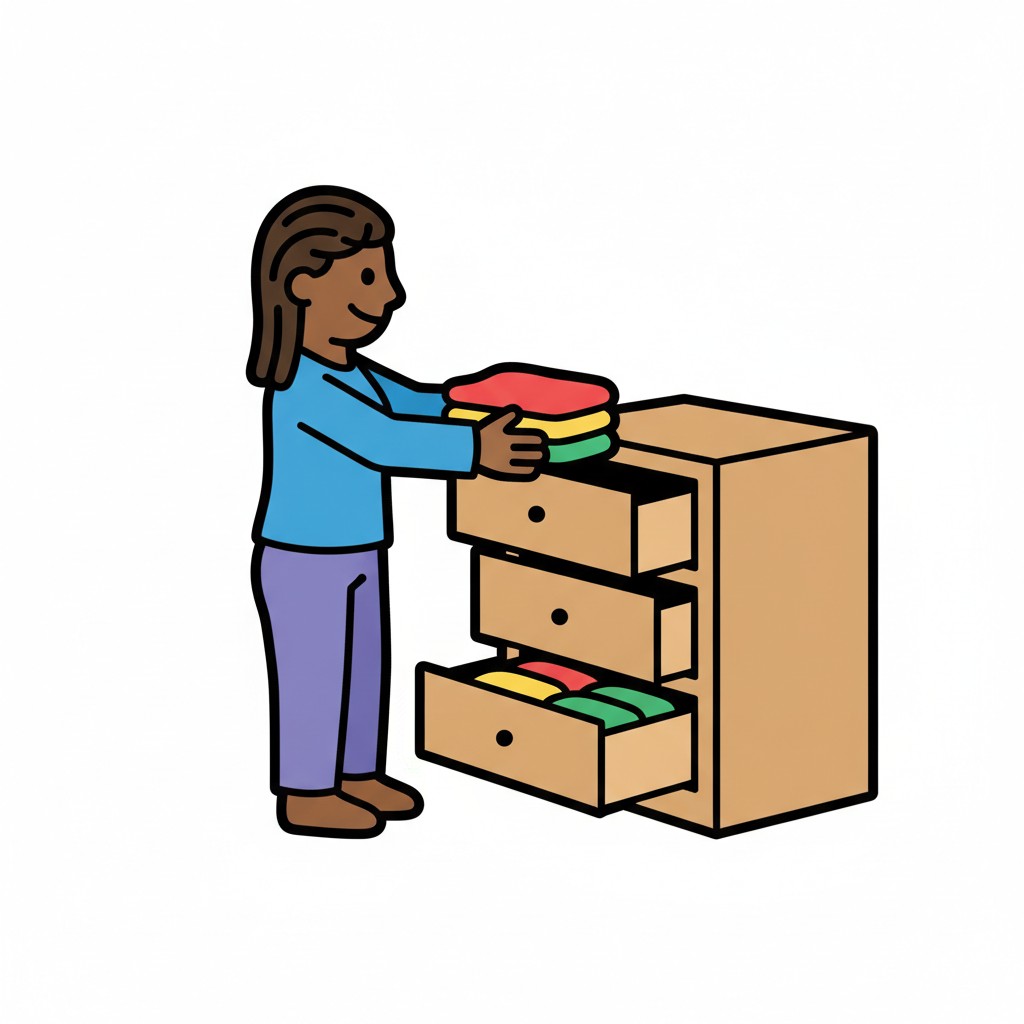 ♀
♀Put the clothes in the drawers
A person puts folded clothes into a chest of drawers with open drawers.
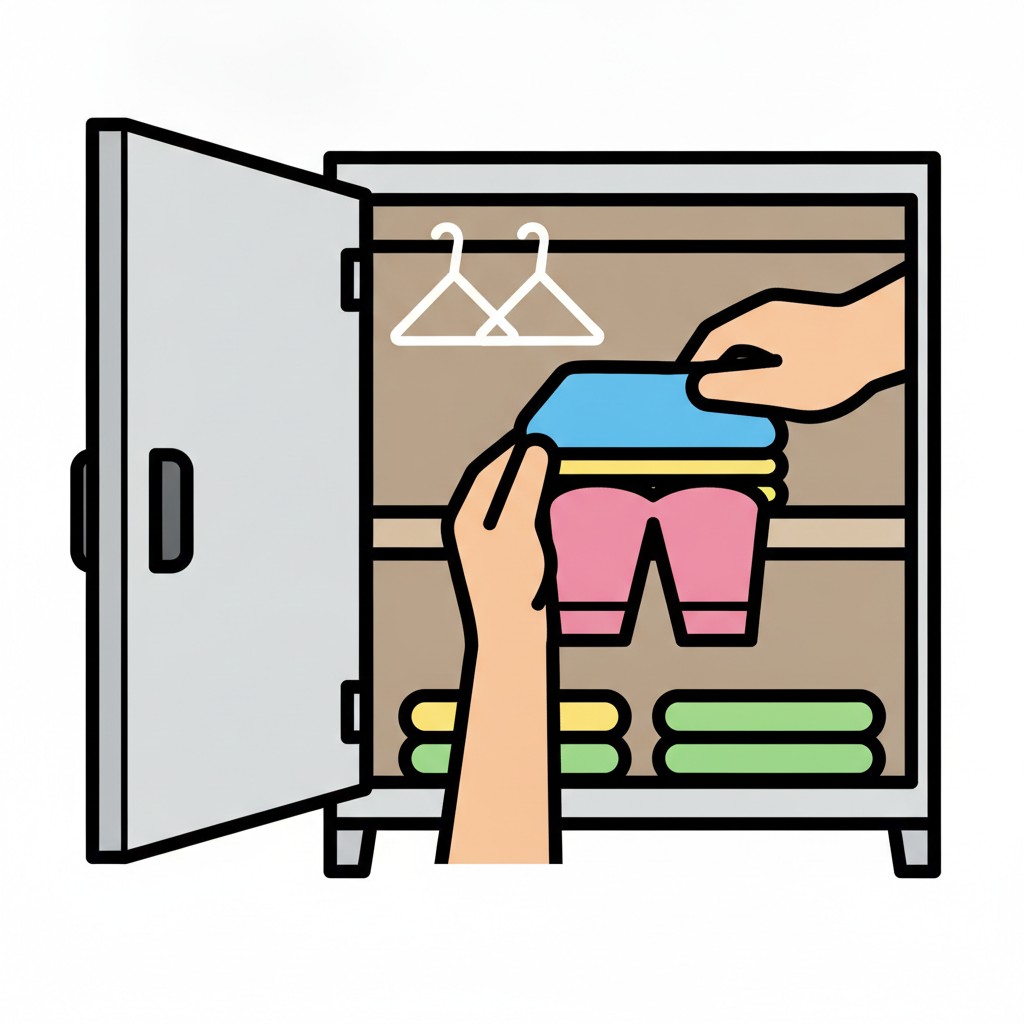
Put away in the wardrobe
Two hands put folded clothes into a wardrobe with hangers and shelves.
About this visual support
A child standing in front of a pile of clean clothes is actually holding four processes open at once: folding, sorting, finding the right drawer and deciding what belongs where. That chain costs more than it looks, especially when the pile is mixed.
Visual support breaks the chain into parts you can see. When each part has its own picture, the next step becomes something concrete on the table instead of something to be pulled from memory. The child can work their way down the pile, item by item, without losing the thread between socks and shirts.
A tip that helps this specific job: make the drawers self-explaining by taping a small picture on the outside of each one, the same image used in the visual support. Now the match between garment and place is physical, not abstract. The child does not have to ask where the t-shirts live this week. If you want to follow the routine across several days, you can add it with check-offs in Routined.
Use this image in a schedule
Build your own visual schedule with this image and download it as a print-ready PDF. Completely free.

More similar visual supports
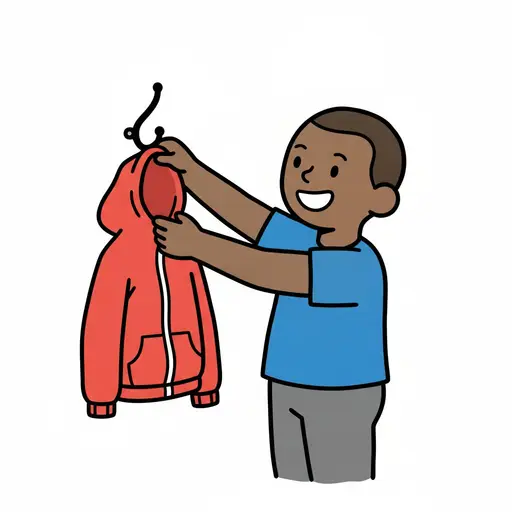
Hang jacket
A smiling person holds up a red hooded jacket towards a hook on the wall.
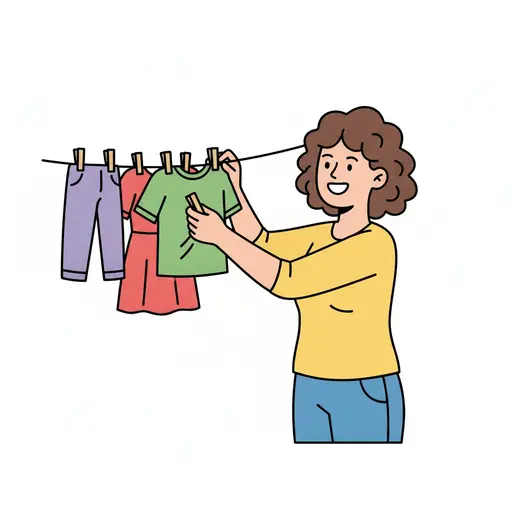
Hang up garments
A person hangs a green top on a line where trousers and dresses already hang.
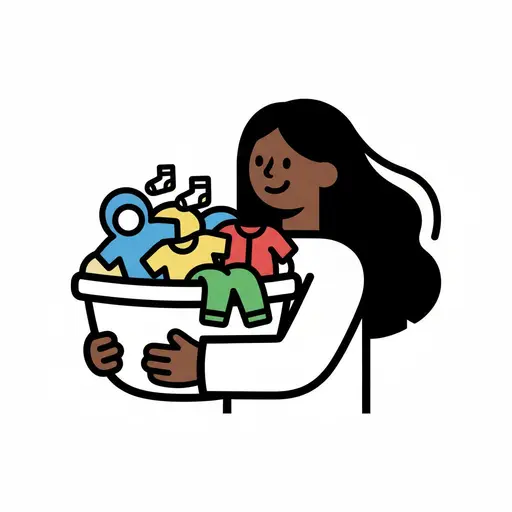
Bring children's clothes
A woman holds a basket filled with colorful children's clothes.
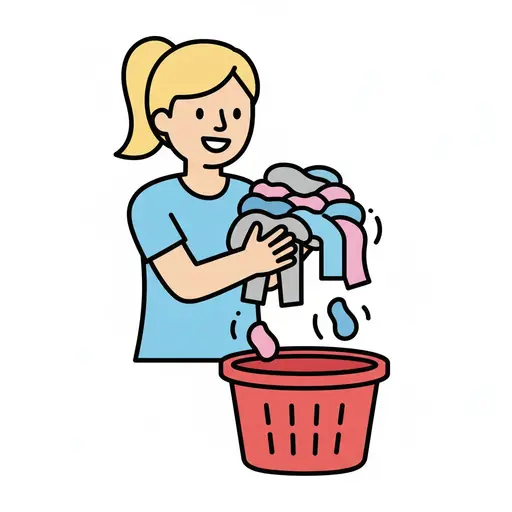
Drop the laundry in the basket
A girl lets an armful of dirty clothes fall into a red laundry basket.
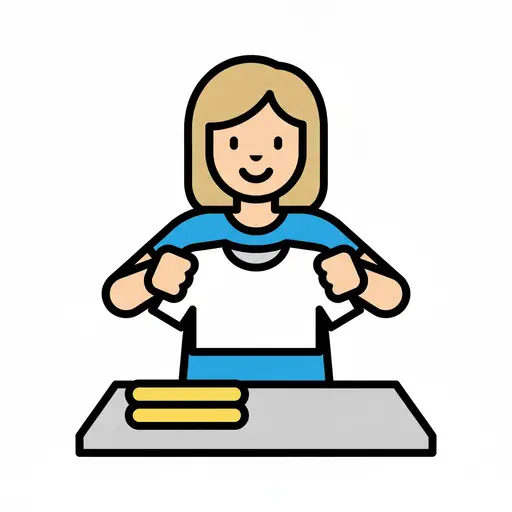
Fold laundry
At a grey table, a girl folds a white shirt while two yellow garments lie neatly...
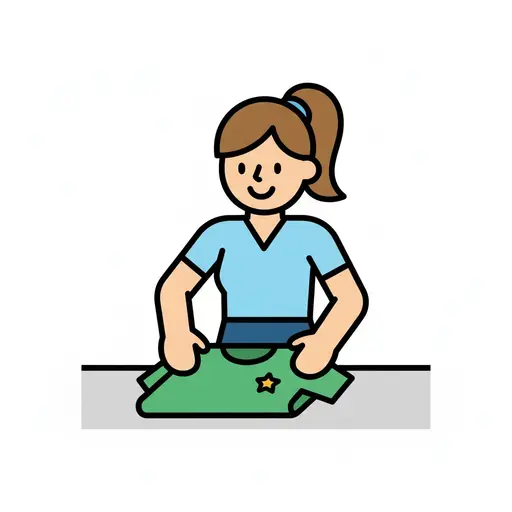
Fold uniform
A woman folding a green uniform t-shirt with a star on it, on a table.
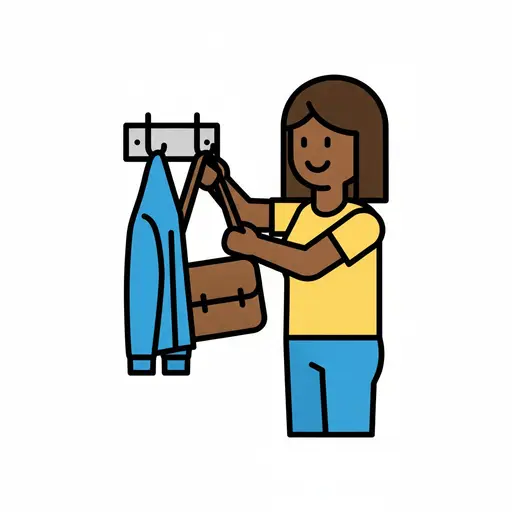
Hang up coat and bag
A smiling person hangs a blue jacket and a brown shoulder bag on a row of hooks ...
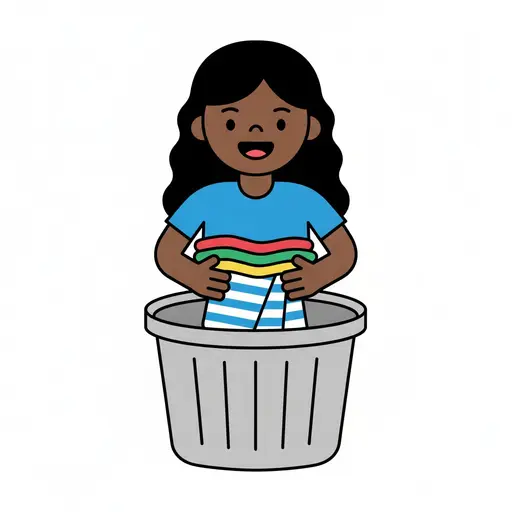
Put in the laundry basket
A child puts a pile of clothes into a laundry basket.
Take the visual supports with you
In Routined you build schedules from these pictures, add timers and voice instructions, and your child follows the day on their own.


* 14-day free trial included for new users.