Hang up garments
A shirt in hand, the drawers in front, hangers in the wardrobe and a shelf up at the top. Picking the right place for each garment is a small decision that easily stalls into indecision and a pile on the floor. The pictures below take over the choice.
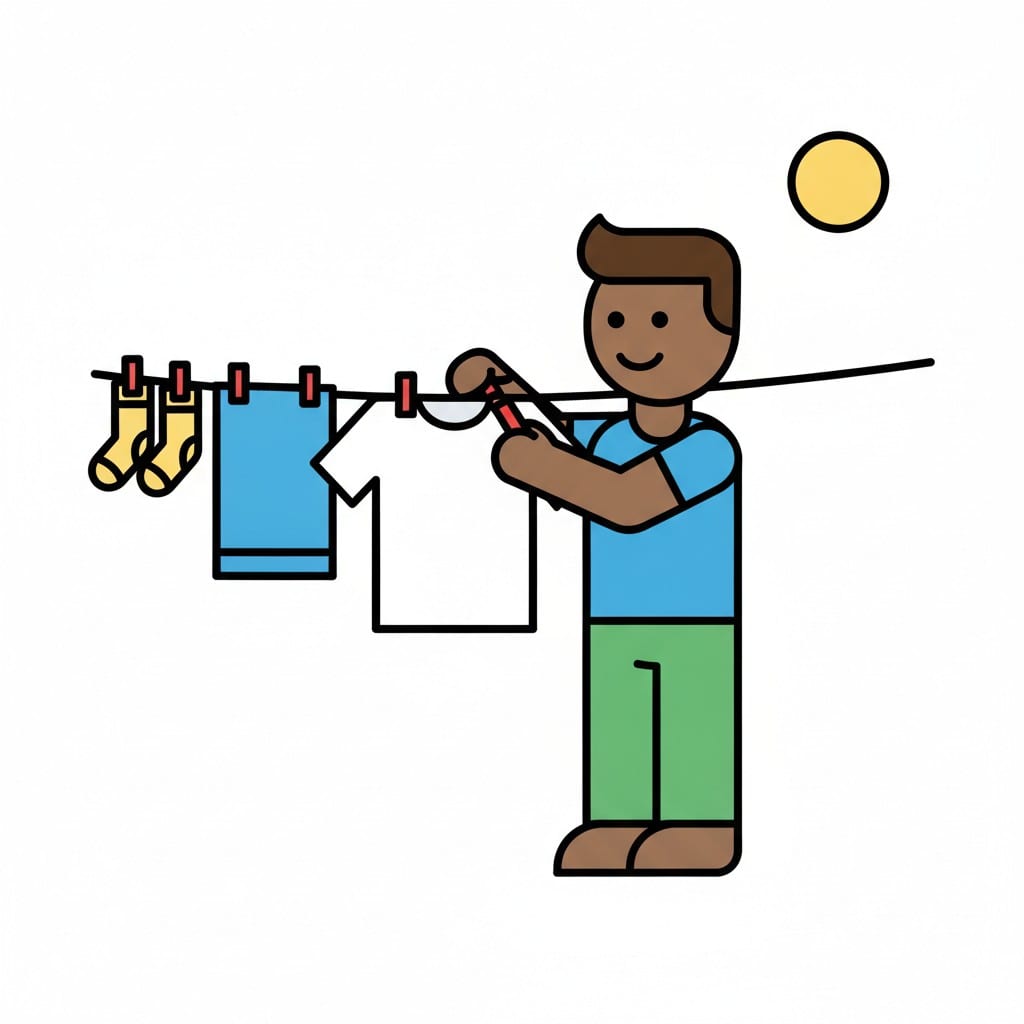 ♂
♂Hang up garments
A person pegs a white t-shirt on a washing line with socks and a towel, the sun above.
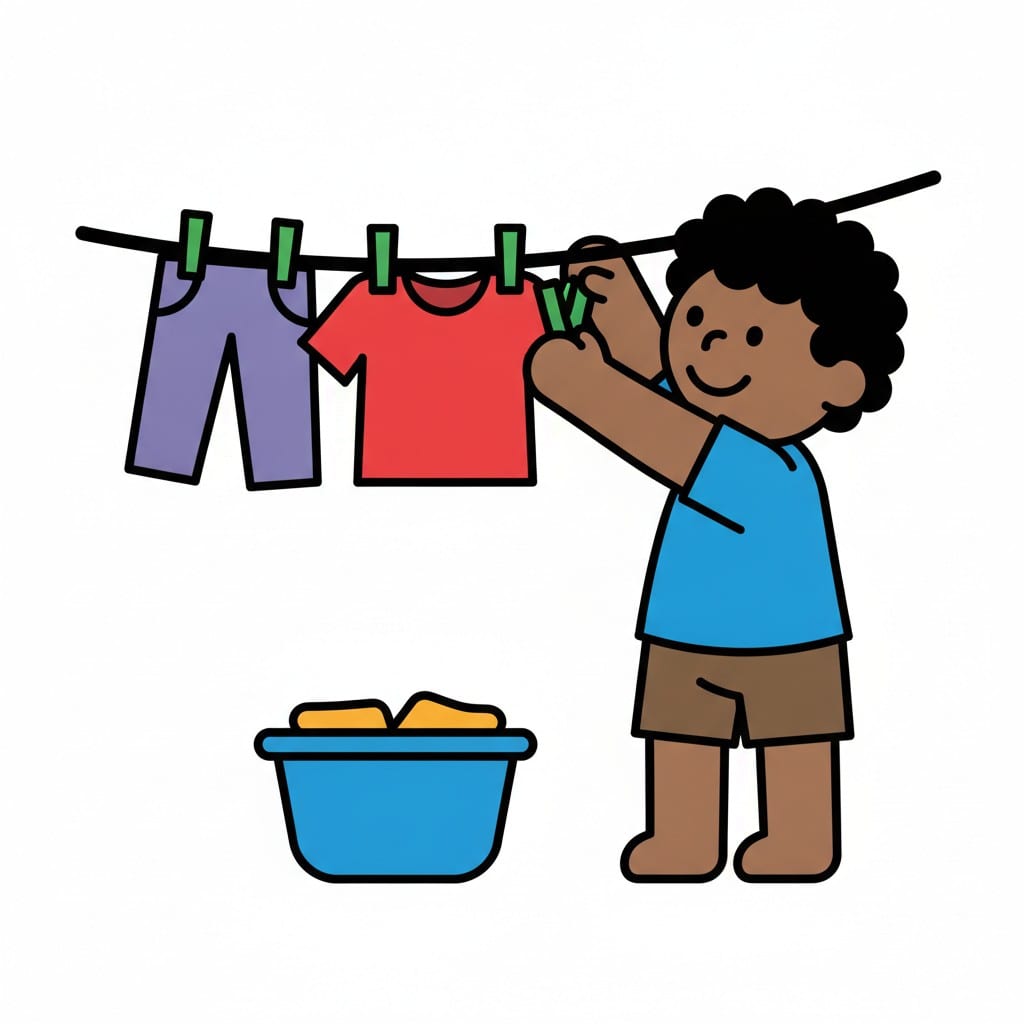 ♂
♂Hang up garments
A boy pegs a red t-shirt on a washing line beside a pair of trousers, a blue basket below.
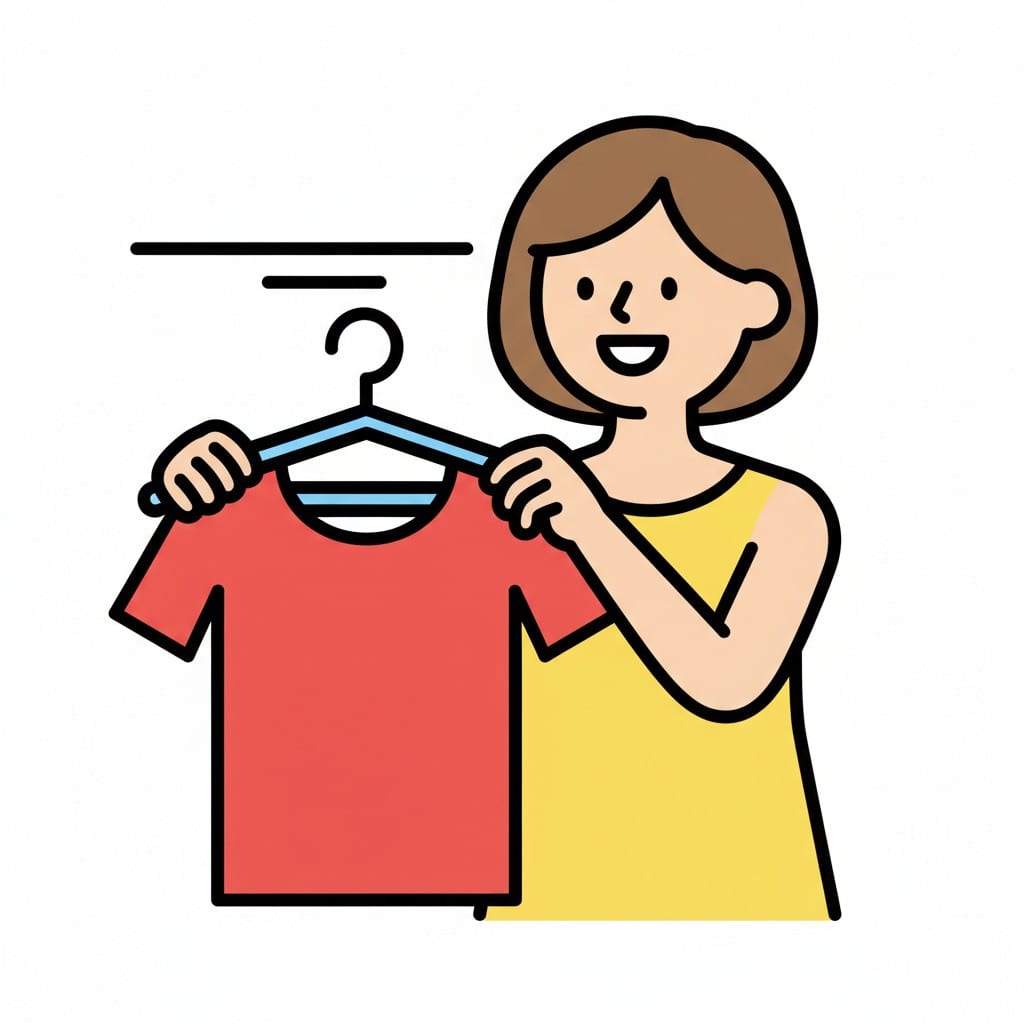 ♀
♀Hang up garments
A person holds up a red t-shirt on a hanger under a clothes rail.
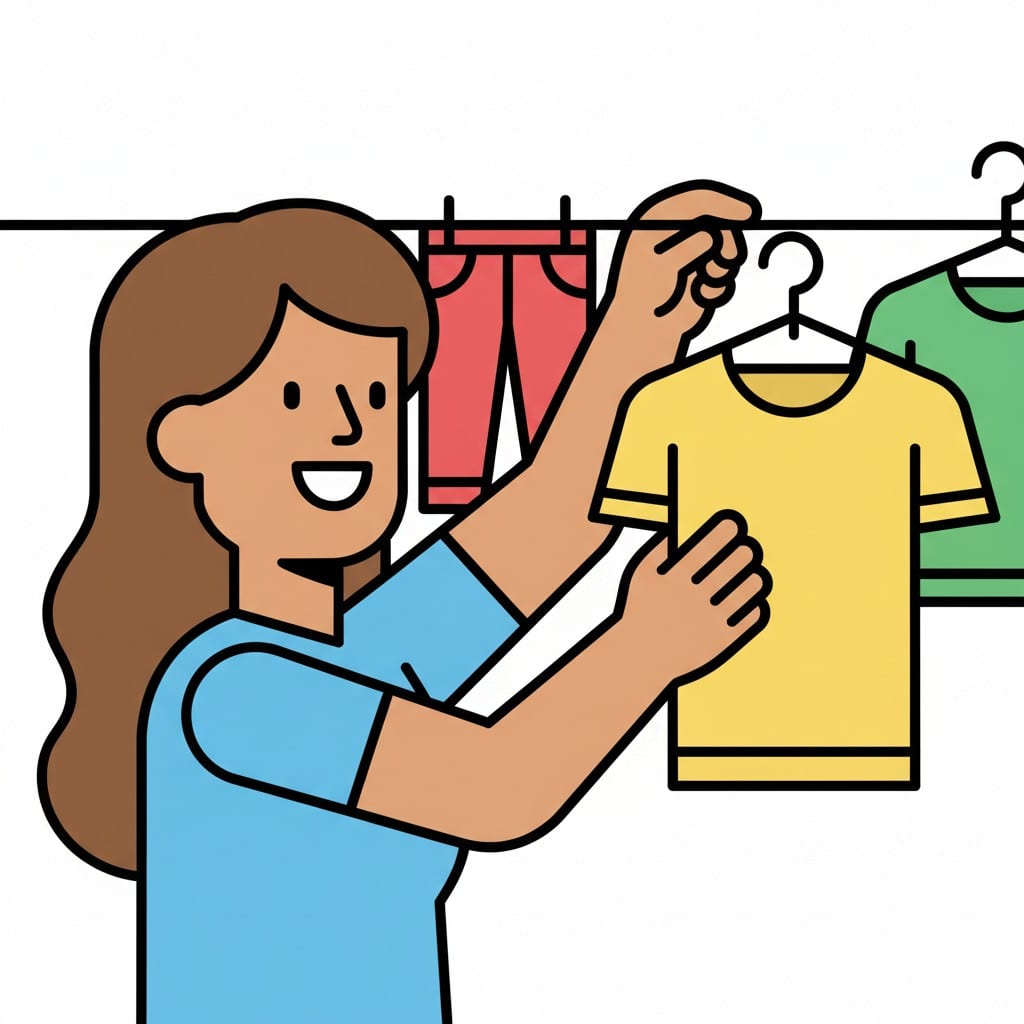 ♀
♀Hang up garments
A person hangs a yellow t-shirt on a hanger on a rail with red trousers and a green top.
 ♀
♀Hang up garments
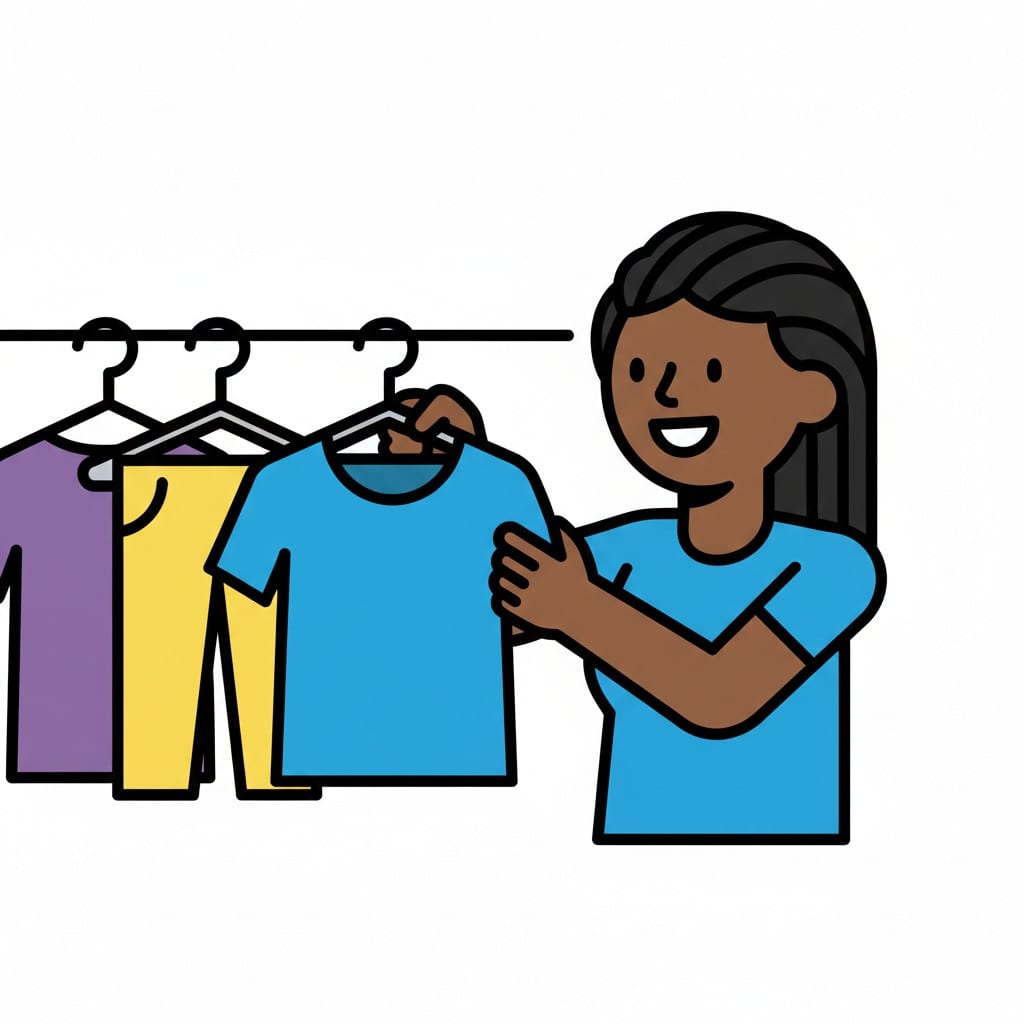
A person hangs a blue t-shirt on a hanger on a rail with more clothes.
 ♀
♀Hang up garments
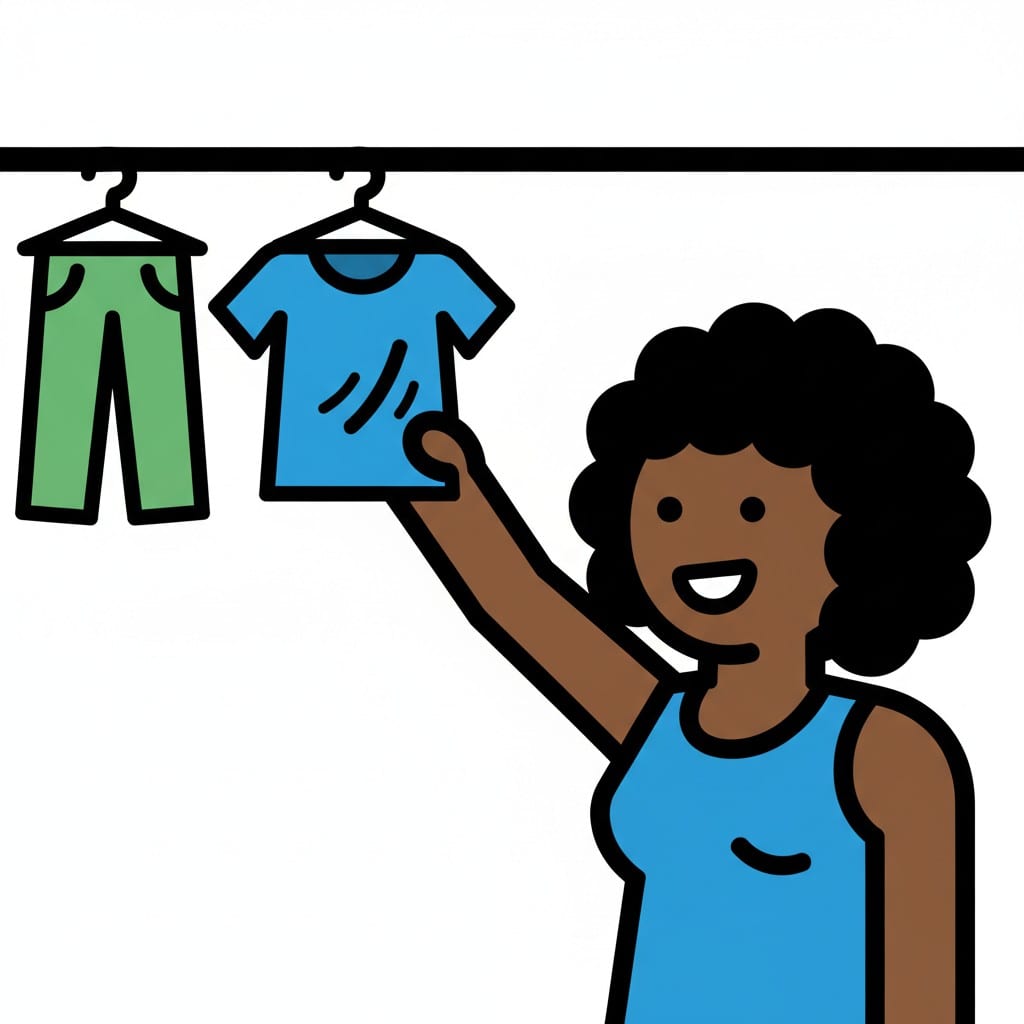
A person hangs a blue t-shirt on a rail beside green trousers.
 ♀
♀Hang up the top
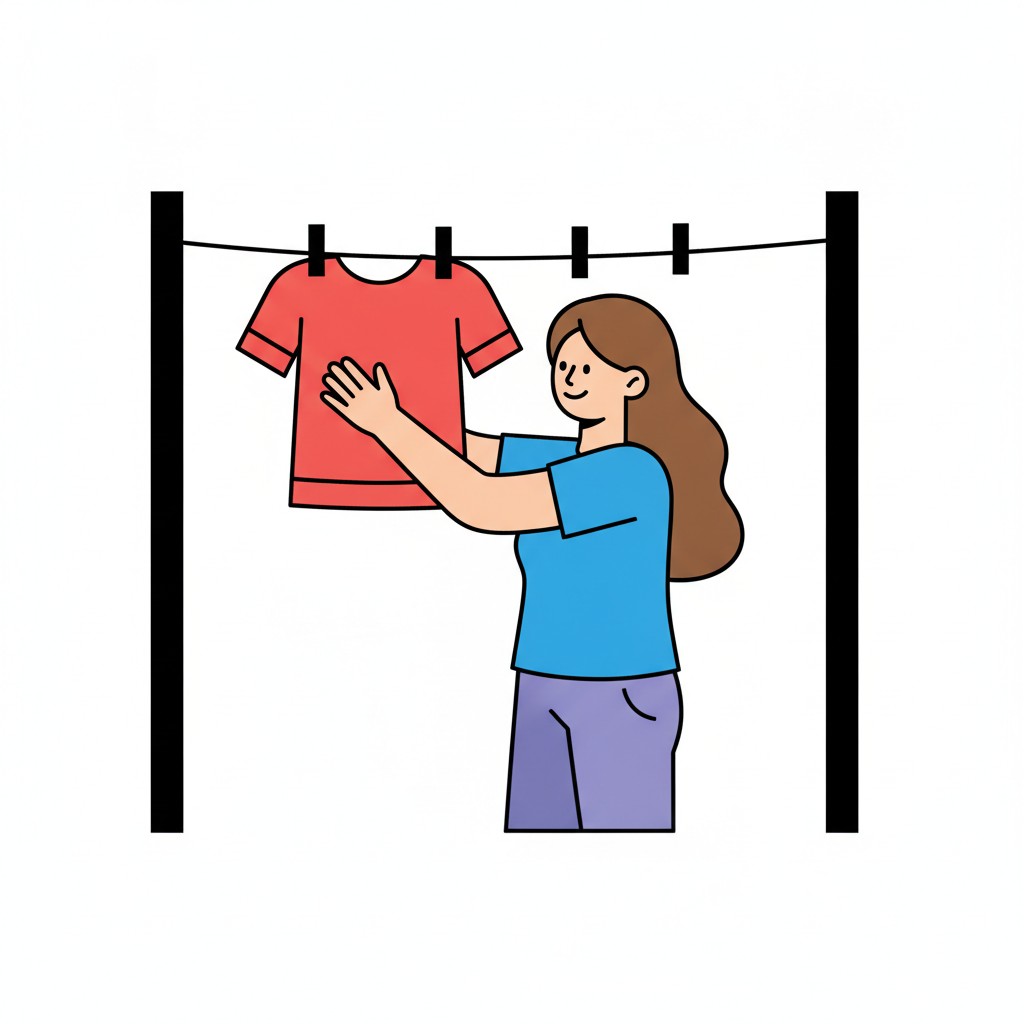
A person hangs a red top on a washing line with pegs.
 ♀
♀Hang on a hanger
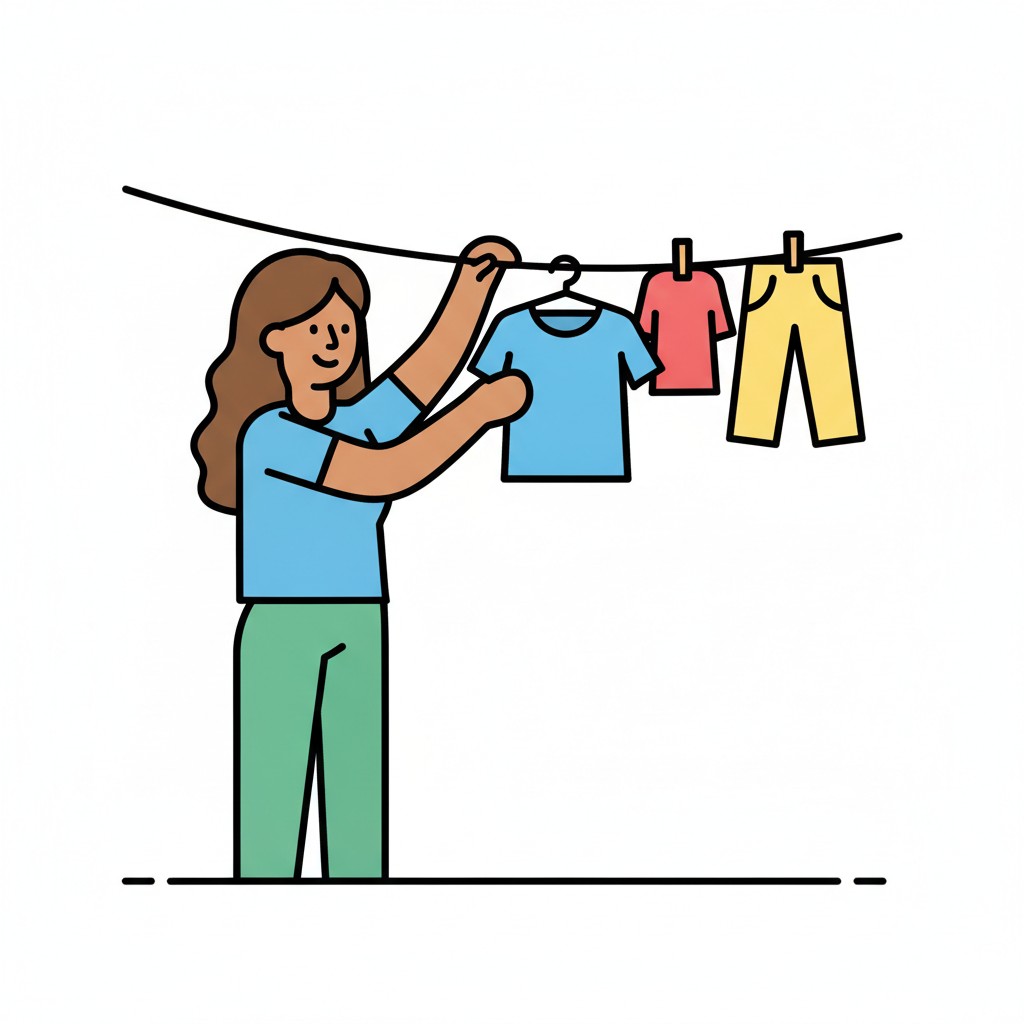
A person hangs a blue top on a hanger by a line with more clothes.
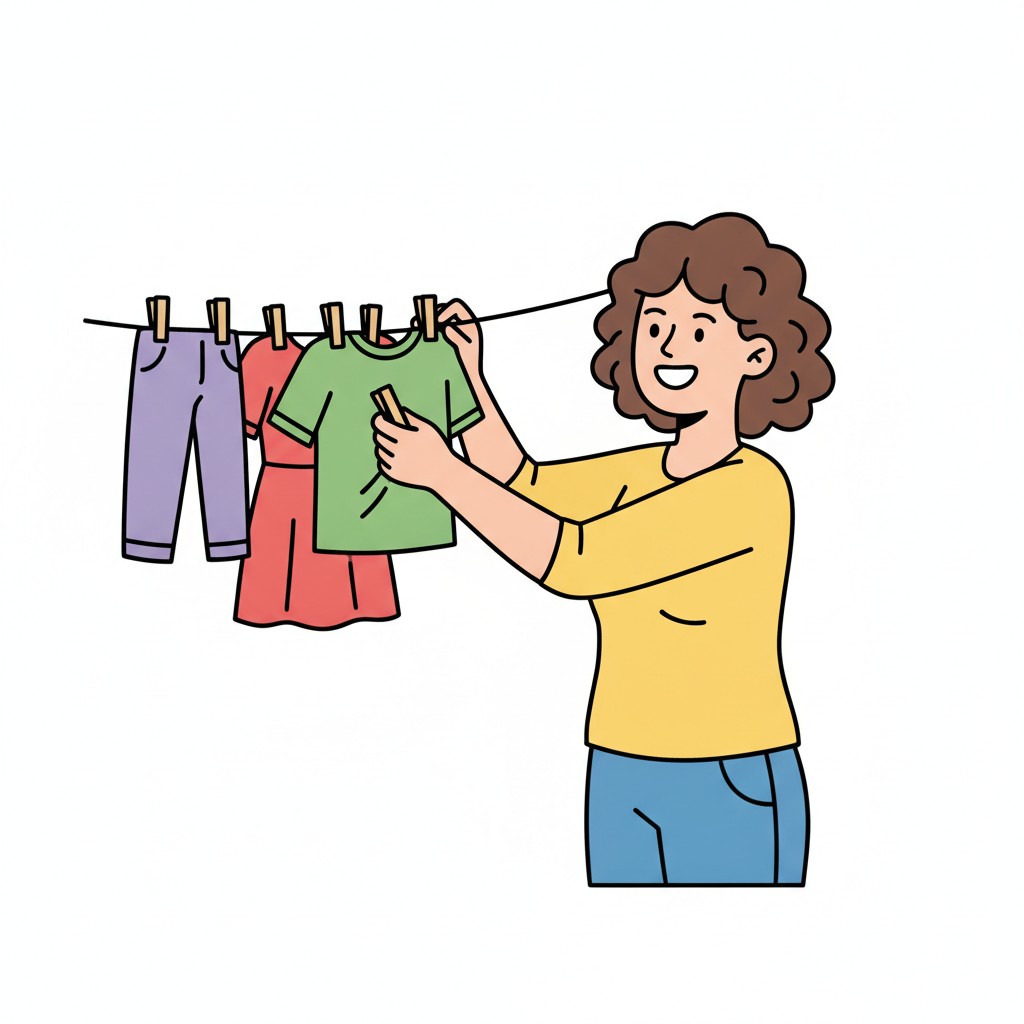 ♀
♀Hang up the washing
A person hangs a green top on a line where trousers and dresses already hang.
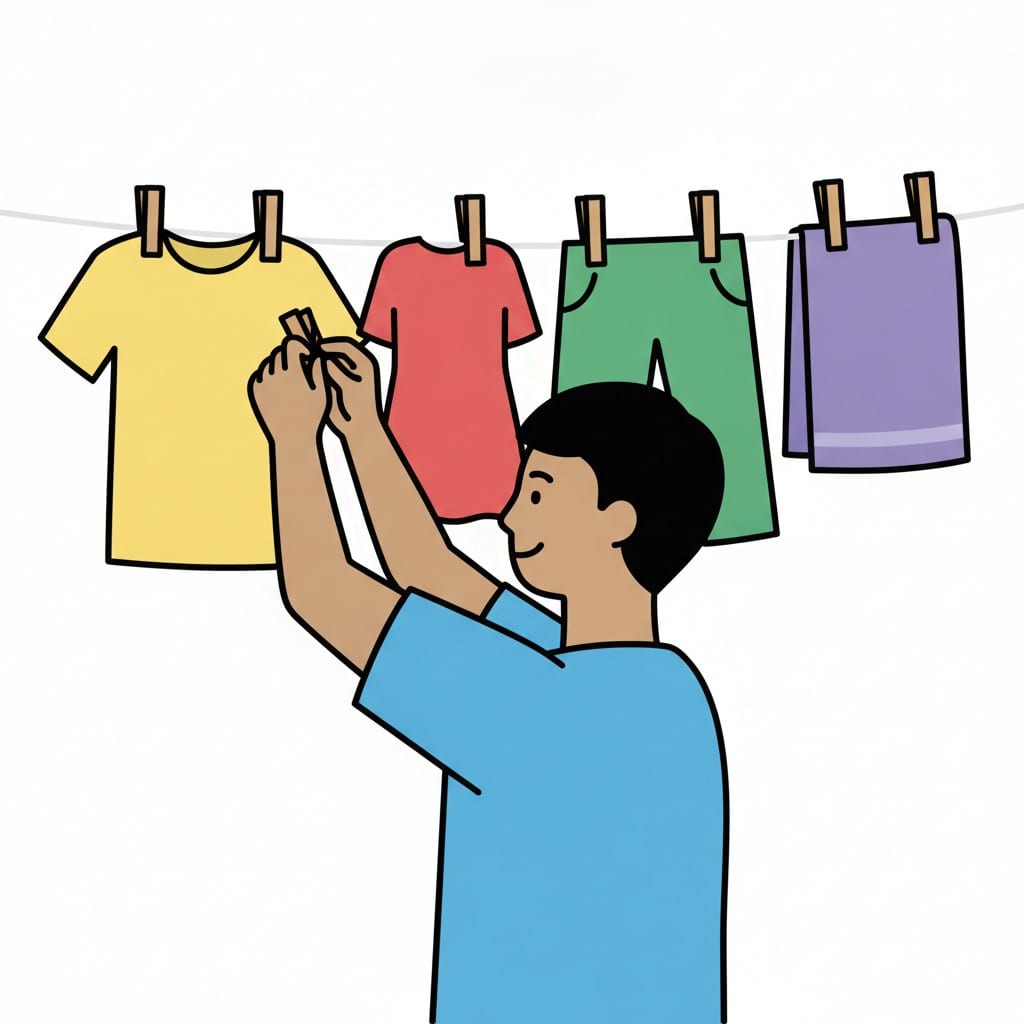 ⚲
⚲Pegging laundry on the line
A person pins shirts and trousers to a clothesline with pegs.
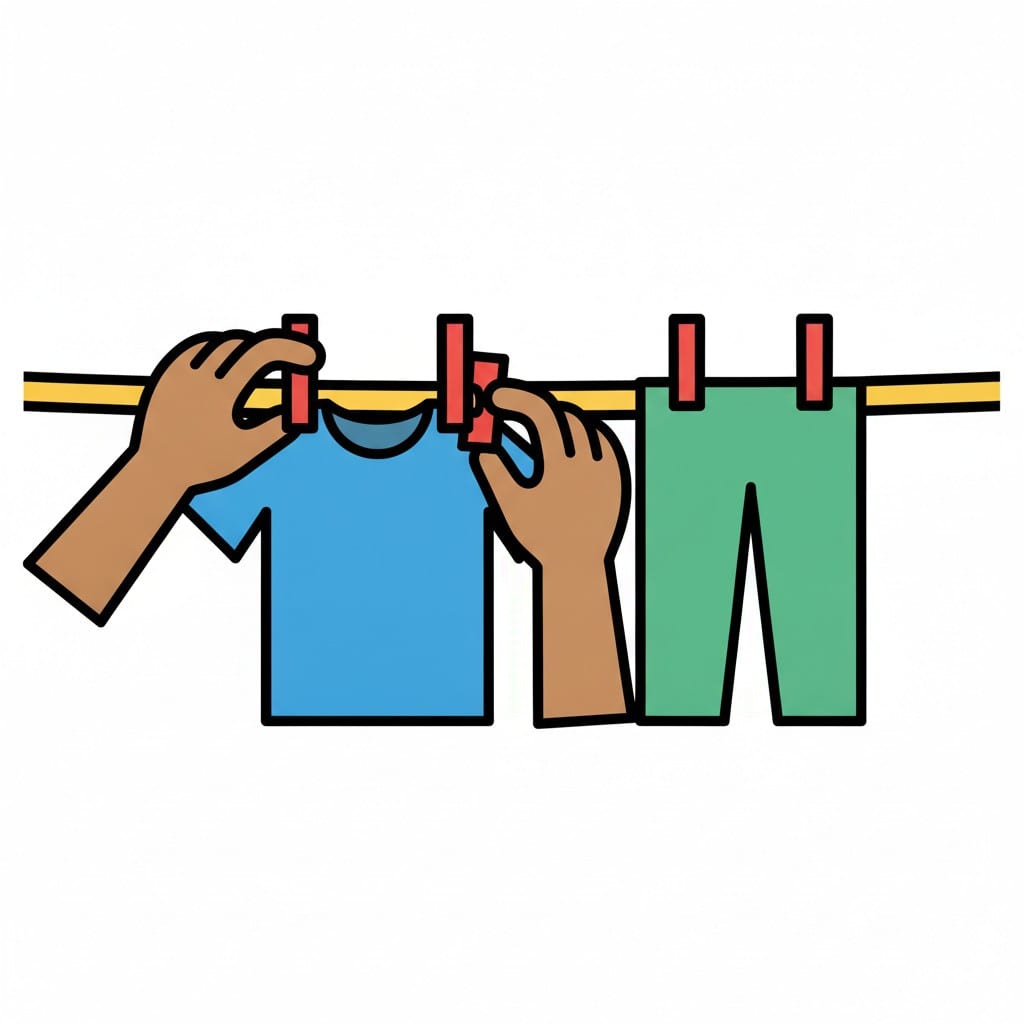 ⚲
⚲Pinning with clothespins
Two hands pin a blue shirt and green trousers to a line with red clothespins.
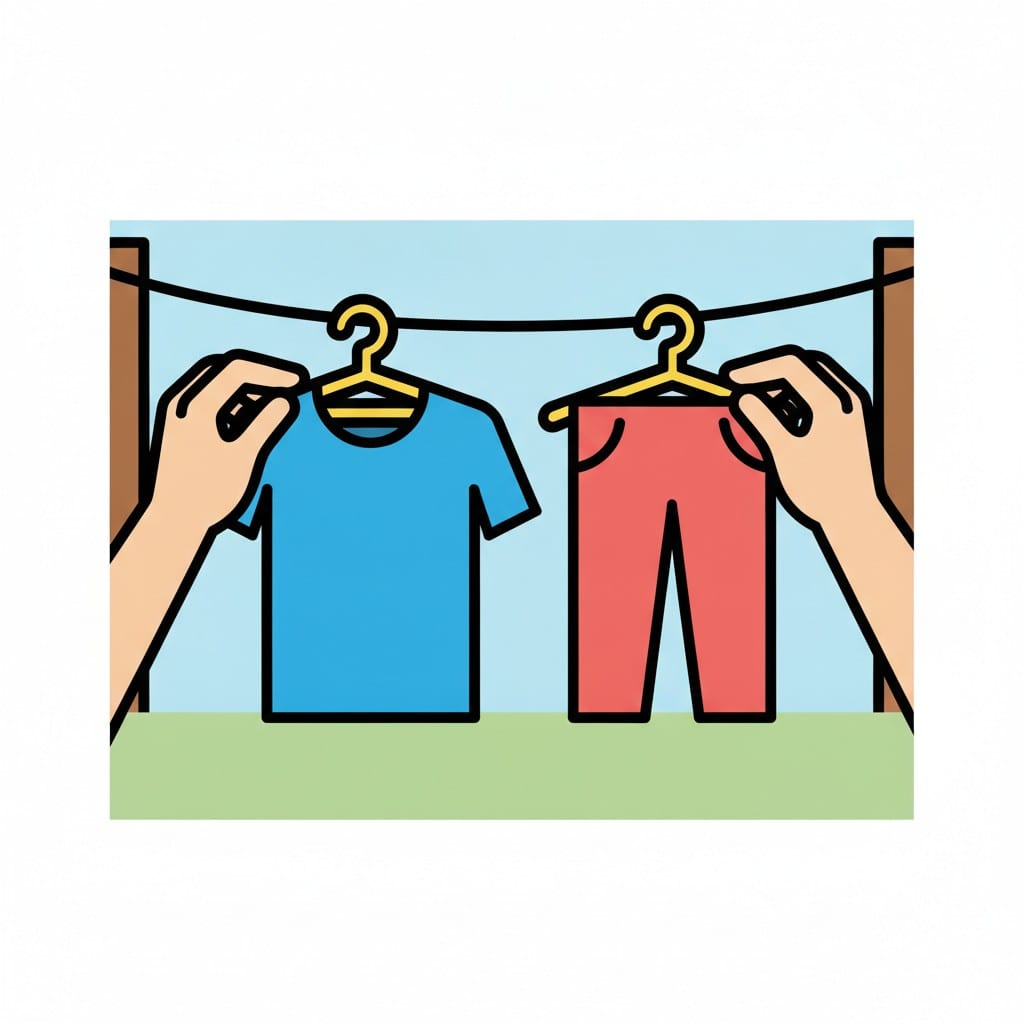 ⚲
⚲Clothes on hangers
Hands hang a shirt and a pair of trousers on hangers on an outdoor line.
About this visual support
Putting clothes away looks like one task but is really a chain of small decisions. T-shirt or sweater, fold or hang, top shelf or bottom shelf, summer drawer or winter drawer, dark or light compartment. For a child who struggles with decisions, the pile on the floor quickly turns into a pile of question marks that nobody has the energy to sort out.
Visual support for the sorting itself removes the hesitation in the moment of choosing. When a picture states that t-shirts live in the top drawer, jeans go on a hanger and sweaters on the shelf, every garment becomes recognition instead of reasoning. The decision has already been made in the morning, the child just follows it at their own pace.
A tip that really helps here: label the storage spot with a copy of the same picture used in the visual support. With the symbol on both the card and the drawer front, the choice connects to the place without words. It works for children with ADHD, and just as well for younger kids or those still building vocabulary. In Routined you can build the routine and try it for fourteen days at no cost.
This image is part of these ready-made schedules
Use this image in a schedule
Build your own visual schedule with this image and download it as a print-ready PDF. Completely free.
More similar visual supports
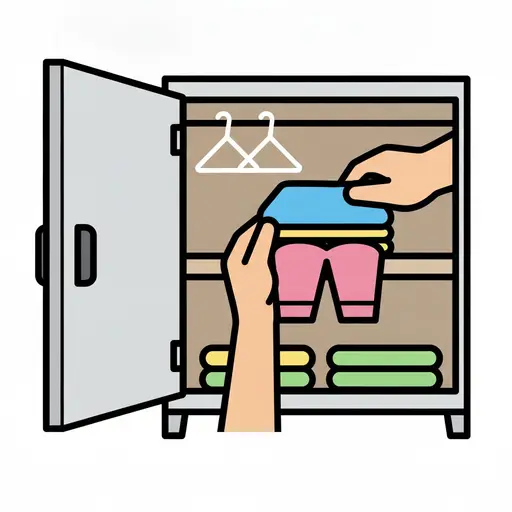
Put away clothes
Two hands put folded clothes into a wardrobe with hangers and shelves.
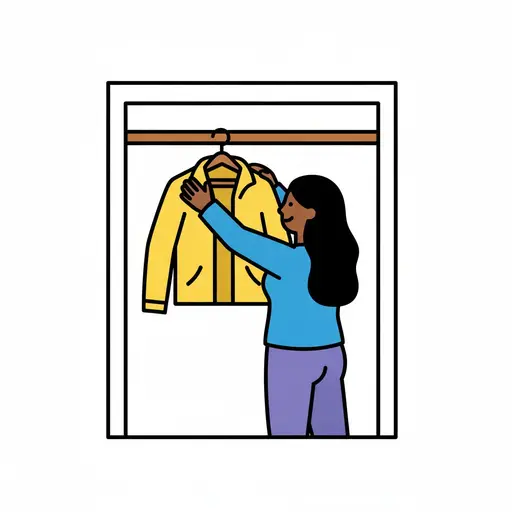
Hang jacket
A woman hangs a yellow jacket in the closet.
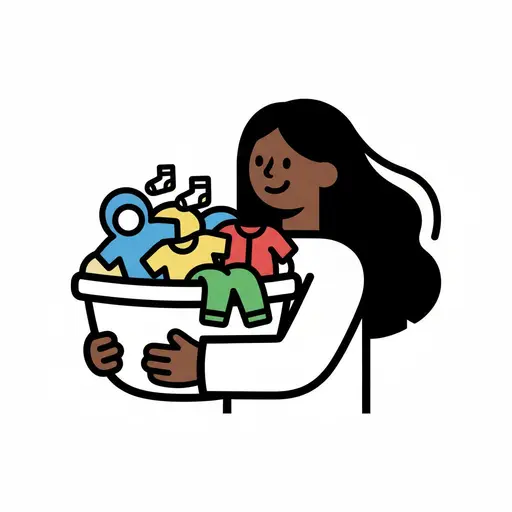
Bring children's clothes
A woman holds a basket filled with colorful children's clothes.
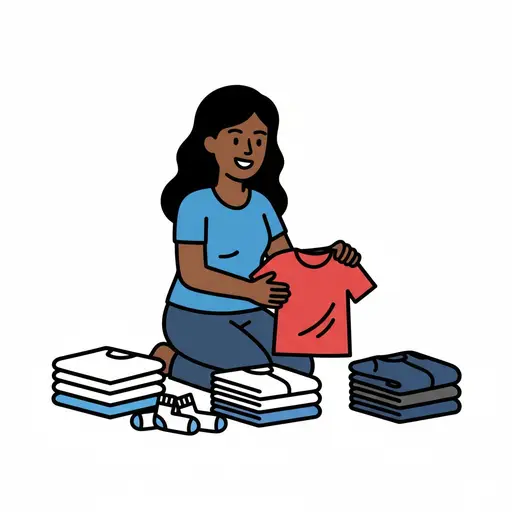
Sort clothes
A person sits on the floor sorting clothes into piles.
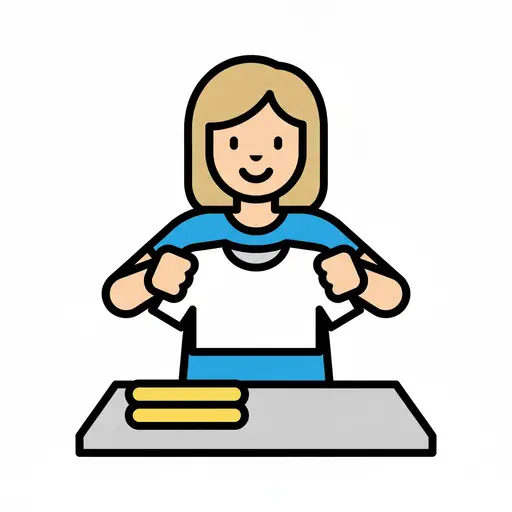
Fold laundry
At a grey table, a girl folds a white shirt while two yellow garments lie neatly...
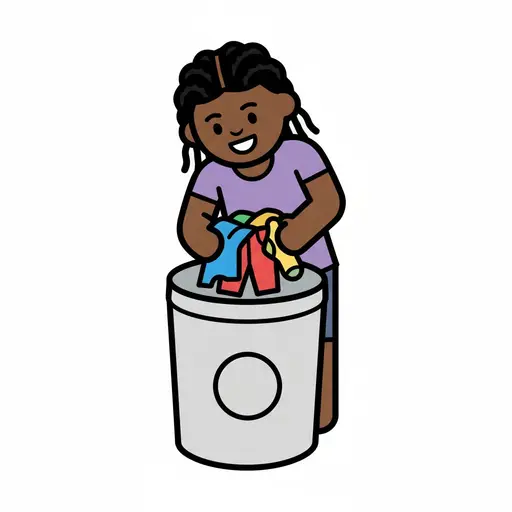
Gather dirty laundry
A girl putting dirty clothes into a laundry basket.
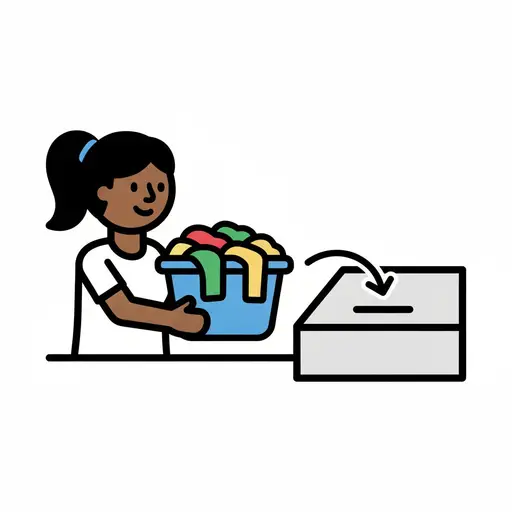
Drop off laundry
A girl with a ponytail holds a blue basket of colourful clothes while an arrow p...
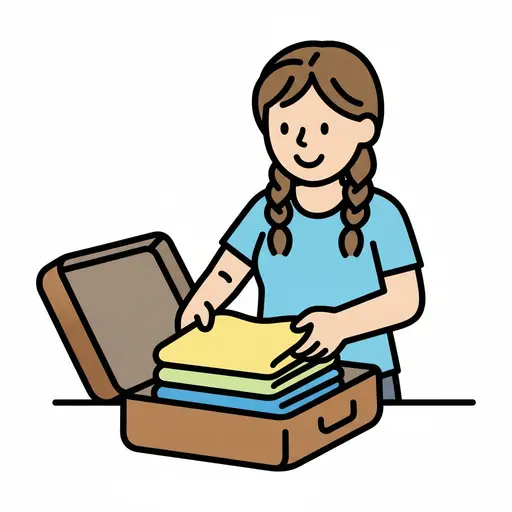
Unpack clean clothes
A child unpacks folded clothes from a suitcase.
This visual support in other languages
Take the visual supports with you
In Routined you build schedules from these pictures, add timers and voice instructions, and your child follows the day on their own.


* 14-day free trial, then $2.39 a month or $20.99 a year (US pricing). Cancel anytime.