Put away toys
Putting away toys asks for two things at once: ending something fun and returning each item to its own spot. The visual support below breaks the task into smaller steps your child can follow.
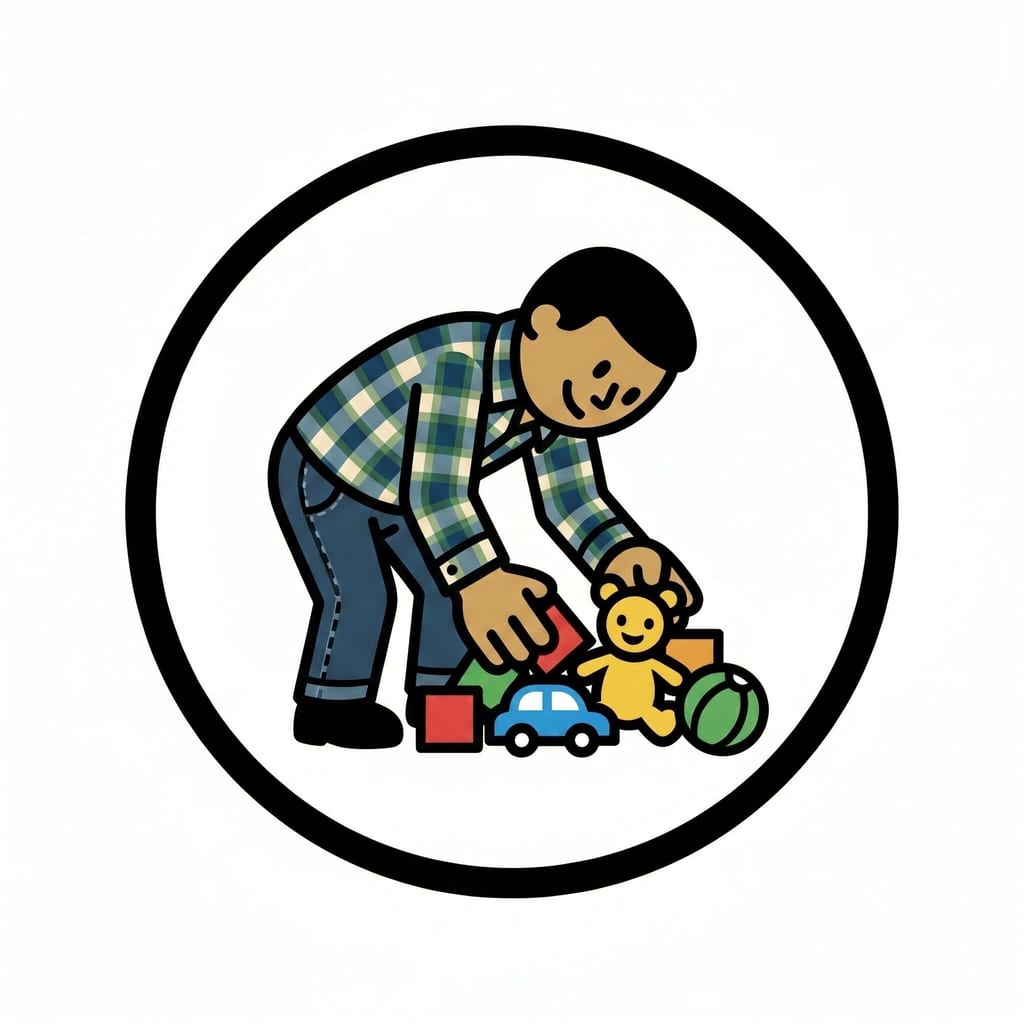 ♂
♂Pick up toys
A boy picking up toys from the floor, including blocks, a car, a teddy bear, and a ball.
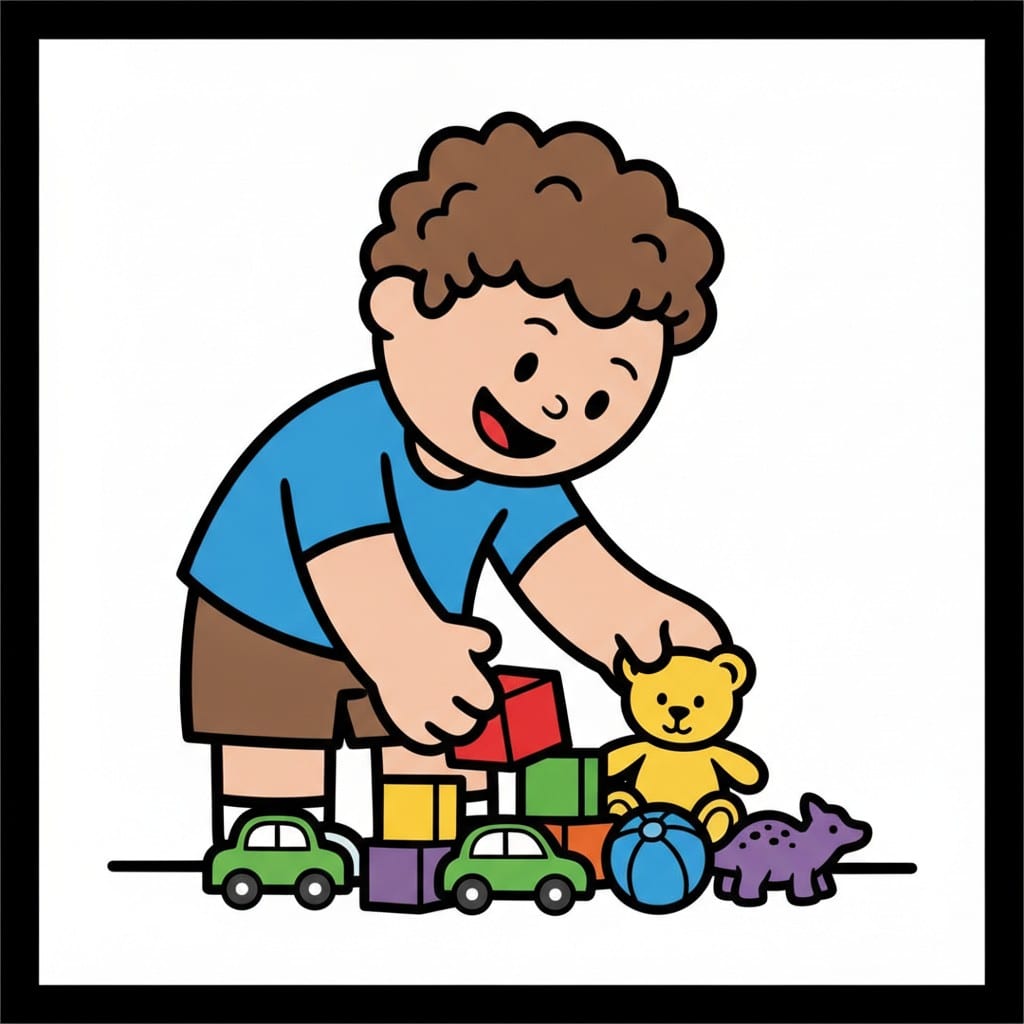 ♂
♂Boy picking up a block and teddy
A smiling boy bends down to gather a red block and a yellow teddy bear from a row of toy cars, blocks, a ball and a dinosaur.
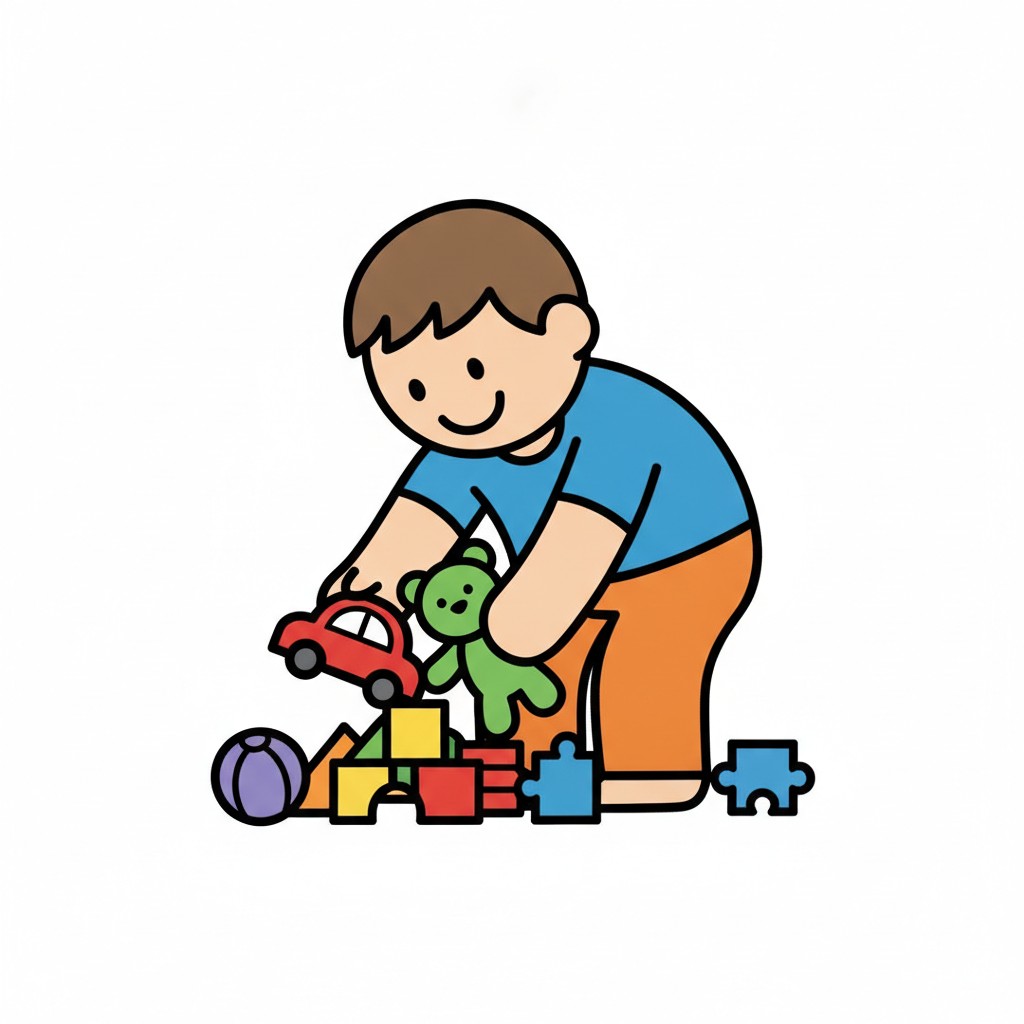 ♂
♂Boy picking up toys
A boy gathers a car, a teddy and blocks from the floor.
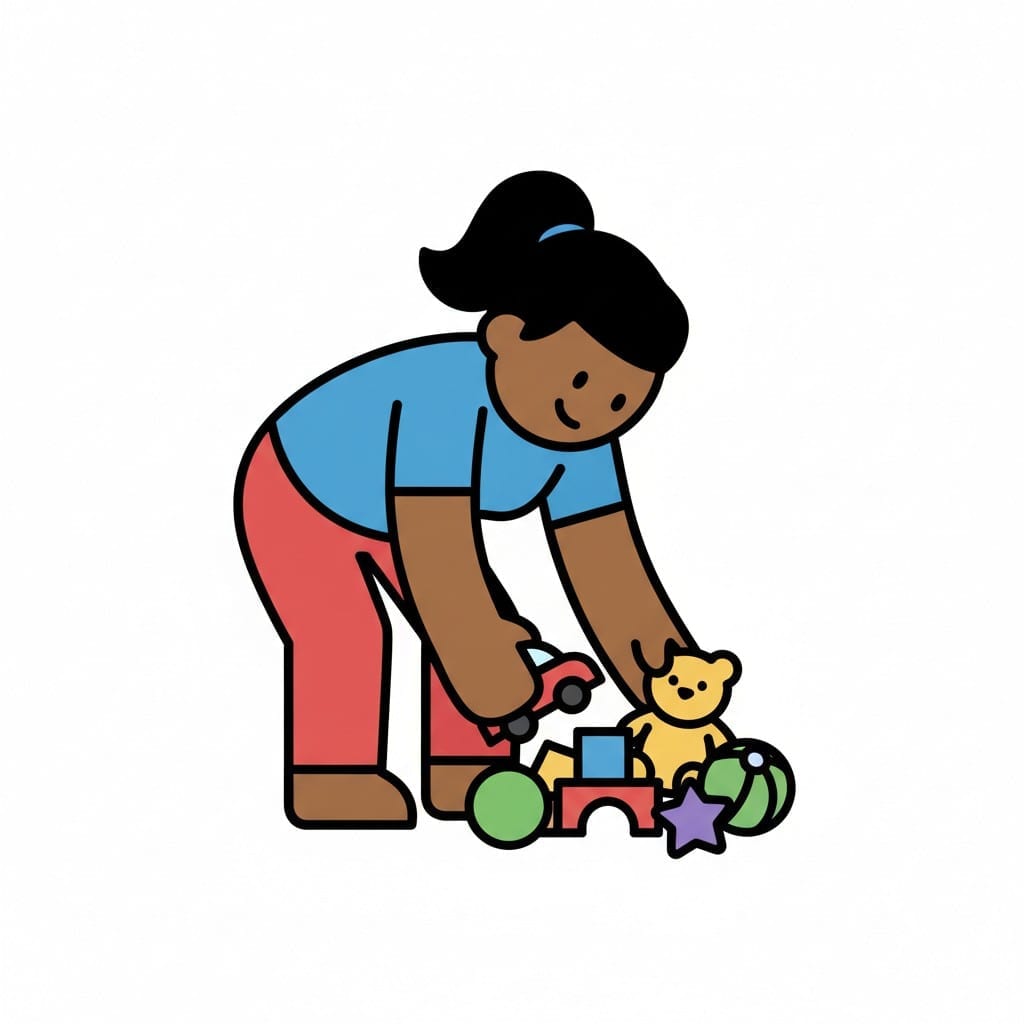 ♀
♀Pick up toys
A woman is picking up toys from the floor.
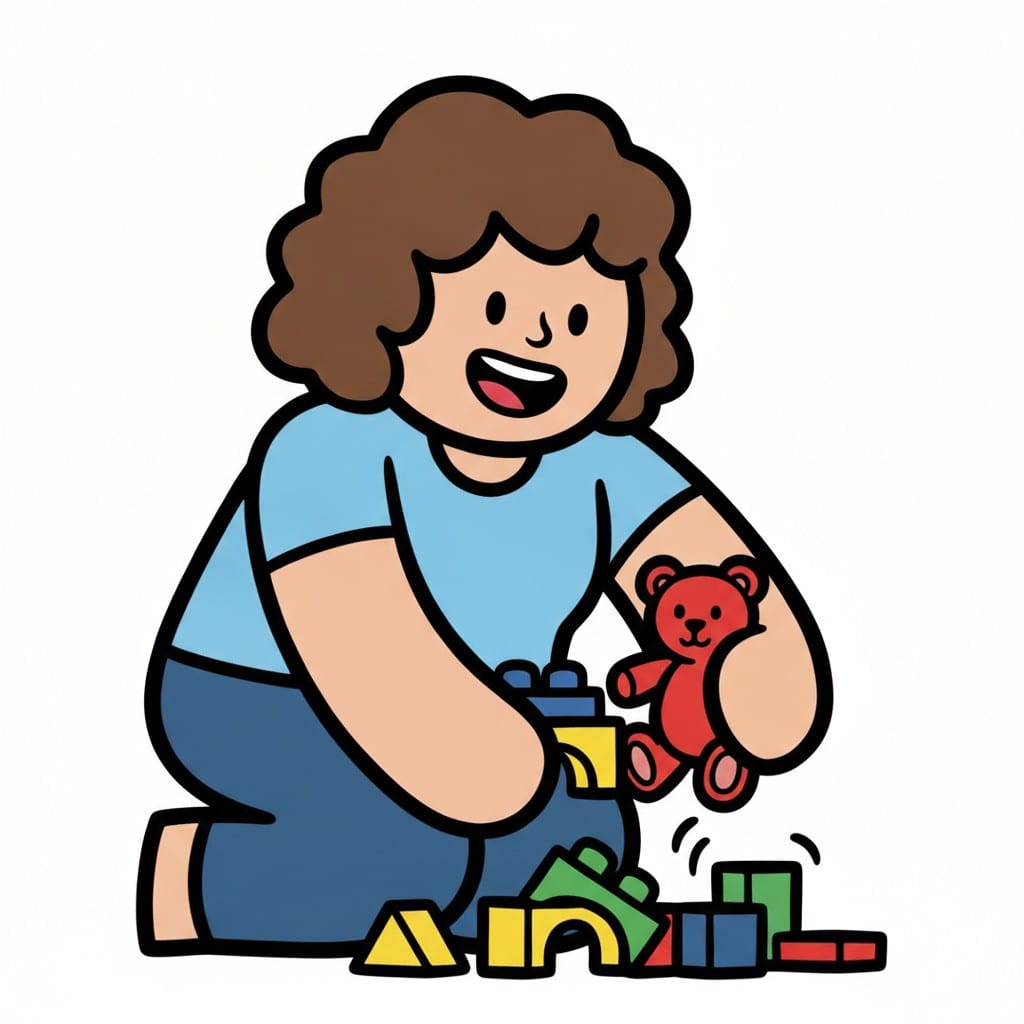 ♀
♀Woman gathering toys
A woman kneels on the floor and picks up a red teddy bear along with colorful building blocks.
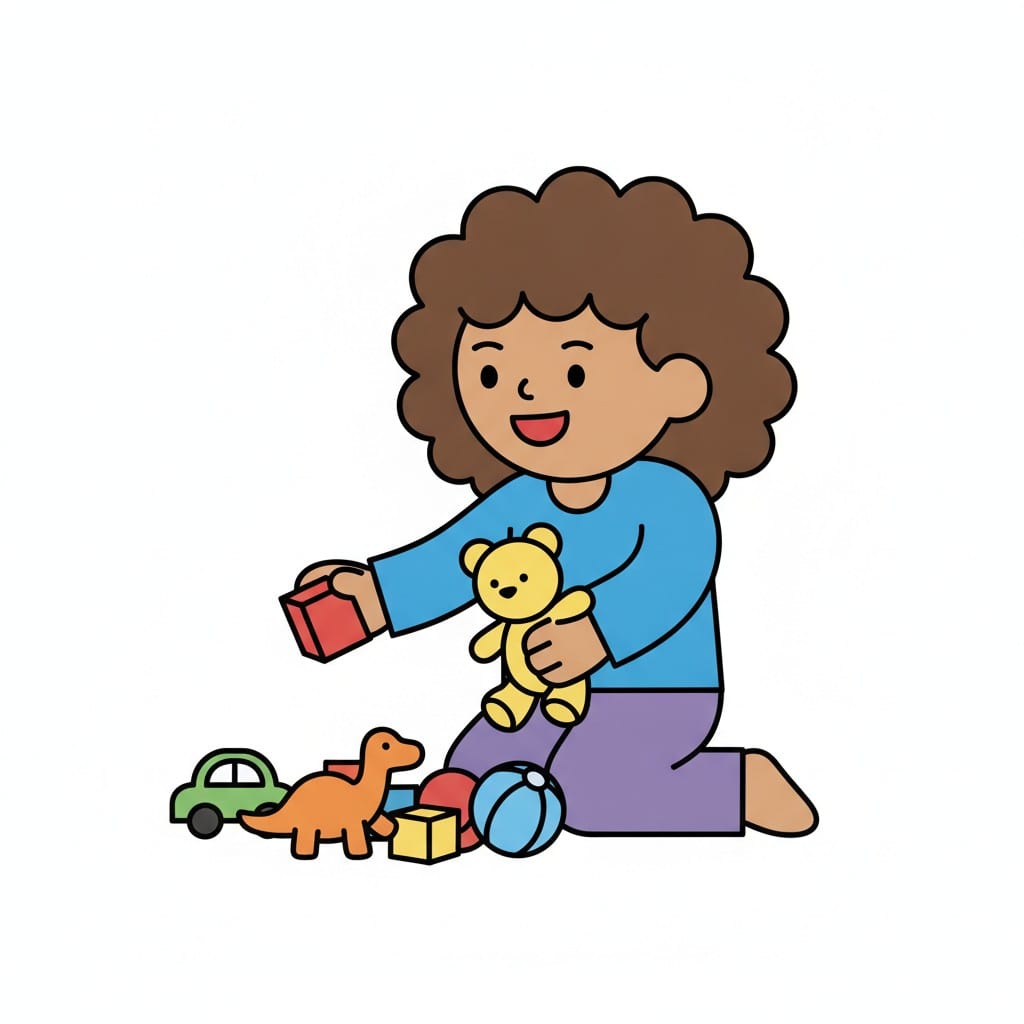 ♀
♀Put away toys
A child kneels holding a yellow teddy and a red block, with toys on the floor.
About this visual support
Two demands at once make this harder than it looks: the play that was fun needs to end, and at the same time every item must find its place. Many children get stuck between the two, drift back into play mid-sort, or give up when the pile feels too big.
Pictures separate the ending from the sorting. One card shows that play time is finished, the next shows which box or shelf a specific type of toy belongs in. The child no longer holds it all in mind, just looks at the next picture and does what it shows.
A practical tip: decide your categories before you start — cars in one bin, soft toys in another — and let the visual support match the bins you actually have. With Routined you can attach a short timer to each step, so the child sees how long each part takes.
This image is part of these ready-made schedules
Use this image in a schedule
Build your own visual schedule with this image and download it as a print-ready PDF. Completely free.
More similar visual supports
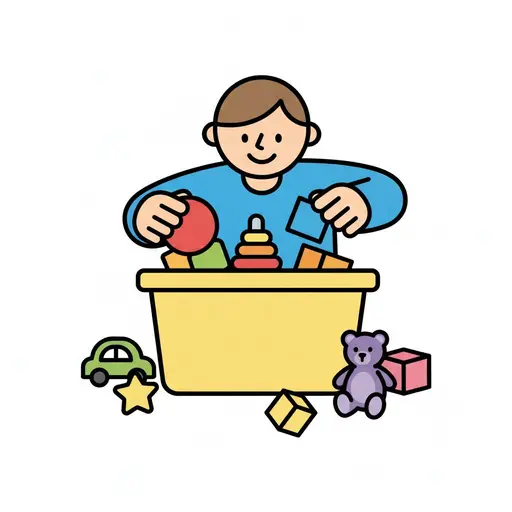
Straighten up
A child puts toys into a yellow tub, with a car, a teddy and a block on the floo...
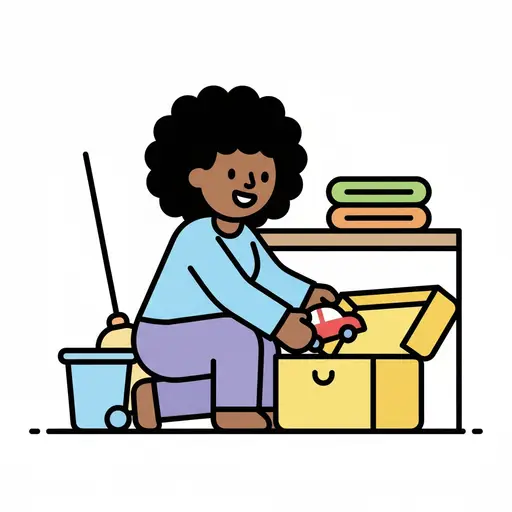
Straighten up the room
A woman puts toys into a yellow box with cleaning things nearby.
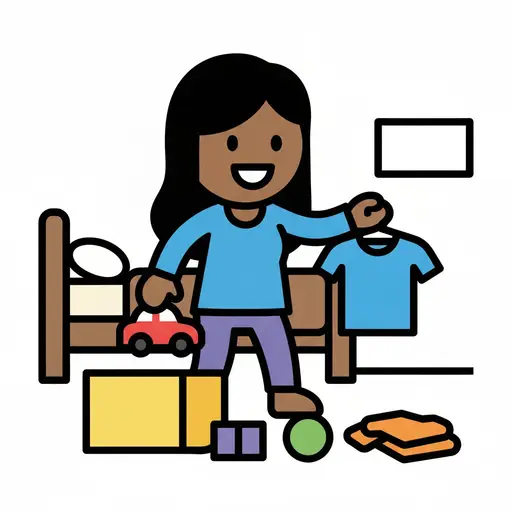
Clean your room
A child tidies their room, holding up a shirt among toys and boxes.
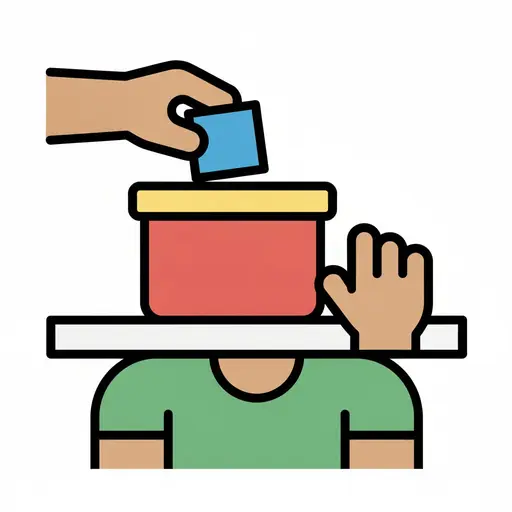
Put away
A hand places a blue block into a red container on a shelf.
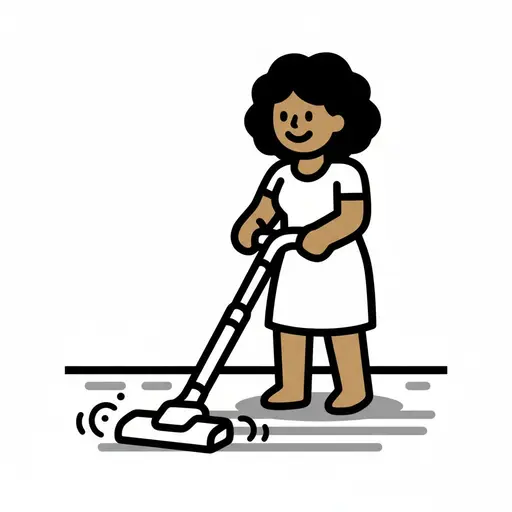
Vacuum the floor
A woman in a white dress runs a vacuum cleaner with a long wand across the floor...

Empty the bin
A cartoon grey bin with its lid lifting open.
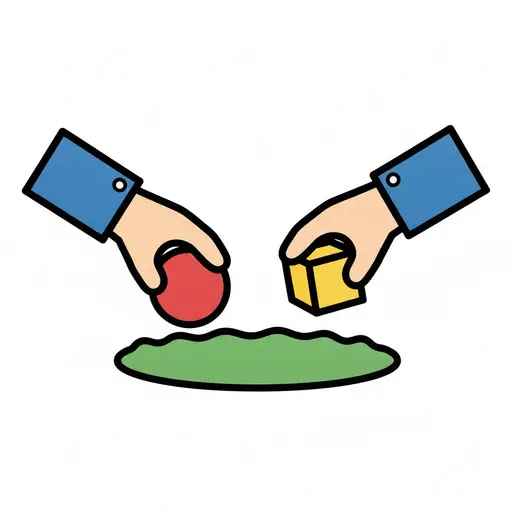
Pick up
Two hands pick up a red ball and a yellow block from a green mat.

Wash car
A boy washing a red car with a sponge and a bucket of foam.
This visual support in other languages
Take the visual supports with you
In Routined you build schedules from these pictures, add timers and voice instructions, and your child follows the day on their own.


* 14-day free trial, then $2.39 a month or $20.99 a year (US pricing). Cancel anytime.