Asthma inhaler
Breathing in at the exact moment you press the inhaler is surprisingly hard, and the mask sealing over the face doesn't make it easier. When each part becomes its own picture, the timing turns into something you can practise calmly. The steps are below.
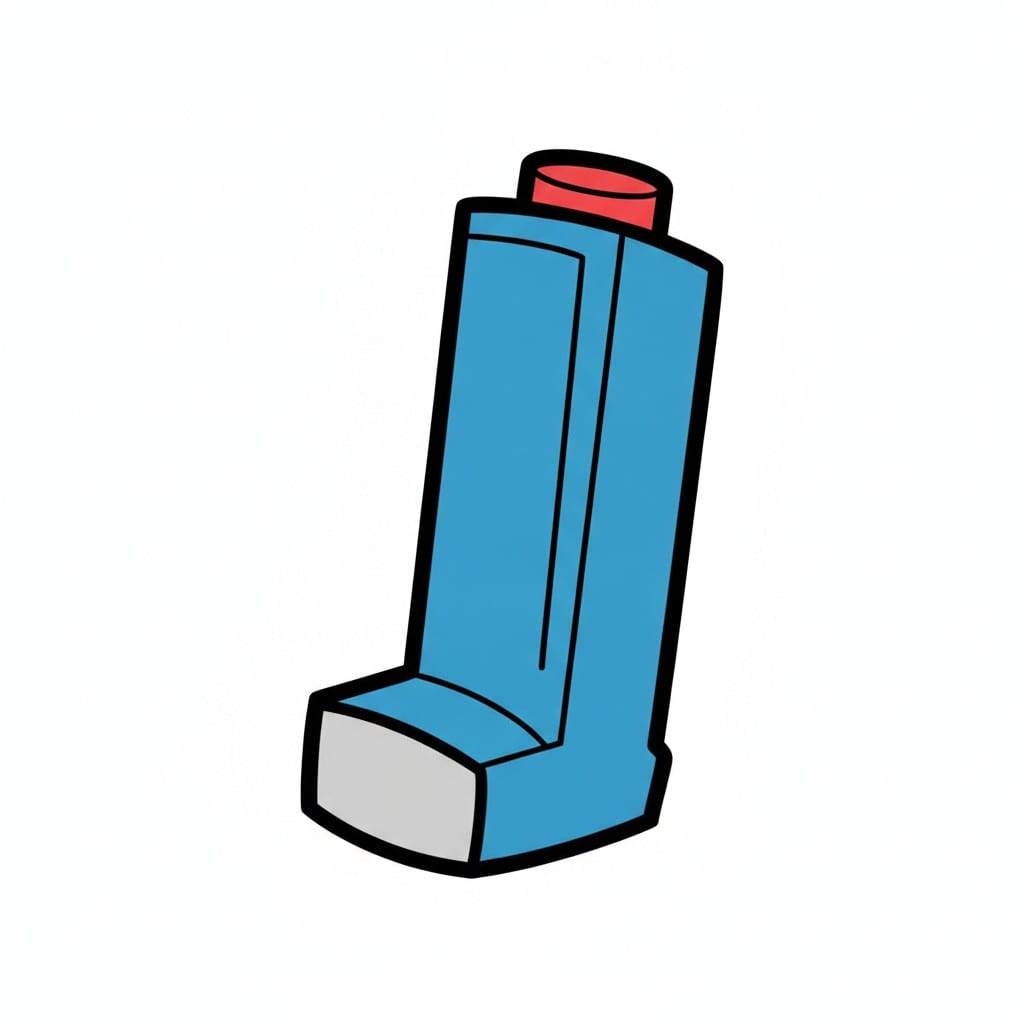
Asthma inhaler
A blue asthma inhaler with a red mouthpiece cap.
About this visual support
Coordination is the whole knot with an inhaler. The breath has to come the same second as the press, the mask has to seal even though it feels closed-in, and all of this often happens when the child is already short of breath and anxious. If the timing fails, the medicine doesn't reach the lungs, and the next attempt becomes even more charged.
Visual support loosens the knot by separating the steps. With breathe out, fit the mask, press and breathe in slowly laid out as separate pictures, the child can rehearse each part on its own in a calm moment, before a real attack makes everything stressful. The movement pattern is then already in the body when it's needed.
A concrete tip is to practise the mask with no medicine at all first, so the child gets used to the feeling on the face without time pressure. Count slowly to ten together while the mask is on, and the closed-in feeling becomes predictable rather than a surprise.
To keep track of morning and evening doses, you can add the inhaler as a recurring step in the Routined app, so the routine stays in place even on hectic days.
Use this image in a schedule
Build your own visual schedule with this image and download it as a print-ready PDF. Completely free.

More similar visual supports
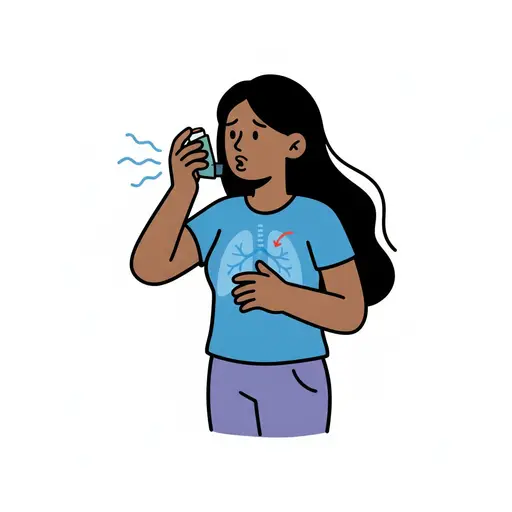
Asthma
A person with a worried expression brings a blue inhaler to their mouth and hold...
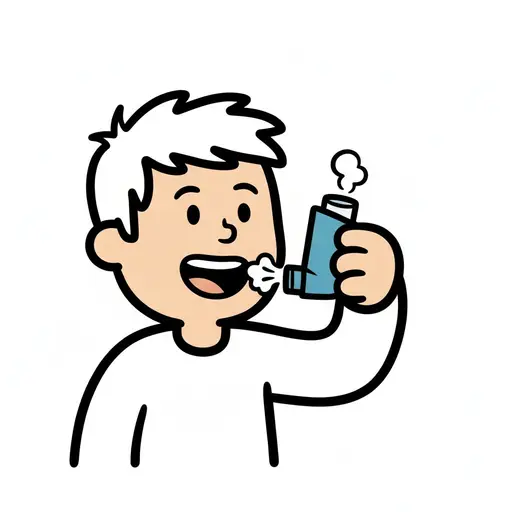
Inhale asthma medicine
Illustration of a boy using an asthma inhaler, with medicine mist coming out.

Allergy medicine
Medicine bottle with a red cross next to a capsule, a leaf, and a cloud.

Antibiotics
A medicine bottle with capsules and a person taking their medicine.
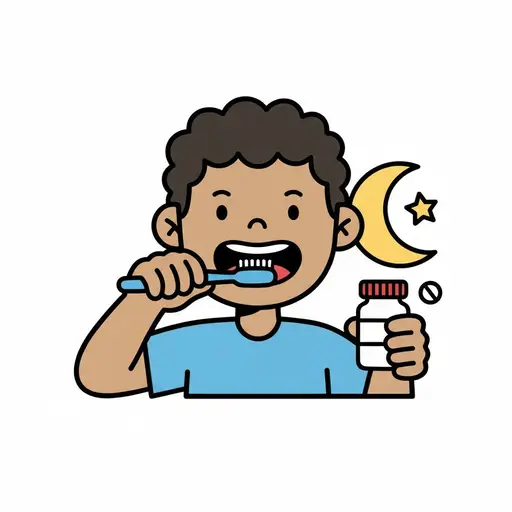
Brush teeth and evening medicine
A boy is brushing his teeth with a toothbrush in his mouth and holding a medicin...

Brush teeth and take medicine
A person in a blue shirt is brushing their teeth with a blue toothbrush while ho...

Drink Movicol
A girl smiles and drinks a mixed drink from a clear glass.

Eat vitamin
A person holding a vitamin bottle in one hand and putting a small, round vitamin...
Take the visual supports with you
In Routined you build schedules from these pictures, add timers and voice instructions, and your child follows the day on their own.


* 14-day free trial included for new users.