Personal assistance
Receiving help with close, bodily care is about boundaries and trust, not just practicalities. When the child knows what will happen and in what order, working with the assistant feels safer. The visual support below lays out the steps.
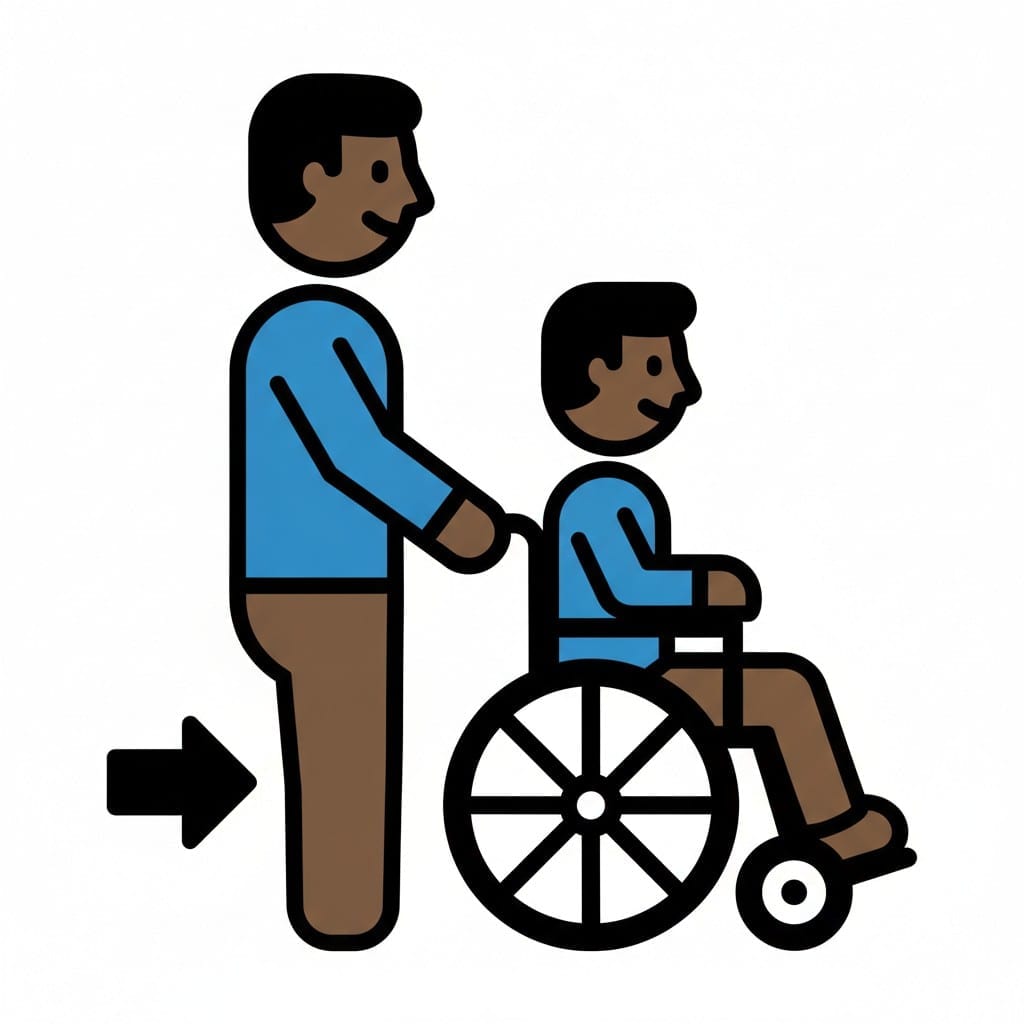 ♂
♂Get help with the wheelchair
A person pushes a child sitting in a wheelchair forward.
About this visual support
The line between one's own hands and someone else's runs deep. When the help touches the body, during dressing, the toilet, a transfer, it is not the movement itself that is sensitive but that someone else comes close. For a child who needs assistance every day, the safety of those moments shapes much of how the day feels.
A visual schedule can give back a piece of that control. When each step has a picture, the child sees what comes next and does not have to guess or feel caught off guard. It also becomes a shared language between child and assistant: you point to the next step instead of explaining, and the child can signal when they are ready. That predictability makes the work gentler for both.
One concrete tip: let the child help decide the order of the pictures, what comes first and what they would rather do themselves. Then the support is something done with the child, not to them. In Routined several people can share the same picture schedule, so different assistants follow the same order, and the app can be tried free for fourteen days. The images below also print well to put up where the help takes place.
Use this image in a schedule
Build your own visual schedule with this image and download it as a print-ready PDF. Completely free.

More similar visual supports
Child psychiatry
A child with a thought bubble showing a brain and a magnifying glass, with a sma...

Doctor
A smiling doctor in a white coat with a stethoscope holds a clipboard, beside a ...
Eye drops
A smiling person holds a small bottle of eye drops above their eye and pulls dow...
Give medicine
An adult holds out a pill and a glass of water to a child who is opening their m...
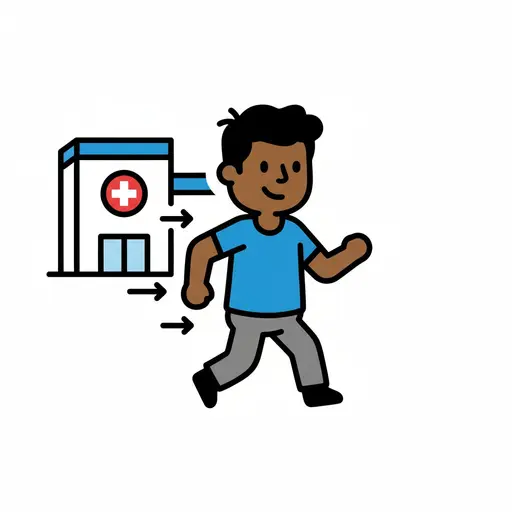
Go to hospital
A cartoon illustration of a boy walking towards a hospital, with arrows indicati...
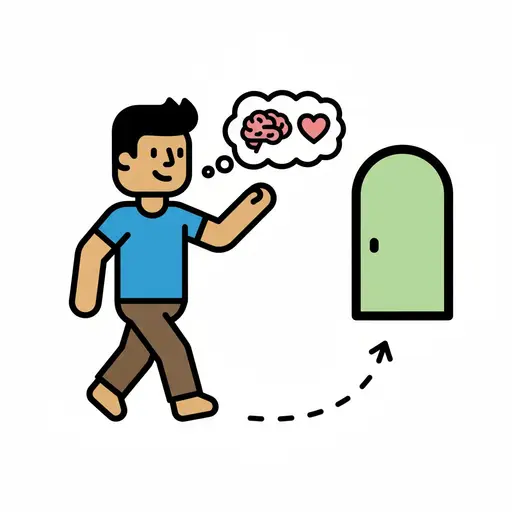
Go to therapy
A boy walks towards a green door. A thought bubble above his head contains a bra...

Habilitation
Standing on a yellow stone bridge, a happy boy in a blue shirt lifts both arms t...

Hospital
A cartoon illustration of a blue hospital building with a red cross symbol and a...
Take the visual supports with you
In Routined you build schedules from these pictures, add timers and voice instructions, and your child follows the day on their own.


* 14-day free trial included for new users.