Cargo bike
A cargo bike does not behave like an ordinary bicycle. It responds more slowly, weighs more in the turns and needs a wider space both in traffic and when parking. The steps below make the trip predictable, from loading to locking it up on arrival.
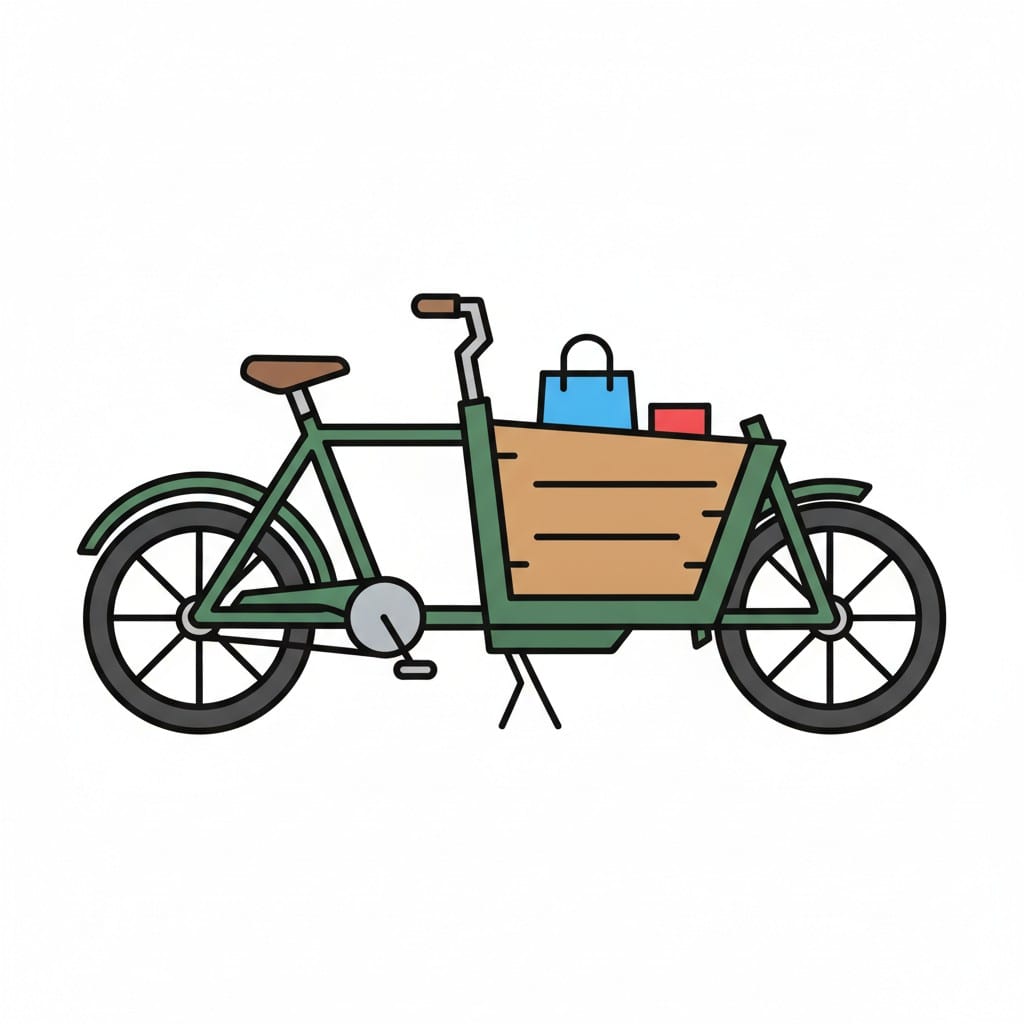
Green cargo bike with a load
A green cargo bike seen from the side with a wooden box at the front holding a blue bag and a red package.
Cargo bike home
A green cargo bike in front of a house.
 ♂
♂Riding a cargo bike
A man rides a cargo bike with things in the box.
 ♂
♂Cargo bike with parcels
A man rides a cargo bike loaded with parcels.
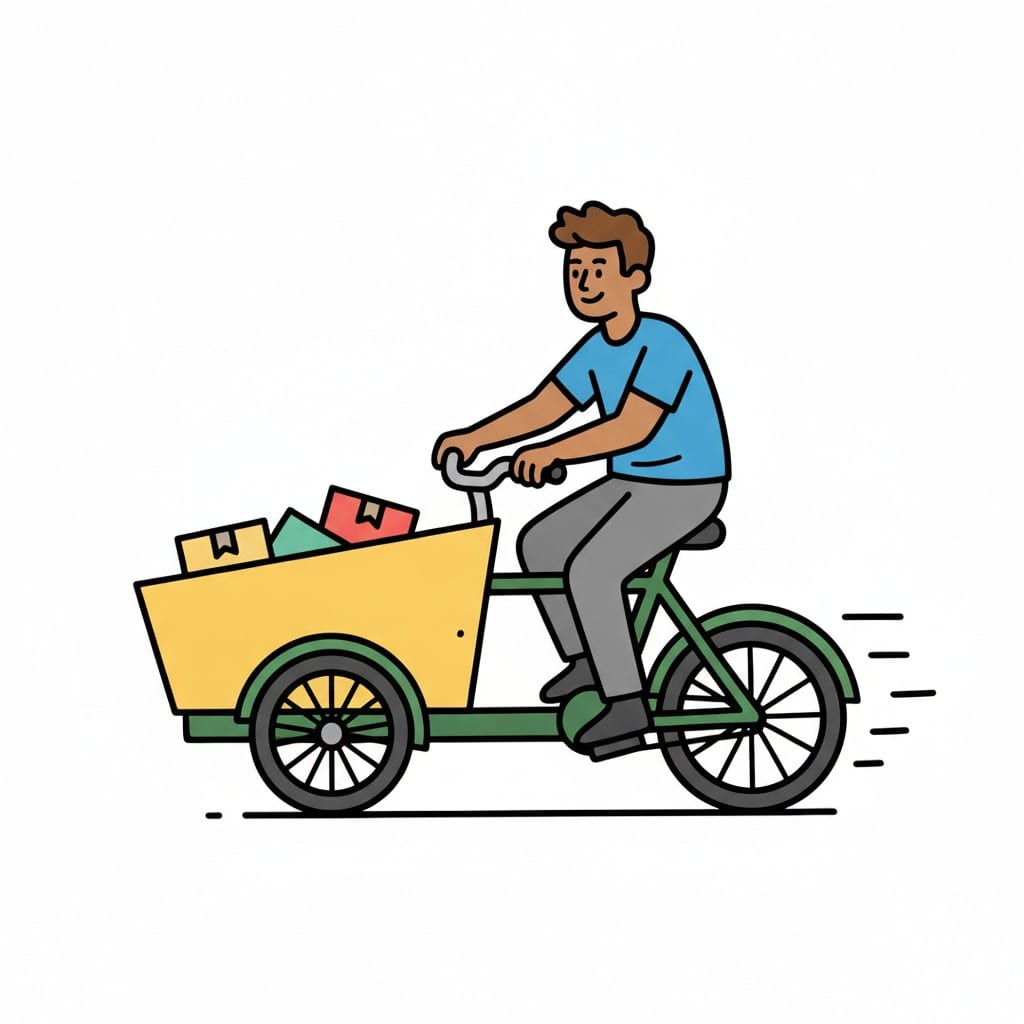 ♂
♂Riding the cargo bike
A man rides a yellow cargo bike with things inside.
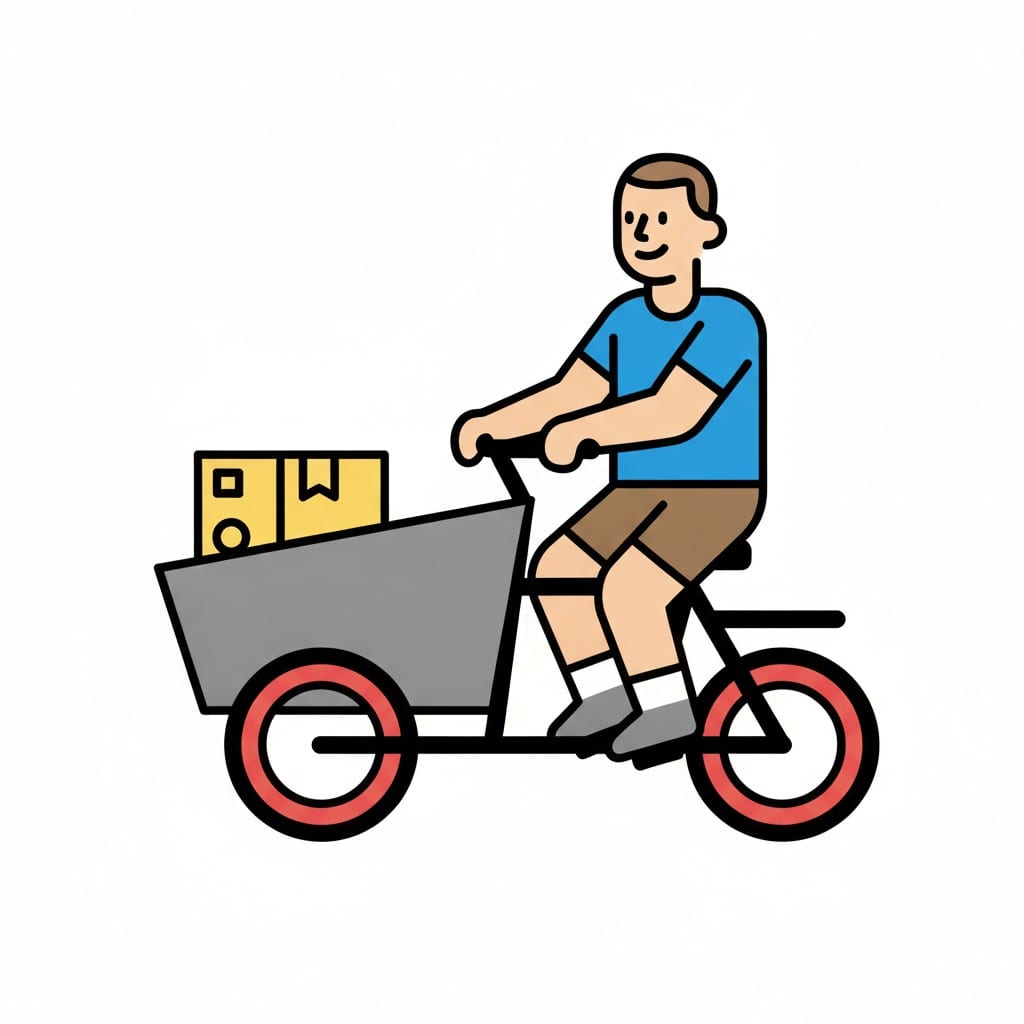 ♂
♂Cargo bike
A man rides a grey cargo bike with a box.
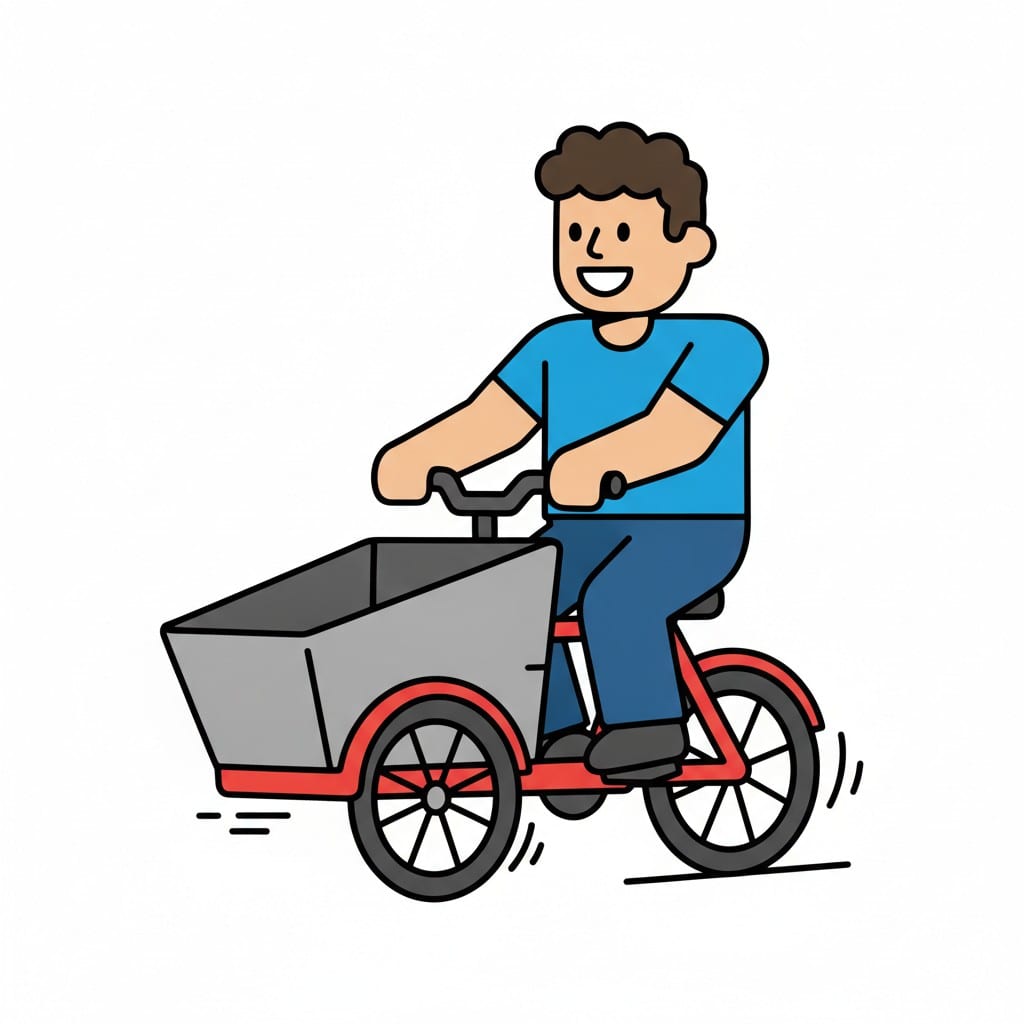 ♂
♂Pedalling a cargo bike
A happy man pedals a red and grey cargo bike.
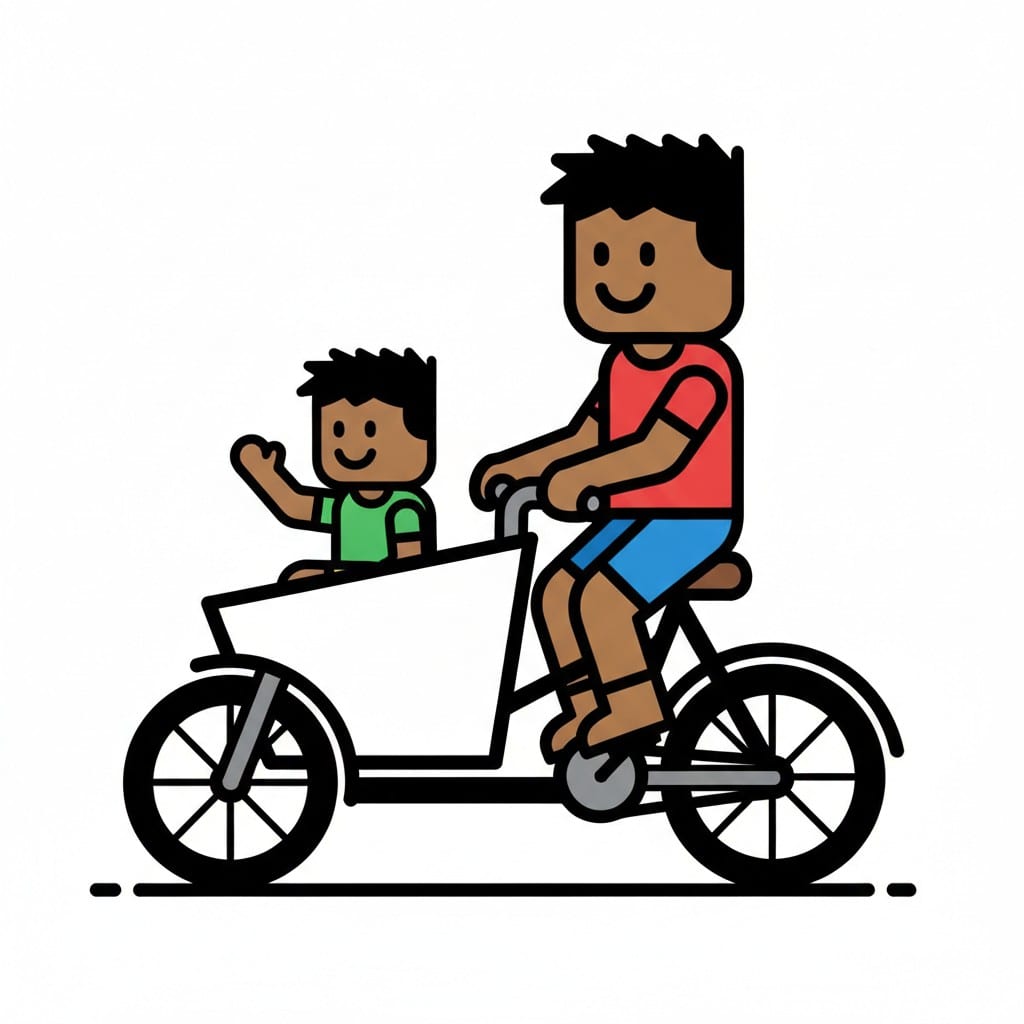 ♂
♂Cargo bike with little brother
A boy rides with his younger sibling in the box.
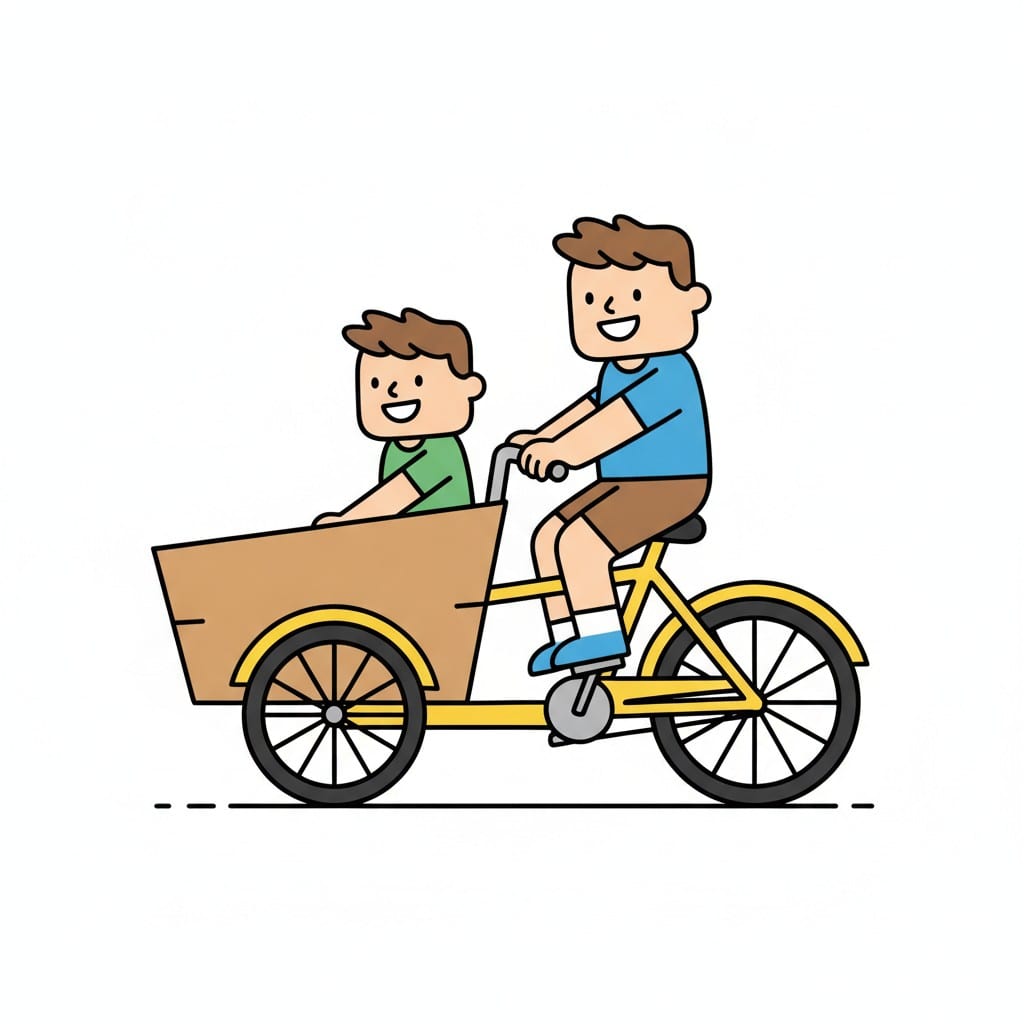 ♂
♂Riding with a sibling
A boy rides a cargo bike with a younger child in the box.
About this visual support
Weight changes everything. A cargo bike with children, bags and groceries weighs several times more than an ordinary bicycle, and that shows up in three situations: starting from standstill, turning at low speed and braking downhill. The rider has to plan further ahead than usual, and the passenger needs to know what comes next.
Visual support helps on both sides. A row of pictures for loading, strapping in, helmet, riding and parking gives the passenger a clear order, and the adult stops repeating the same instructions every time. Children who know the helmet comes before the rolling also protest less, because the helmet no longer interrupts something already under way.
One tip is to make strapping in a step of its own with its own picture rather than a detail of loading. That is the moment most often skipped when everyone is in a hurry. In Routined the trip can sit as a routine with the same order every time, and the app can be tried for fourteen days at no cost.
Use this image in a schedule
Build your own visual schedule with this image and download it as a print-ready PDF. Completely free.

More similar visual supports
Bike
A blue bicycle seen from the side with a red saddle, orange pedals and a bell on...
Walk the bike
A smiling boy in a blue t-shirt and black shorts walking beside a red bicycle wh...
Family walk
An adult and two children walk together on the grass.
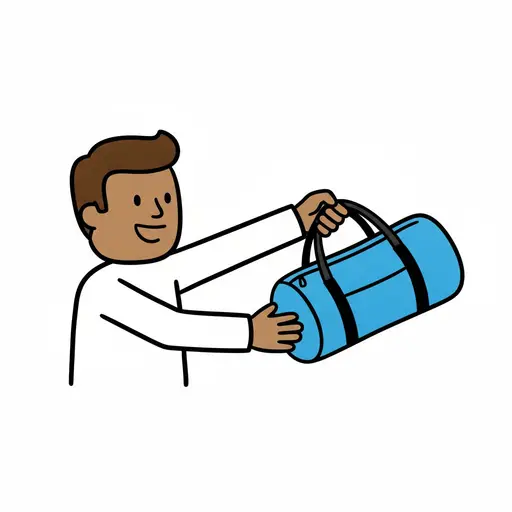
Fetch the gym bag
A boy reaches out and picks up a blue sports bag.
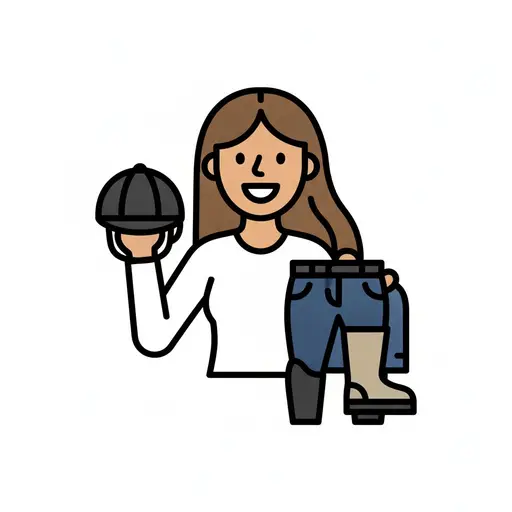
Get riding clothes
A girl holds up a black riding helmet next to a pair of breeches and riding boot...
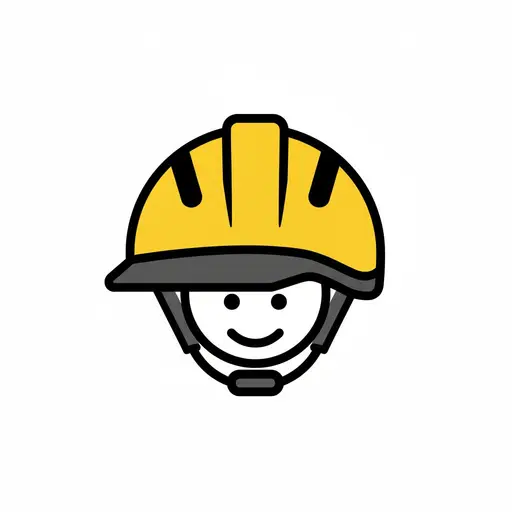
Helmet
A smiling face wearing a yellow helmet.
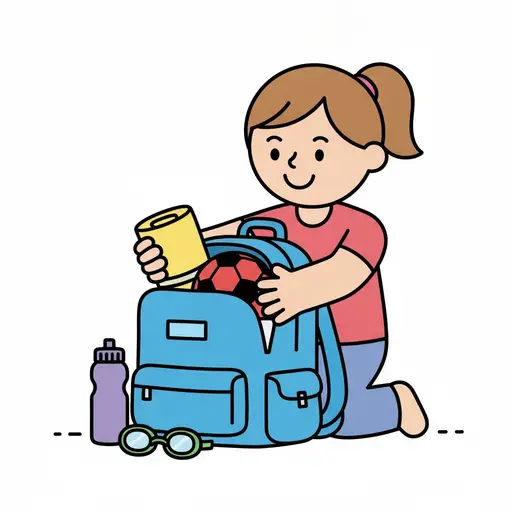
Pack for activities
A girl packs a blue backpack with a ball and a rolled towel, and a water bottle ...
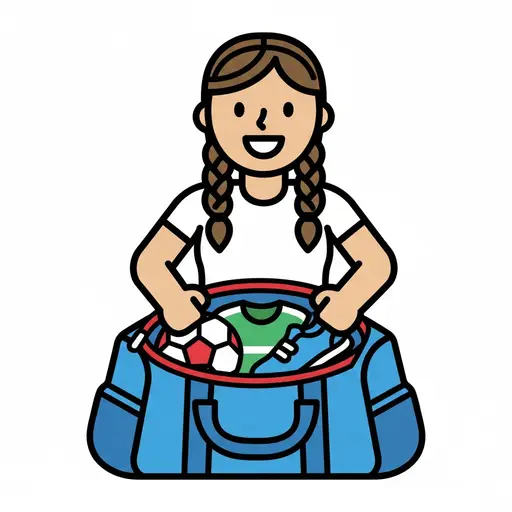
Pack for sports
A girl with braids holds open a blue sports bag packed with a football, a jersey...
Take the visual supports with you
In Routined you build schedules from these pictures, add timers and voice instructions, and your child follows the day on their own.


* 14-day free trial, then $2.39 a month or $20.99 a year (US pricing). Cancel anytime.