Clay
Clay offers a resistance that is hard to describe to someone who enjoys it: cold, heavy and slightly sticky. For some children that is exactly the pleasure, for others it is the reason not to start at all. The steps below cover both ends of the experience.
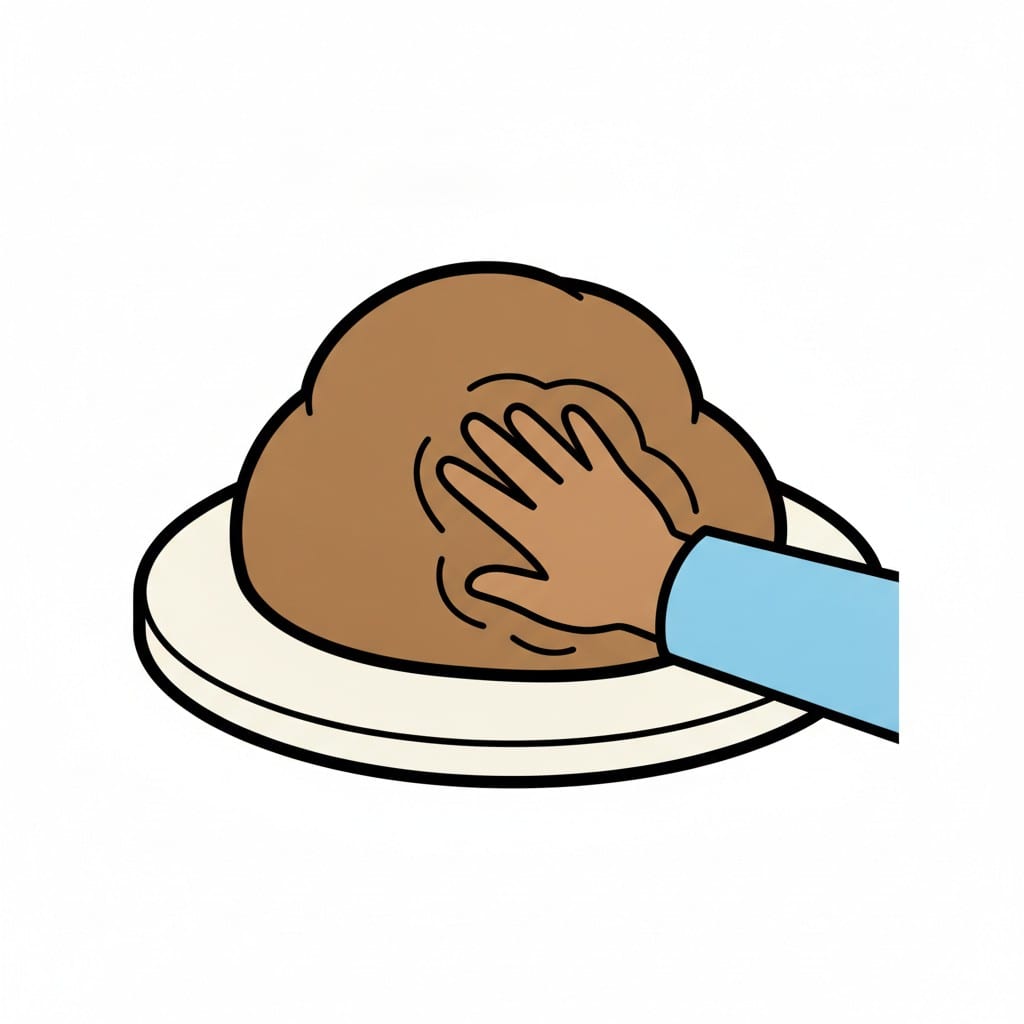 ♀
♀Hand shaping a lump of clay
A hand in a blue sleeve presses into a brown lump of clay resting on a pale board.
About this visual support
Materials with a strong tactile character split children into two camps. Some are drawn to the clay and can sit with it for a long time, while others react to the cold and to the way it lodges under the nails. Both reactions are reasonable, and both become easier to handle when the activity has a clear beginning and a clear end.
Visual support makes the ending visible from the start. Four pictures can show get out the mat, shape, put the clay back and wash your hands, where the last step matters just as much as the first. Knowing that hand washing is coming makes the stickiness possible to tolerate in the meantime.
A concrete tip is to offer a tool as an alternative to bare hands, a stick or a rolling pin for instance. That lets a child who dislikes the feel take part in the shaping without touching the material directly. In Routined the craft session can sit as a block with a clear ending, and the app can be tried for fourteen days at no cost.
Use this image in a schedule
Build your own visual schedule with this image and download it as a print-ready PDF. Completely free.

More similar visual supports
Beading
A smiling girl with a ponytail sits at a wooden table threading colourful beads ...
Art
A brush, a palette, a paint tube and a painting with shapes.
Creative Play
A girl builds a tower with colorful blocks next to a box of craft supplies.
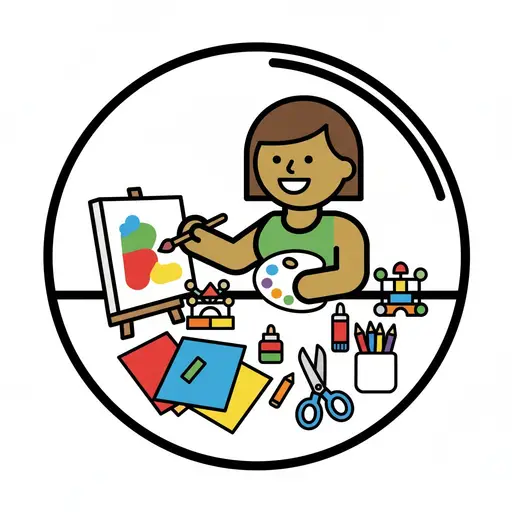
Creative project time
A girl paints on an easel surrounded by craft supplies like scissors, glue and p...
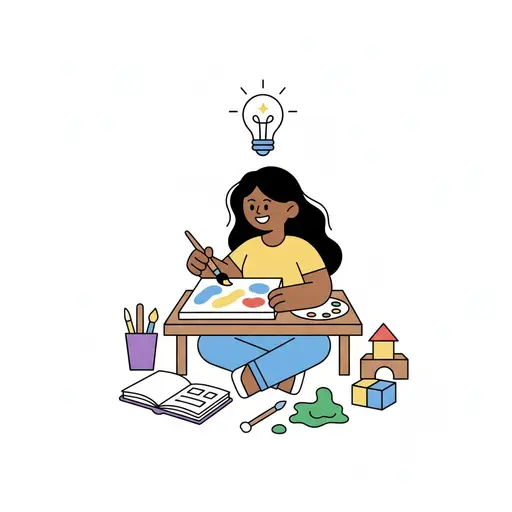
Creative Time
A girl sits at a small table and paints with a brush among craft supplies and bl...
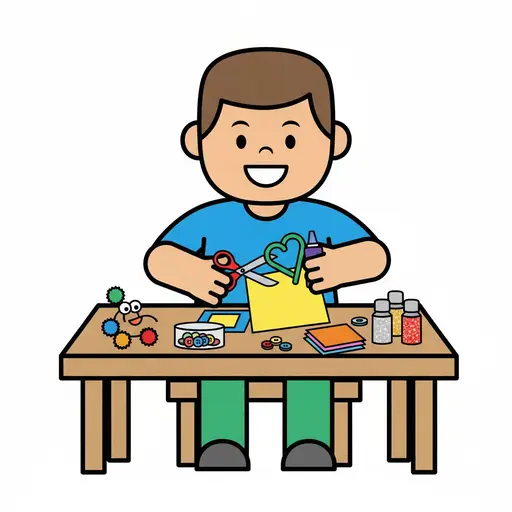
Do crafts
A smiling boy cuts a sheet of yellow paper with scissors at a table with buttons...
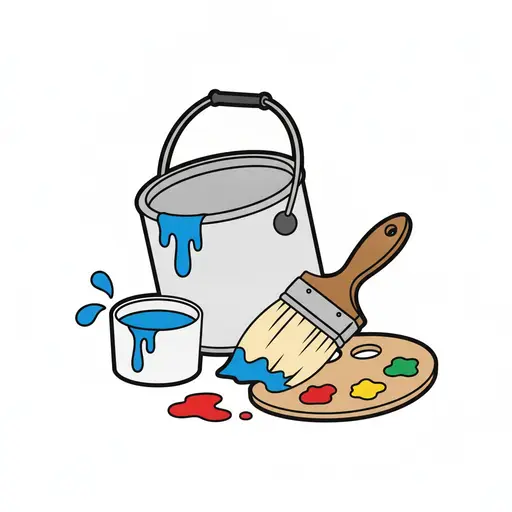
Paint
A large paint can dripping blue, a small tin of blue paint, a wide brush and a w...
5000 Steps
A blue sneaker with the number 5000 and arrows showing movement.
Take the visual supports with you
In Routined you build schedules from these pictures, add timers and voice instructions, and your child follows the day on their own.


* 14-day free trial, then $2.39 a month or $20.99 a year (US pricing). Cancel anytime.