Dance leap
A leap looks like one movement but is at least four: approach, take-off, air and landing. If the timing goes wrong in the first, the rest goes wrong however much power there is. The pictures below make the parts visible one at a time.
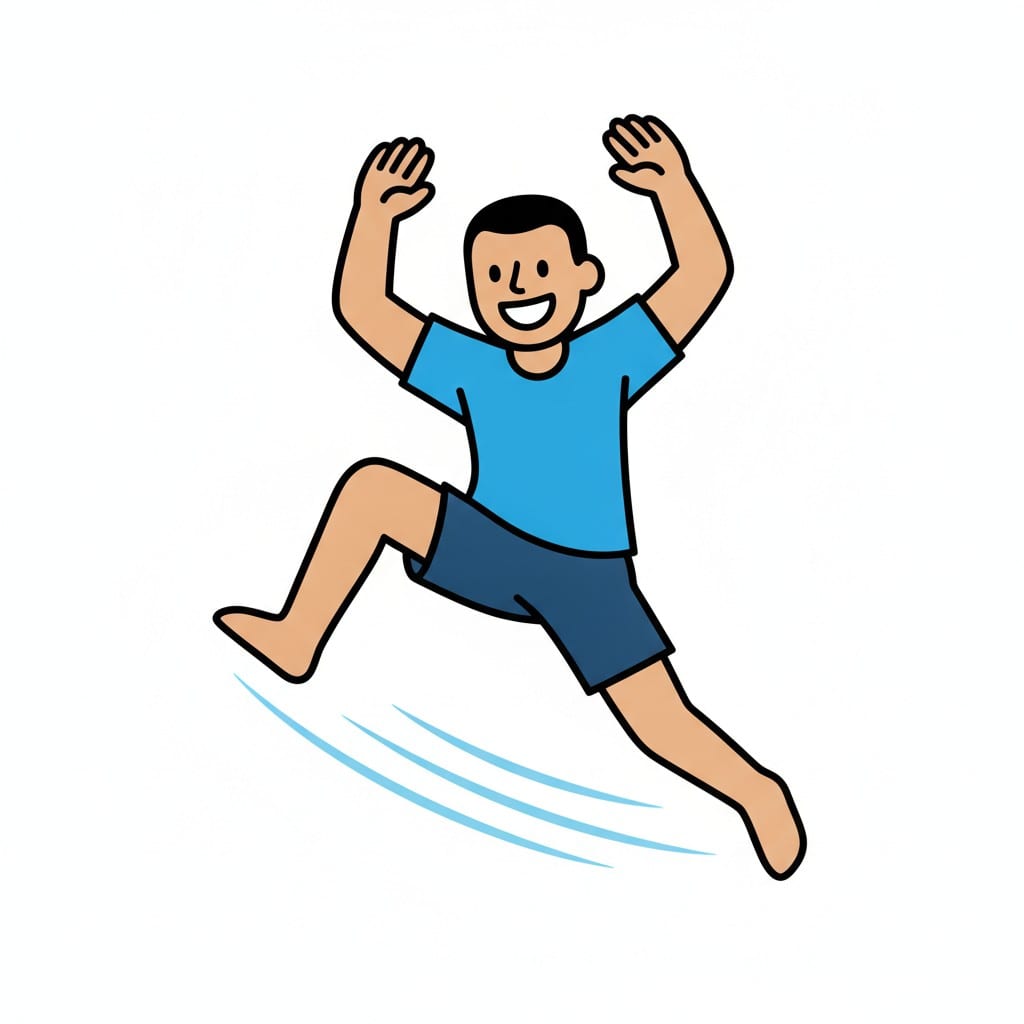 ♂
♂Person leaping forward with hands raised
A laughing person in a blue t-shirt and dark shorts leaps forward with both hands up and legs apart, with motion lines below.
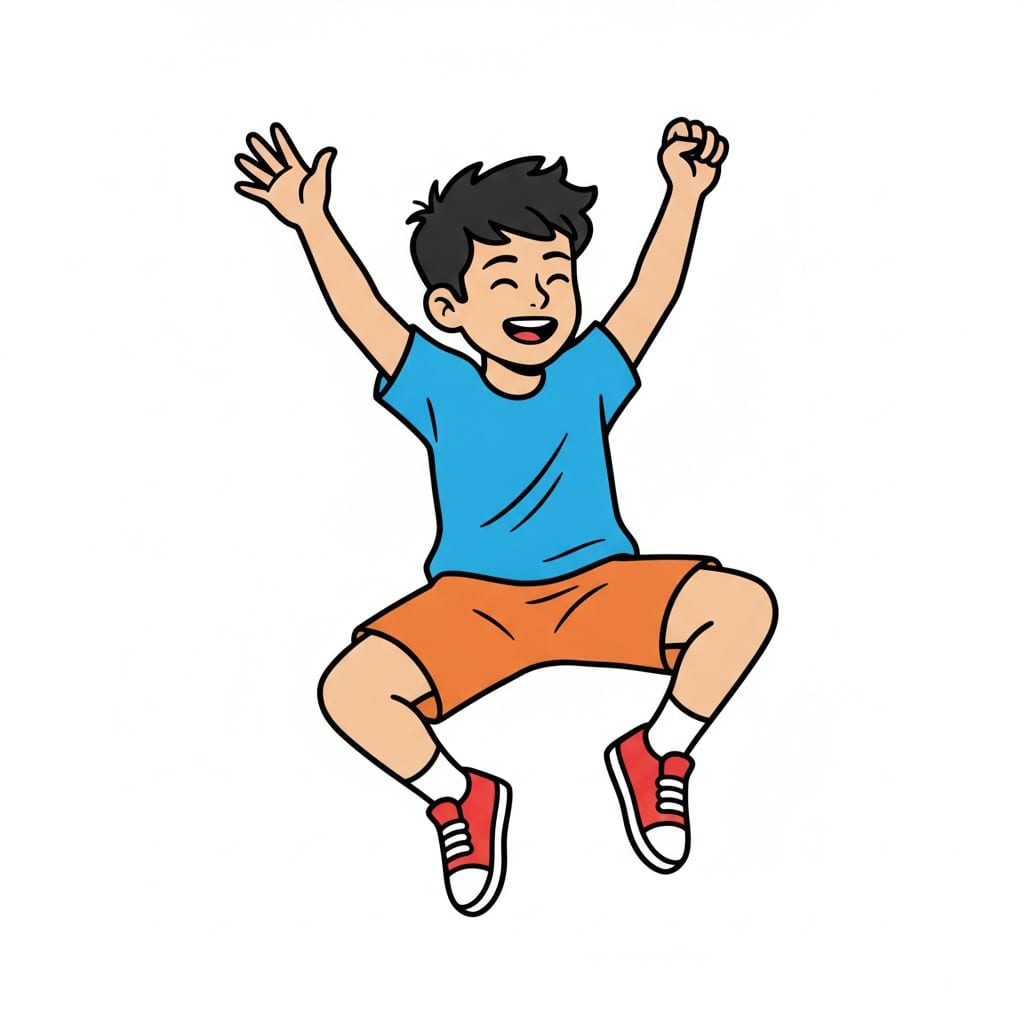 ♂
♂Boy jumping with a raised fist
A laughing boy in a blue t-shirt and orange shorts jumps with one open hand and one clenched fist in the air, wearing red shoes.
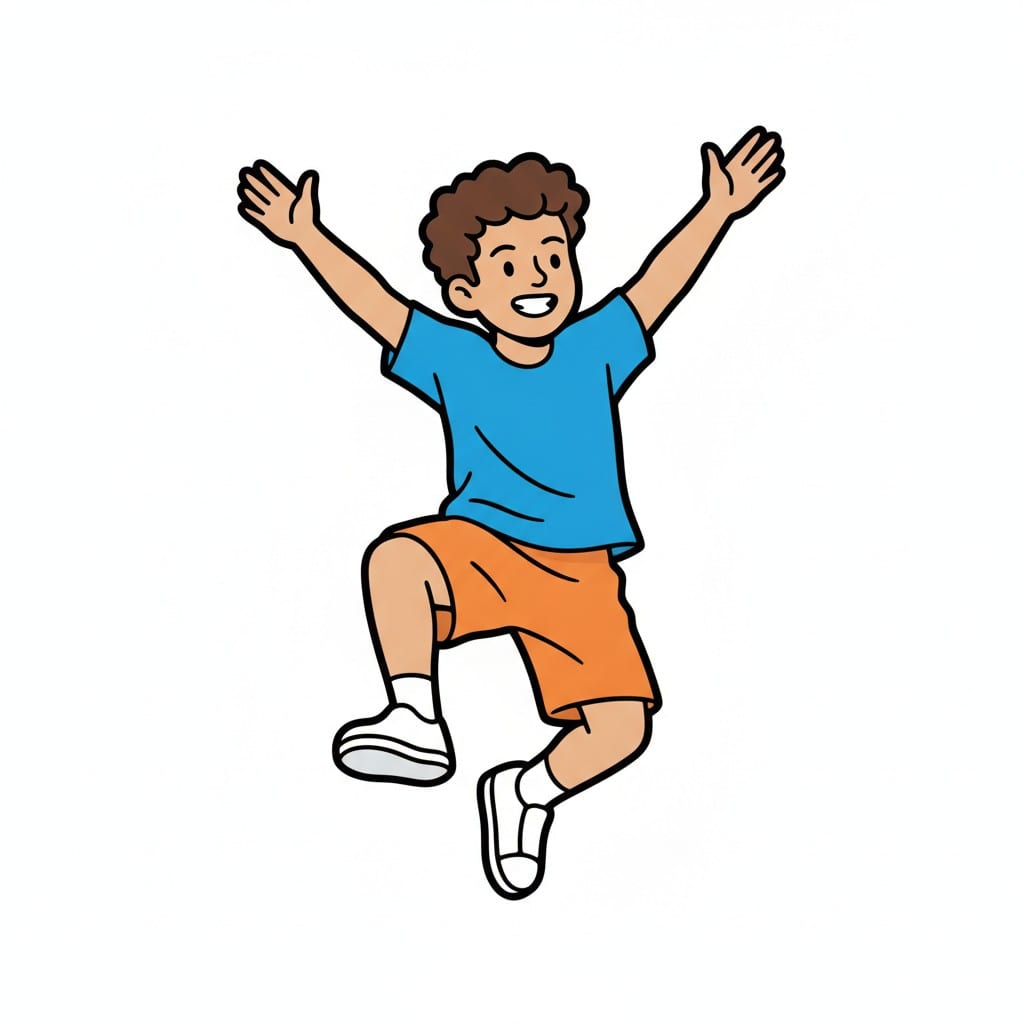 ♂
♂Boy jumping with both arms wide
A smiling boy with curly hair in a blue t-shirt and orange shorts jumps with both arms stretched wide, wearing white shoes.
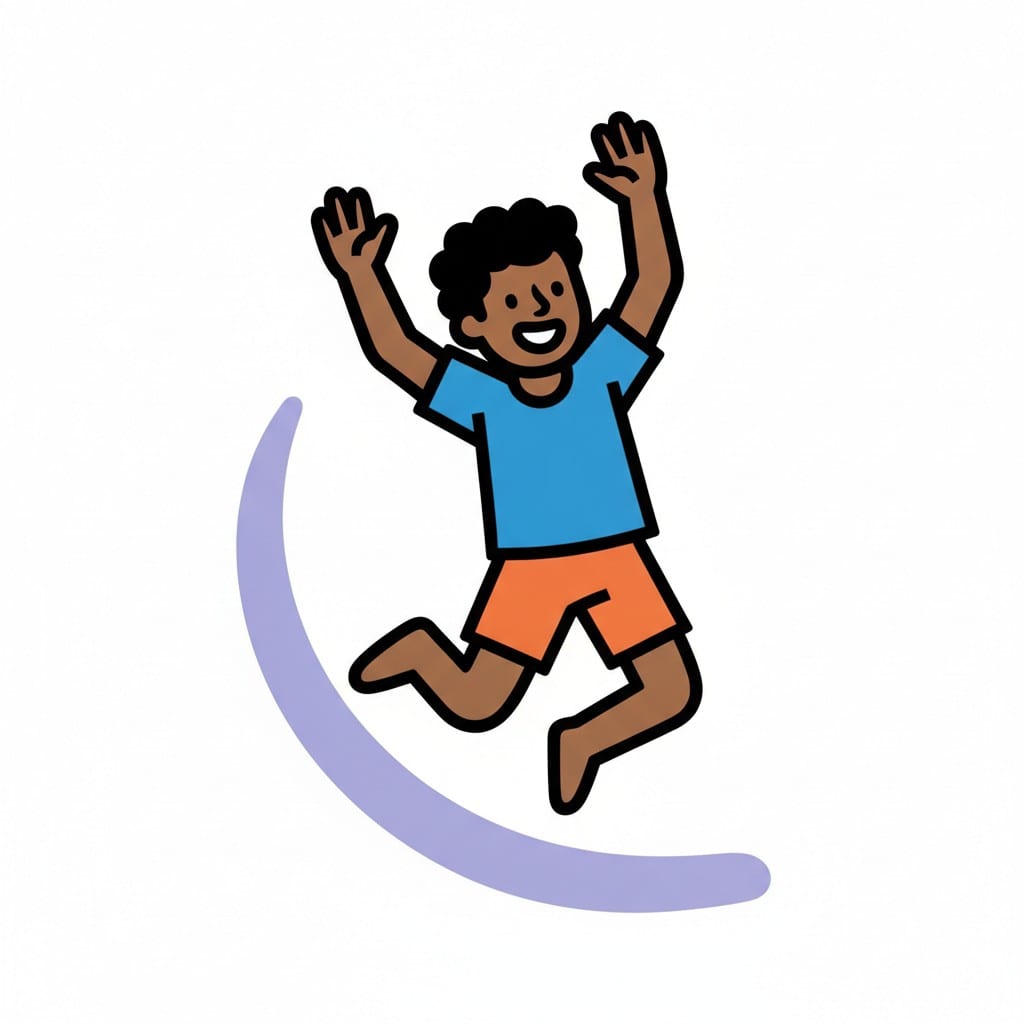 ♂
♂Boy leaping along a purple arc
A laughing boy in a blue t-shirt and orange shorts jumps with his arms up above a curved purple arc showing the path of the leap.
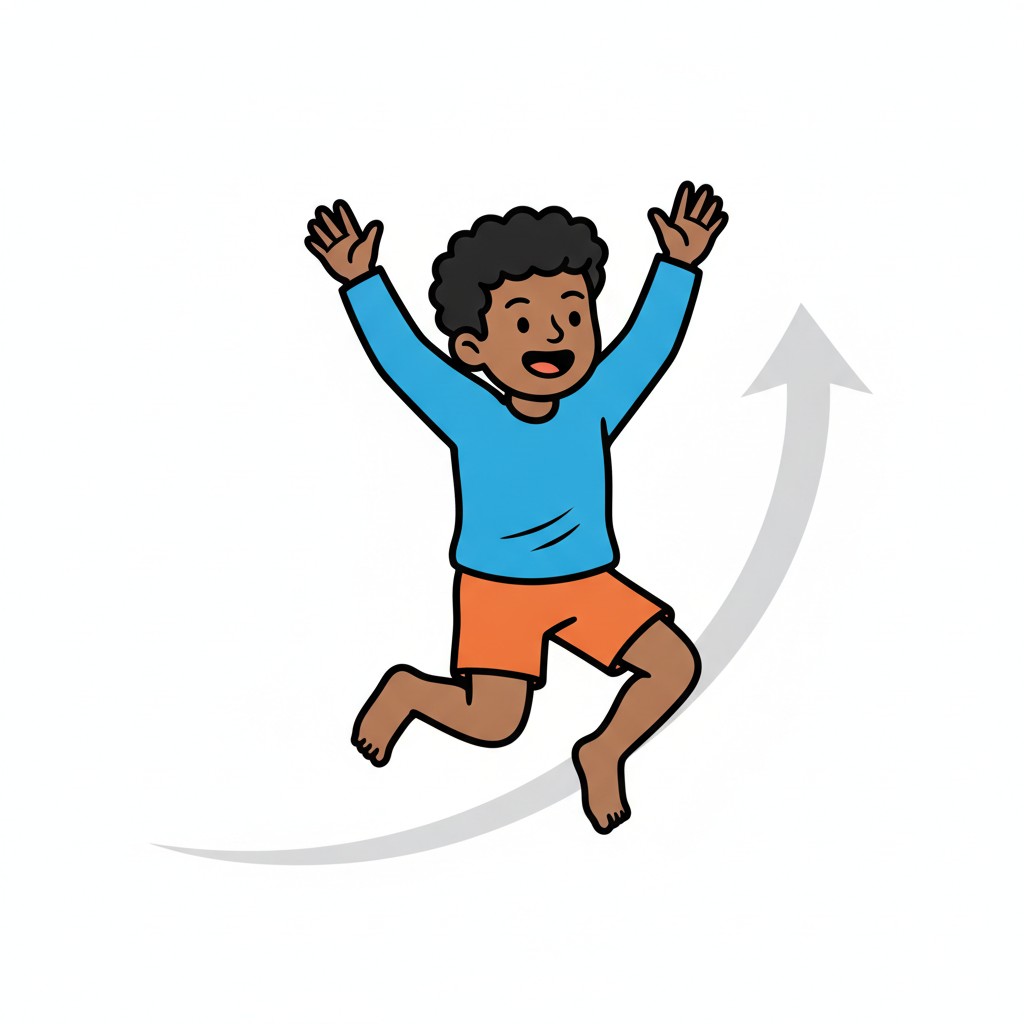 ♂
♂Leap high
A child jumps with arms up and an arc showing the path of the leap.
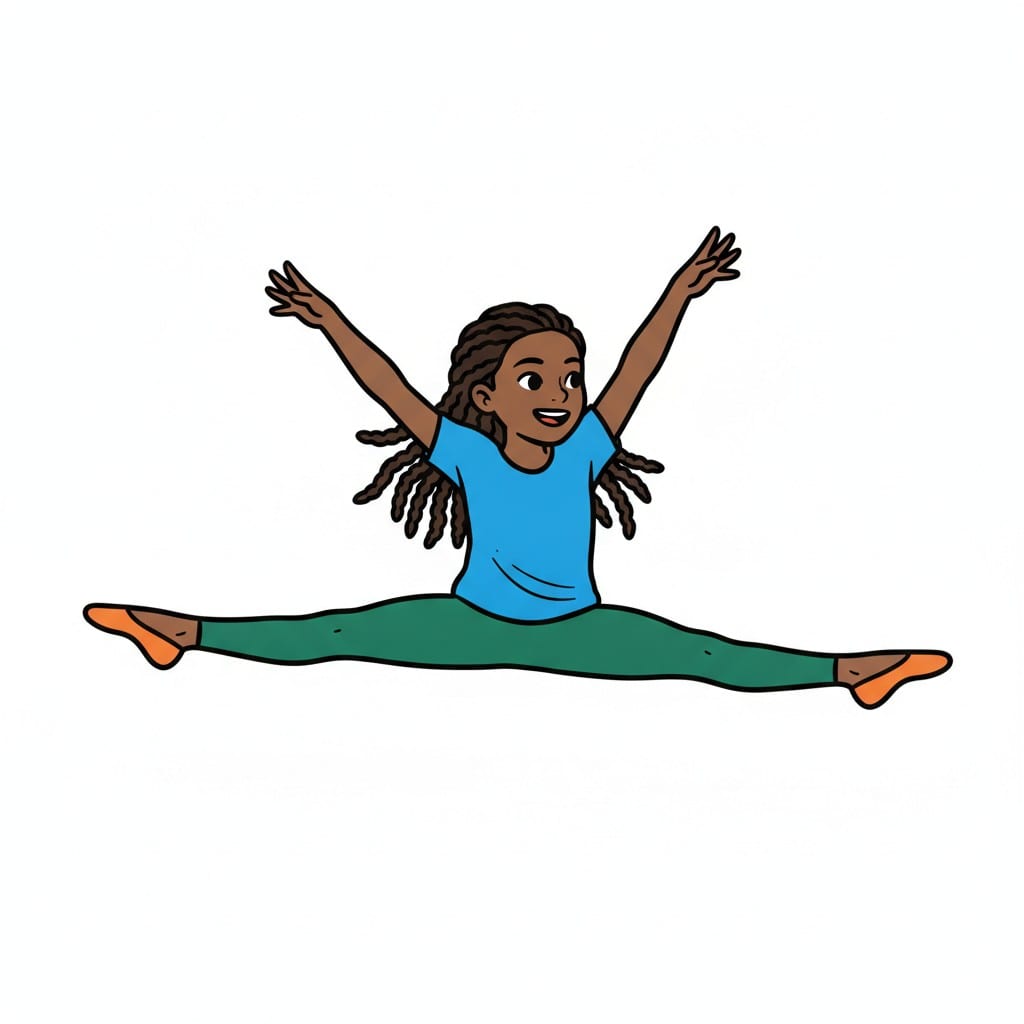 ♀
♀Person in a mid-air split with green trousers
A laughing person with braids in a blue t-shirt and green trousers floats in a split in mid-air with both arms raised.
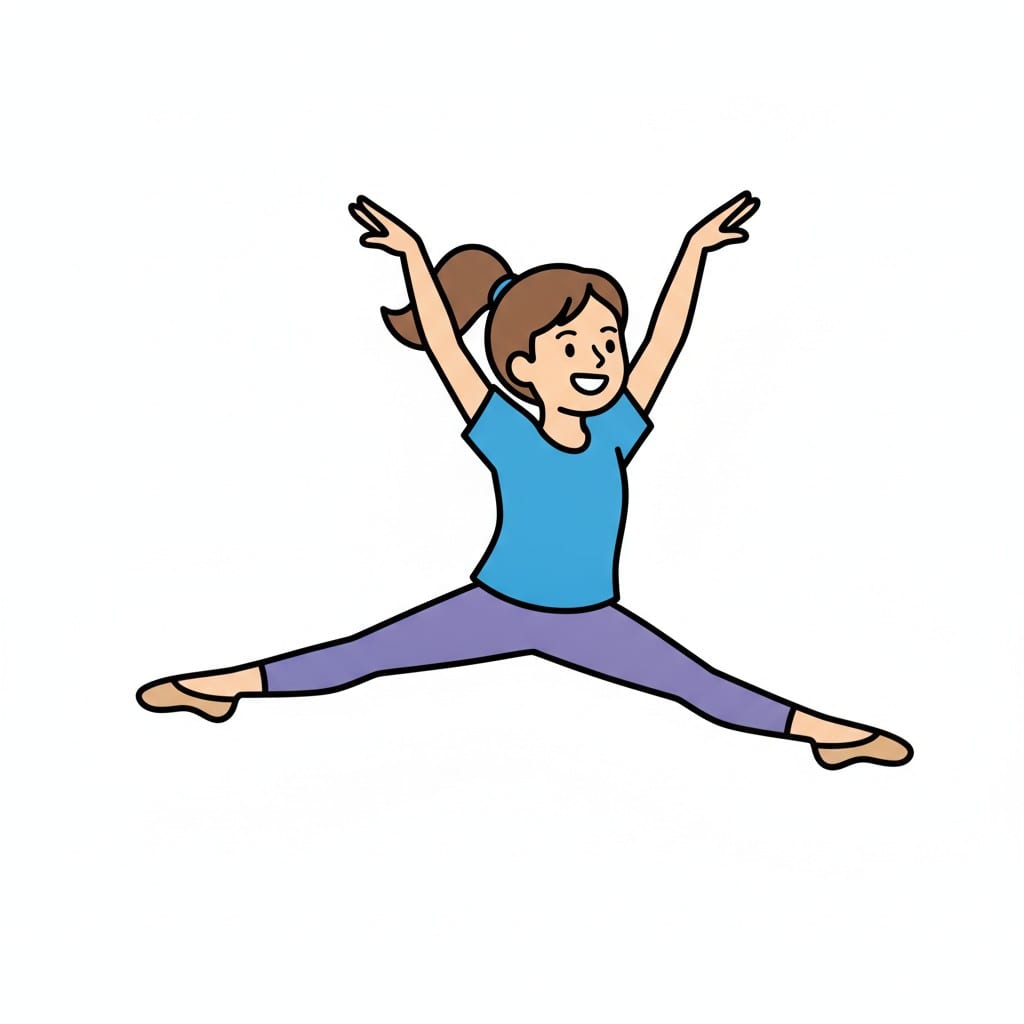 ♀
♀Person with a ponytail in a split jump
A smiling person with a ponytail in a blue t-shirt and purple trousers floats in a split jump with both arms raised.
About this visual support
Compound movements are harder to learn than they look, because they have to be performed in one sweep but trained in parts. A dance leap depends on the power arriving at the right instant and on the landing being absorbed by the legs rather than by the floor. A child focused on height often forgets the landing, and that is when the knees take the impact.
Visual support gives the movement a structure to think in. Four pictures in a row make it possible to practise one part at a time: only the approach today, only the landing tomorrow. It also provides a language for feedback, since both child and adult can point at the part to change instead of talking about the whole jump.
A concrete tip is to practise the landing first, without a leap, stepping down from a small height. Once the body knows how to take the weight, height becomes less risky. In Routined the training can sit as a routine with warm-up and elements, and the app can be tried for fourteen days at no cost.
Use this image in a schedule
Build your own visual schedule with this image and download it as a print-ready PDF. Completely free.

More similar visual supports
Ballet
A laughing dancer with long hair in a light blue top and pink tutu jumps with le...
5000 Steps
A blue sneaker with the number 5000 and arrows showing movement.
Active play
A girl jumps with a basketball in a playground with a slide and swings.
Cheer on
A smiling person in a blue t-shirt and red trousers raising both arms, with a sp...
Dance
A girl dances with her arms raised and one leg lifted, with movement lines aroun...
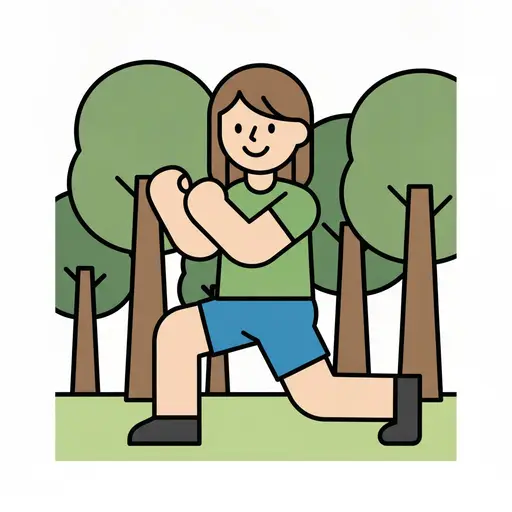
Exercise in the forest
A child does a lunge exercise among the trees in the forest.
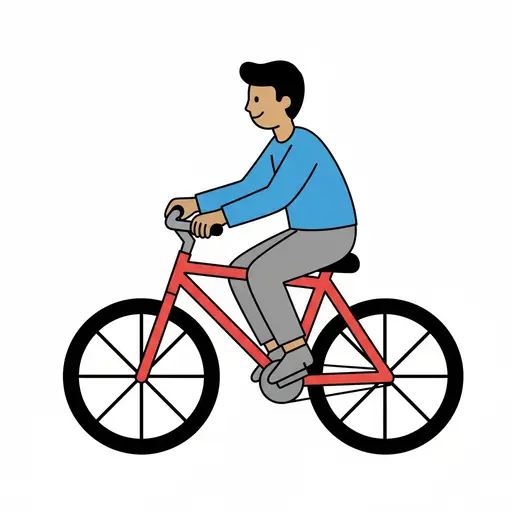
Go horseback riding
A person rides a red bike.
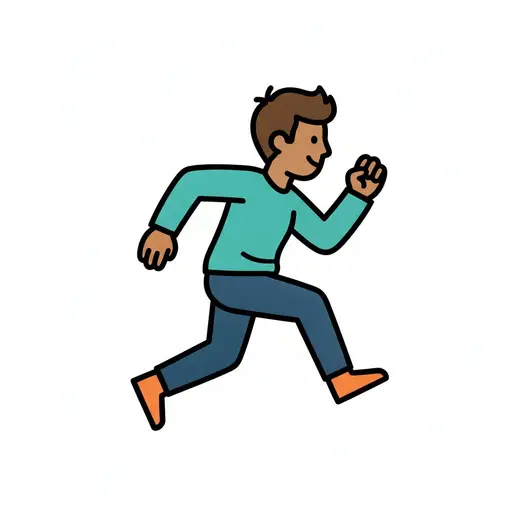
Move around
A person jogs forward in a green top and blue trousers.
Take the visual supports with you
In Routined you build schedules from these pictures, add timers and voice instructions, and your child follows the day on their own.


* 14-day free trial, then $2.39 a month or $20.99 a year (US pricing). Cancel anytime.