Do an activity
Asking what someone feels like doing sounds easy, but an empty choice with no content gives a child nothing to prepare for. The visual support below puts the options where they can be seen, so pointing replaces the search for an answer somewhere inside.
 ♀
♀Choosing an activity
A girl points to one side while holding up a question mark surrounded by icons for different activities.
About this visual support
The question of what do you want to do sounds like an offer, but for a lot of children it is an empty room. There is nothing to prepare for, no picture in the head of how the next hour is supposed to look, and so the choice itself becomes the obstacle. The answer turns into a shrug, or a suggestion that gets rejected two minutes later anyway.
Visual support flips the order around. Instead of an open question the child gets three or four concrete options to look at, and the decision suddenly concerns something you can actually picture. One tip: take away the cards that are not possible today, outdoor play in heavy rain for instance, so every visible option is one you can say yes to. Fewer cards on the table produce faster decisions than a whole library does. Three or four is usually right, and if they live in the same corner of the table every day the child finds them without asking.
With the Routined app you can assemble your own sets of activity choices and save them as ready-made lists for weekends and school holidays.
Use this image in a schedule
Build your own visual schedule with this image and download it as a print-ready PDF. Completely free.

More similar visual supports

Free activity
A happy person with a ponytail jumps with arms raised above a pile of colourful ...

Activity
Inside a dashed circle a girl runs along holding a paintbrush in one hand and a ...
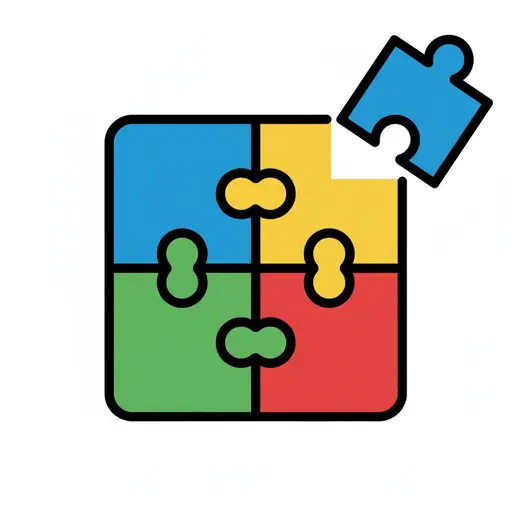
Do a puzzle
A colorful four-piece puzzle with the last blue piece about to be placed.
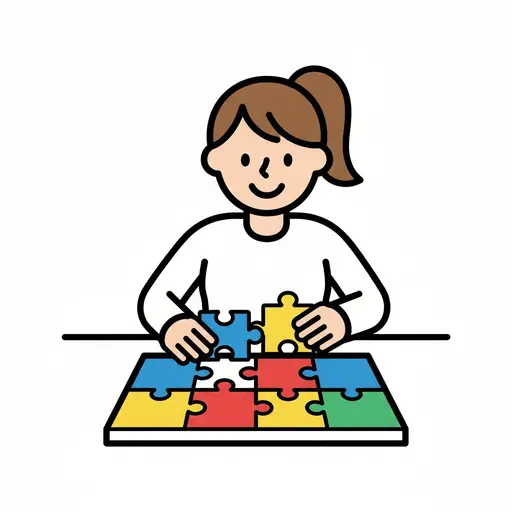
Do puzzle
A girl with brown hair in a ponytail sits at a table assembling a puzzle with se...
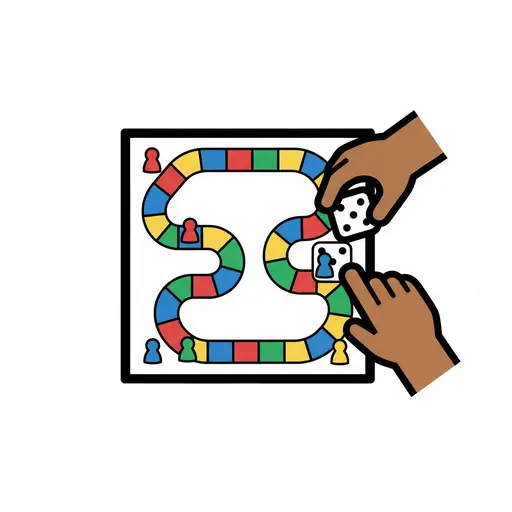
Game
Two hands rolling dice and moving pieces on a colorful board game.
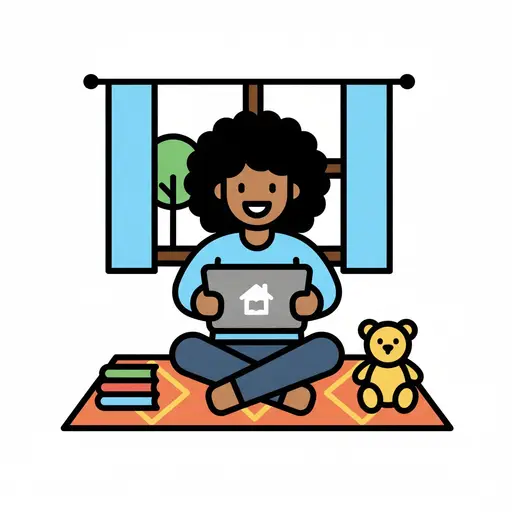
Indoor play
A child sits cross-legged on a rug with a tablet, with a teddy and books beside ...

Move around
A person jogs forward in a green top and blue trousers.
Outdoor Play
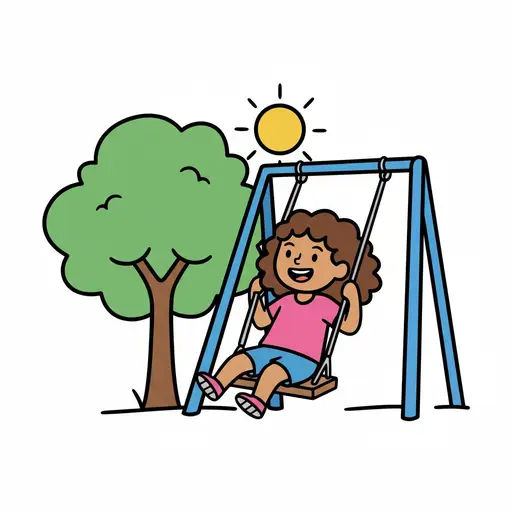
A happy girl on a swing in an outdoor setting with a tree and sun.
Take the visual supports with you
In Routined you build schedules from these pictures, add timers and voice instructions, and your child follows the day on their own.


* 14-day free trial included for new users.