End play
A book has a last page, but the construction on the floor can go on for hours, which means the ending always has to come from an adult. The visual support below moves that ending from your voice to something your child can see.
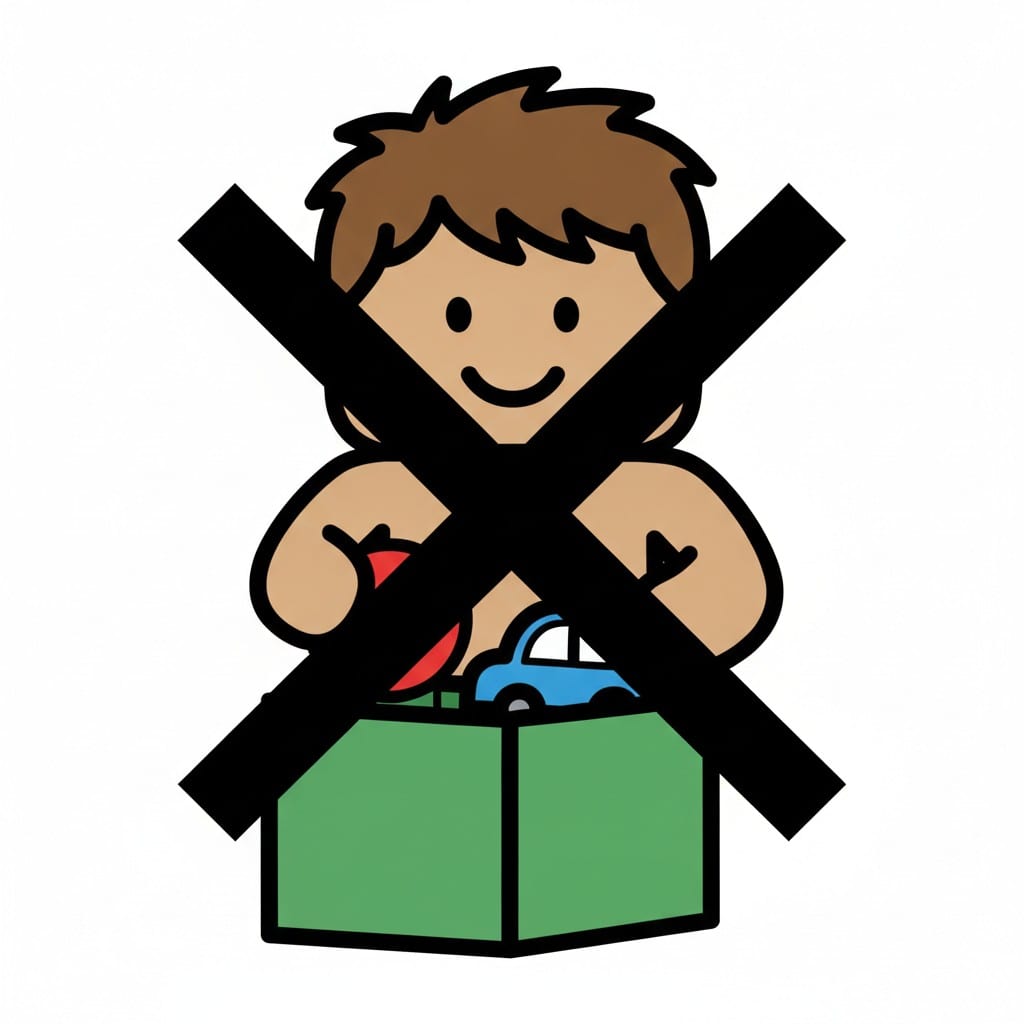 ♂
♂Playtime is over
A large cross over a boy at a toy box shows that playtime is over.
About this visual support
What makes ending play hard is that play has no ending of its own. A film has credits and a meal has an empty plate, but the build on the floor can continue for hours, so the word to stop always comes from outside and always in the middle of something that was working. For children with ADHD it is often the interruption of something enjoyable that weighs most, not the task waiting afterwards.
Visual support helps by giving play a finish of its own. A card for the last round, one for putting things away and one for what happens next mean the ending is present in the room before it arrives, instead of turning up as a surprise. A tip that belongs specifically to play: define the ending in actions rather than minutes, such as two more cars into the garage or the tower finished, because then your child can see their own finishing line ahead of them.
In the Routined app you can pair the pictures with a timer so both the time and the next step are visible. Fourteen days are available to try at no cost.
Use this image in a schedule
Build your own visual schedule with this image and download it as a print-ready PDF. Completely free.

More similar visual supports
Free play
A cheerful girl in a green top spreads her arms while a ball, a block, a teddy a...
Indoor games
A cartoon girl with a happy face sits cross-legged inside a house outline. She i...
iPad and toys
An iPad is leaning against a blue building block. Next to it are a red toy car a...
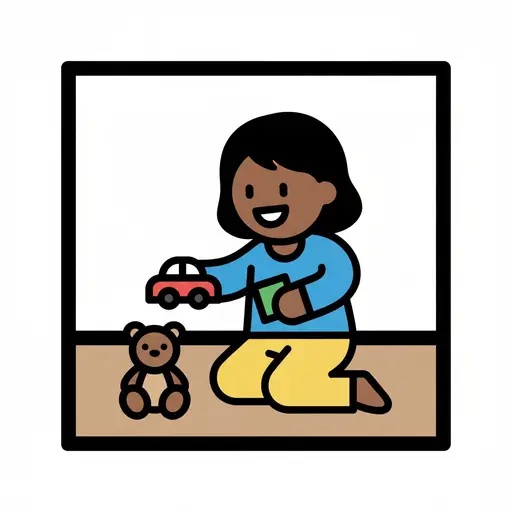
Play in the room
A girl sits on the floor in her room playing with a toy car and a teddy bear.
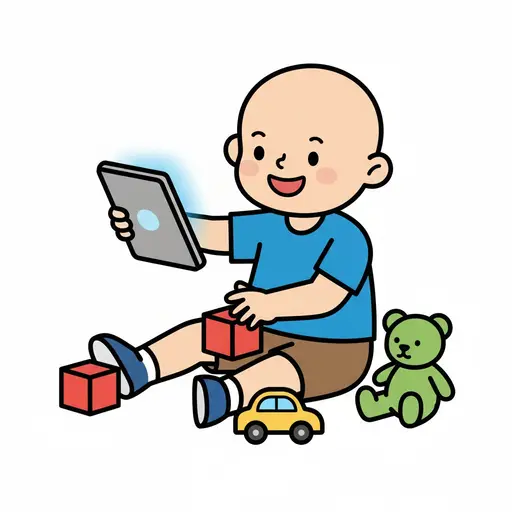
Play iPad and toys
A happy boy is sitting on the floor holding an iPad. Around him are red building...

Play stories
A person reads a book and plays with a yellow dinosaur and a red robot.
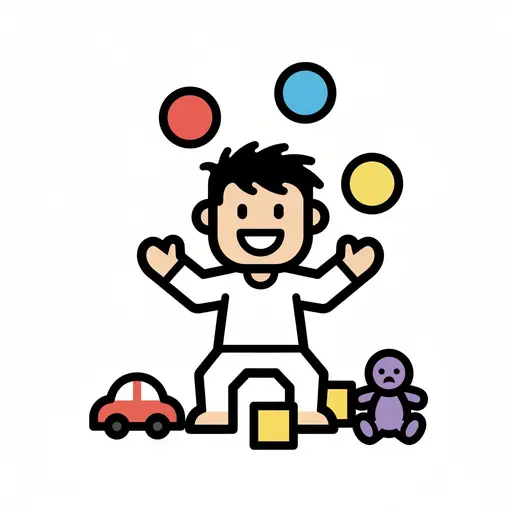
Play time
A laughing boy juggles a red, a blue and a yellow ball while a toy car, blocks a...
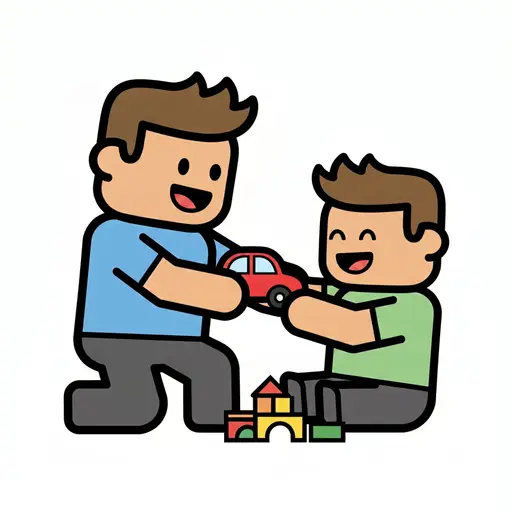
Play with little brother
Two brothers play together with a toy car and building blocks.
Take the visual supports with you
In Routined you build schedules from these pictures, add timers and voice instructions, and your child follows the day on their own.


* 14-day free trial included for new users.