Feed animals
The animal will not wait while the child remembers the portion, and an overfilled bowl cannot be undone. The visual support below shows portion, bowl and time so the responsibility actually fits on the child.
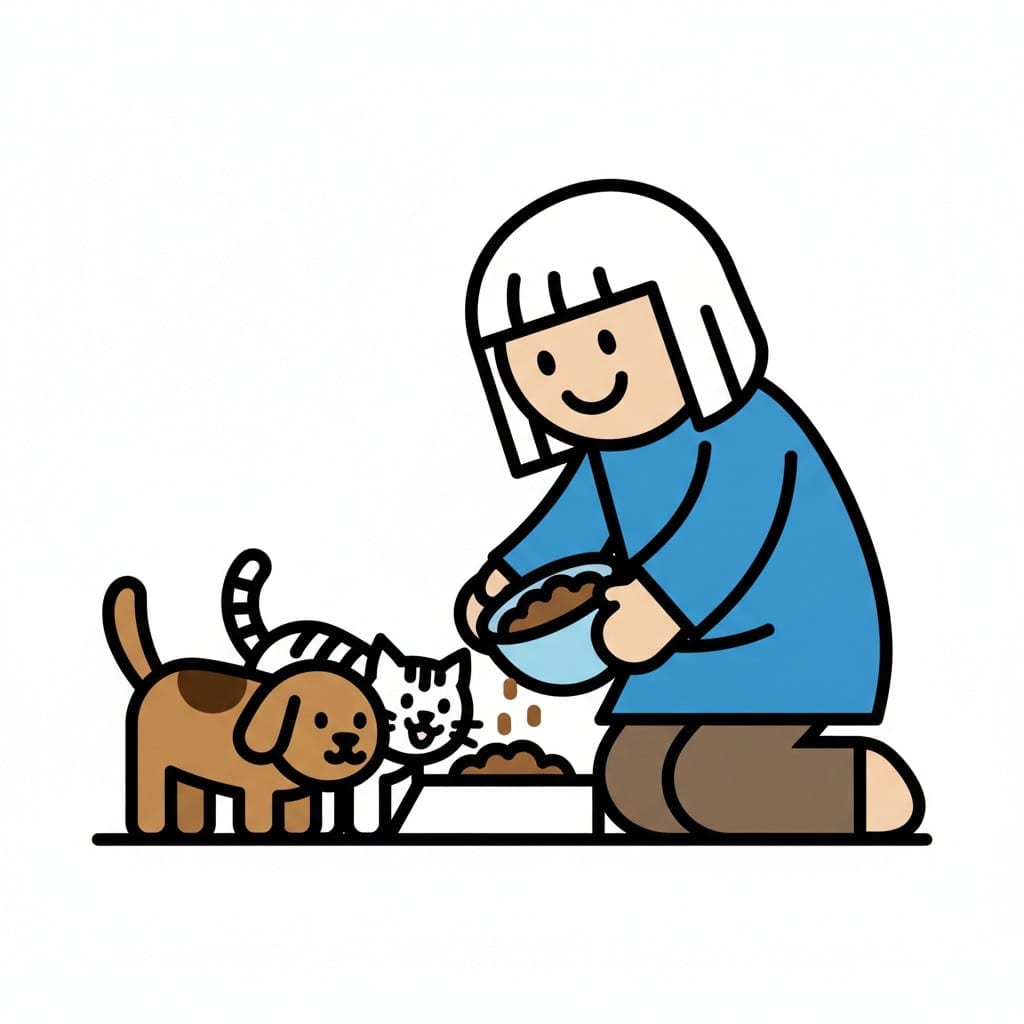 ♀
♀Feed animals
A person kneels, pouring food from a bowl into a pet bowl on the floor, in front of a dog and a cat watching.
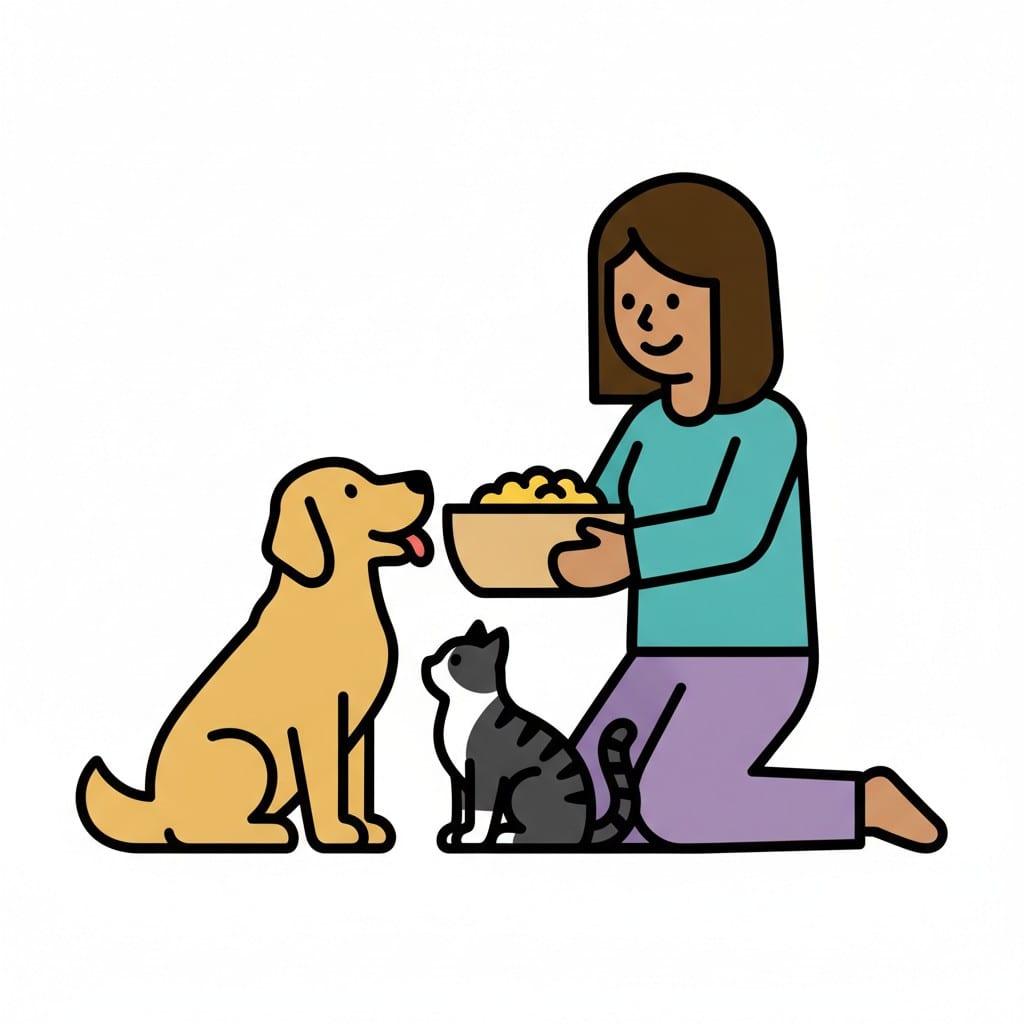 ♀
♀Woman feeding the animals
A woman kneels and offers a bowl of food to a dog and a cat.
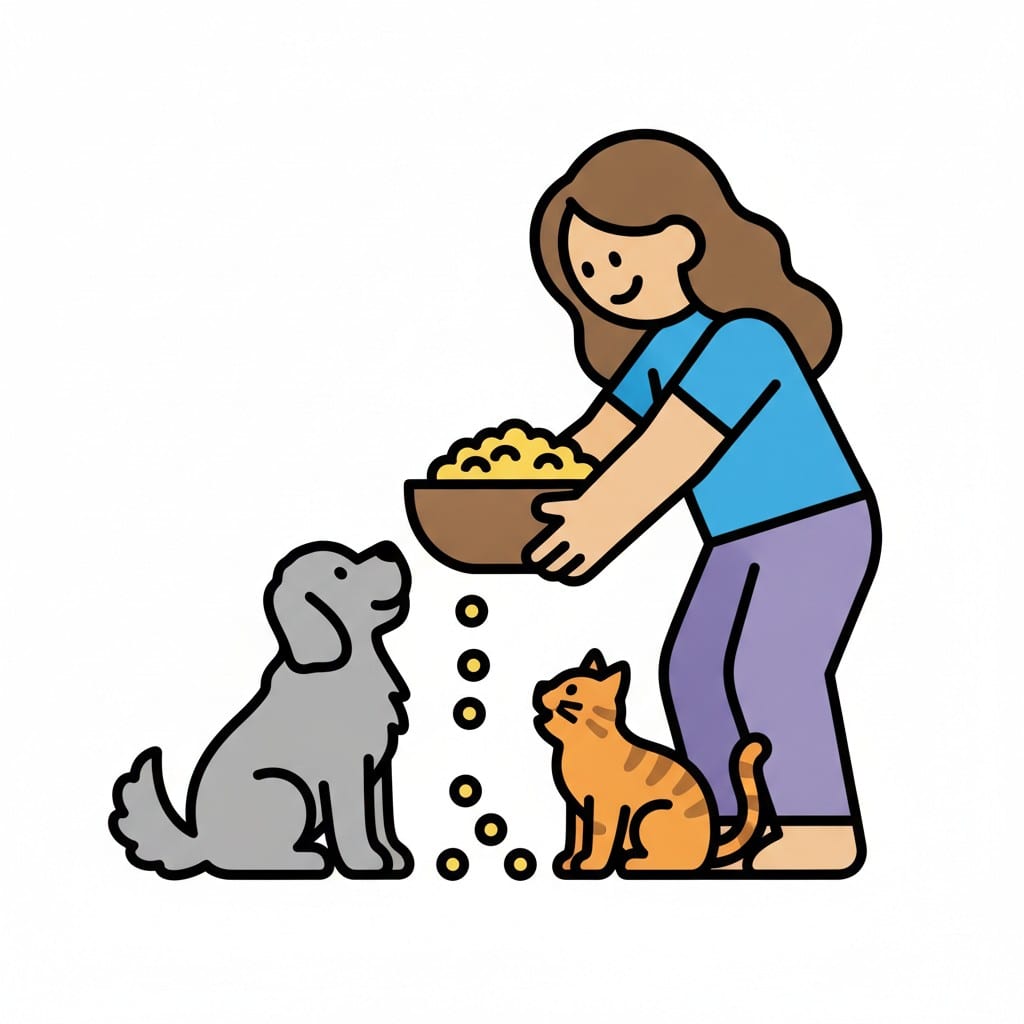 ♀
♀Giving the pets food
A woman pours dry food from a bowl for a dog and a cat.
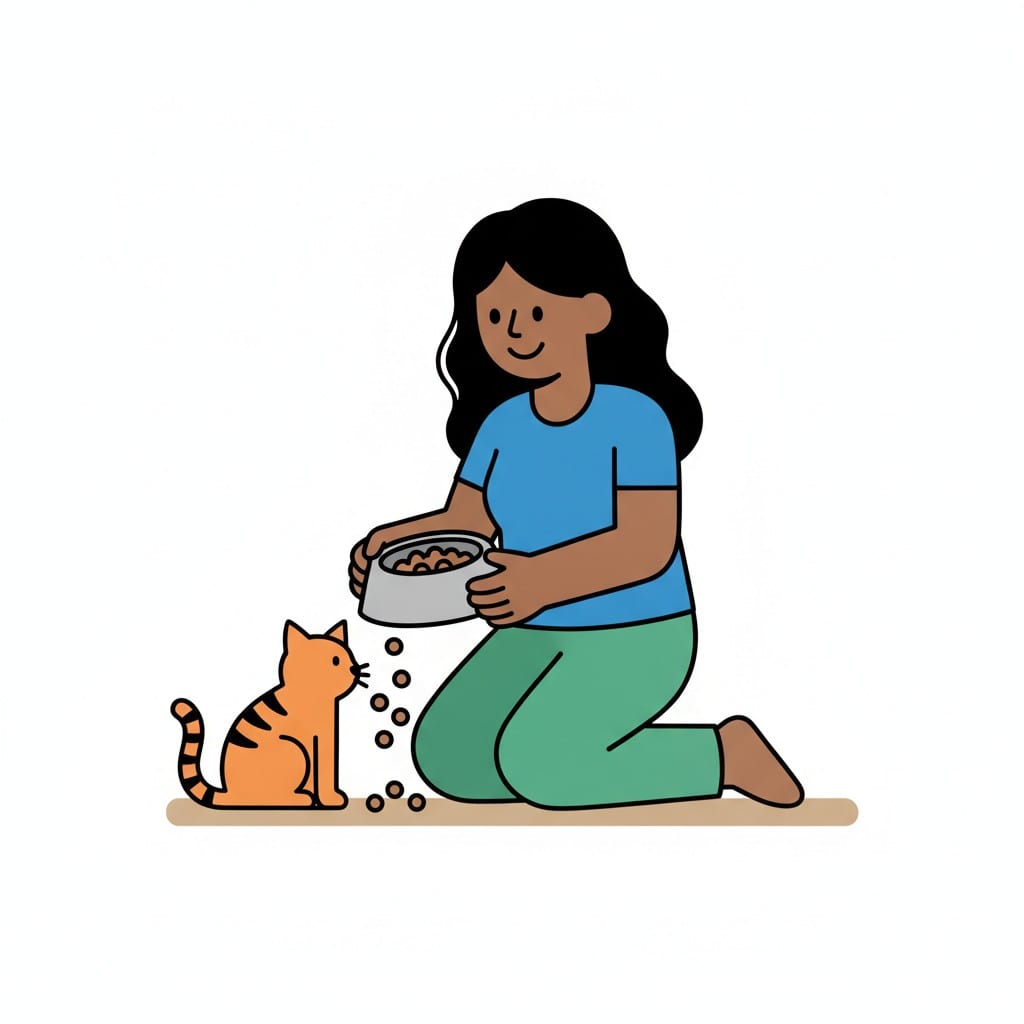 ♀
♀Feeding the animal
A woman kneels and pours food into a bowl for a cat.
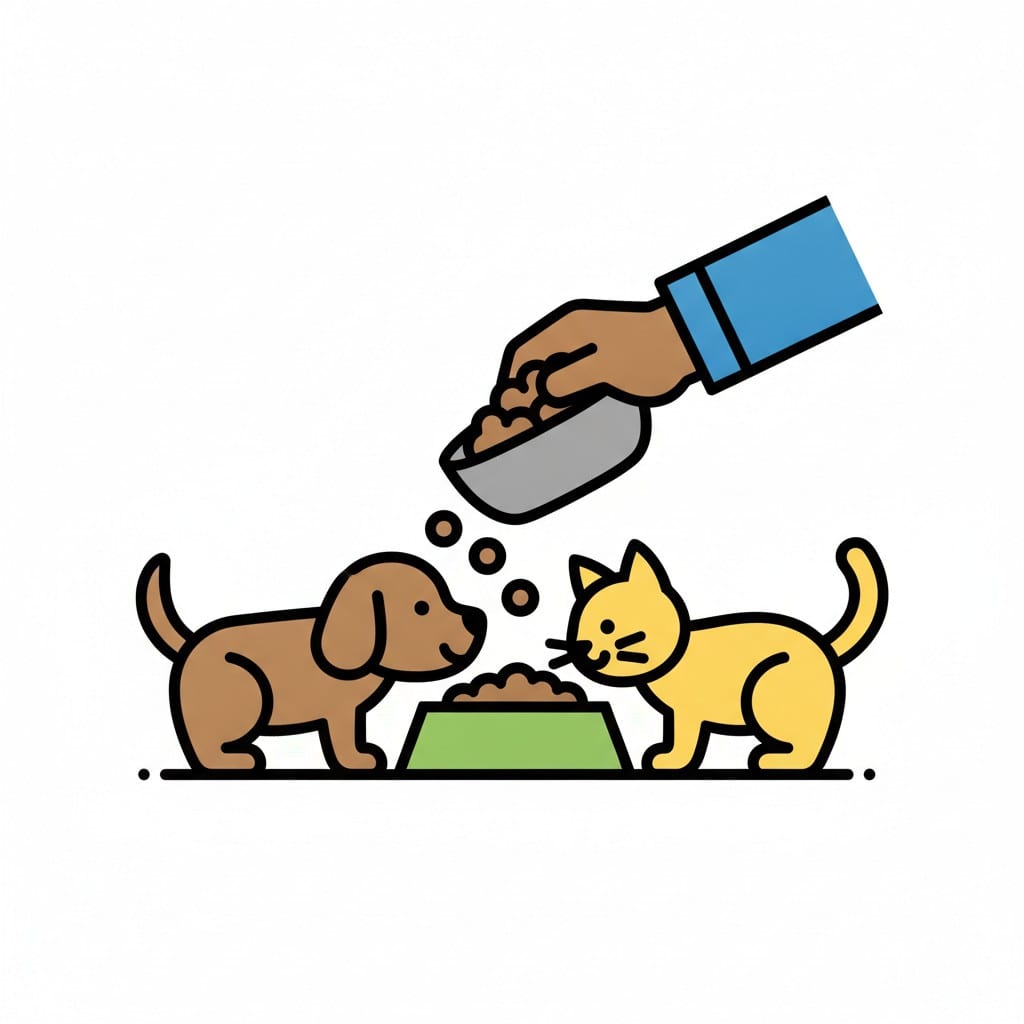 ⚲
⚲Filling the food bowl
A hand pours food into a bowl while a dog and a cat wait.
About this visual support
Feeding a pet looks simple, yet it is one of the few daily tasks where the wrong amount really has consequences: an overfilled bowl stays full, hidden food goes off, a skipped meal shows on the animal before the day is over. It is not a job you can half do and fix later.
Visual support gives the child a visible recipe: take the measure, fill to the line, pour into the right bowl, top up the water, walk away. When the amount is shown concretely, for example as a picture of a cup or scoop, the child no longer has to guess and you avoid the argument over what a little more means. The animal's need sets the rule, not the child's mood.
A practical tip: hang the visual support where the food is stored, not on the fridge or in the child's room. That way the right step is in front of their eyes the second a hand reaches for the bag, which is exactly where mistakes usually creep in. To turn pet feeding into a recurring routine the child can tick off, Routined can hold it together with a 14-day trial.
Use this image in a schedule
Build your own visual schedule with this image and download it as a print-ready PDF. Completely free.
More similar visual supports
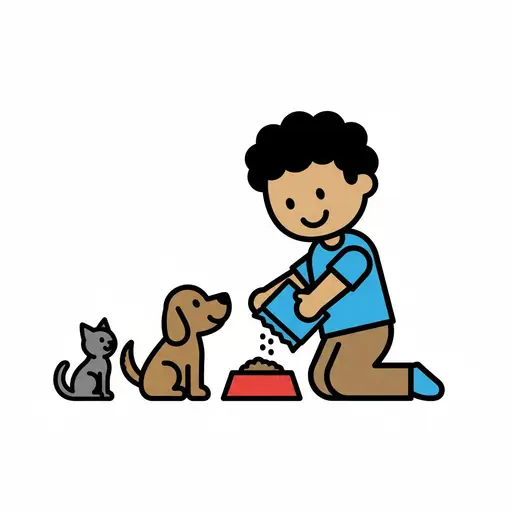
Feed pets
A cartoon image of a child kneeling and pouring food into a red bowl for a dog a...
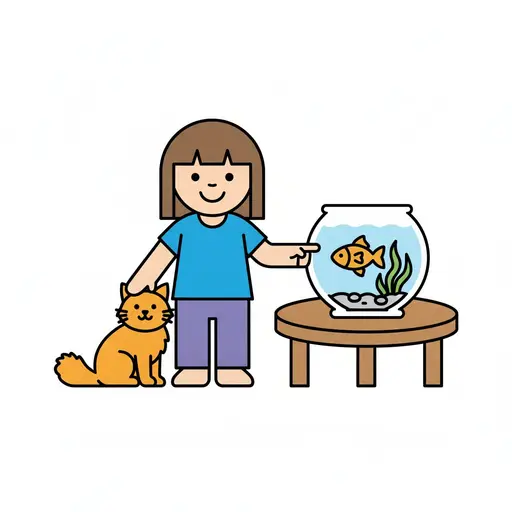
Pets
A person points at a fishbowl on a table with a cat beside them.
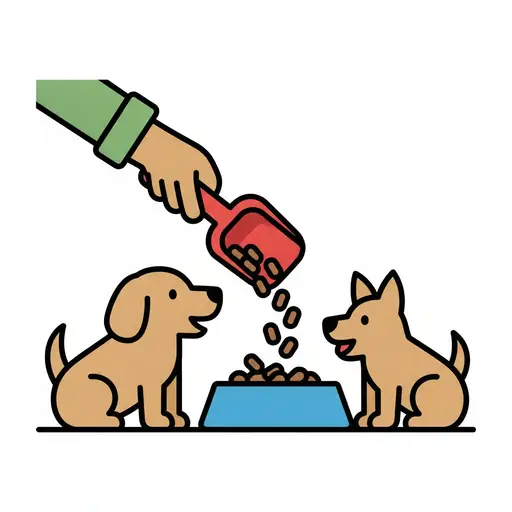
Feed dog
A hand pours dry food into a bowl for two dogs.
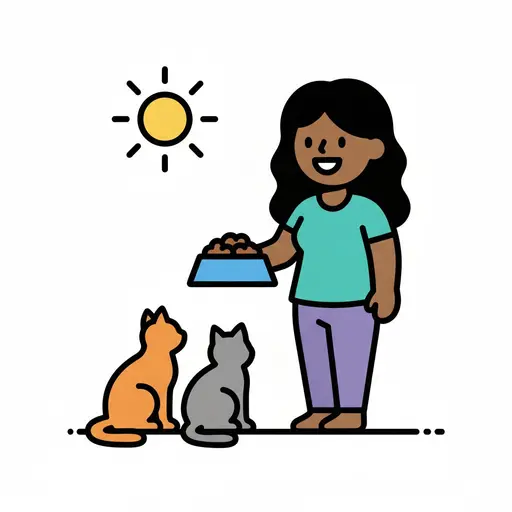
Feed cats
A smiling person holds a blue bowl of dry food while an orange and a grey cat si...
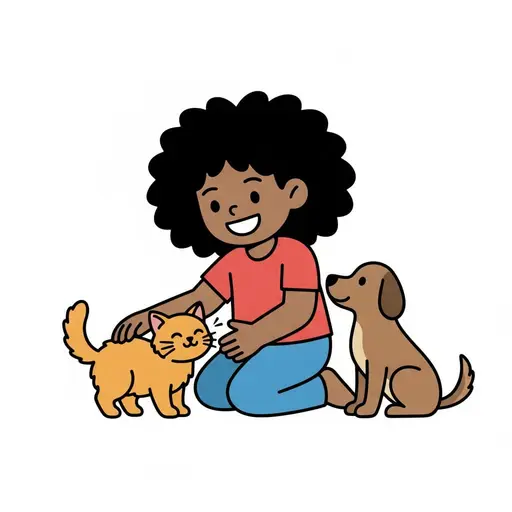
Pet the animal
A girl kneels and strokes an orange cat while a dog stands beside her.
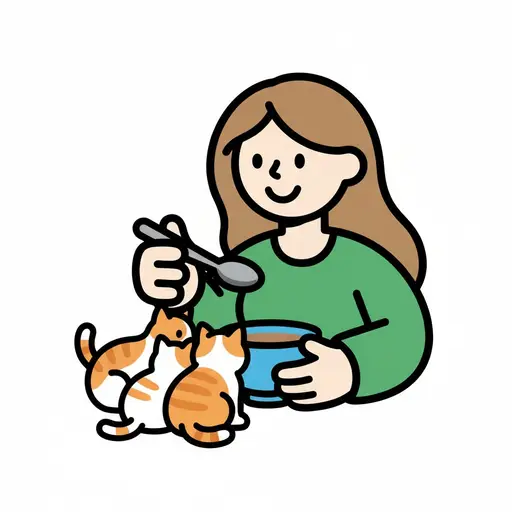
Feed kittens
A woman feeding two small kittens with a spoon from a bowl.
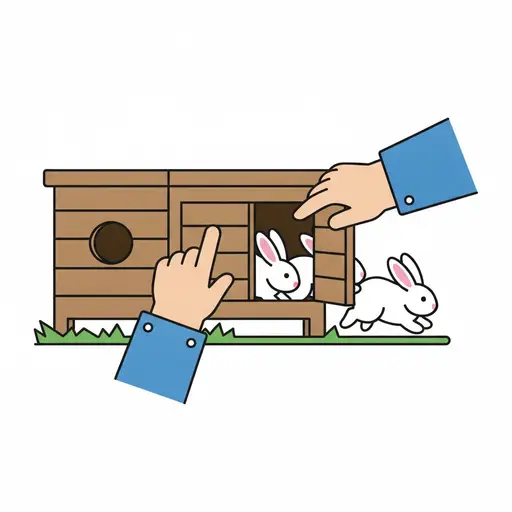
Rabbits
Two hands open the door of a rabbit hutch with two rabbits inside.
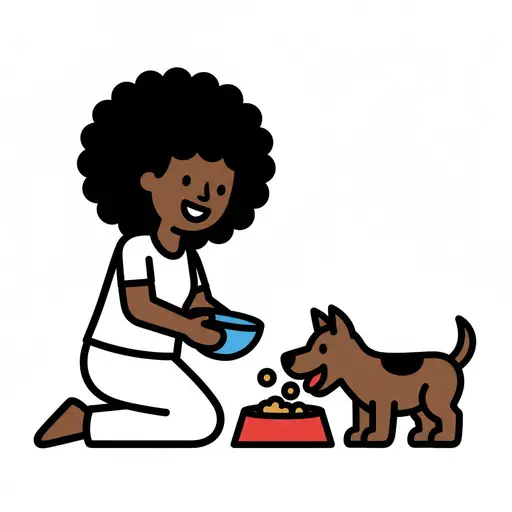
Feed dog breakfast
A person kneels, pouring breakfast from a blue bowl into a red food bowl for a d...
This visual support in other languages
Take the visual supports with you
In Routined you build schedules from these pictures, add timers and voice instructions, and your child follows the day on their own.


* 14-day free trial, then $2.39 a month or $20.99 a year (US pricing). Cancel anytime.