Friend play
Playing with a friend is as much about reading each other as inventing the next move. The cards below break down turn-taking, theme switches and rest moments when two ideas meet.
 ♂
♂Two boys with ball
Two boys are laughing and holding a colorful ball together.
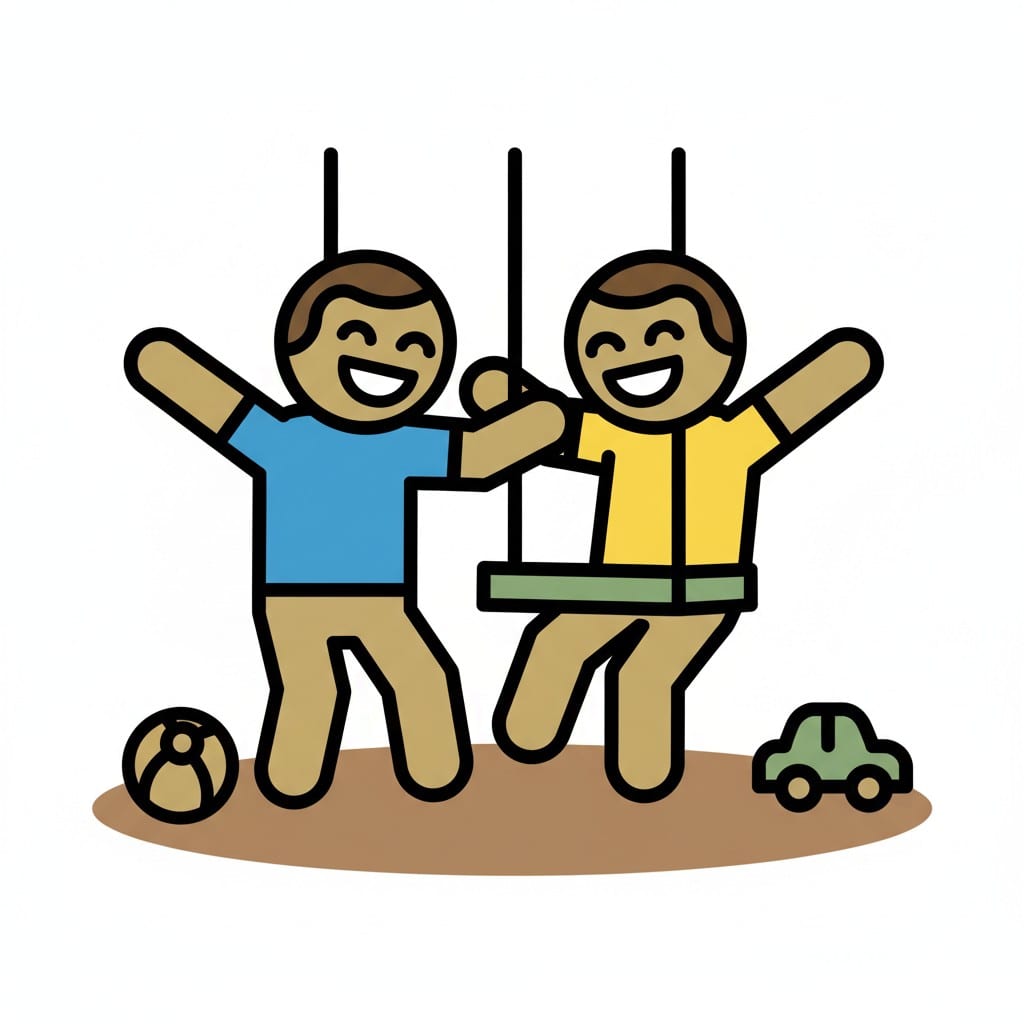 ♂
♂Two boys playing outdoors
Two boys with open arms are playing outdoors with a swing, a ball, and a toy car.
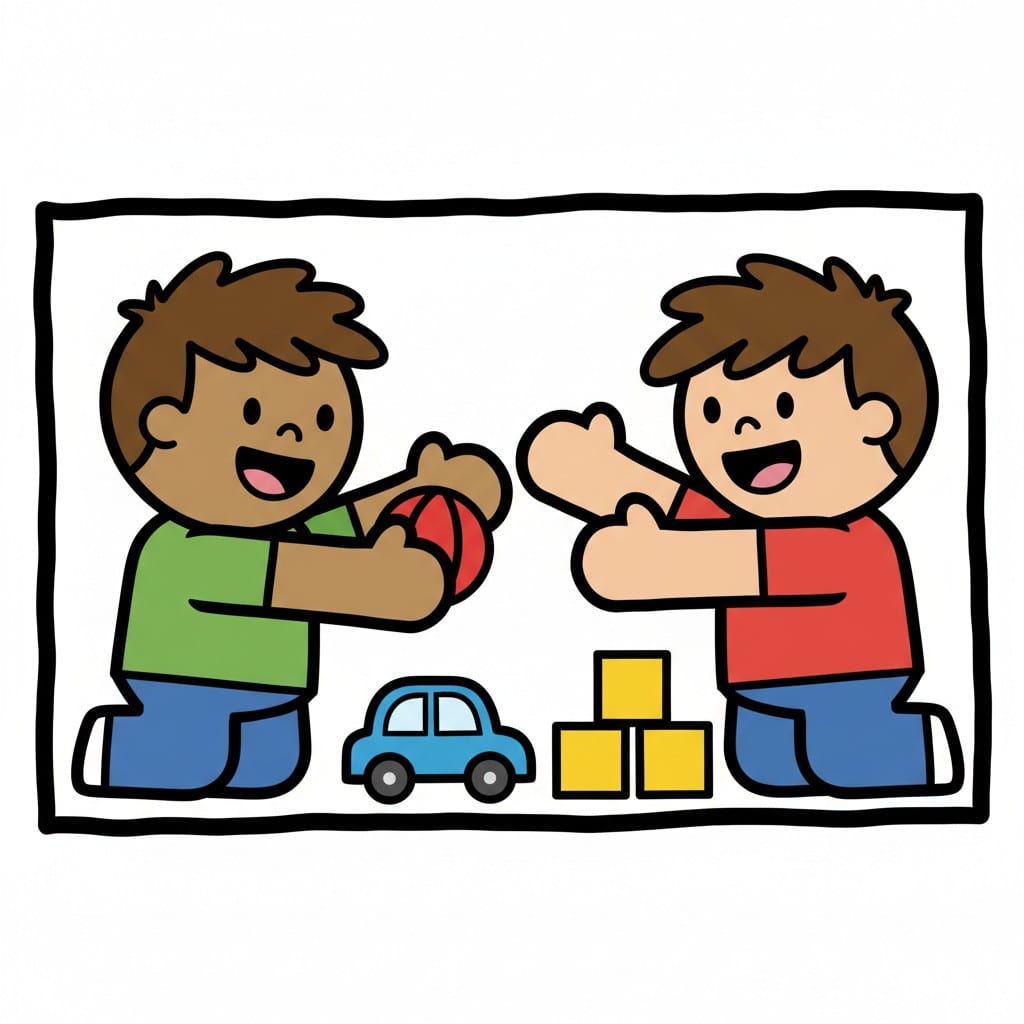 ♂
♂Two boys playing with toys
Two boys are kneeling and playing with a red ball, a blue car, and yellow blocks.
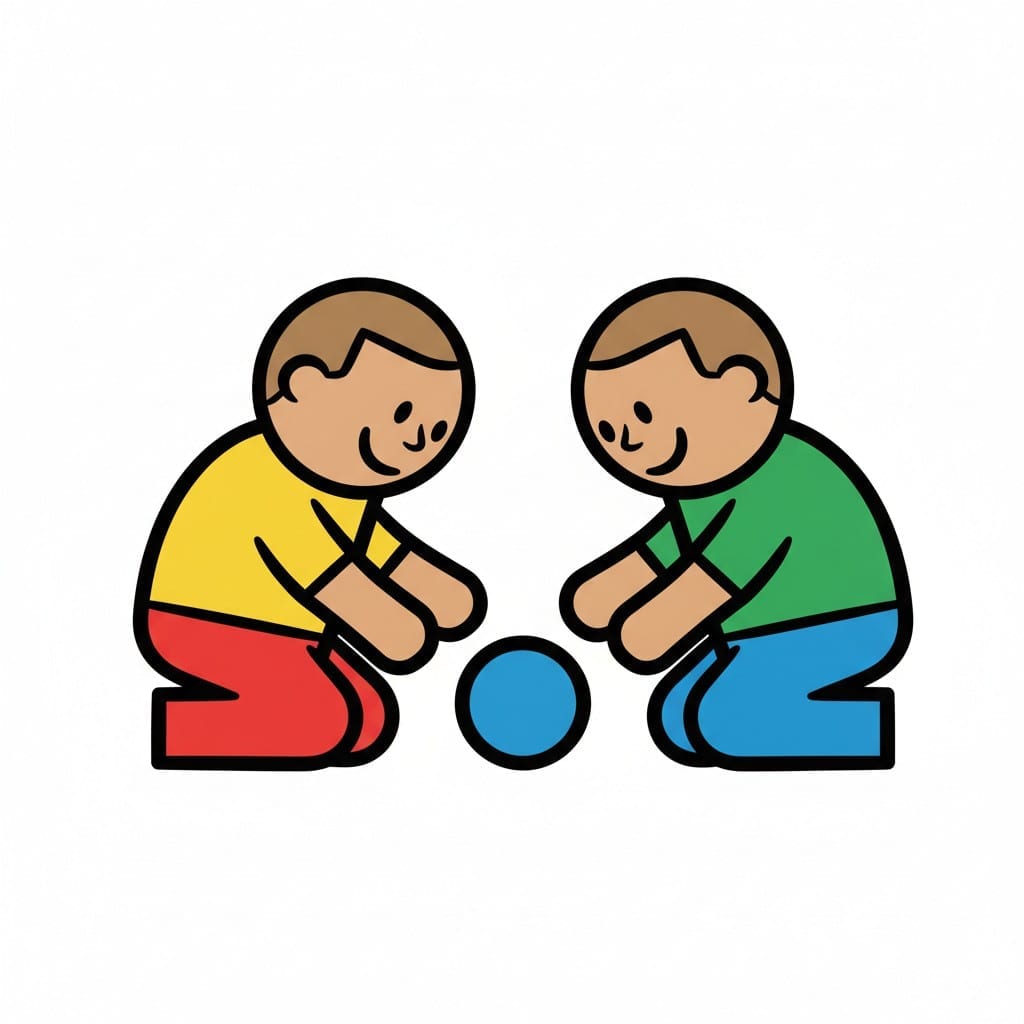 ♂
♂Two boys playing ball on the floor
Two boys are kneeling on the floor and playing with a small blue ball.
About this visual support
Friend play lives in the tiny seconds between two kids: a glance, a sigh, half a step back when someone suggests a new direction. Those signals stay invisible to many children, and the play either gets steered by one of them or breaks into conflict.
Visual support turns the social layer into something you can point at. When taking turns, switching themes and pausing each get their own picture, kids can show what is happening right now without anyone losing face. It also helps to agree before the play starts: lay out three cards for what we will do, and both already know what they have said yes to.
A concrete tip for friend play is to keep two cards side by side, one called my idea and one called your idea, and physically swap them when it is time to switch. From there you can build the whole play session in Routined, so the same cards travel to the next meet-up. Try the app free for 14 days.
Use this image in a schedule
Build your own visual schedule with this image and download it as a print-ready PDF. Completely free.

More similar visual supports
After school friends
Two boys and a girl, all smiling, one boy holding a soccer ball, in front of a s...
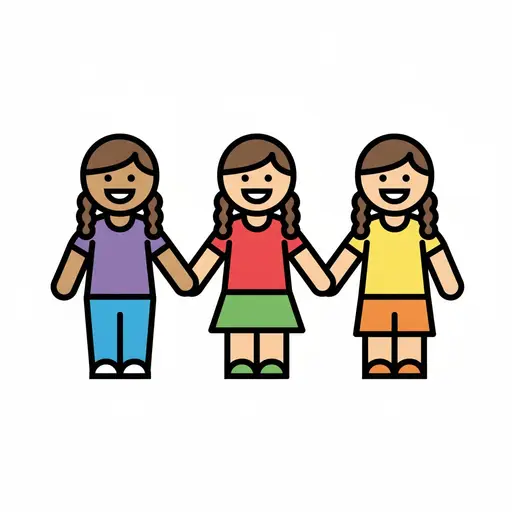
Meet friends
Three laughing children in purple, red and yellow tops stand side by side holdin...
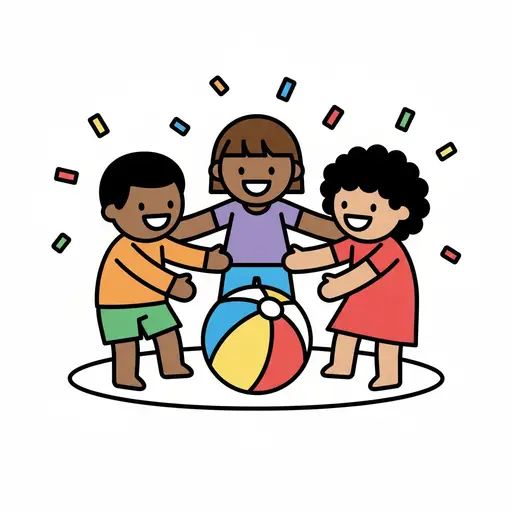
Play with friends
Three laughing children stand together around a large colourful ball with confet...
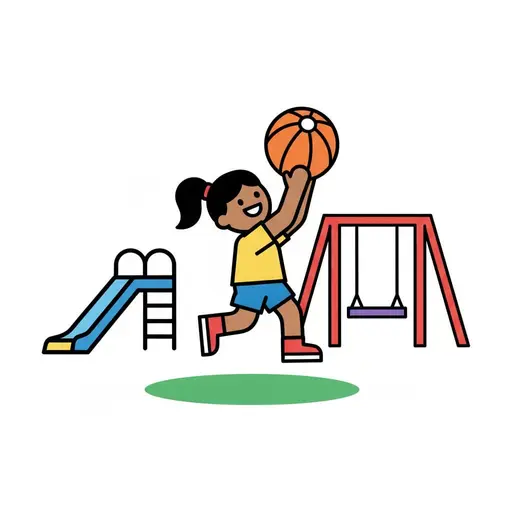
Active play
A girl jumps with a basketball in a playground with a slide and swings.

Activities
A child surrounded by icons for a book, paint palette, ball and building block.
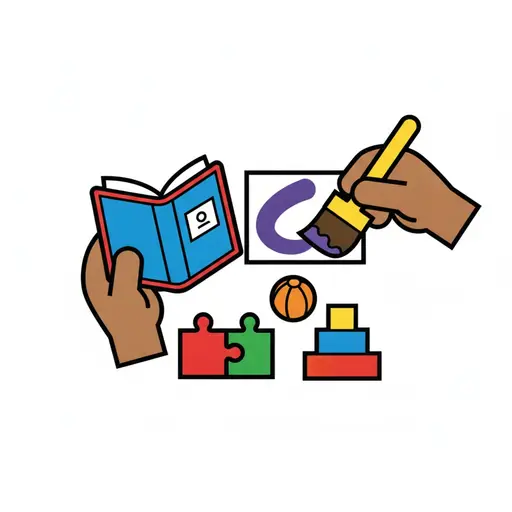
Activity
Hands holding a book and a paintbrush, surrounded by a puzzle, a ball and buildi...
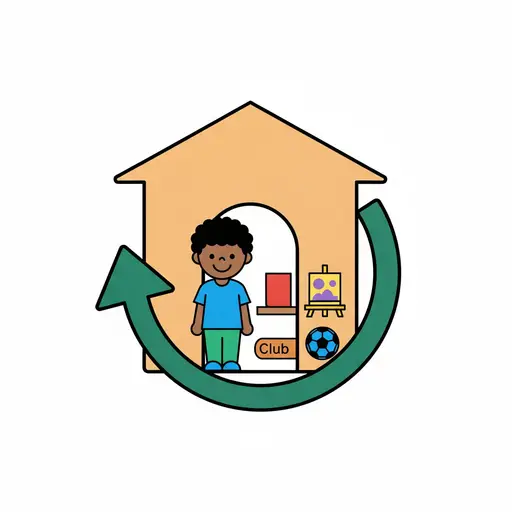
After school club
A boy stands in a club house with a circular arrow around it.
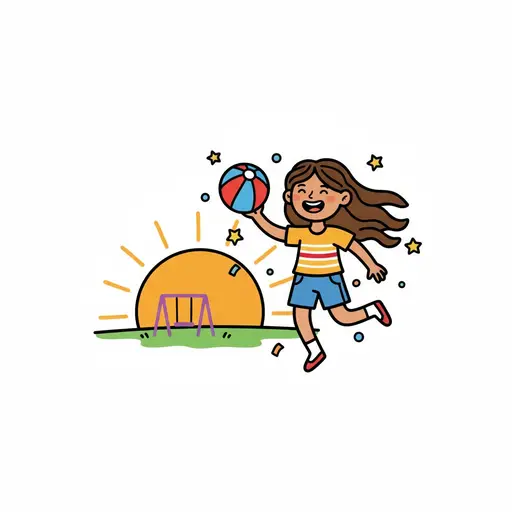
Afternoon playtime
A happy girl runs and plays with a ball outdoors in front of a playground.
Take the visual supports with you
In Routined you build schedules from these pictures, add timers and voice instructions, and your child follows the day on their own.


* 14-day free trial, then $2.39 a month or $20.99 a year (US pricing). Cancel anytime.