Mom reads
Moving from moving images to a voice and a still page means the body has to shift down a gear first, and that shift rarely happens on its own. The visual support below shows how story time starts, where to sit and when the book closes.
 ♂
♂Mom reading a book
A mother smiles while holding an open red book.
About this visual support
A book competes with everything that flashes. Holding attention in words rather than movement asks the body to land first, and for many children it is that slowing down that is difficult, not the reading. Which is why story time is often noisy at the start and calm five minutes in.
A visual schedule helps by turning the wind-down into its own steps: screen off, fetch the book, climb onto the sofa, read two chapters. Your child can see there is a fixed frame around the moment and does not have to negotiate the length. One tip that makes a difference: let your child pick the book on a separate card before the screen goes off, so switching off becomes a move towards something rather than only an ending.
In Routined, story time can sit last in the evening routine with its own picture, so it becomes something to look forward to rather than an instruction.
Use this image in a schedule
Build your own visual schedule with this image and download it as a print-ready PDF. Completely free.

More similar visual supports

Read a book with mom
A child and mom look at an open picture book together.
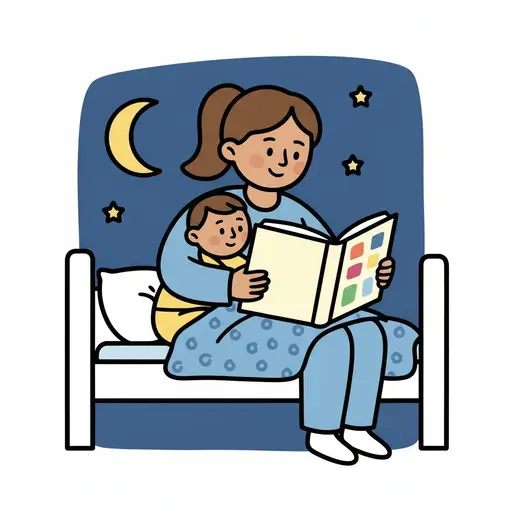
Bedtime Story
A woman with a ponytail sits on the edge of a bed reading a large book while a c...
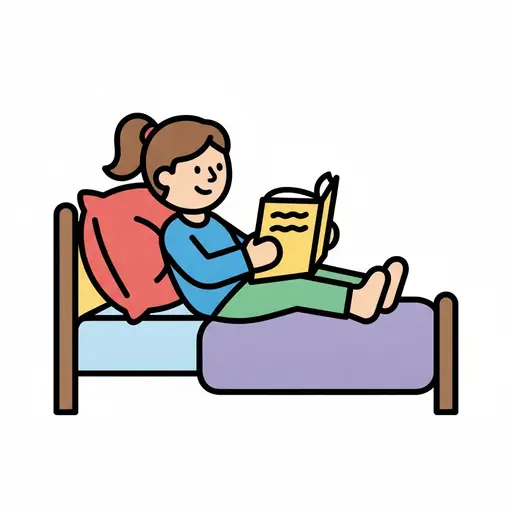
Read in bed
A smiling girl with a ponytail leans against a red pillow in bed reading a yello...

Read on your own
A boy holds an open book and reads on his own.
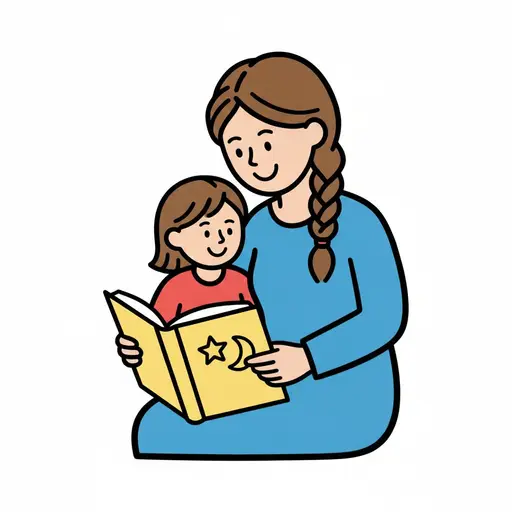
Read story with mom
A mother reads a bedtime story from a book to a young child on her lap.
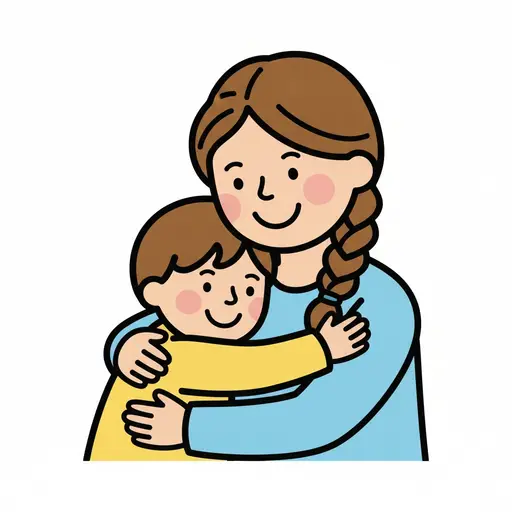
Cuddle with mom
A mother and child hug each other closely.

Engage with literature in bed
A person is lying in bed, propped up against a pillow, reading a red book with a...

Listen to an audiobook
A girl wearing headphones smiles and holds a tablet showing a book.
Take the visual supports with you
In Routined you build schedules from these pictures, add timers and voice instructions, and your child follows the day on their own.


* 14-day free trial included for new users.