No fighting
A rule that only says no offers no guidance in the moment it matters. The body is already moving, and stopping it requires something to do instead. The pictures below show exactly that: concrete alternatives that can be chosen in the middle of a conflict.
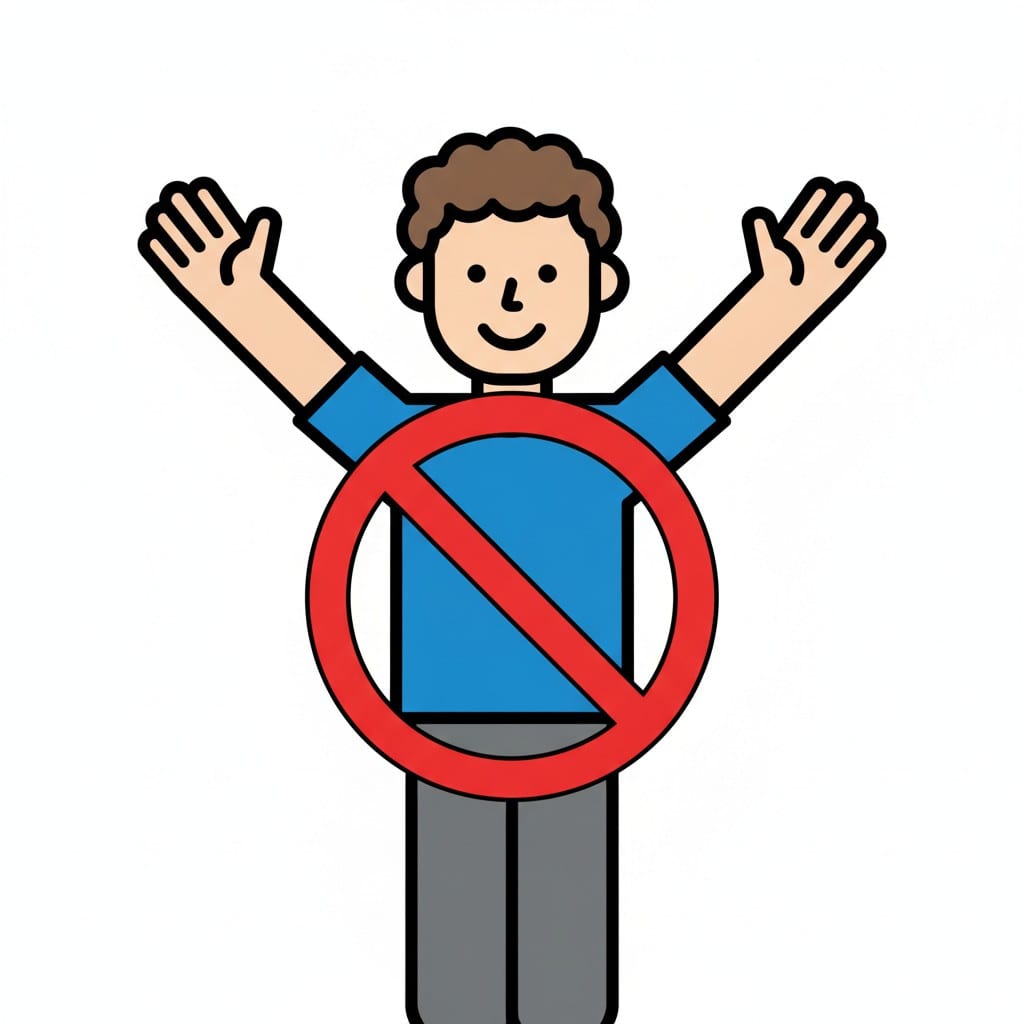
Crossed-out person with raised arms
A person in a blue top stands with both arms raised behind a red prohibition circle with a diagonal line.
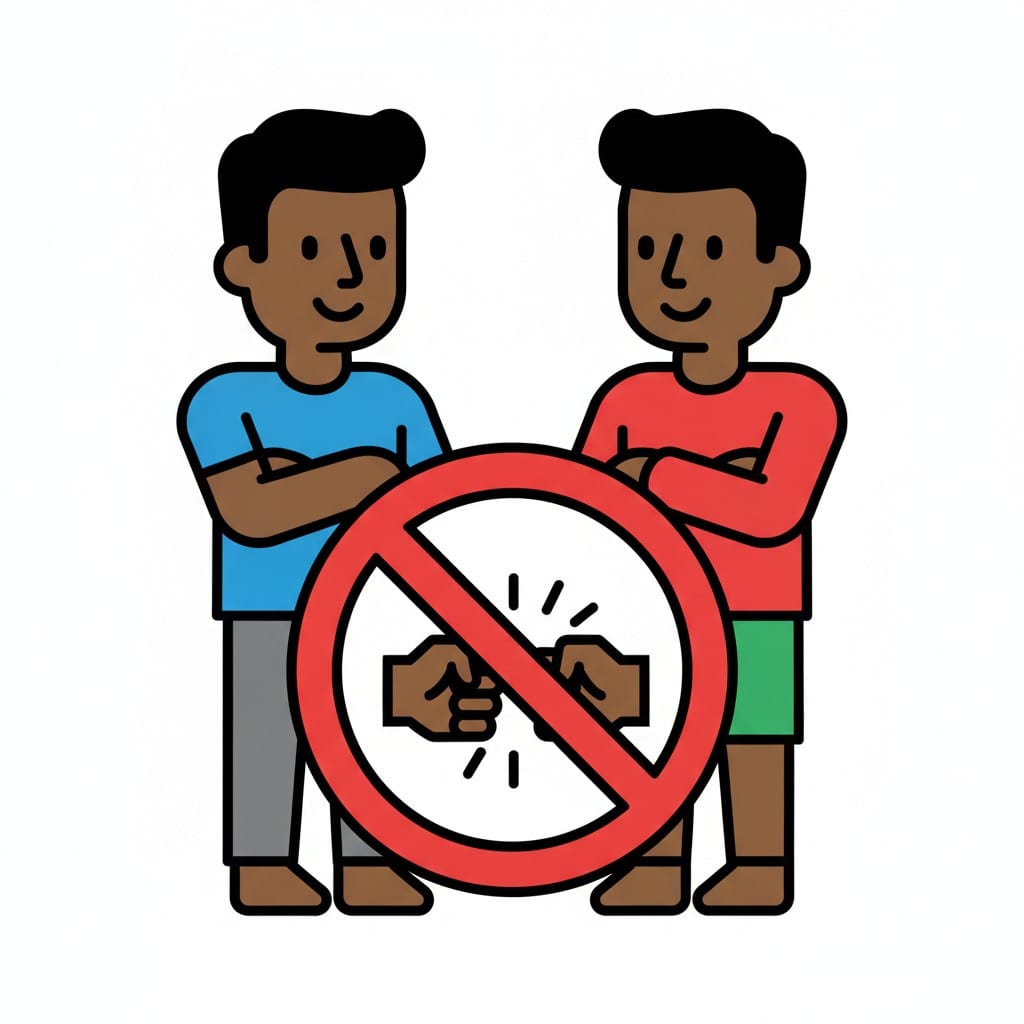
Two people with crossed-out fists
Two people with folded arms stand on either side of a red prohibition circle showing two clenched fists meeting.
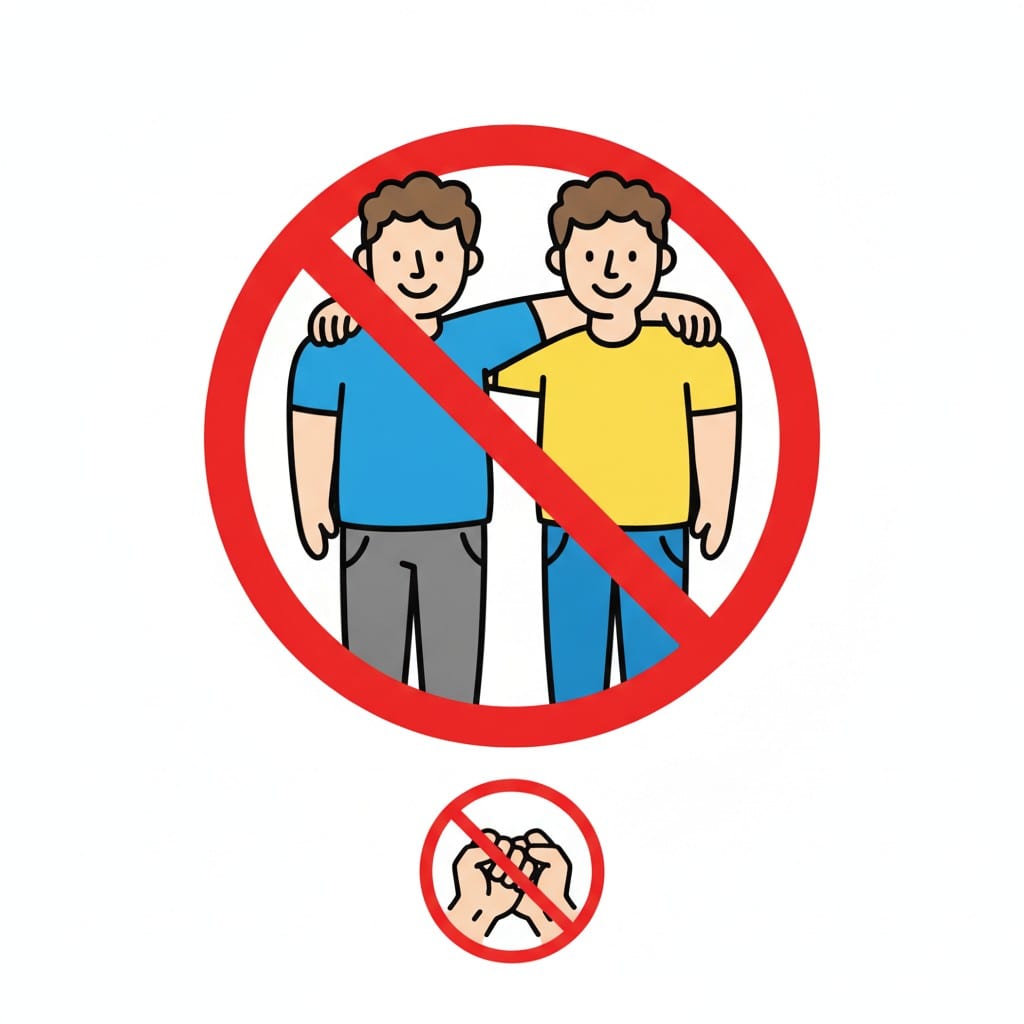
Prohibition sign over two friends
A red prohibition circle with a diagonal line over two people standing with arms around each other, and a smaller prohibition circle with two fists below.
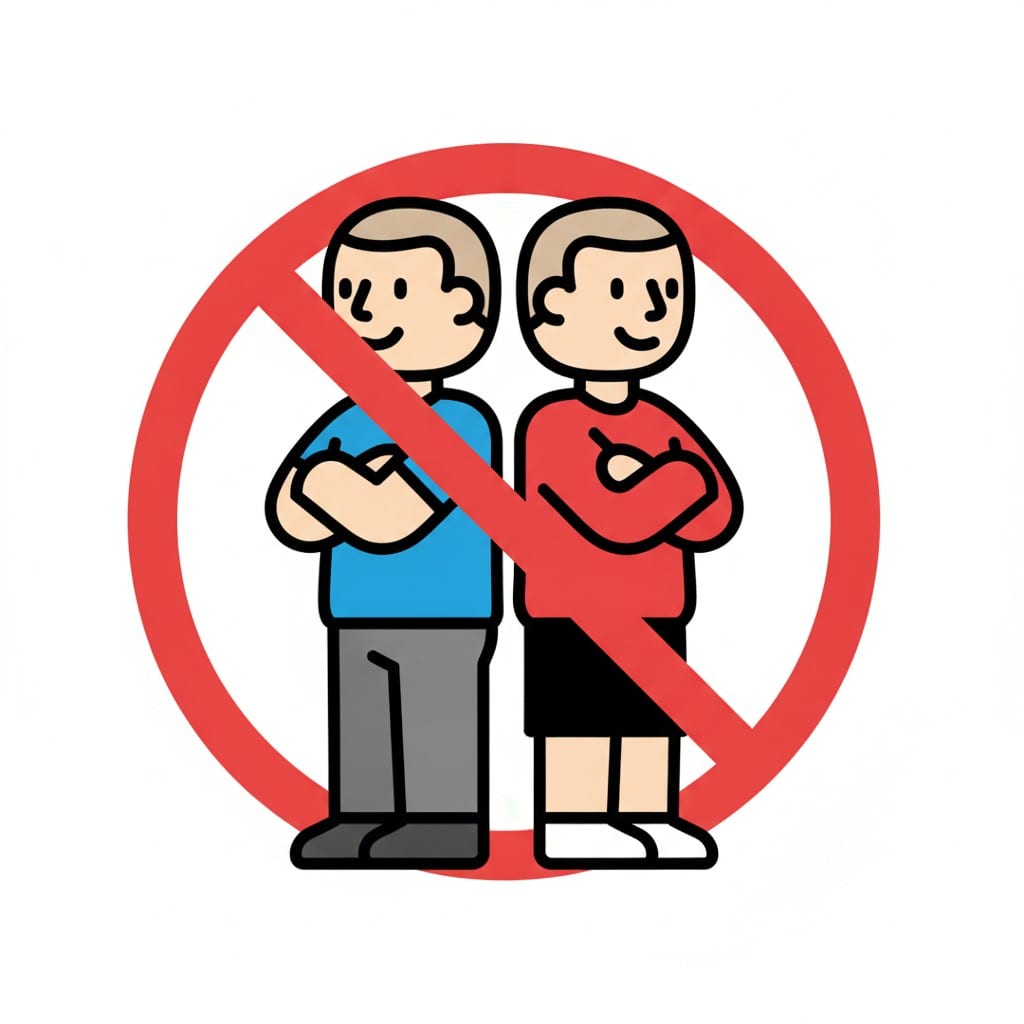
Crossed-out people with folded arms
Two people in blue and red tops stand close together with folded arms behind a red prohibition circle with a diagonal line.
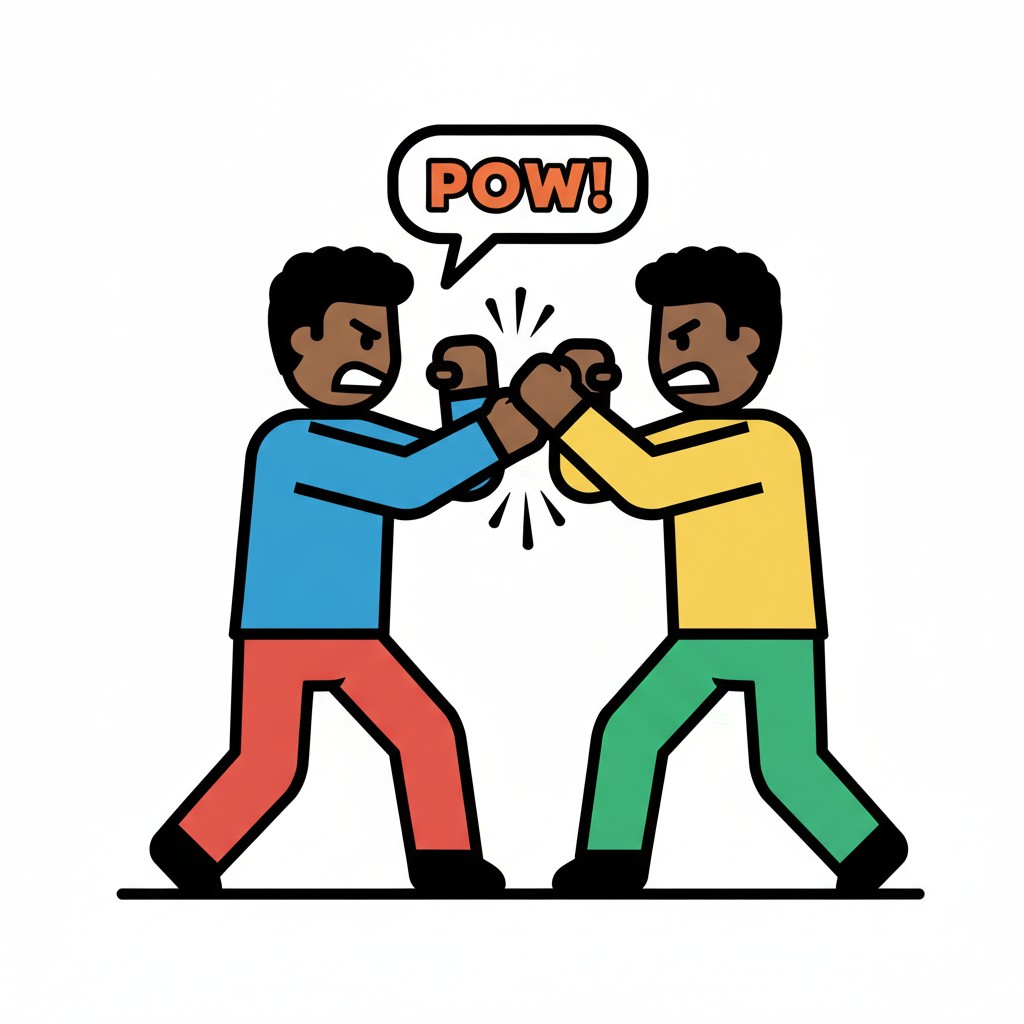 ♂
♂When a fight starts
Two children push and fight each other, with a speech bubble showing a bang.
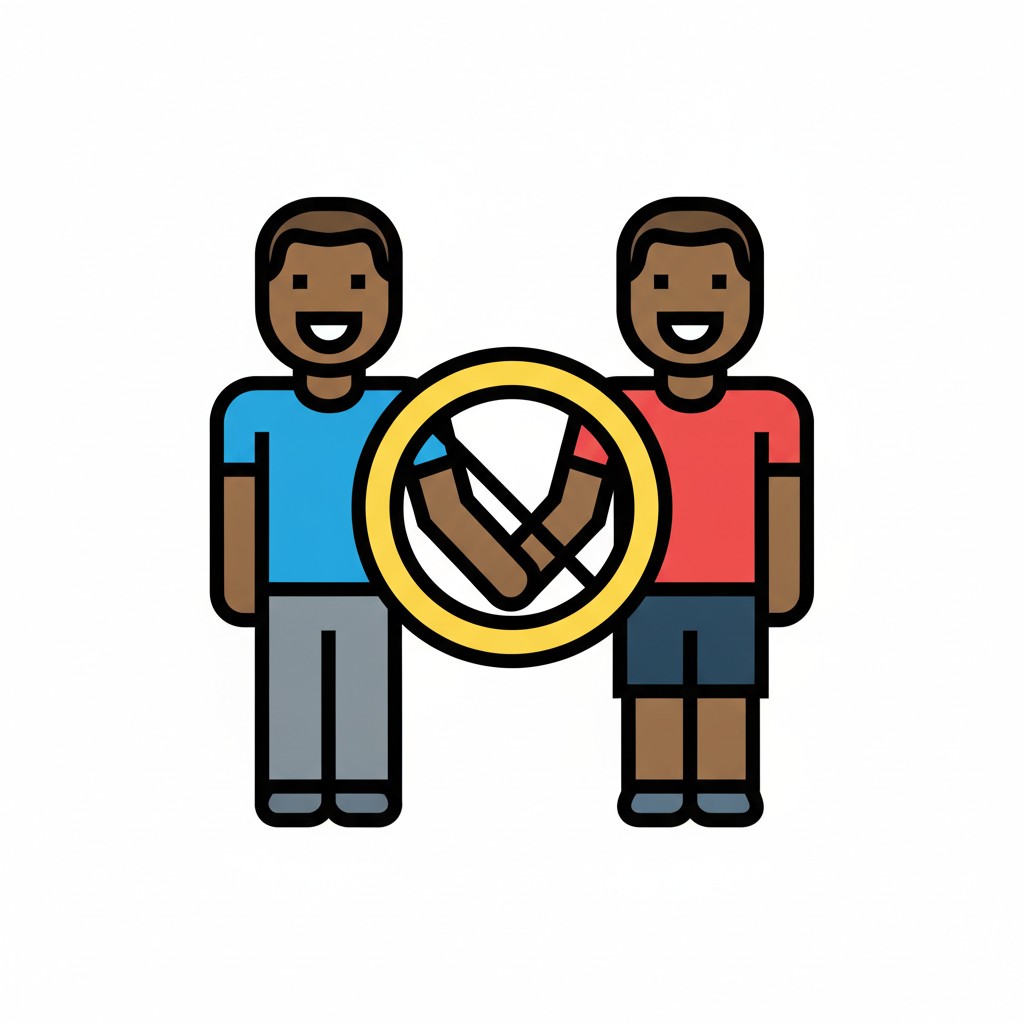 ♂
♂No fighting
Two children stand beside each other with a crossed-out symbol of fists between them.
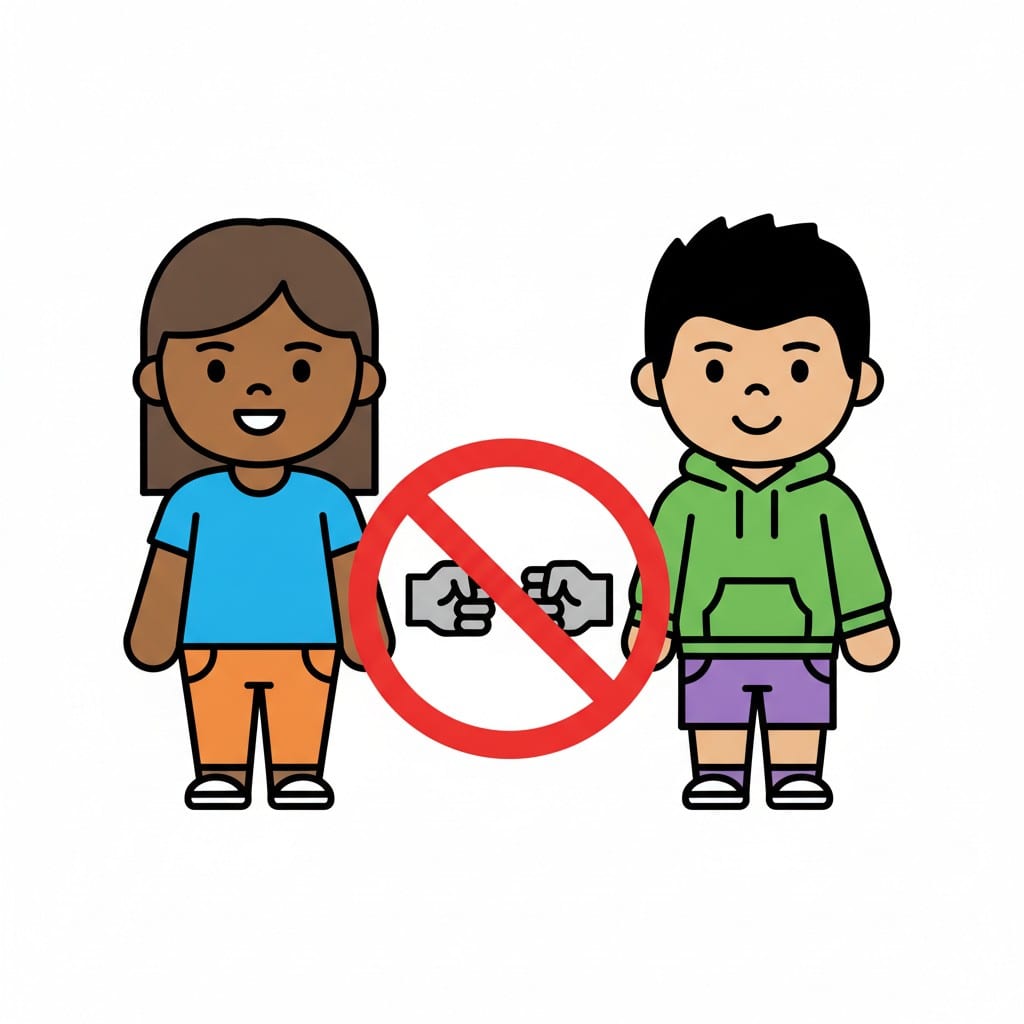
Two children with crossed-out fists between them
Two smiling children stand side by side with a red prohibition circle between them covering two clenched fists.
About this visual support
Impulse control is not a trait but a skill that gets trained, and it works worst exactly when it is needed most. In a conflict the body acts before the thought has managed to form the rule, and afterwards the child can often recite the rule perfectly. Repeating it one more time therefore rarely solves anything.
Visual support shifts the focus from prohibition to action. A small row with three alternatives, walk away, say stop, fetch an adult, gives something to choose between when words run out. Alternatives are easier to remember than bans, because they point towards a movement instead of braking one. The pictures also help adults say the same thing every time, which makes the rule predictable.
A concrete tip is to practise the alternatives during calm moments, ideally as play. What gets rehearsed when nobody is angry is still there when somebody is. In Routined the pictures can be kept near where the conflicts usually start, and the app can be tried for fourteen days at no cost.
Use this image in a schedule
Build your own visual schedule with this image and download it as a print-ready PDF. Completely free.

More similar visual supports
5000 Steps
A blue sneaker with the number 5000 and arrows showing movement.
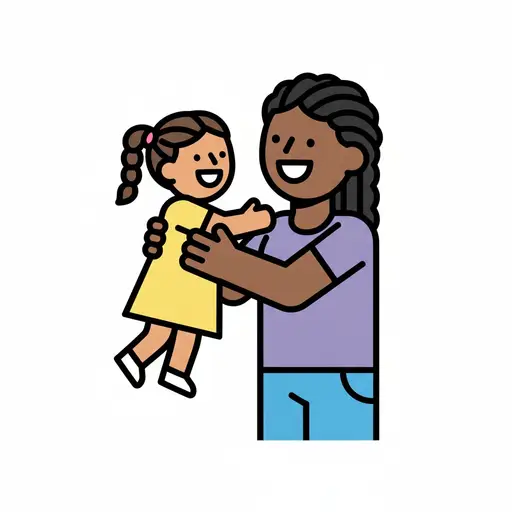
A parent picks up the child
An adult happily lifts a child up in their arms.
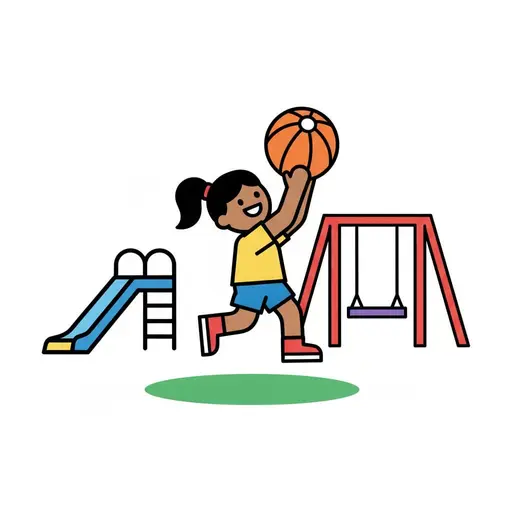
Active play
A girl jumps with a basketball in a playground with a slide and swings.

Activities
A child surrounded by icons for a book, paint palette, ball and building block.
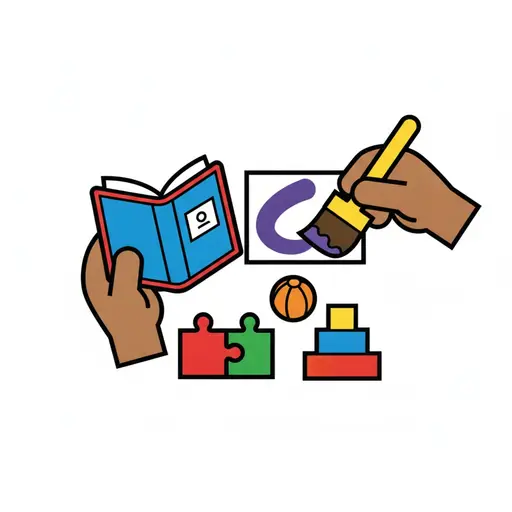
Activity
Hands holding a book and a paintbrush, surrounded by a puzzle, a ball and buildi...
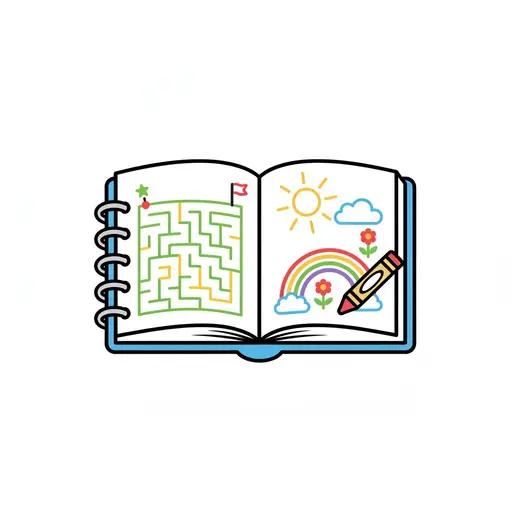
Activity book
An open activity book showing a maze on one page and a drawing of a sun, rainbow...
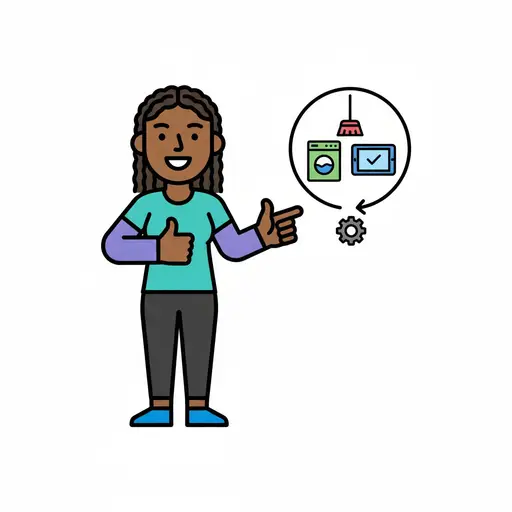
Activity Training
A woman gives a thumbs-up and points to a circle with symbols for household task...
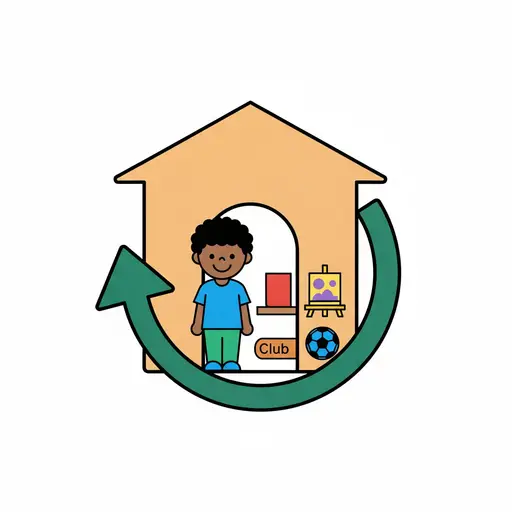
After school club
A boy stands in a club house with a circular arrow around it.
Take the visual supports with you
In Routined you build schedules from these pictures, add timers and voice instructions, and your child follows the day on their own.


* 14-day free trial, then $2.39 a month or $20.99 a year (US pricing). Cancel anytime.