Play the marching drum
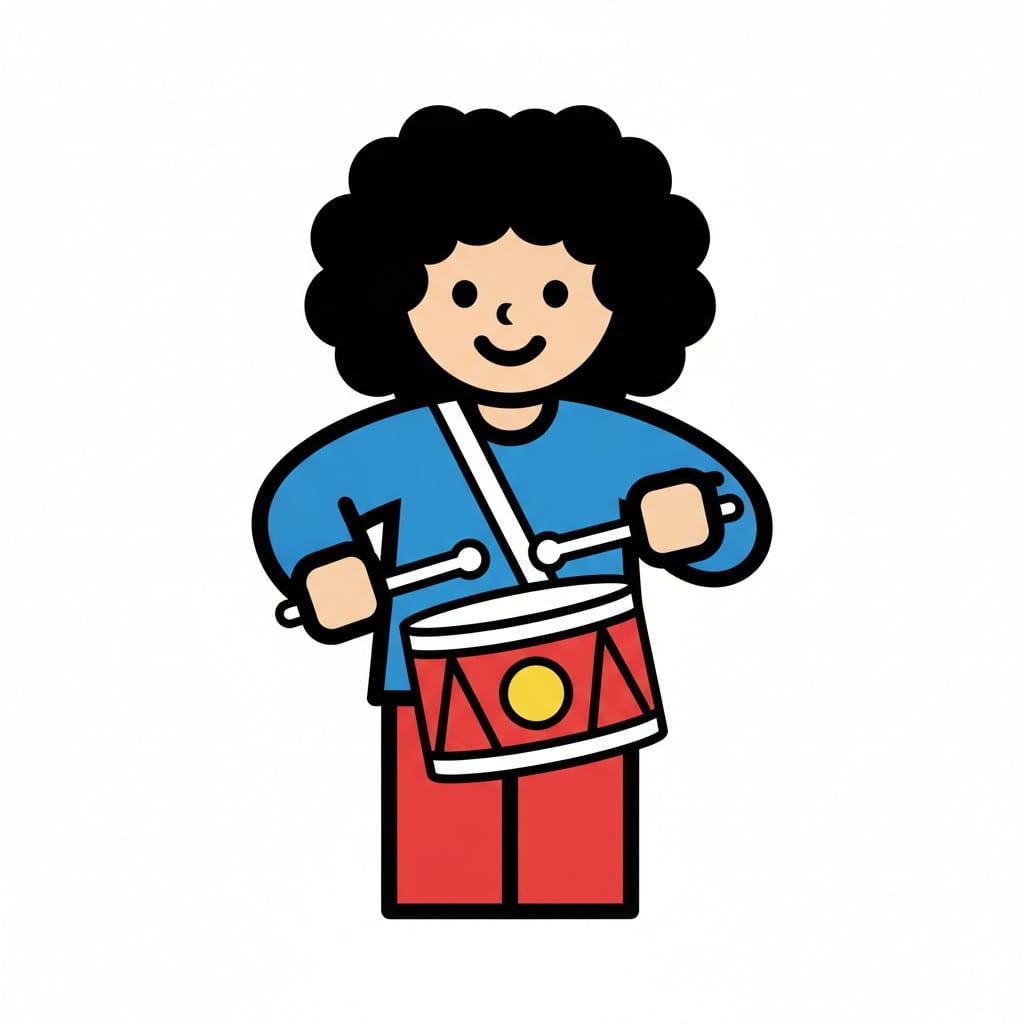
A marching drum makes three demands at once: the body carries the weight, the ears take the sound and the hands keep the beat. That is a lot to coordinate for a beginner. The pictures below split the parts so one at a time can be practised.
 ♀
♀Play the marching drum
A child plays a red and white marching drum with sticks and a shoulder strap.
About this visual support
The unusual thing about a drum is that the sound is not only heard, it is felt. The beat travels through the skin, into the harness and on into the chest, and anyone sensitive to sound notices it long before anybody else calls it loud. At the same time the instrument hangs on the body and changes the balance, so posture and breathing are affected while the hands are meant to be doing something else entirely.
Visual support lets the parts be practised separately before they are put together. One picture for putting on the harness, one for the grip on the sticks and one for the beats means nobody has to hold the whole sequence in their head at once. It also lets a parent who does not play help out, because the steps are visible rather than needing explanation.
A concrete tip is to practise the rhythm on the thigh before the drum goes on. The movement is then already in the hand when the sound is added, which removes one layer. In Routined the practice can sit as a short timed item a few days a week, and the app can be tried for fourteen days at no cost.
Use this image in a schedule
Build your own visual schedule with this image and download it as a print-ready PDF. Completely free.
More similar visual supports
Practise the saxophone
A boy blows into a saxophone while music notes float around him.
Recorder
A smiling boy puts a recorder into a red backpack.
Guitar
A brown acoustic guitar.
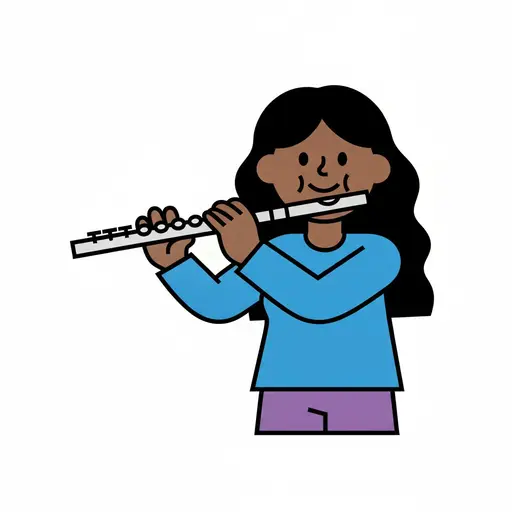
Flute
A woman plays the flute.
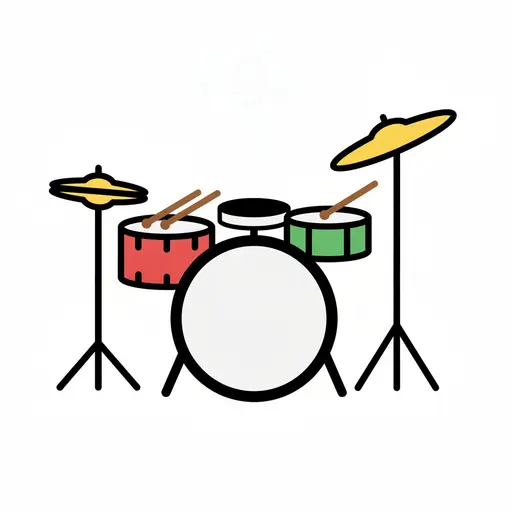
Drums
A drum kit with a large bass drum, a red and a green snare drum, two yellow cymb...
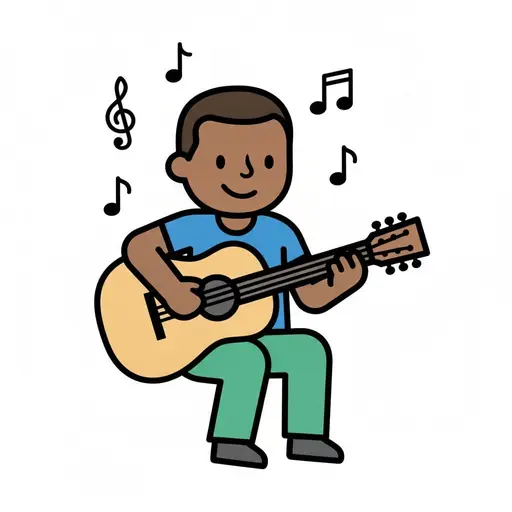
Practise the instrument
A boy sits playing an acoustic guitar with music notes and a treble clef beside.
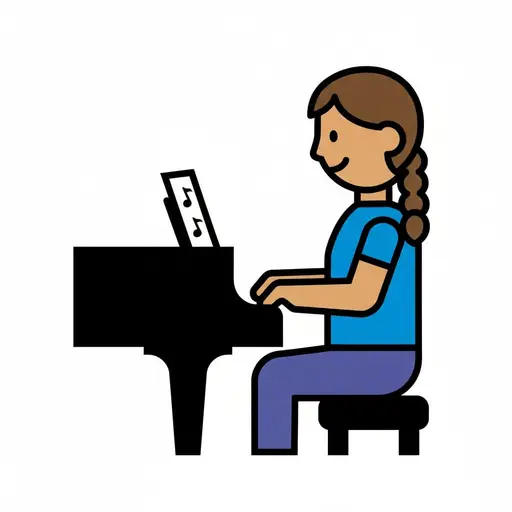
Practice piano
A girl with a braid sits on a stool and plays a black grand piano with sheet mus...
Piano
A piano with a bench in front of it.
This visual support in other languages
Take the visual supports with you
In Routined you build schedules from these pictures, add timers and voice instructions, and your child follows the day on their own.


* 14-day free trial, then $2.39 a month or $20.99 a year (US pricing). Cancel anytime.