Play with siblings
Playing together means negotiating rules, taking turns and sometimes losing without everything falling apart. That is a lot to manage at once, and the road from laughter to quarrel is short. The visual support below makes the rules visible before the play even starts.
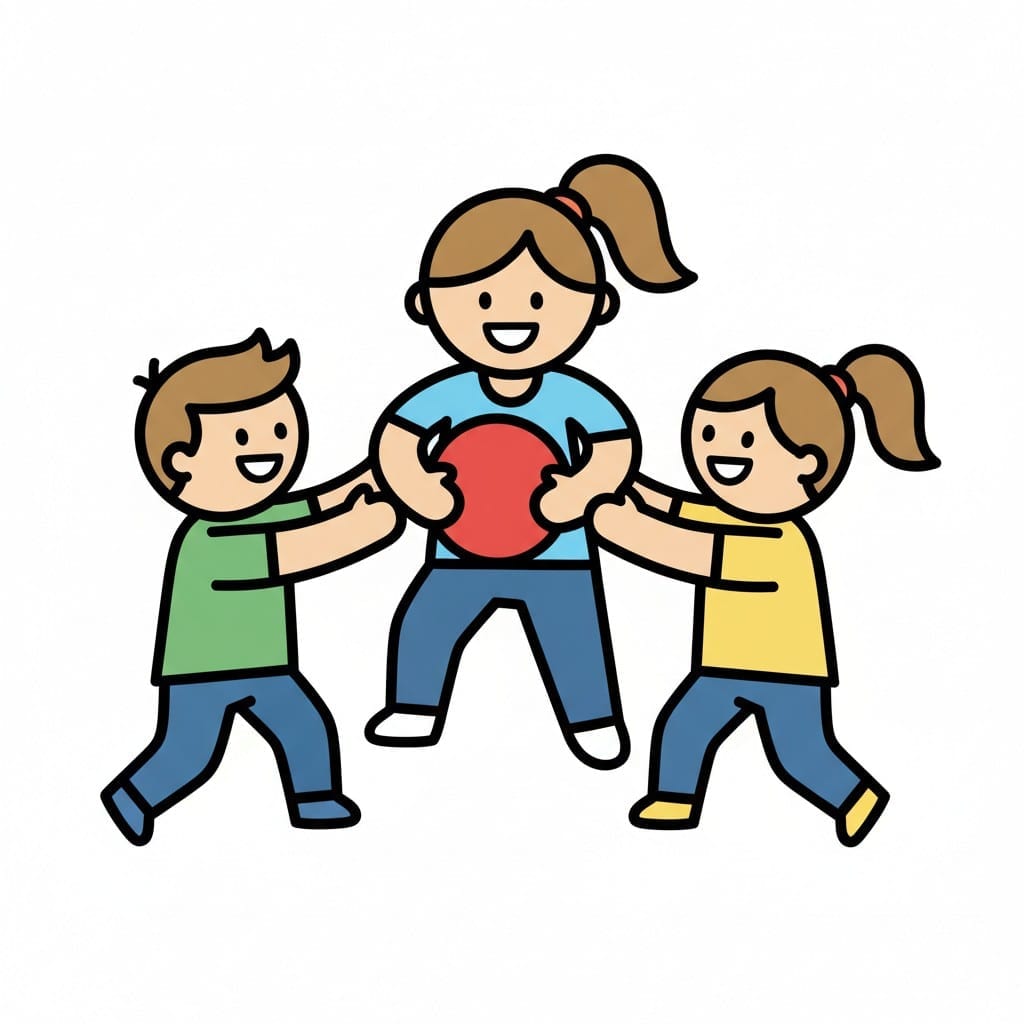 ♀
♀Sharing a ball
Three children playing together and holding a red ball
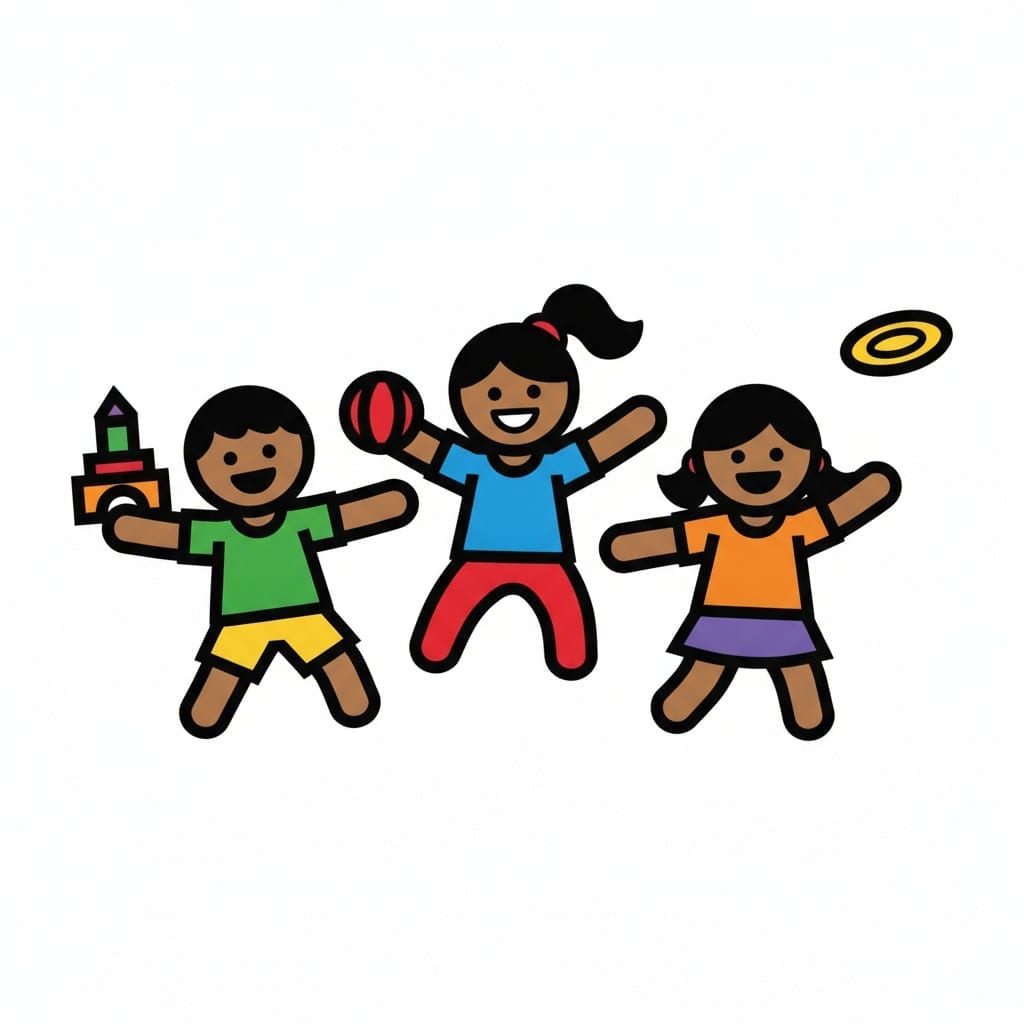 ♀
♀Playing together
Three children happily playing together with a ball and a frisbee
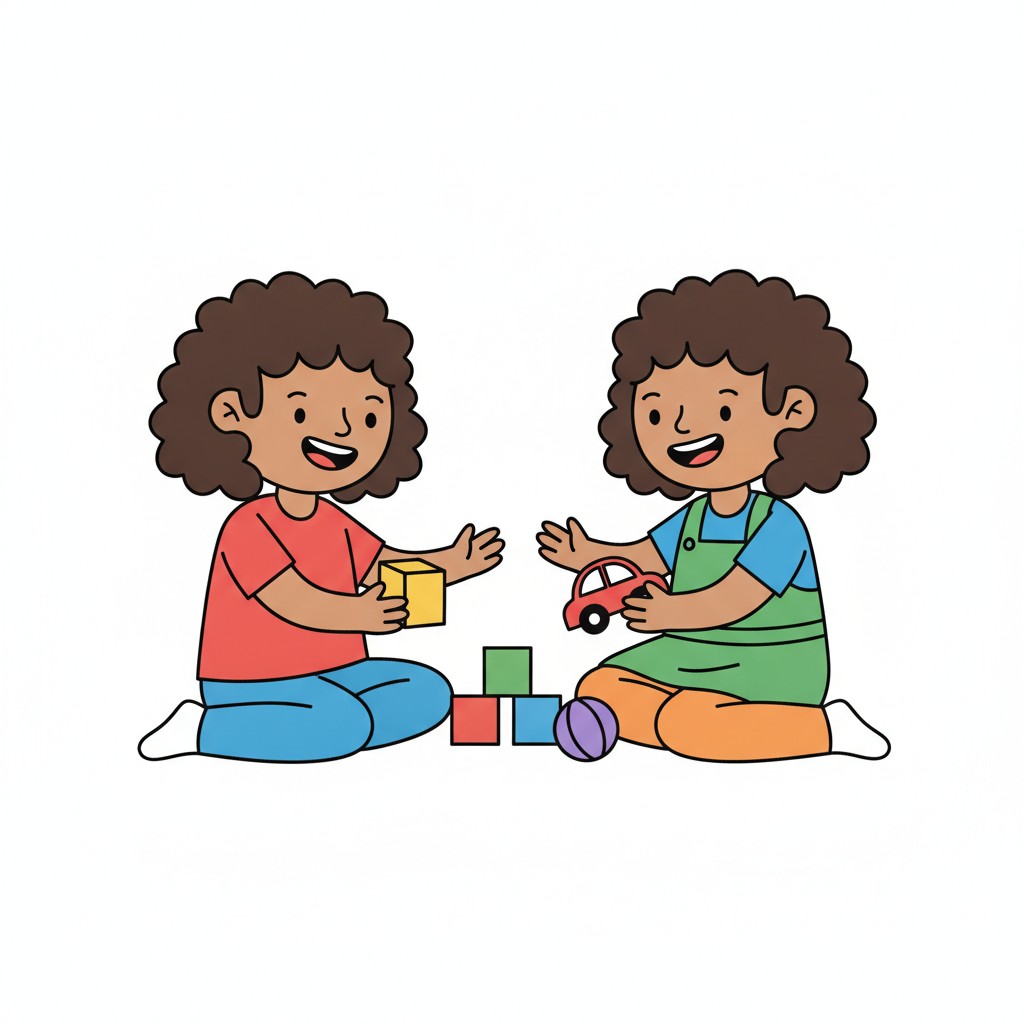 ♀
♀Play with your sibling
Two children sit on the floor playing with blocks, a car and a ball.
About this visual support
It almost always starts well. Then one wants to go first, the other calls it cheating, and a minute later someone is crying. Play between siblings is one of the most demanding social situations a child meets, because it asks them to read another person, give and take, and hold back their own will in the moment, all at once.
A visual support can lower the temperature by moving the rules outside the children. When the turn order and what counts sit on a picture, it is no longer one child's word against the other's but something both can point to. The fight over whose turn it is becomes a glance at the picture instead of a power struggle. That small shift, from person to picture, is often enough to keep the play going.
One tip just for sibling play: decide together beforehand what happens when someone loses, with its own picture, so the disappointment has somewhere to go. Then losing becomes part of the game rather than a breakdown. In Routined you can make simple turn-taking schedules both children can see, with fourteen days free to try. The images below also print well to lay between the children during play.
Use this image in a schedule
Build your own visual schedule with this image and download it as a print-ready PDF. Completely free.

More similar visual supports
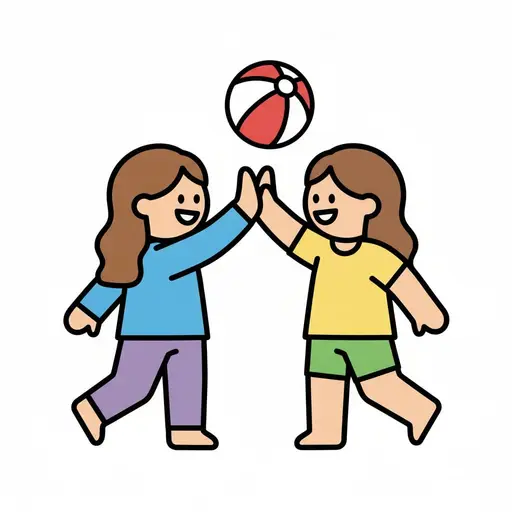
Play with friend
Two children high-five each other while a beach ball is in the air.
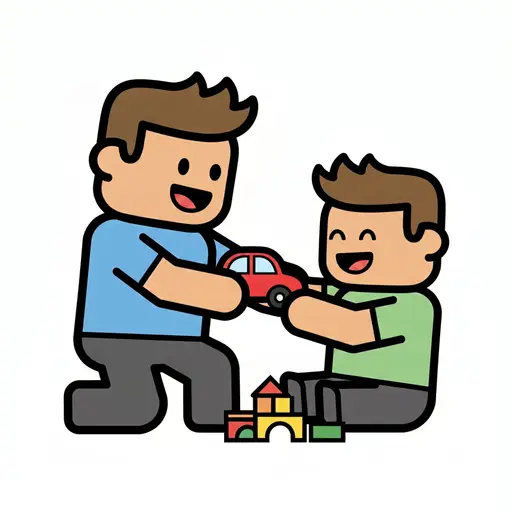
Play with little brother
Two brothers play together with a toy car and building blocks.
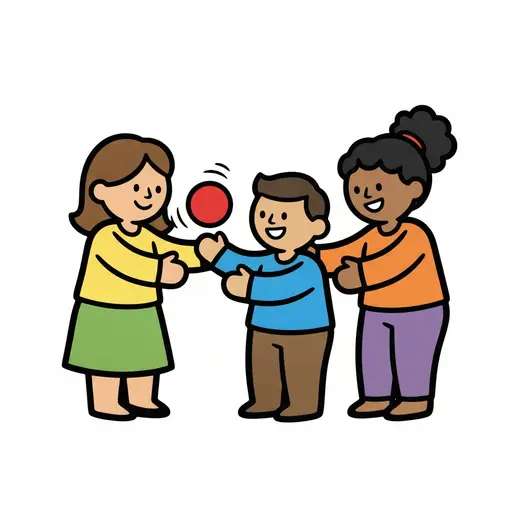
Play with mom and aunt
A child plays with a ball together with mom and aunt.
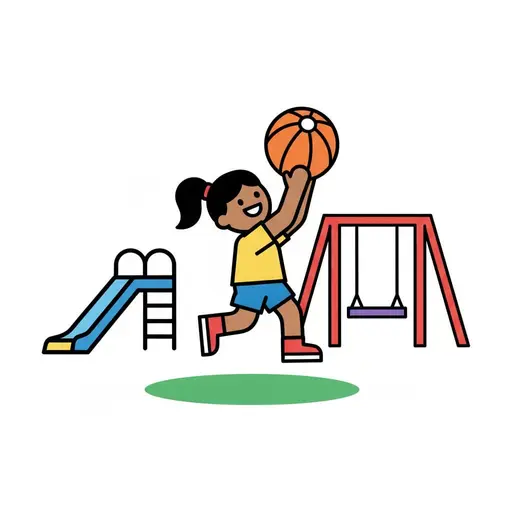
Active play
A girl jumps with a basketball in a playground with a slide and swings.
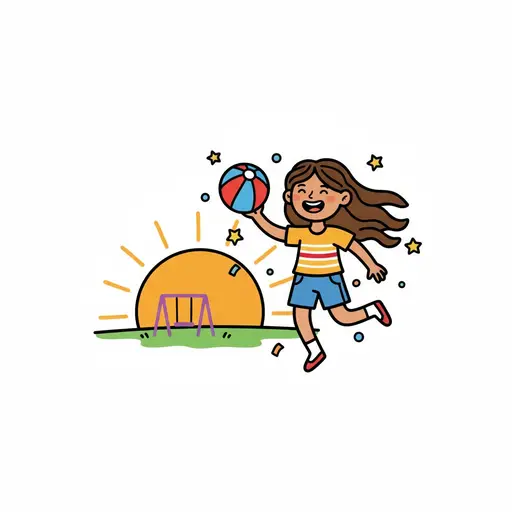
Afternoon playtime
A happy girl runs and plays with a ball outdoors in front of a playground.
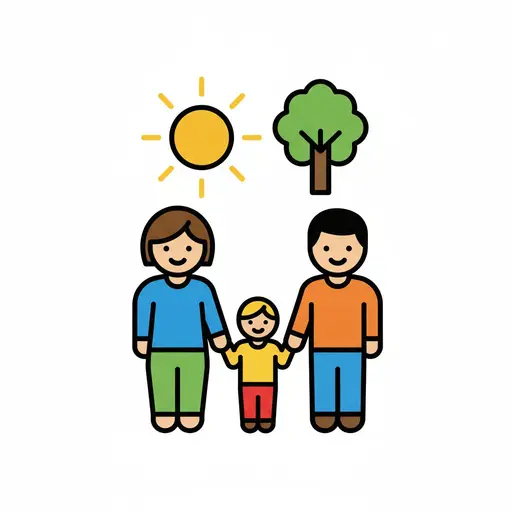
Family time
Two adults and a child hold hands under a sun and a tree.
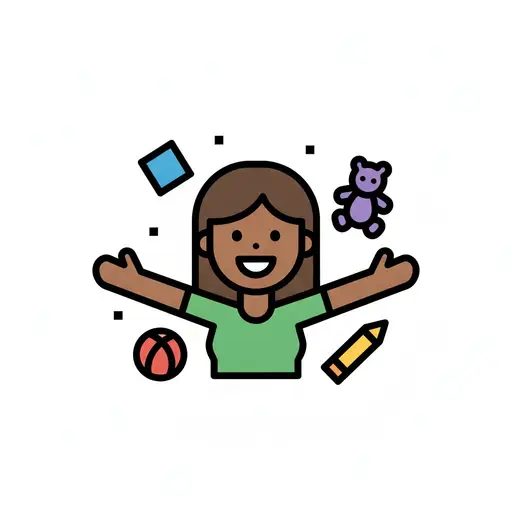
Free play
A cheerful girl in a green top spreads her arms while a ball, a block, a teddy a...

Get up and play
A smiling girl in a yellow shirt and blue trousers jumping while holding a blue ...
Take the visual supports with you
In Routined you build schedules from these pictures, add timers and voice instructions, and your child follows the day on their own.


* 14-day free trial included for new users.