Sibling activity
When two siblings play the same game, two wills meet, and without an agreement on who decides what, the teamwork quickly tips into squabbling. The steps below give the play a shared plan both can point to.
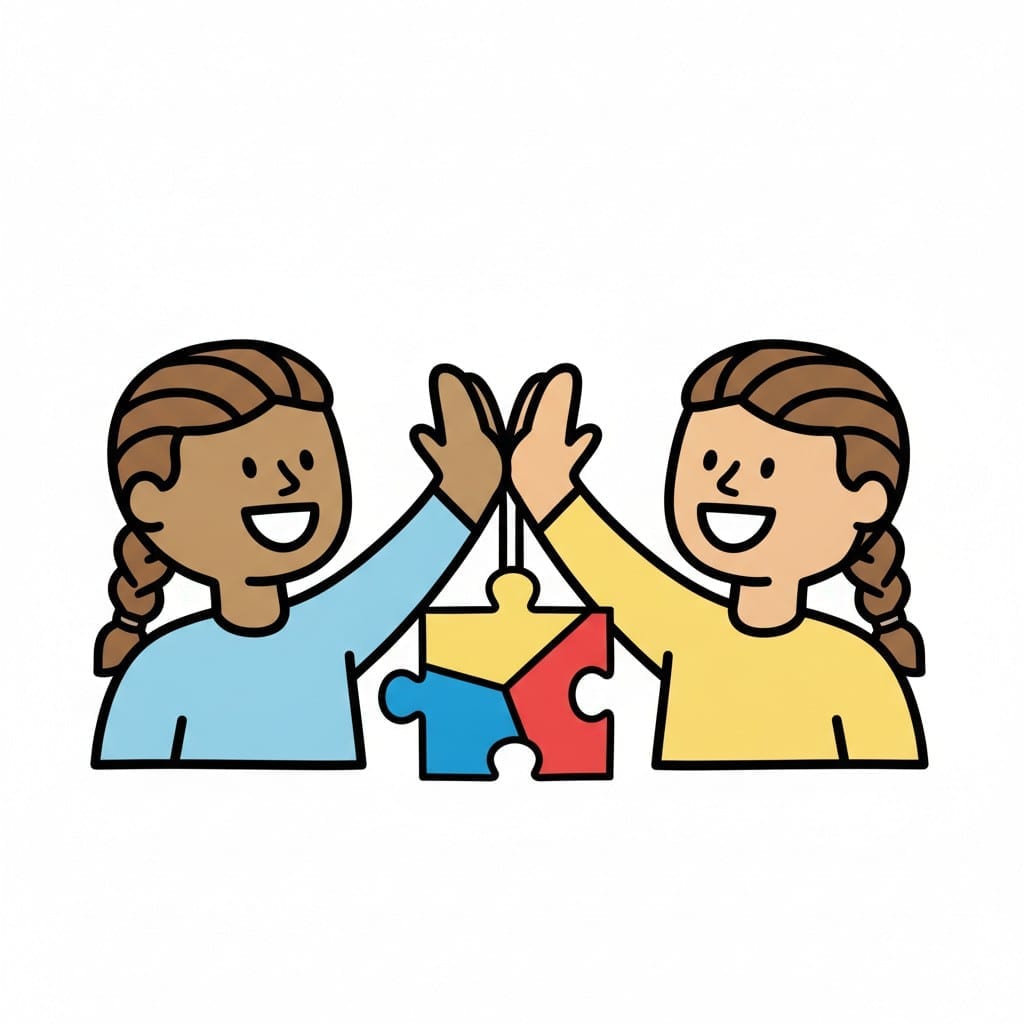 ♀
♀Sibling activity
Two happy children give each other a high five above connected puzzle pieces
About this visual support
Cooperation sounds simple until two children try to build the same puzzle or invent the same game. Two ideas about how it should go now have to share one room, and the moment one child feels the other is taking over, an argument is only a step away. It is not unkindness, but two wills that do not yet have the tools to meet halfway.
Visual support gives the cooperation an outside structure that neither child owns alone. When a picture shows that we take turns placing a piece, or that one child picks the game and the other picks where, the compromise becomes something concrete to lean on instead of a negotiation that has to be won.
A practical tip is to let the children swap roles at a visible marker, such as a card that says switch now, so the lead rotates without anyone having to give it up willingly. That makes the turn-taking feel fair to both. In Routined you can add shared activities that the siblings follow together. Try the app free for fourteen days.
Use this image in a schedule
Build your own visual schedule with this image and download it as a print-ready PDF. Completely free.

More similar visual supports
Do a puzzle
A colorful four-piece puzzle with the last blue piece about to be placed.
Do puzzle
A girl with brown hair in a ponytail sits at a table assembling a puzzle with se...
Play with dad
An adult holding a child who is playing with a yellow toy dump truck, dumping br...
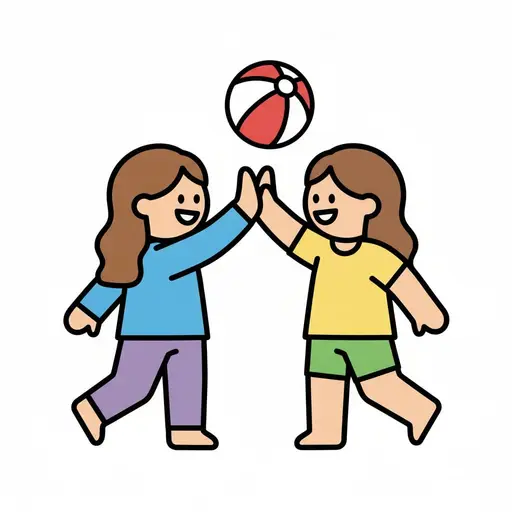
Play with friend
Two children high-five each other while a beach ball is in the air.
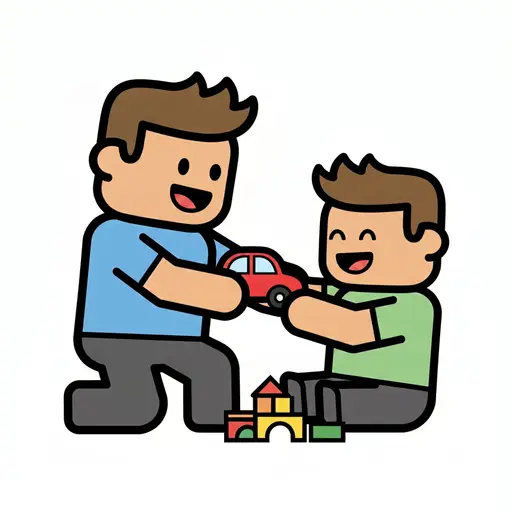
Play with little brother
Two brothers play together with a toy car and building blocks.
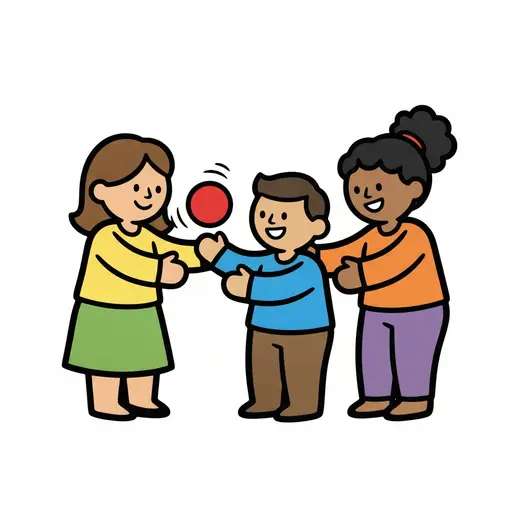
Play with mom and aunt
A child plays with a ball together with mom and aunt.
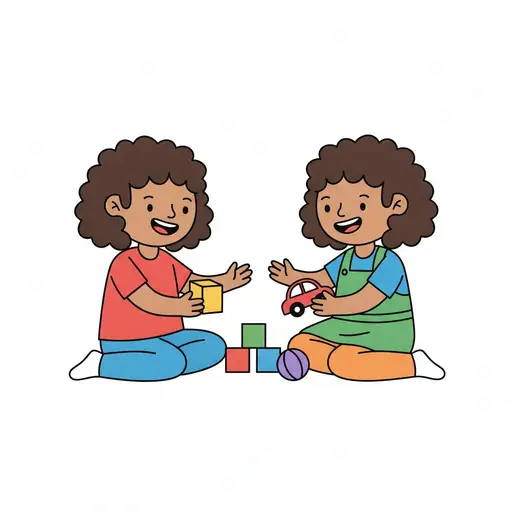
Play with siblings
Two children sit on the floor playing with blocks, a car and a ball.

Sibling
A girl and a boy hold hands with a heart above them
Take the visual supports with you
In Routined you build schedules from these pictures, add timers and voice instructions, and your child follows the day on their own.


* 14-day free trial included for new users.