Sunday routines
Sunday is no longer the weekend and not quite a weekday either. That drift is what makes the evening land harder than expected. The steps below mark the transition while it is still happening.
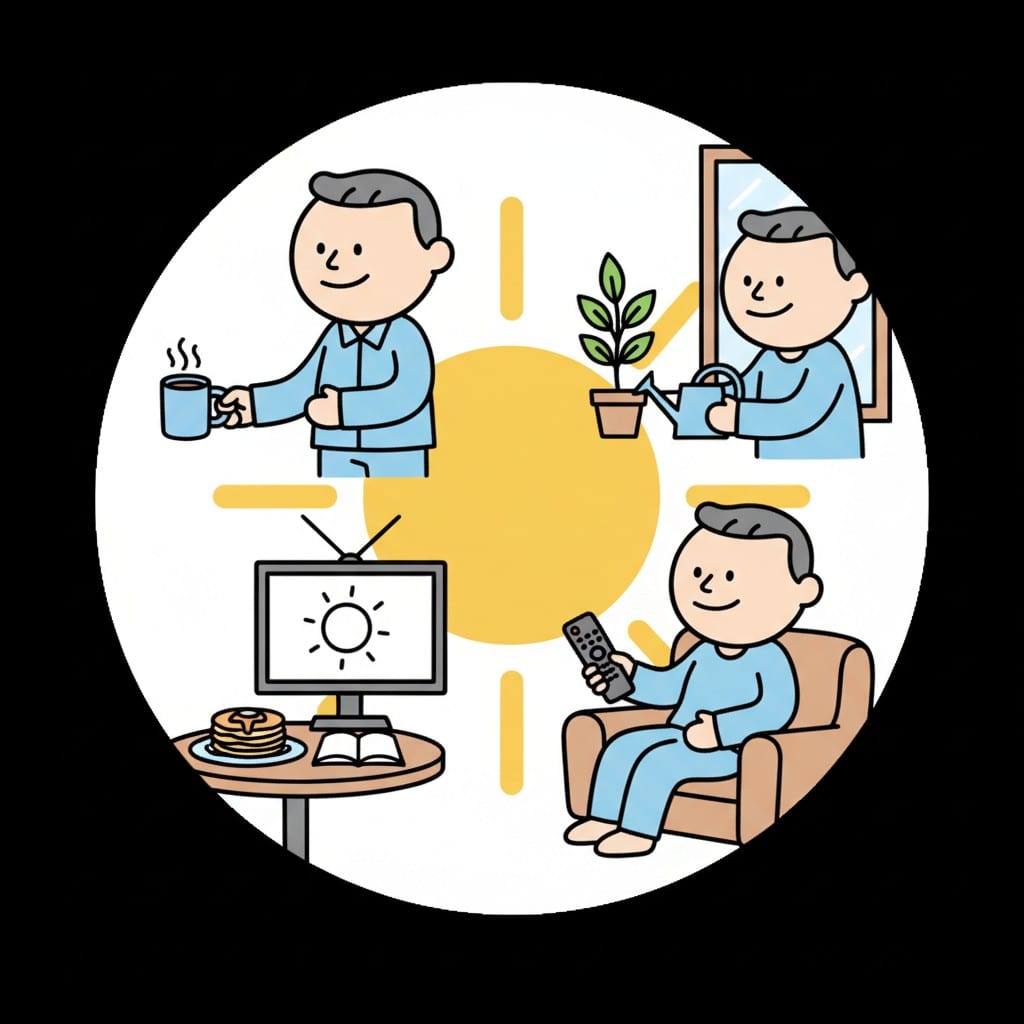 ♂
♂Man with Sunday routines
Illustration of a man performing various Sunday routines such as drinking coffee, watering plants, watching TV, and eating pancakes.
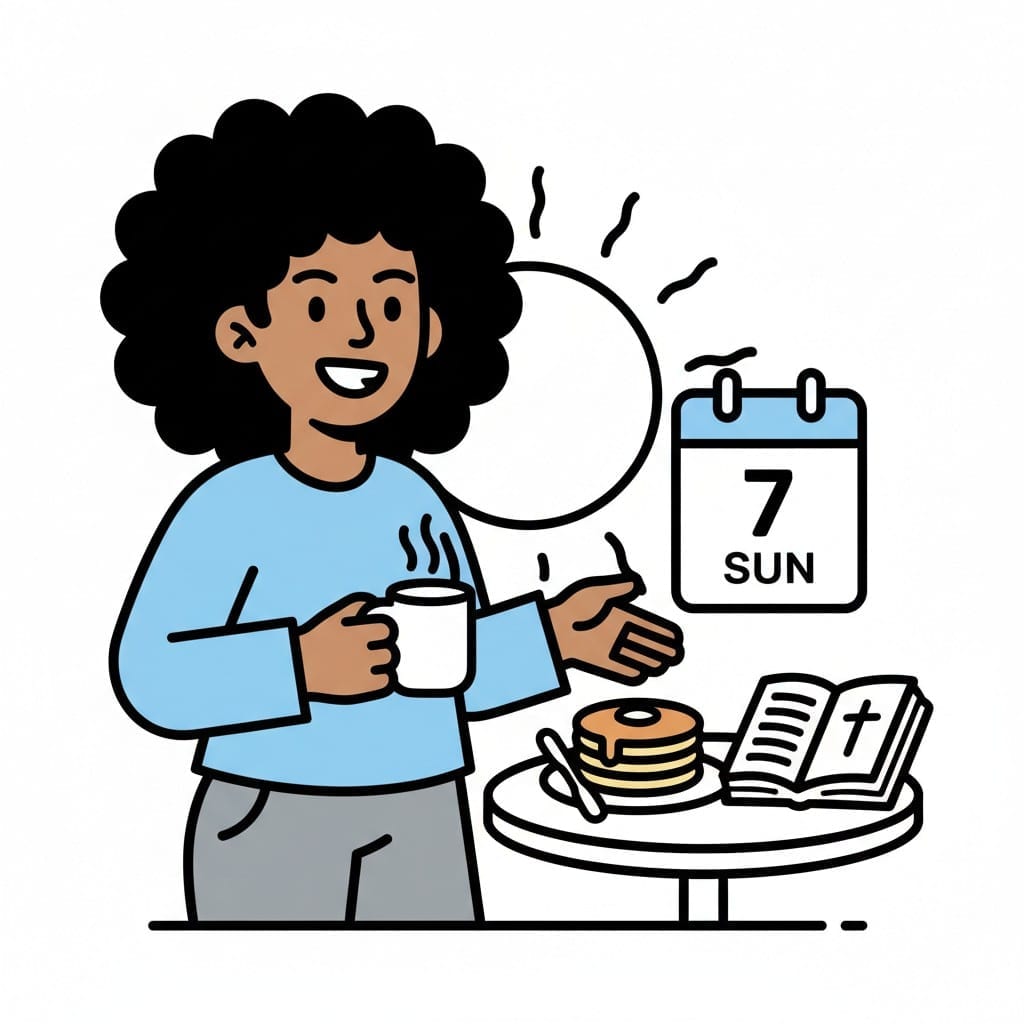 ♀
♀Woman enjoying Sunday morning
Illustration of a woman enjoying a relaxed Sunday morning with coffee, pancakes, and a book, with a calendar indicating Sunday.
About this visual support
Transitions inside a single day are often harder than transitions between days. Sunday is the clearest example: no bell rings, no clock ticks louder than any other, but somewhere between afternoon and dinner the mood of the house shifts. Your child senses it without being able to name it, and what comes out instead is mood swings or sudden friction over small things.
When Sunday routines appear as visual support, the transition moves from a feeling to a visible thing. A late breakfast, a calm activity, a shared moment, evening prep for the week, supper and bedtime each get their own card. It becomes clear that the evening is not the same as Saturday night, and just as clear that Monday is not starting now — it starts tomorrow morning.
A practical tip: place a specific card for ”pack the school bag” or ”lay out Monday clothes” somewhere after the afternoon snack. That moves preparation away from bedtime and makes the shift visible early. The whole Sunday can then be saved as a pattern in Routined if you want to reuse it.
Use this image in a schedule
Build your own visual schedule with this image and download it as a print-ready PDF. Completely free.

More similar visual supports
Slow weekend morning
A sunrise with calendar dates, a crossed-out alarm clock and pancakes.
Weekend
Saturday and Sunday are highlighted on a calendar while people rest in a hammock...

Weekend routines
An illustration of a person with symbols representing weekend activities like wa...

Holiday mornings
A red mug of hot drink beside pancakes, a sprig of evergreen and a wrapped gift.

Listen to audiobook
An open book with white pages and a blue cover, framed by grey headphones and wi...

Listen to music
Close-up of a girl with long hair wearing blue headphones, eyes closed, with mus...

Relax with movie
A boy sits comfortably in a blue armchair, watching a movie on a television scre...
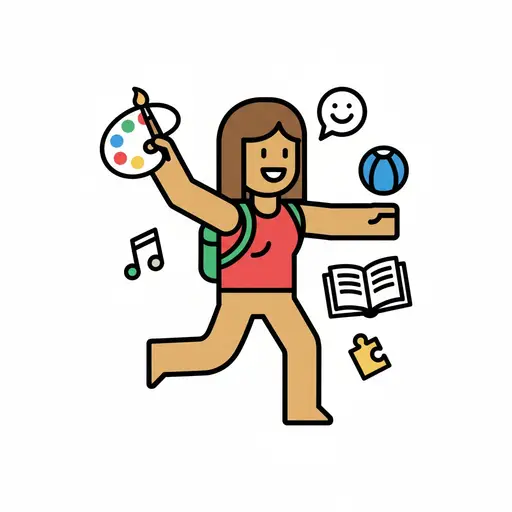
Activities
A child surrounded by icons for a book, paint palette, ball and building block.
Take the visual supports with you
In Routined you build schedules from these pictures, add timers and voice instructions, and your child follows the day on their own.


* 14-day free trial included for new users.