Watch television
Watching TV is an active wind-down, which is exactly why the legs feel heavy when it’s time to stand up. The pictures below give the body a clear cue for where that lift happens.
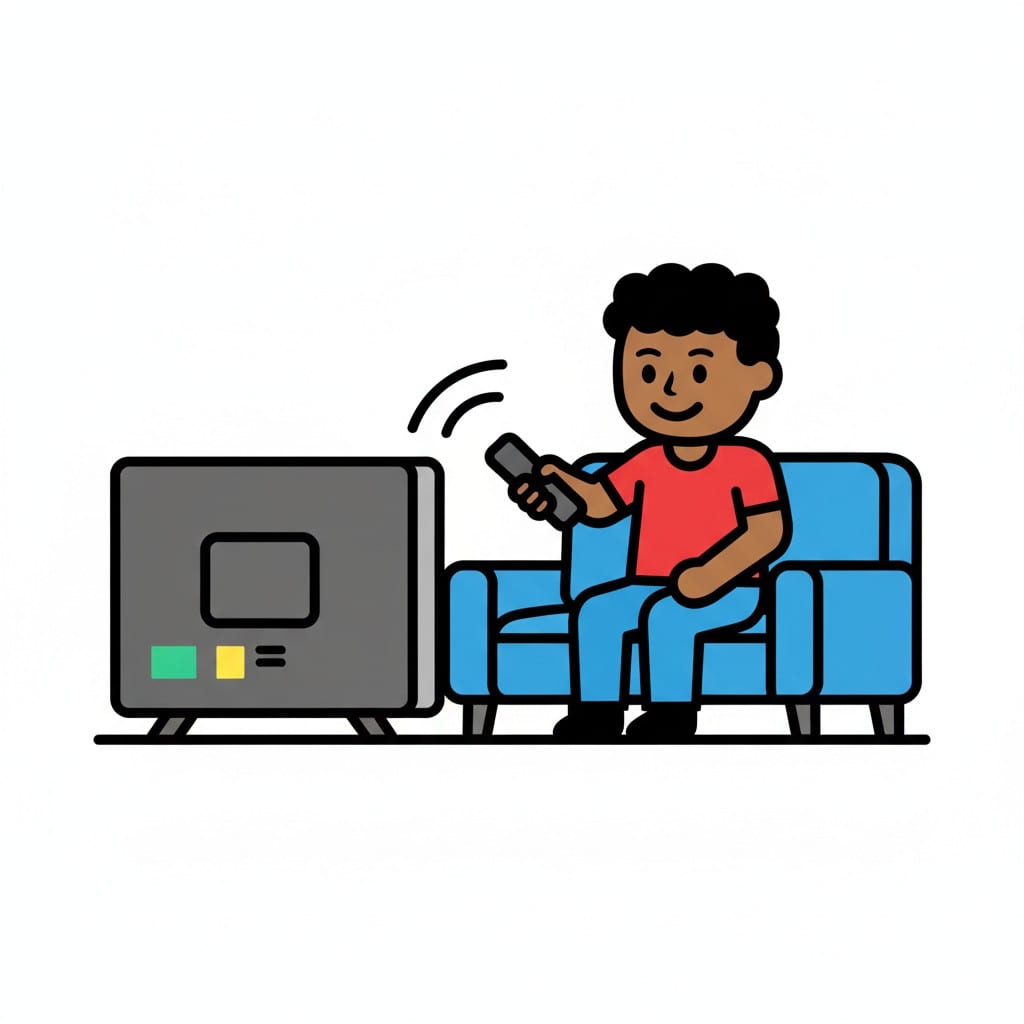 ♂
♂Watch TV
A person sits on the couch watching TV with a remote control in hand.
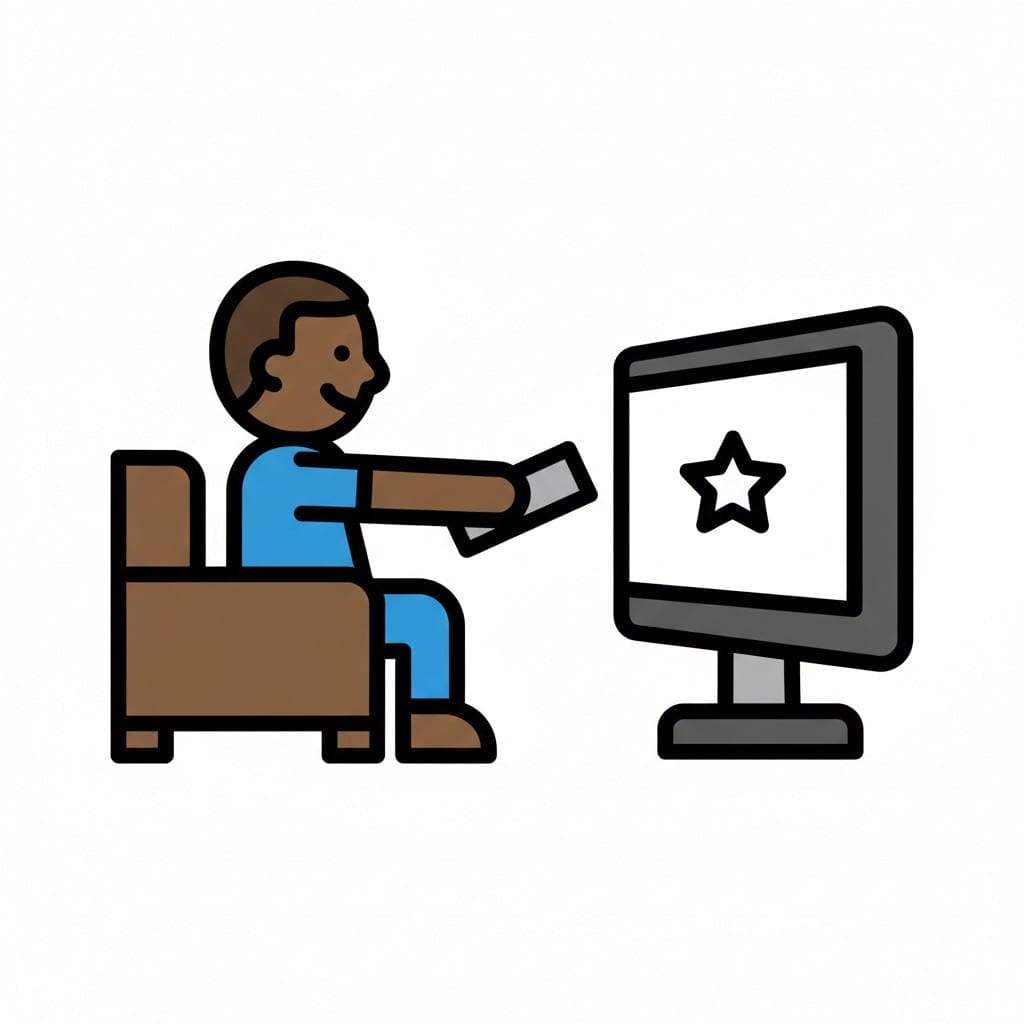 ♂
♂Watch TV
A person sits in a chair, pointing a remote control at a TV.
 ♂
♂Interact with TV
A person stands, pointing at a wall-mounted TV with a remote control in hand.
 ♂
♂Watching TV in the armchair
A man sits in a brown armchair with a remote in his hand, watching a television that shows a white star.
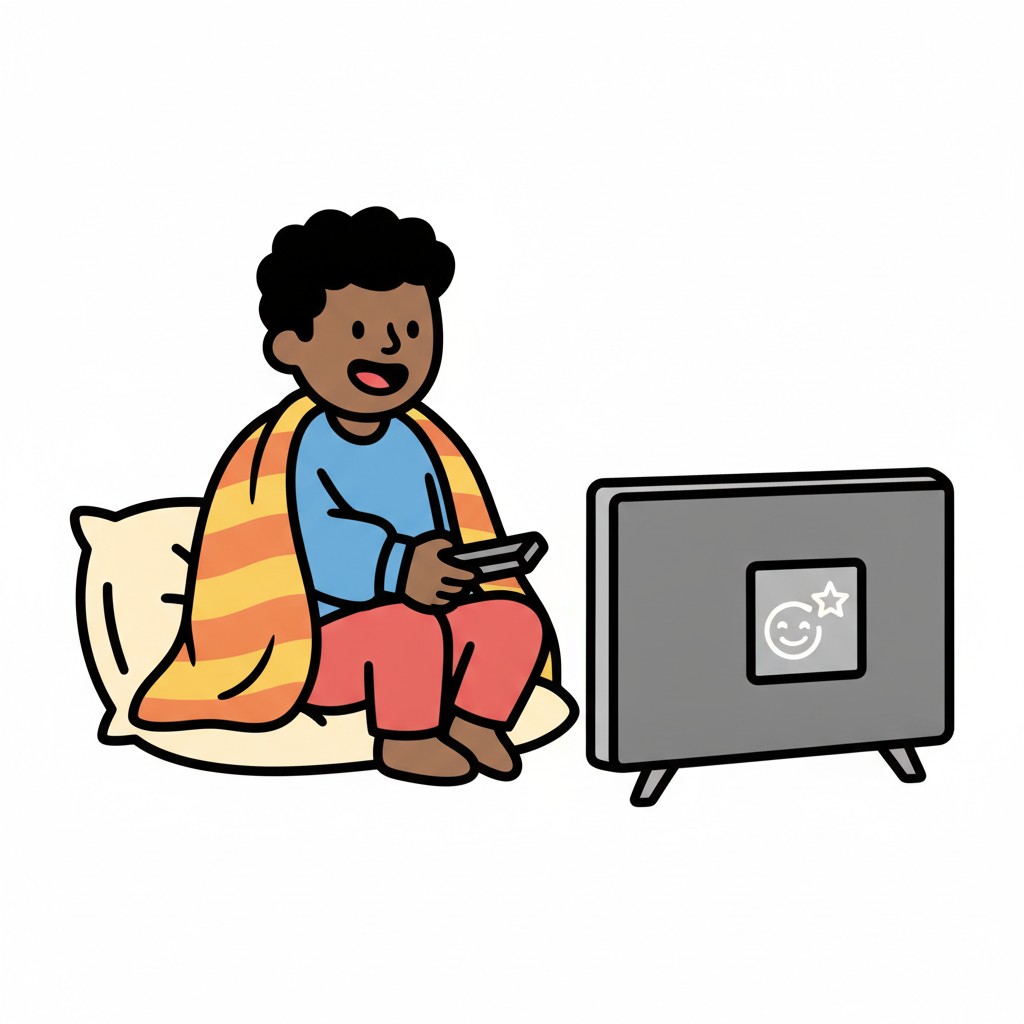 ♂
♂Cosy TV time
A boy sits under a blanket on a cushion in front of the TV.
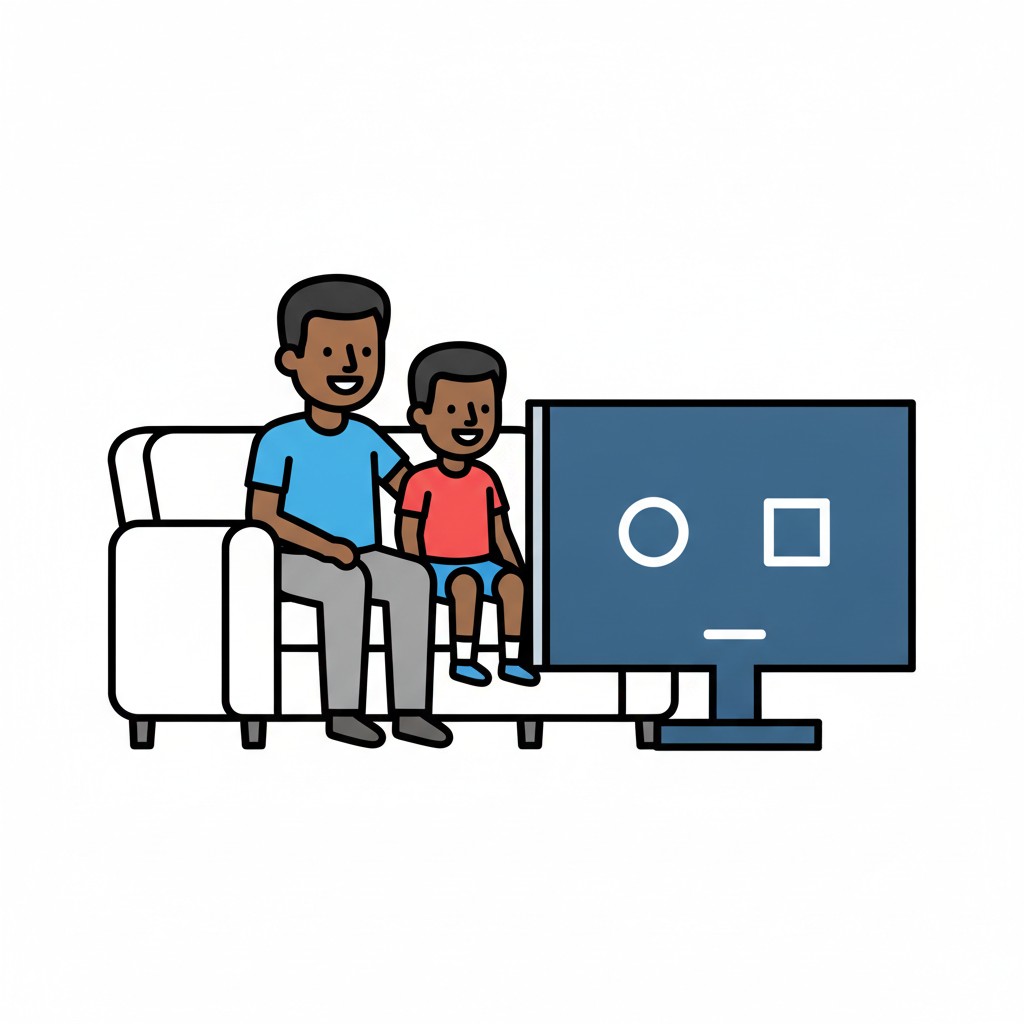 ♂
♂TV with dad
A dad and a child sit on the sofa watching TV.
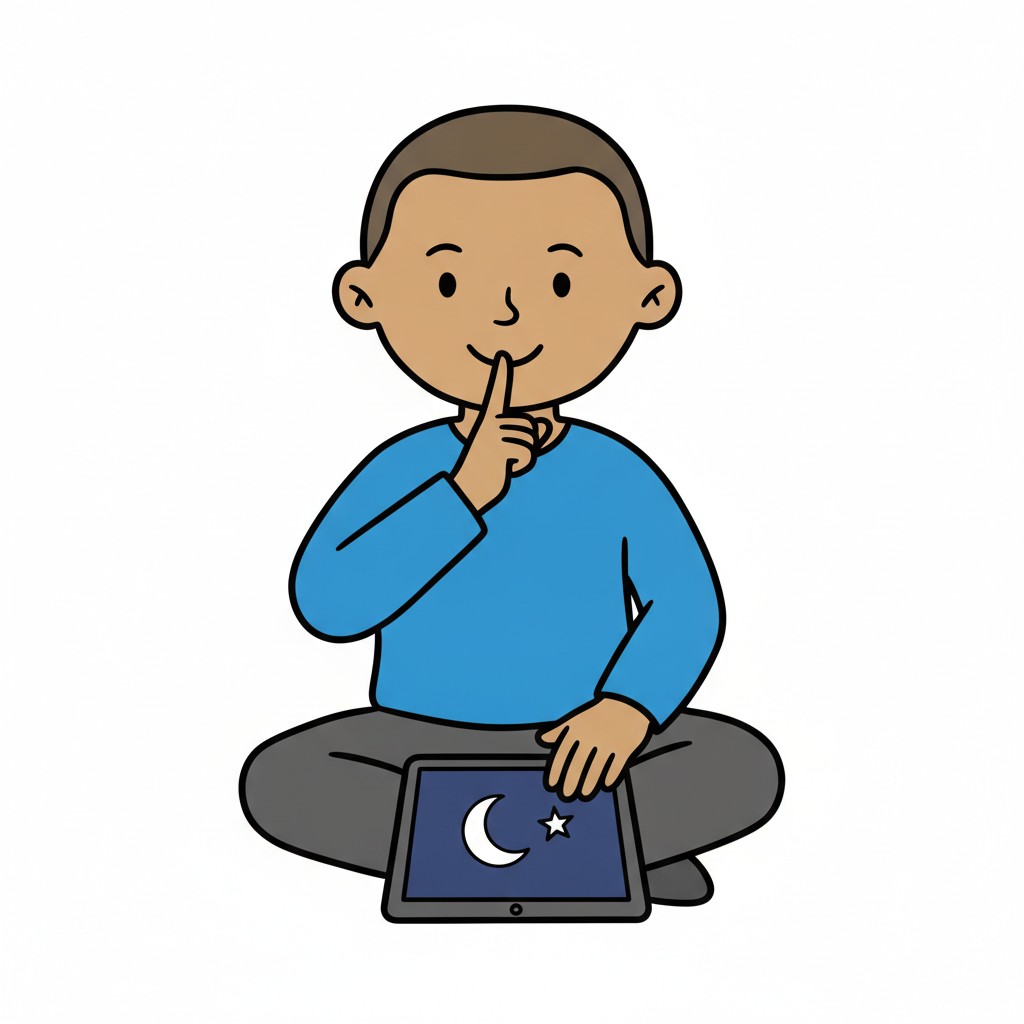 ♂
♂Watching quietly
A boy holds a finger to his lips with a tablet on his lap.
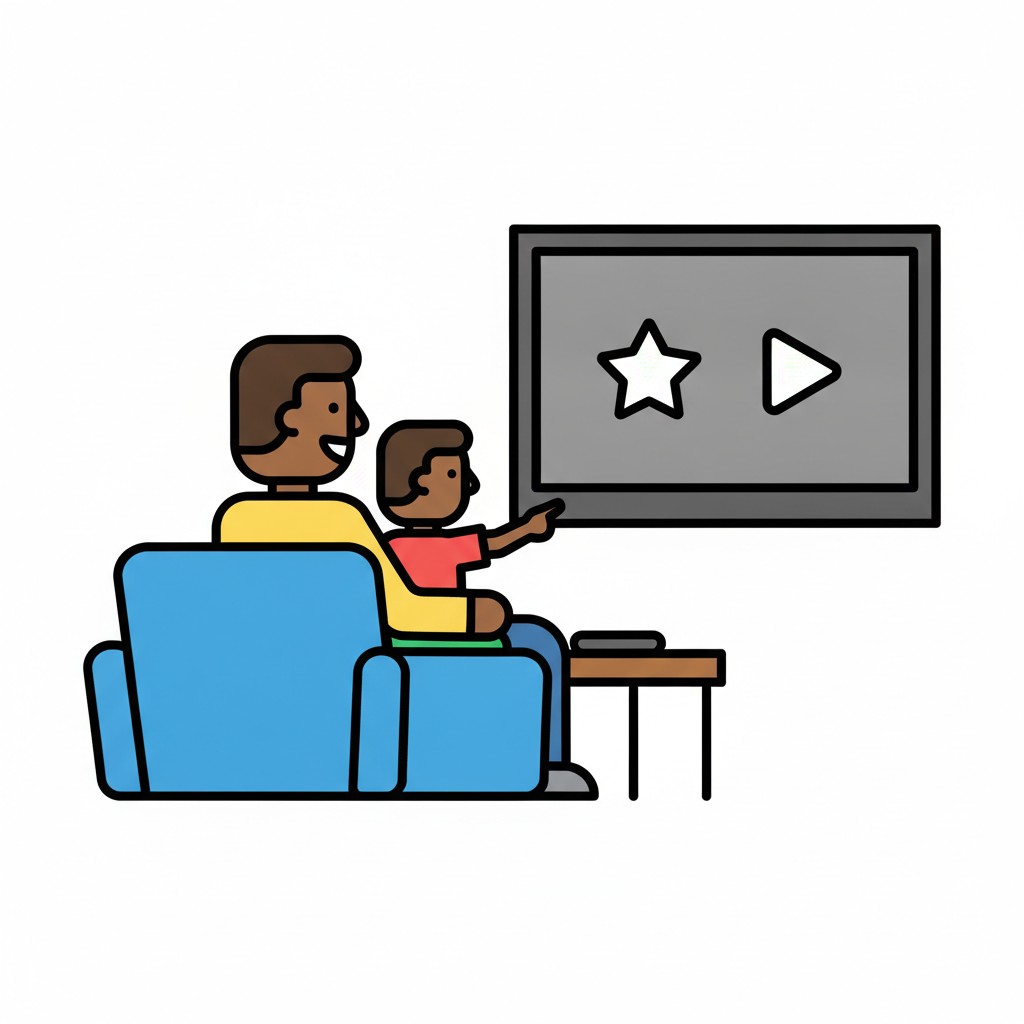 ♂
♂TV with dad
A dad and a child sit in an armchair watching TV.
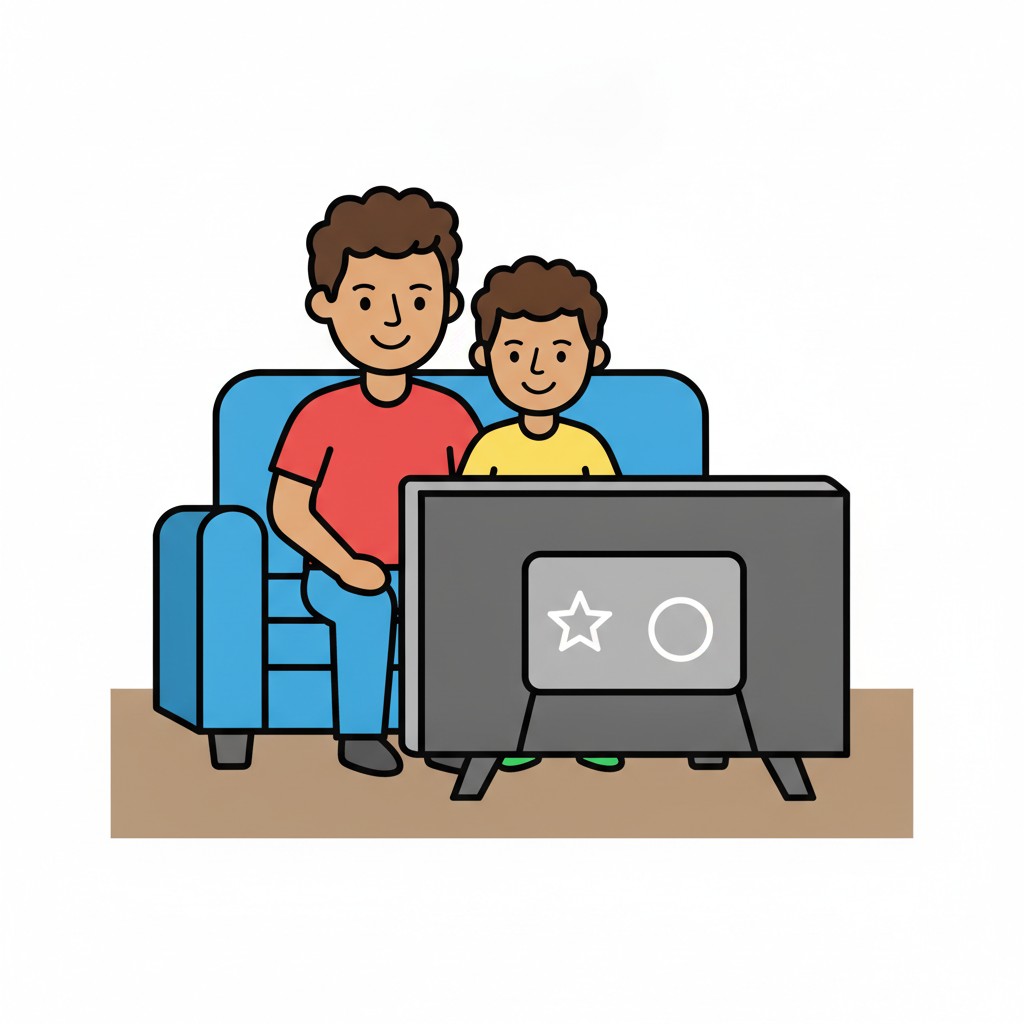 ♂
♂TV time with dad
A dad and son sit on a blue sofa in front of the TV.
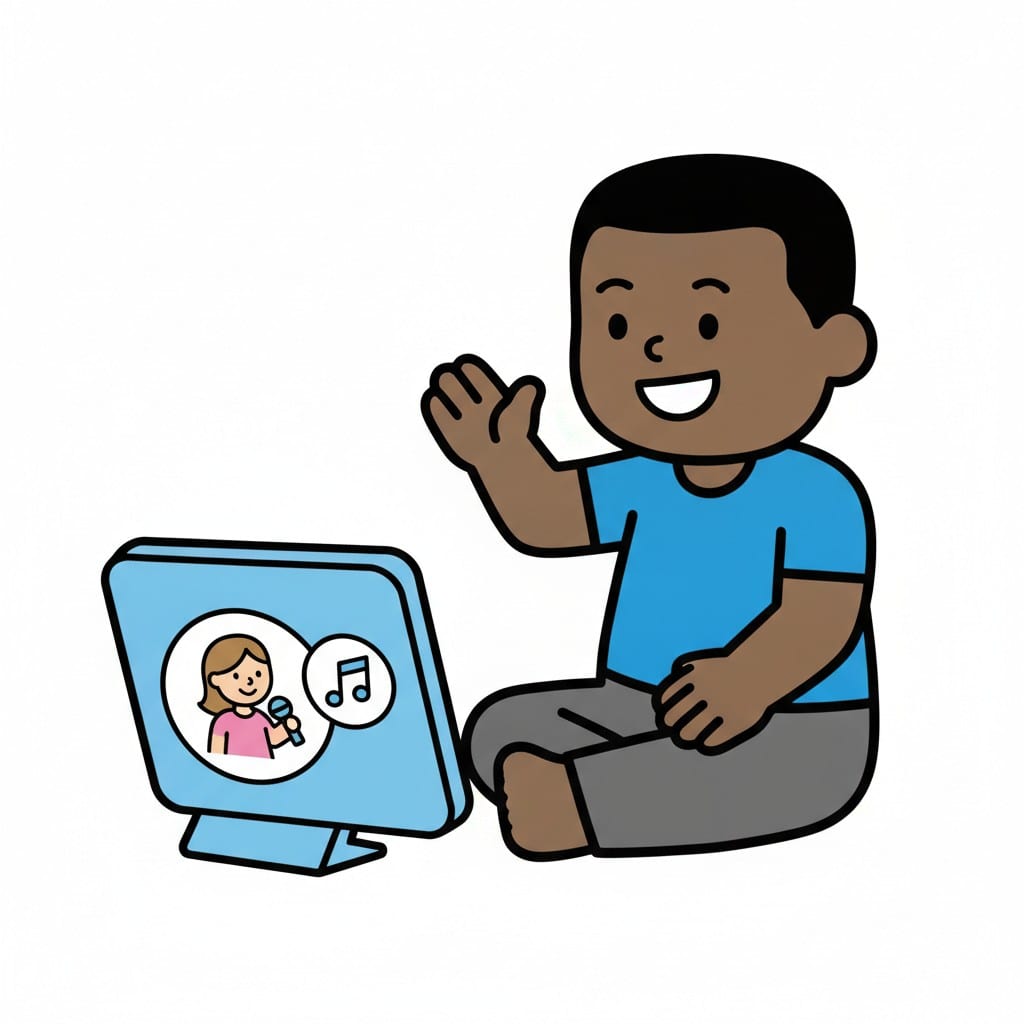 ♂
♂Watching a show
A happy boy sits on the floor and waves at a screen showing a singing girl and a music note.
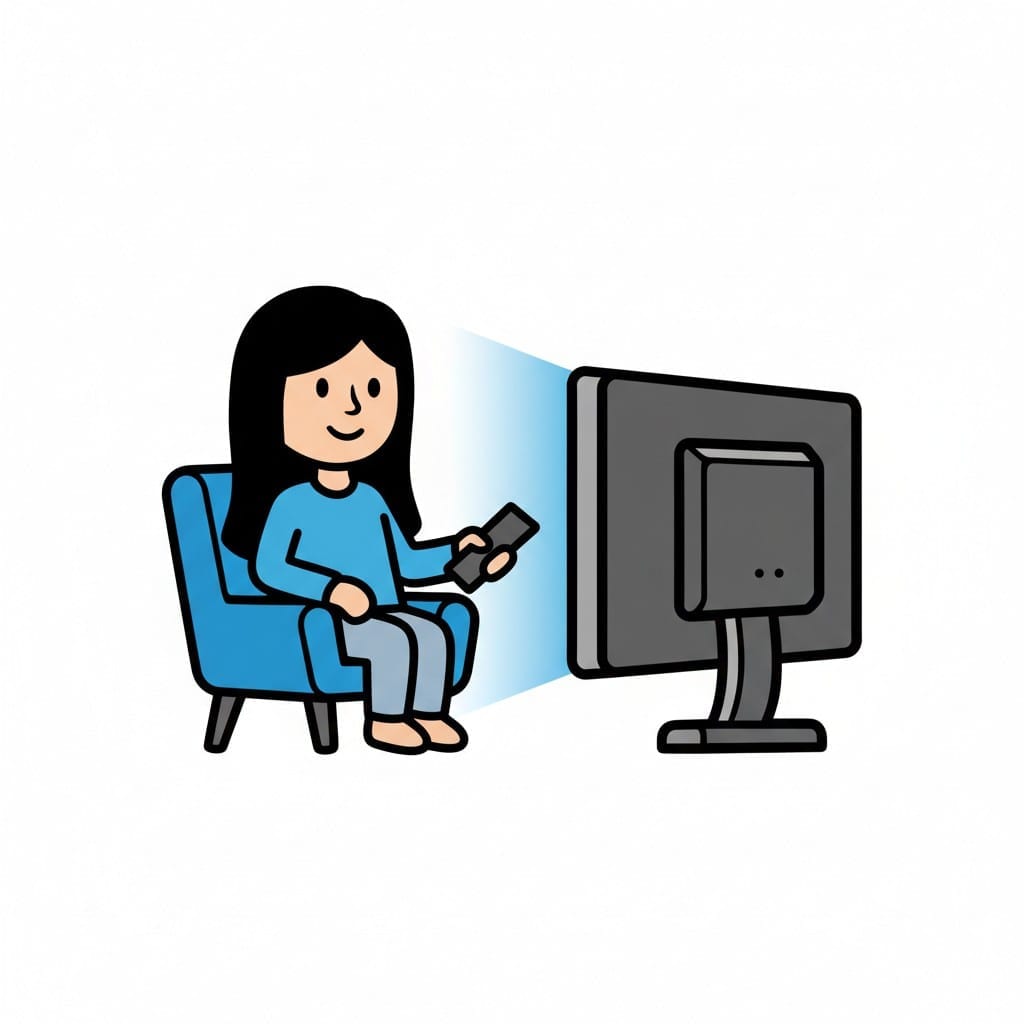 ♀
♀Watch TV
A person sits in a chair holding a remote control, watching a television.
 ♀
♀Watch TV
A girl sitting on a chair, pointing at a TV screen with a play button, indicating watching television.
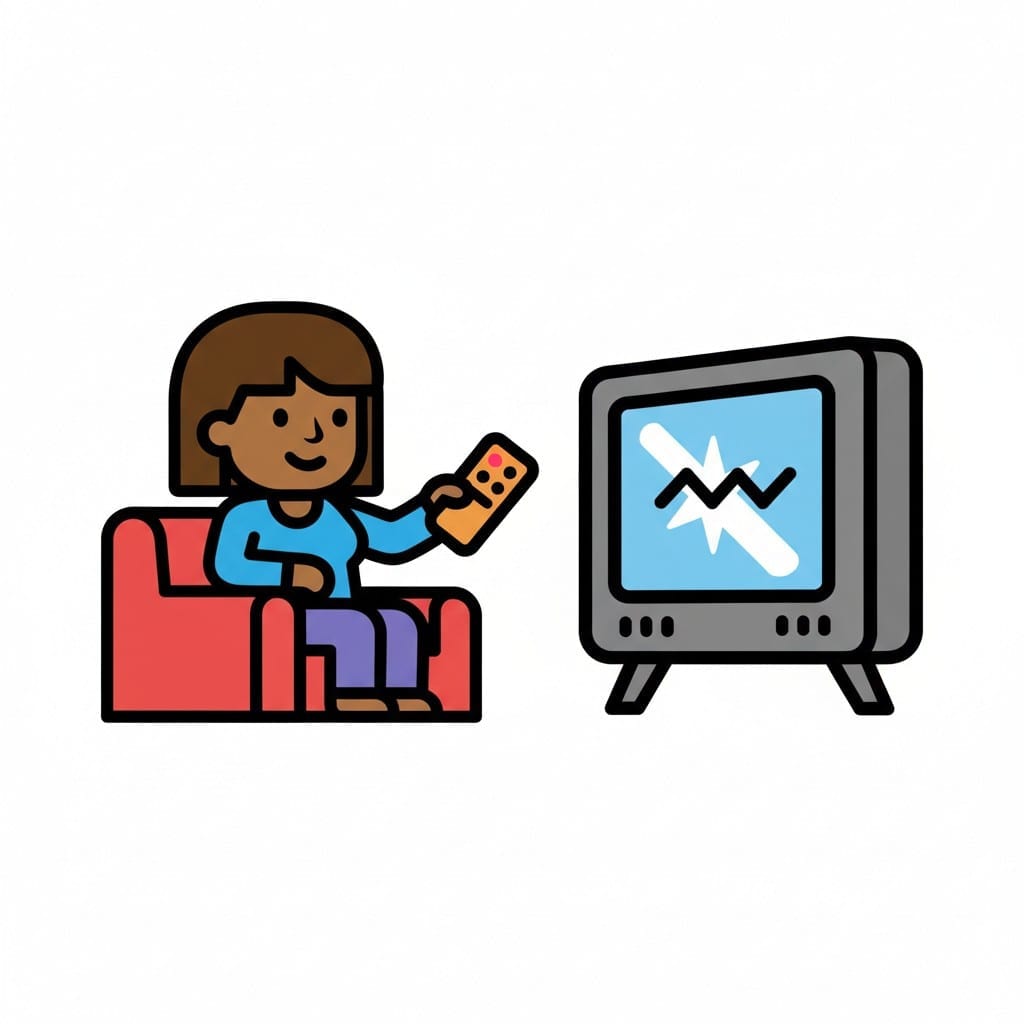 ♀
♀Watch TV
A person sitting in a red armchair, holding a remote control and watching a television.
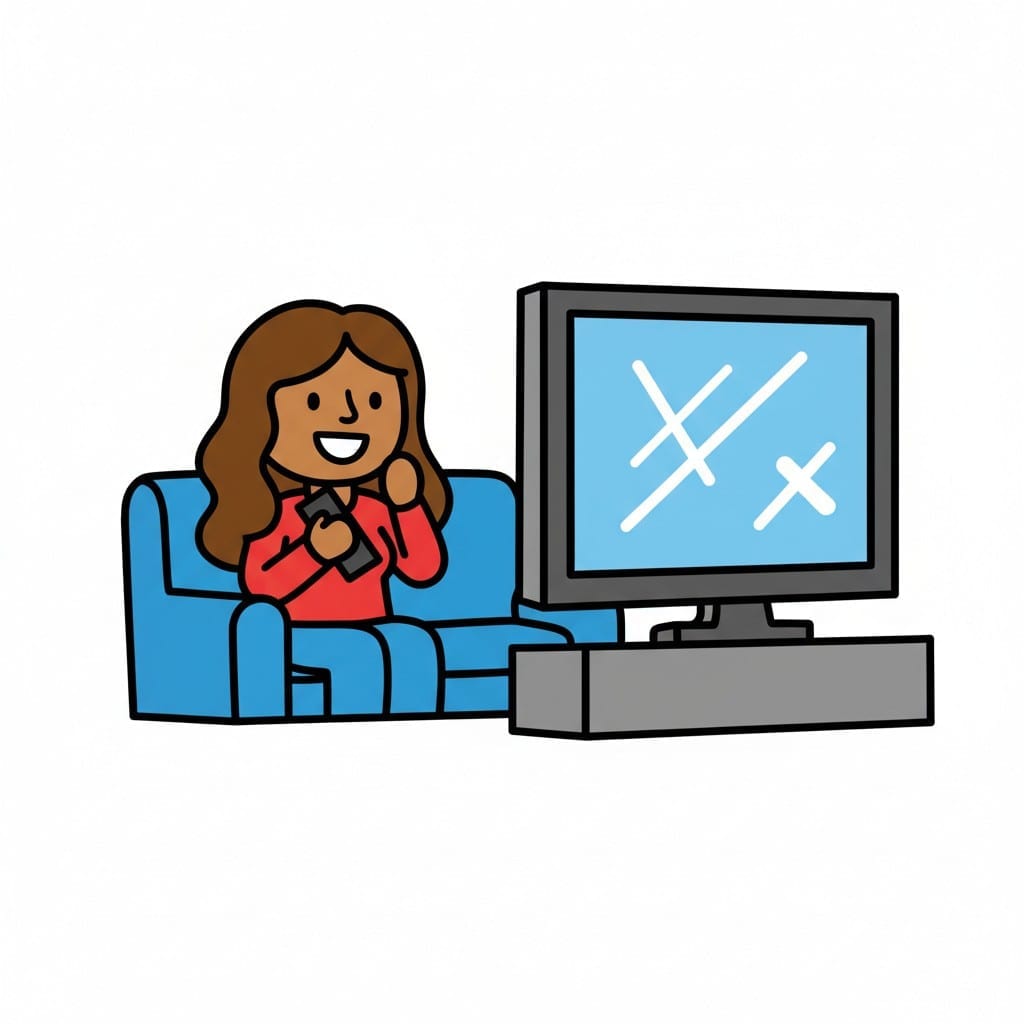 ♀
♀Watch TV
A person sits on a blue couch, holding a remote control and watching a television screen.
 ⚲
⚲Watching TV
A child sits in an armchair watching TV.
About this visual support
Once a show starts, the body slips into a half-dreaming state. Breathing slows, shoulders drop, eyes lock on the screen. This is one of the few daily moments where a child’s brain gets full rest, which is valuable – but it also means that getting up from the sofa later feels disproportionately heavy.
Visual support for TV time is therefore less about the watching itself and more about what frames it. A picture for the sofa, one for the remote, one for the episode, and one for whatever comes immediately after – a snack, evening routine, a short walk. When the next thing already exists as a picture beside the sofa, the body doesn’t have to invent the transition from scratch.
Everyday tip: use one episode as the unit instead of minutes. The picture shows one episode, then the screen goes off. That’s easier to negotiate than clock time, because the ending is already built into the story.
If you want to pair the pictures with a calm countdown for the last few minutes, that flow lives inside Routined.
Use this image in a schedule
Build your own visual schedule with this image and download it as a print-ready PDF. Completely free.
More similar visual supports
Watch movie
A simple outline drawing of a girl holding a tablet with a film reel and play bu...
Movie Night
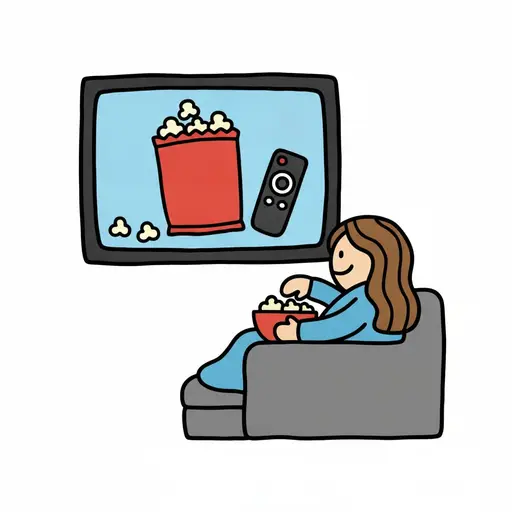
Curled up on a grey couch in blue pyjamas, a girl eats from a red popcorn bowl a...
Watch a movie with siblings
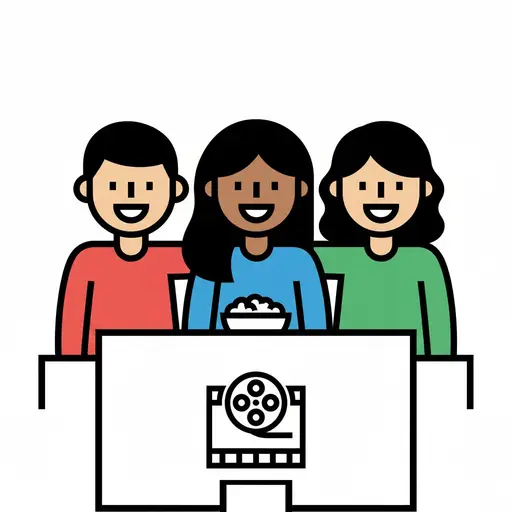
Three smiling children sit together with a bowl of popcorn in front of a movie s...

Movie time
An illustration showing a movie projector, a film clapboard with a clock, a scre...
Movie
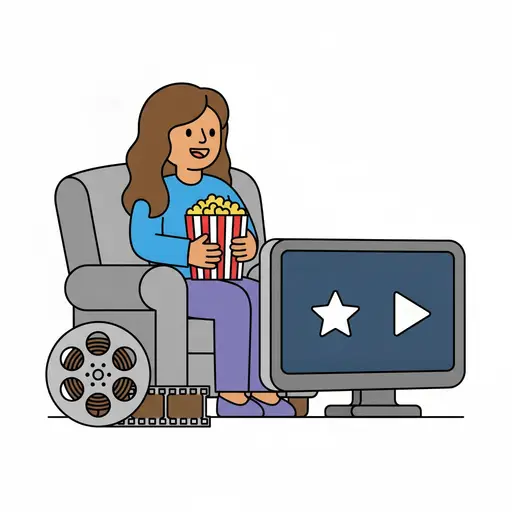
A smiling person sits in a grey armchair with a tub of popcorn watching a screen...

Audiobook time
A smiling girl with braids wears red headphones and holds up a phone showing a b...
Watch a Movie and Relax
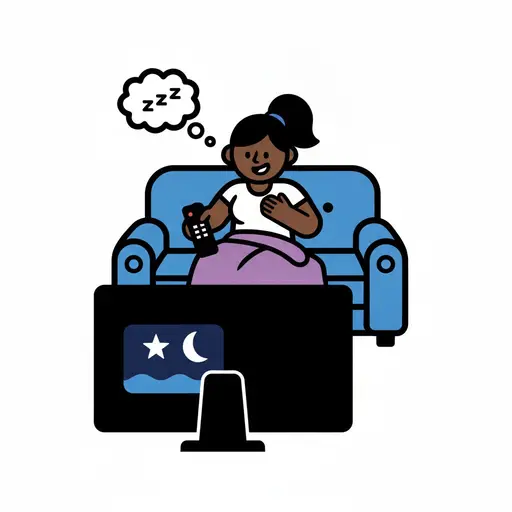
A girl sits relaxed on the couch holding a remote and watching a movie on the TV...

Listen to an audiobook
A girl wearing headphones smiles and holds a tablet showing a book.
This visual support in other languages
Take the visual supports with you
In Routined you build schedules from these pictures, add timers and voice instructions, and your child follows the day on their own.


* 14-day free trial, then $2.39 a month or $20.99 a year (US pricing). Cancel anytime.