Bring keys and phone
Shoes are on, jacket is on, and now two things need to be found at once — keys near the door, phone usually still in the room. It is the doubling up that quietly makes one of them slip away. The visual support below keeps both objects clear, side by side.
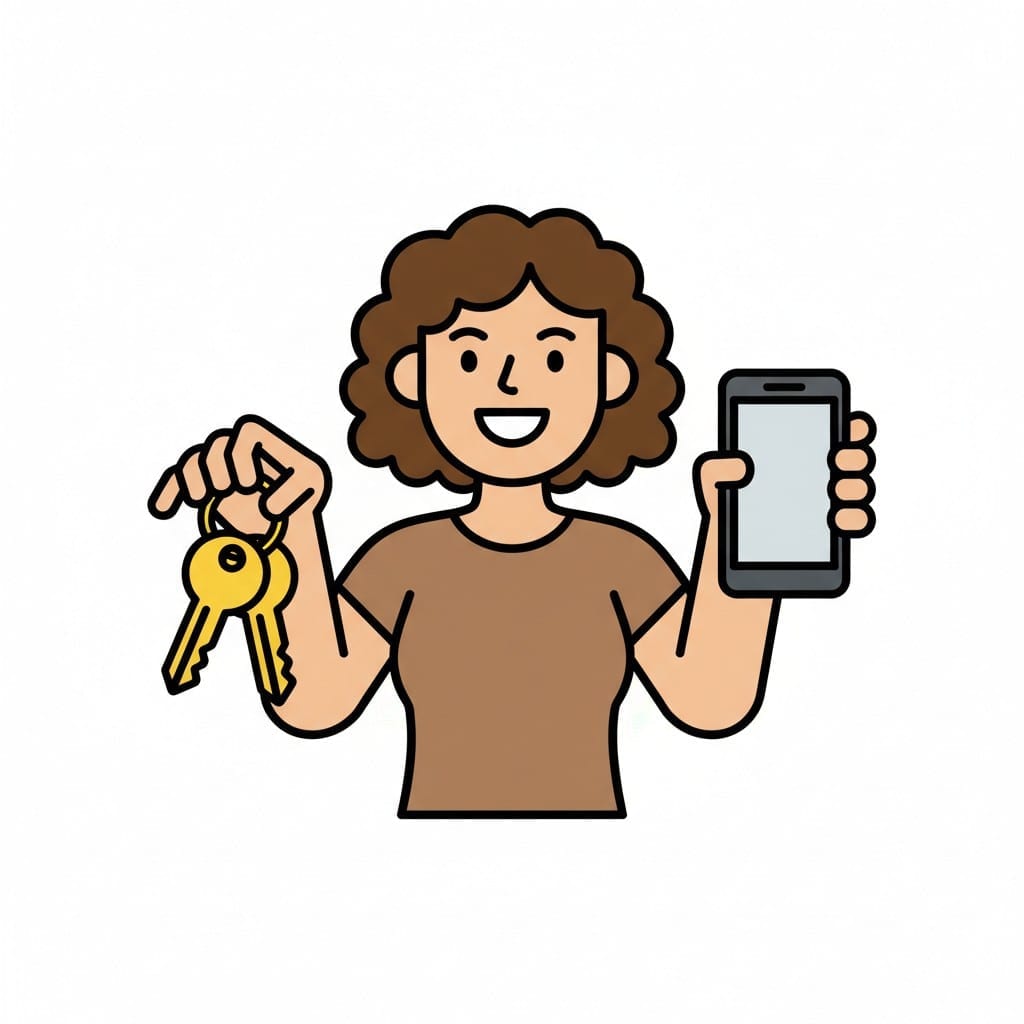 ♀
♀Woman with keys and phone
A woman holds a set of keys in one hand and a smartphone in the other.
About this visual support
Bringing two essentials at the same time looks simple on paper, but it happens in the exact moment when the mind has already moved outside. The keys sit by the front door, the phone is still on the charger in the bedroom, and the brain is supposed to hold both items at once. It is the split direction — one thing from the hallway, one from another room — that makes this step unusually fragile.
Visual support helps by making both objects visible at the same time. When the picture of the key and the picture of the phone sit next to each other, the reminder is not spoken but seen. The child can look, point, fetch, and check whether anything is missing before the door closes.
One concrete tip: settle the order in advance, for example phone first (from inside), then keys (at the door). The movement then follows the house from bedroom toward hallway in a line. To connect this with the rest of the morning, the sequence can be built into Routined alongside shoes and jacket.
Use this image in a schedule
Build your own visual schedule with this image and download it as a print-ready PDF. Completely free.

More similar visual supports

Dress for outside
A girl with a ponytail, a striped hat and a yellow scarf fastens her red jacket,...
Keys
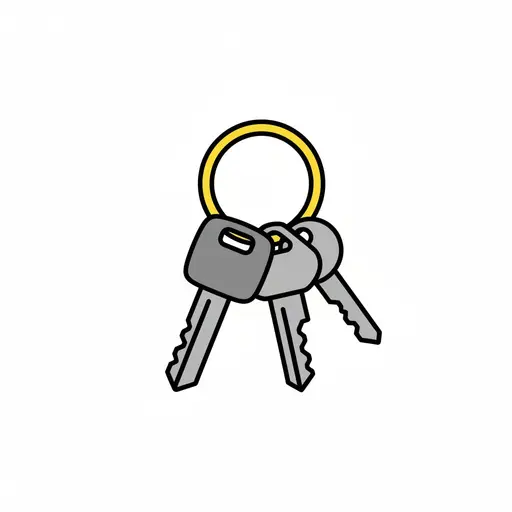
A bunch of three keys on a keyring
Pack phone
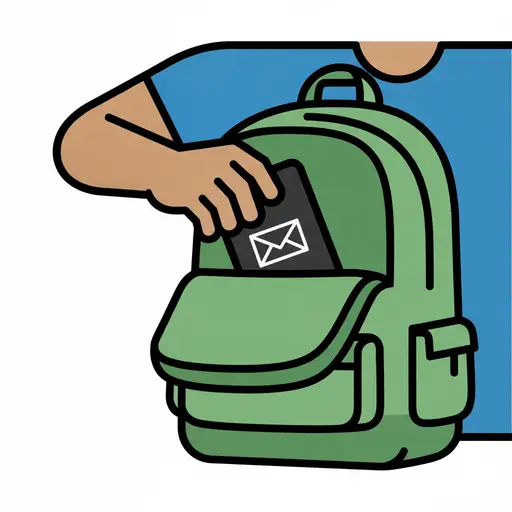
Close-up of a hand sliding a dark phone with an envelope icon on its screen into...
Bring keys
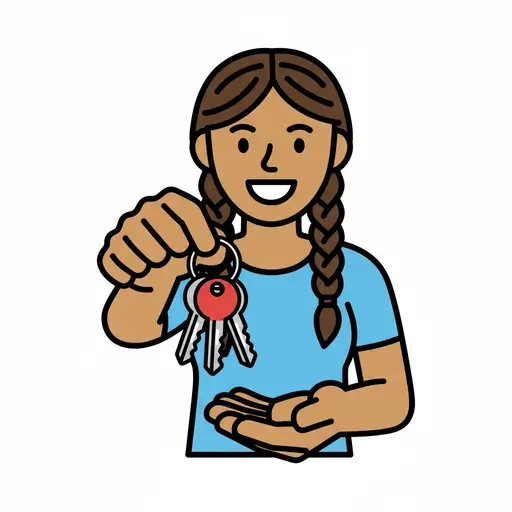
A girl with braided hair holds a set of keys and smiles.
Bring school bag
Illustration of a boy holding a blue and yellow school bag.
Dress for outdoors
A happy boy dressed in a red jacket, green hat, and blue scarf, ready for snowy ...
Get jacket on
A person puts on a red jacket over a blue top.
Get ready for outside
A cheerful girl wears her blue jacket over an orange top and lifts both arms in ...
Take the visual supports with you
In Routined you build schedules from these pictures, add timers and voice instructions, and your child follows the day on their own.


* 14-day free trial included for new users.