Set a timer
Five more minutes can mean anything to a child. A timer makes time concrete, and when the child sets it themselves, the end is easier to accept. The visual support is below to download.
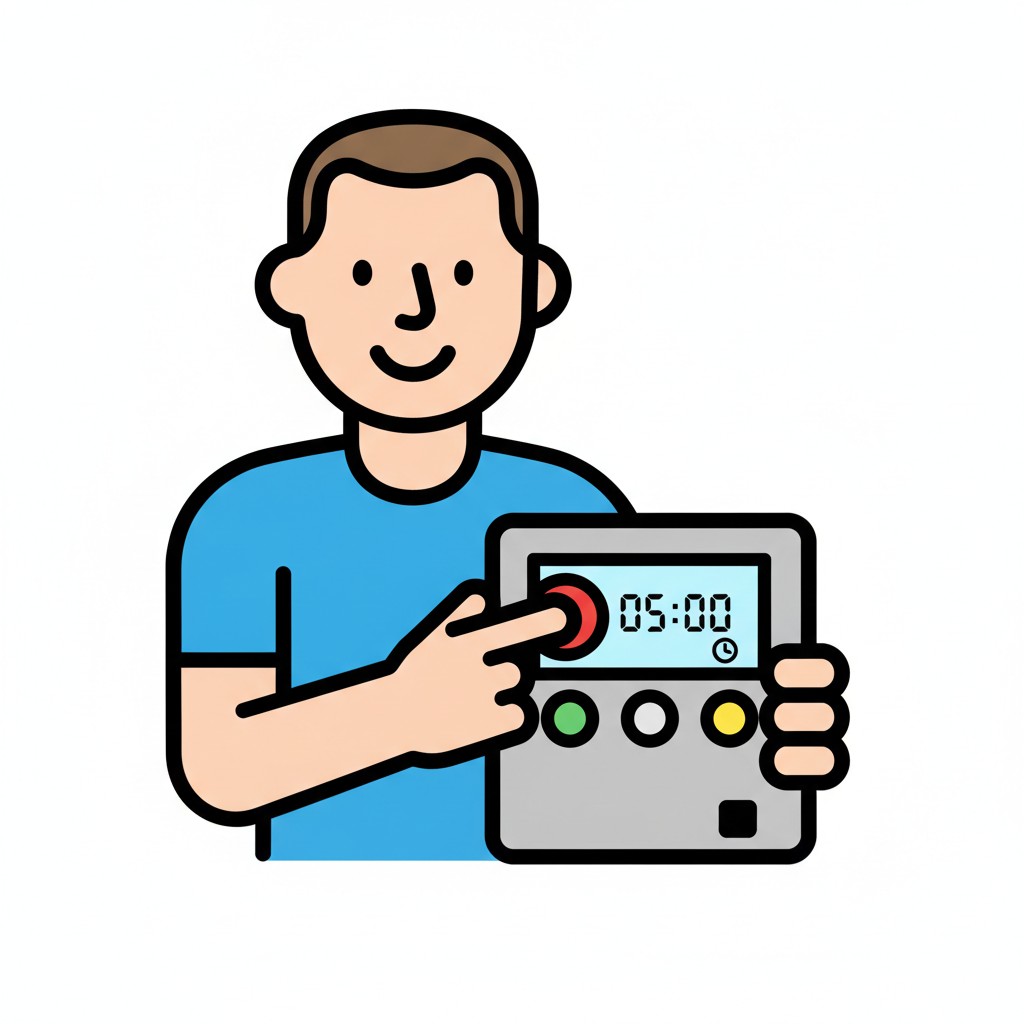 ♂
♂Setting the timer
A man presses a timer showing five minutes.
About this visual support
Time is abstract, and for children who find it hard to judge how long something lasts, transitions easily become conflicts. Screen time running out, homework that feels endless or toothbrushing that lasts ten seconds are often about the same thing: time cannot be seen. A kitchen timer makes it visible and audible, and moves the decision from the adult to the clock.
The visual support teaches the action itself. The picture shows an adult setting a kitchen timer. Use it together with pictures for the task: choose how long, turn the timer, put it where the child can see it, do the task and stop when it rings. Many children enjoy turning and pressing it themselves, which gives a sense of ownership. A timer can also be used the other way round, to show how long a break or play session may last.
A practical tip is to use the same timer for the same type of task, so the sound becomes linked to, for example, homework or tidying. Start with short times and extend gradually. If you want time support built right into the child's steps, with a countdown on each activity, you can try Routined for 14 days at no cost.
Use this image in a schedule
Build your own visual schedule with this image and download it as a print-ready PDF. Completely free.

More similar visual supports

Check the time
A boy points at his digital wristwatch to see what time it is.
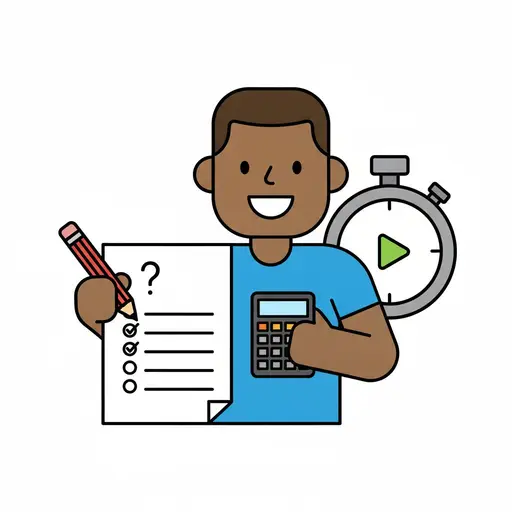
Test
A boy holds a question sheet and a pencil, next to a calculator and a stopwatch.
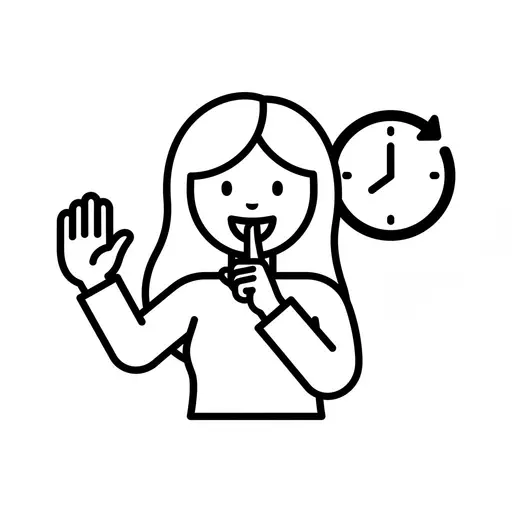
Wait
A person holds up one hand as a stop sign, has a finger on their lips to signal ...
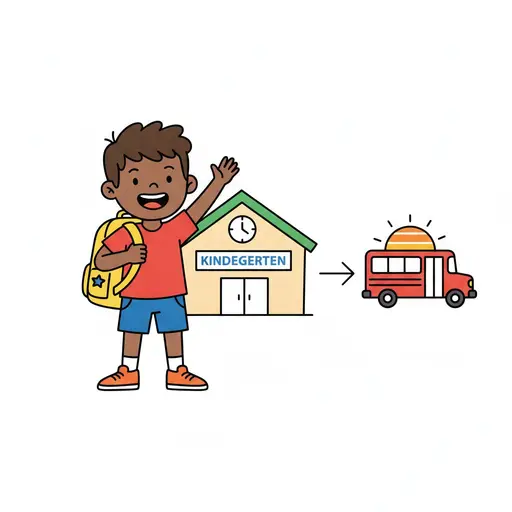
After preschool
A boy with a backpack waves by the preschool with a bus nearby.

After school
A girl with a backpack holds an open book in front of a school building with the...
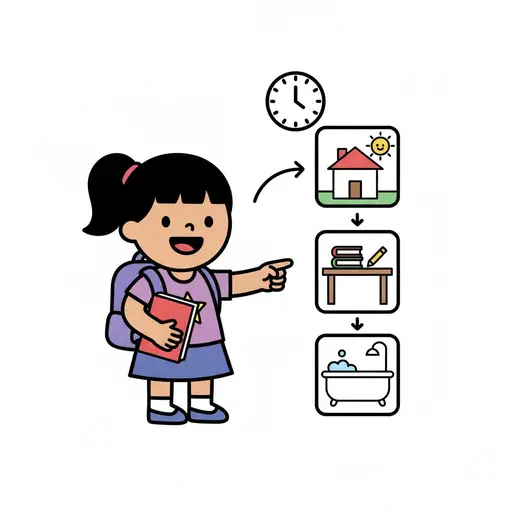
After School Routine
A girl with a backpack points at a schedule showing home, homework and bath afte...

After the school day
A boy with a backpack holds a red book beside a house, a tree, the sun and a rug...
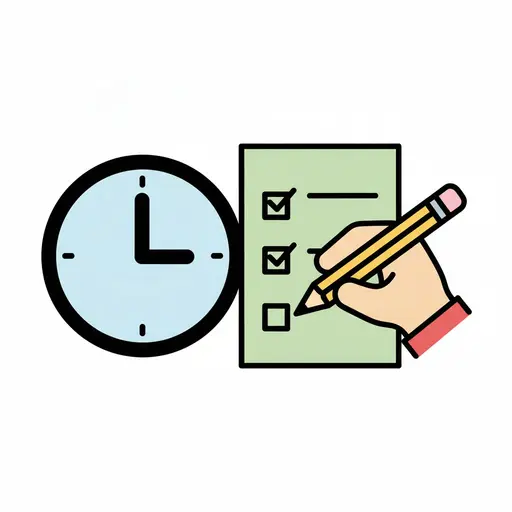
Afternoon checklist
A hand with a pencil ticks boxes on a green checklist beside a light blue wall c...
Take the visual supports with you
In Routined you build schedules from these pictures, add timers and voice instructions, and your child follows the day on their own.


* 14-day free trial included for new users.