Test
How much time is left – that question takes up room during a test, and when the clock owns a child's attention there is less left for the questions themselves. The visual support below breaks the test into stages you can actually look at.
 ♂
♂Take a test
A boy holds a question sheet and a pencil, next to a calculator and a stopwatch.
About this visual support
A test comes with a frame no other school task has. It starts at one minute on the clock and ends at another, whether or not the child got through the paper, and that frame alone can make thinking harder. Part of the brain counts minutes instead of solving anything.
Pictures move the time frame out of the head and onto the desk. One card for reading everything through, one for answering what feels easy, one for going back to the hard parts, one for handing the paper in. The test becomes a route with legs rather than one long stretch of pressure, and it is visible on the table that a short pause belongs in the plan too.
One thing that works well before a test: put the cards in the order the child should work in, with the easiest kind of question first. Ticking something off early takes the edge off the rest of the time. If you want the plan for test day on a phone, you can build it in Routined and try the app free for 14 days.
Use this image in a schedule
Build your own visual schedule with this image and download it as a print-ready PDF. Completely free.
More similar visual supports
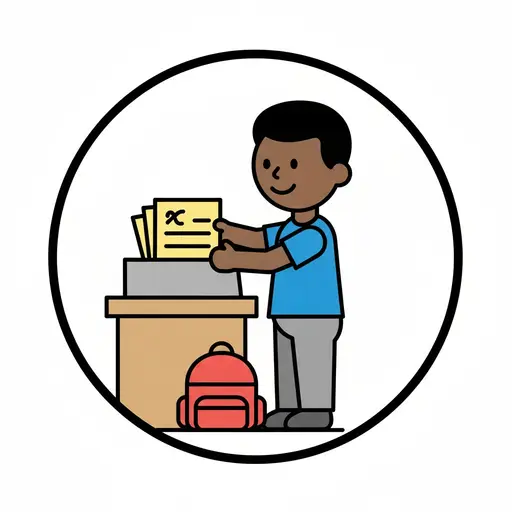
Hand in homework
A boy puts papers into a homework box with his backpack below.

Fetch pen and paper
A boy reaches toward a sheet of paper while holding a pen.
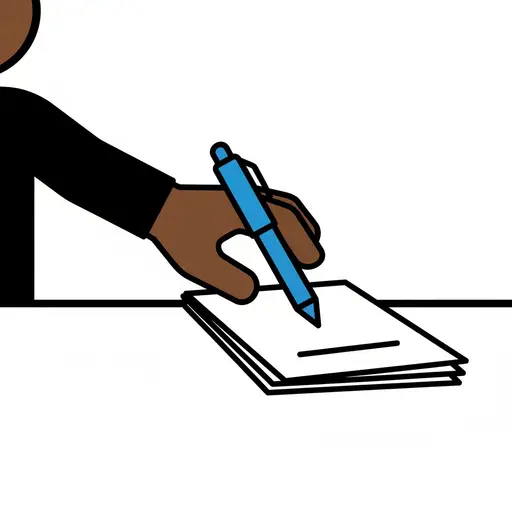
Get pen and paper
A person leans forward and writes with a blue pen on a stack of paper.
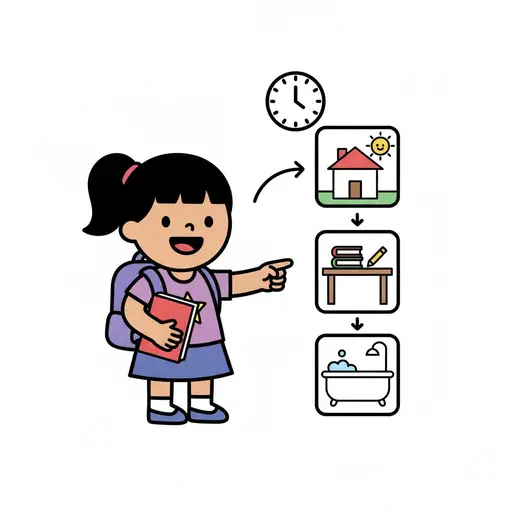
After School Routine
A girl with a backpack points at a schedule showing home, homework and bath afte...

Take note
A boy holding a pen and writing in a notebook. A glowing lightbulb floats above ...

Grab pen and paper
A smiling boy holds a blue pen and some sheets of paper, ready to write.
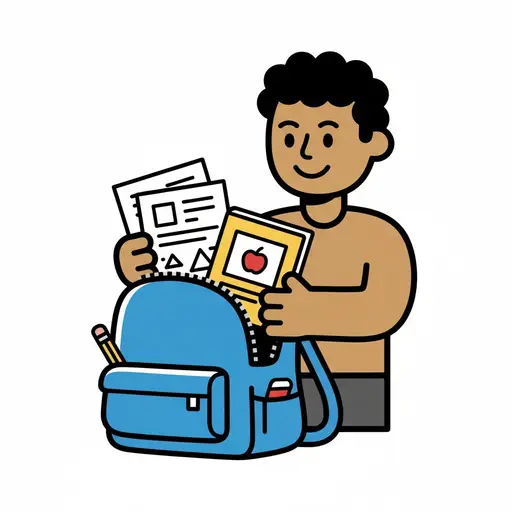
Pack homework
A smiling person is packing books and papers into an open blue backpack.
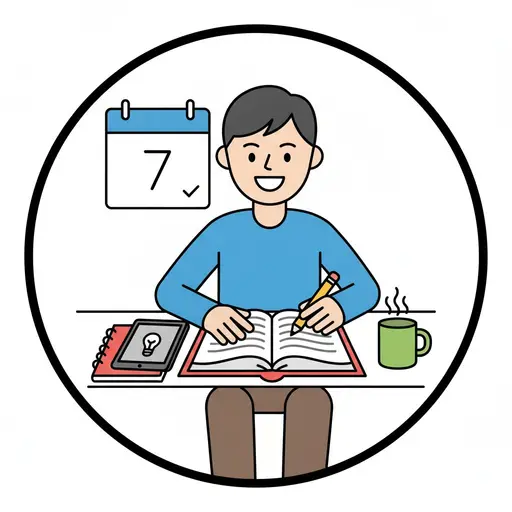
Study
A person sits at a desk writing in a book, with a calendar, a tablet and a mug b...
This visual support in other languages
Take the visual supports with you
In Routined you build schedules from these pictures, add timers and voice instructions, and your child follows the day on their own.


* 14-day free trial, then $2.39 a month or $20.99 a year (US pricing). Cancel anytime.