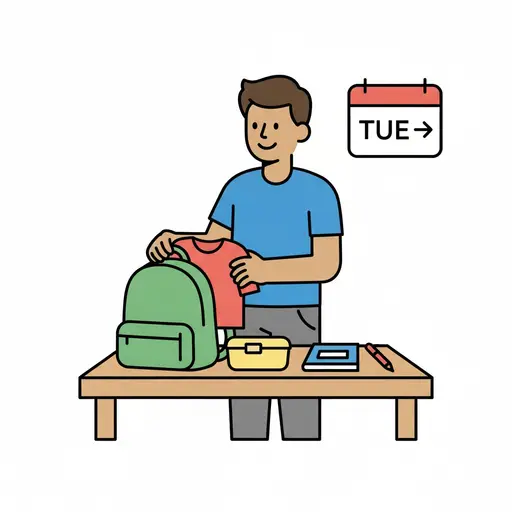
Shared Custody Over the Summer Holiday: One Routine in Two Homes
Long summer swaps between two homes can unsettle even an easy-going child. A shared routine that travels between homes gives them stability when everything else changes.

For children in shared custody arrangements, maintaining a sense of stability across two homes during the long summer holiday is crucial. The key to achieving this lies in establishing a consistent, predictable shared custody summer routine that minimizes disruption and provides a reassuring framework, even when environments change. By agreeing on core structures for daily life, parents can help children, particularly those who thrive on predictability like those with ADHD or autism, navigate transitions with greater ease and confidence, making the summer a time for joy, not stress.
Why handovers and long swaps unsettle kids
Summer holidays, while eagerly anticipated, often bring significant shifts in routine. For children in shared custody, this can mean extended periods at one parent's home, followed by another long stretch at the other's. Each handover, each prolonged stay, represents a double dose of change. Children experience not just the physical move, but also the emotional and cognitive effort of adjusting to a new set of rules, expectations, and even the smell of a different pillow.
This constant recalibration can be particularly challenging for children who benefit from predictability, such as those with ADHD or autism. For them, the loss of the familiar isn't just an inconvenience; it can be deeply disorienting. What was predictable at Mom's house might be different at Dad's, or vice versa. The secure anchor of their daily life, which provides a sense of safety and control, is lifted twice over – first when they leave one home, and again when they arrive at the next, especially if the structure between homes varies wildly. This can manifest as anxiety, acting out, sleep disturbances, or a general feeling of being unsettled, making the transition periods difficult for everyone involved.
The thing that helps most: the same core routine in both homes
The most powerful tool for easing these transitions is surprisingly simple: a consistent core routine across both homes. This doesn't mean every single detail must be identical – variety can be good! But the fundamental rhythm of the day should remain largely the same. Think of it as a familiar melody played on different instruments.
Focus on the big three: mornings, meals, and bedtimes.
- Mornings: A predictable start to the day sets a positive tone. This might involve waking at a similar time (even if slightly later for summer), having breakfast, getting dressed, and perhaps a short, quiet activity before the day's adventures begin. Knowing what to expect first thing reduces morning anxiety.
- Meals: Regular meal times provide structure and help regulate appetite and energy levels. While the menu might differ, the expectation of breakfast, lunch, and dinner around certain hours offers a consistent anchor. Shared meal prep, clearing the table, or even a specific family mealtime ritual can be incorporated into both settings.
- Bedtime: This is perhaps the most critical for stability. A consistent bedtime routine – bath, story, quiet play, lights out – signals to a child's body and mind that it's time to wind down, regardless of whose house they are in. Maintaining a similar wake-up time in the morning, even if slightly later than school days, also supports their internal clock.
Having this underlying structure provides a sense of security. It communicates to the child, "Even though my location has changed, the world still operates in a way I understand." For children with ADHD or autism, this consistency is not just comforting; it's often essential for managing sensory input, executive functions, and emotional regulation.
Agree on a few non-negotiables together
Creating this shared routine requires conversation and agreement between co-parents. The key is to keep it focused, practical, and neutral. Resist the urge to overhaul everything; instead, identify just a few core "non-negotiables" that you can both commit to.
These agreements aren't about imposing one parent's lifestyle on the other, but about establishing a baseline of predictability for the child. Examples might include:
- A general window for wake-up and bedtime (e.g., wake-up between 7-8 AM, bedtime between 9-10 PM for older children, earlier for younger).
- Meal times (e.g., breakfast around 8:30 AM, lunch 1 PM, dinner 6 PM).
- Screen time guidelines (e.g., no screens one hour before bed, a daily limit for recreational use).
- Homework or reading time expectations (if applicable, even in summer).
- A consistent expectation for personal hygiene (e.g., showering daily, brushing teeth twice a day).
When discussing these, frame them around the child's well-being. "This helps [Child's Name] feel secure," or "Consistent sleep helps [Child's Name] manage their energy better." Keep the list short – perhaps 3-5 key points – to make it achievable and reduce potential conflict. Remember, flexibility for special summer outings or events is still important, but the default routine provides the necessary anchor.
Ease the handover itself
Beyond the daily routine, the actual moment of handover can be a flashpoint for anxiety. Making this transition as smooth and predictable as possible is vital.
- Predictability: Discuss and agree on a consistent time and location for handovers. Punctuality and clear communication about any changes can significantly reduce stress for both parents and children.
- Low-Conflict Environment: Strive to keep handovers as neutral and calm as possible. This is not the time to discuss grievances or complex parenting issues. Keep conversations brief and child-focused. If there are tensions, communicate any necessary information beforehand via text or email, not in front of the child. Children are highly attuned to parental emotions, and conflict during a handover can heighten their anxiety about leaving one parent for the other.
- A Transitional Object: For younger children, or those who struggle with separation, a beloved transitional object can be incredibly helpful. This could be a special teddy bear, a favorite blanket, or a small toy that travels between homes. It provides a tangible link and a source of comfort from one environment to the next. For older children, a special book or a journal where they can write about their experiences might serve a similar purpose. This object isn't just a thing; it's a piece of "home" that goes with them, providing continuity.
When the parents disagree
It's an unfortunate reality that co-parents don't always see eye-to-eye. When disagreements arise about routines or expectations, it's crucial to always bring the focus back to the child's needs rather than personal victory or "being right."
- Child-Centric Perspective: Ask yourself: "What will genuinely benefit my child in this situation?" rather than "How can I get my co-parent to agree with me?" Sometimes, even if a routine isn't exactly what you would design, if it provides some consistency and predictability for the child, it's better than no consistency at all.
- Respectful Communication: Approach discussions with respect, even if you feel frustrated. Use "I" statements ("I've noticed that [Child's Name] struggles with early mornings after a late night, and I'm concerned about their energy levels") rather than accusatory "you" statements ("You always let them stay up too late!"). Focus on shared goals: the child's well-being, happiness, and ability to thrive.
- Pick Your Battles: Not every difference needs to be a point of contention. Some things are less critical than others. For instance, the specific brand of toothpaste might not matter as much as ensuring teeth are brushed consistently. Prioritise the core routines that have the most significant impact on a child's sense of security and regulation.
- Lead by Example: If your co-parent is unwilling to adopt certain routines, focus on providing as much consistency as possible in your own home. Your child will still benefit from the predictability in your care, and this stability may indirectly highlight the benefits to the other parent over time.
- Professional Guidance: If disagreements are persistent and significantly impacting your child's well-being, consider seeking guidance from a family therapist or mediator. They can provide neutral support and strategies for effective co-parenting communication.
Navigating shared custody during summer requires patience, empathy, and a commitment to putting your child's needs first. By working towards a consistent core routine and smoothing transitions, you can help your children embrace the joys of summer with a secure and settled heart, no matter which home they wake up in.
Read more
Frequently asked questions
How do I keep routines consistent across two homes?
Focus on core routines: morning rituals, meal times, and bedtime. Agree on a few key non-negotiables like wake-up/sleep times and screen limits. It’s not about identical rules, but creating a predictable rhythm that children can rely on in both environments, providing a sense of stability.
My child is unsettled after every handover — what helps?
Make handovers predictable and low-conflict. Establish consistent times and locations, and avoid discussing adult issues in front of the child. A comfort object that travels between homes, like a favorite toy or blanket, can also provide emotional security during the transition.
What if my co-parent won’t follow the same routine?
Prioritize respectful, child-centric communication, focusing on your child's well-being. Pick your battles and focus on the most impactful routines. If full consistency isn't possible, maintain as much predictability as you can in your own home; your child will still benefit significantly from your efforts.
Should the rules be identical in both homes?
Not necessarily every rule. The goal is consistent core routines and expectations, not identical household rules. Small differences are natural and can even be enriching, but a shared structure for things like sleep, meals, and general expectations provides crucial stability, especially for sensitive children.
How do I make summer handovers less stressful?
Plan handovers in advance, ensuring they are punctual and clear. Keep the actual exchange brief, neutral, and free from parental conflict. Provide your child with a transitional object that offers comfort and a sense of continuity from one home to the other, helping them feel secure.