Allowance and Chores by Age: A Complete Guide for 4 to 14-Year-Olds
How much allowance should a 6-year-old get? What chores can a 9-year-old realistically handle? An age-by-age guide with concrete examples, plus how to connect responsibility to reward without turning the home into a transactional workplace.

"How much allowance should we give?" is one of the most-Googled parenting questions in Sweden every year. So is "What chores should a 7-year-old be doing?" Both questions have a wider range of reasonable answers than most parents realize — but there are guideposts.
Here's a practical, age-by-age guide. Numbers are in SEK with rough international equivalents; adjust to your country and family economy.
The age-by-age table
| Age | Weekly allowance | Typical chores | Time per day |
|-----|------------------|----------------|--------------|
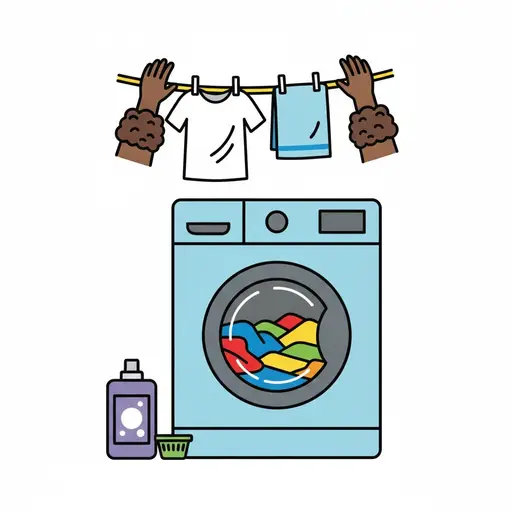
| 4–5 | 0–20 SEK | Put toys away, put dirty clothes in basket, set napkins on table | 5 min |
| 6–7 | 20–40 SEK | Make own bed, clear own plate, water plants, feed pet (with reminder) | 10 min |
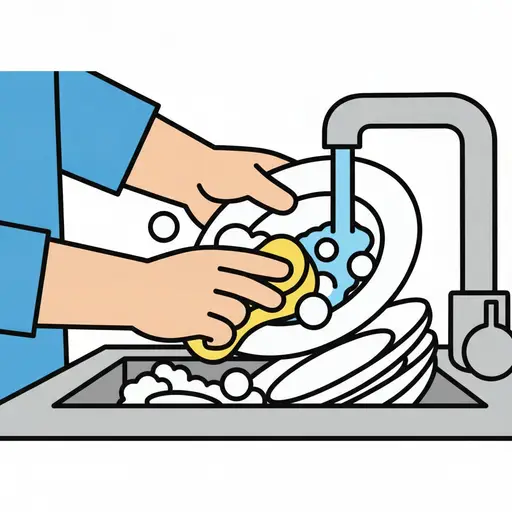
| 8–9 | 40–60 SEK | Pack own school bag, take out trash, load dishwasher, fold own laundry | 15 min |
| 10–11 | 60–80 SEK | Empty dishwasher, vacuum own room, prep own breakfast, walk the dog | 20 min |
| 12–13 | 80–120 SEK | Cook simple meal, clean bathroom, do laundry start-to-finish, mow lawn | 30 min |
| 14+ | 120–200 SEK | Plan and cook one family meal a week, manage own laundry, babysit younger siblings | 30–45 min |
These are starting points. A 10-year-old who's been doing chores since age 5 can handle more than this table suggests. A 12-year-old just starting is appropriately back at age 8 or 9.
Should chores be linked to allowance?
This is the central debate. There are two defensible positions.
Position A: Don't link them. Chores are what you do as part of the family. Allowance is for learning to manage money. Linking them creates a transactional relationship — "I don't feel like cleaning today, you can keep your money."
Position B: Link them, partially. A baseline of chores is non-negotiable family contribution. Additional chores beyond the baseline earn additional allowance. This teaches the relationship between work and pay while keeping family contribution separate.
Most research and child psychology guidance leans toward Position A for children under 8 — make chores part of family life, give allowance as a separate financial education tool. For older children, a hybrid model often works well.
What unifies both positions: don't pay for things that should be intrinsic. Don't pay a 9-year-old to do their homework. Don't pay for being kind to a sibling. Pay for tasks, not behavior.
When to start
You can start allowance as early as age 4 — the amount doesn't matter, the system does. A few coins a week, kept in a transparent jar where the child can see them grow, teaches more about money than any later conversation will.
By age 6 most children are ready for a system with three jars: spend, save, give. The amount and split can be discussed as a family. Many Swedish families settle on 60/30/10 or 50/40/10 depending on values.
How to roll this out without drama
If you've never done chores or allowance before, don't introduce ten new things at once. Pick:
- One chore the child can reasonably do.
- One small allowance amount.
- One visible system — a chart, a jar, an app.
Run it for two weeks. Add one more thing. Run it for another two weeks. By month three, you have a system. By month six, it's a habit.
The biggest mistake is launching everything on a Sunday with a family meeting and trying to make it stick. Routines that change a family's daily structure need to be introduced one element at a time.
What allowance teaches that nothing else does
Allowance isn't really about the money. It's about choices. A child who has 50 SEK and wants something that costs 80 SEK is learning patience, planning and trade-offs in a way that no lecture can teach. A child who buys something and regrets it has learned more about consumer decisions than years of "no, you don't need that" can teach.
The point isn't that they save it all. The point is that they own the decision. That's a much bigger gift than the weekly amount.
Allowance and chores aren't about creating a transactional home. They're about giving children real participation in family life and real responsibility for their own decisions. Start small, stay consistent, and let the system grow with the child.
Frequently asked questions
Should I give allowance only if all chores are done?
For young children, no. Allowance is for learning. Withholding it for forgotten chores teaches that money is a punishment lever, not a learning tool. For older children with a clearer hybrid system, withholding the additional allowance is reasonable; withholding the baseline isn't.
What about screen time as currency?
For some families, screen time minutes work better than money as a reward — especially for younger children who don't yet care about saving. In Routined you can use screen time as a reward type, attached to specific routines or chores. Many parents find this more effective than coins for the 5–8 age group.
How do I handle a child who refuses chores?
Don't escalate to threats. Make chores part of a visual sequence — pack school bag, brush teeth, put dishes in sink — so they're embedded in the rhythm rather than singled out. Resistance drops dramatically when chores are step 4 of a routine rather than a separate demand.
My child has ADHD — chores are impossible.
Three adjustments:
- Make each chore visible (a picture, a checklist) — don't rely on memory.
- Break each chore into smaller steps. "Clean your room" is too abstract. "Put clothes in basket, books on shelf, toys in box" is concrete.
- Use a visible timer. ADHD time-blindness makes open-ended chores feel infinite. A 10-minute timer with a visible countdown makes the task tractable.
Should children pay for things they break?
Sometimes, yes — for older children, especially repeat or deliberate damage. But not for normal accidents, and not for things that the child couldn't reasonably have prevented. The lesson should be about responsibility, not about replacing the parent's checkbook.