Take melatonin
The body gets a memo that it's time to sleep while the mind is still spinning through the day. The visual support below ties the pill to a row of calm evening steps so the signal has time to land.
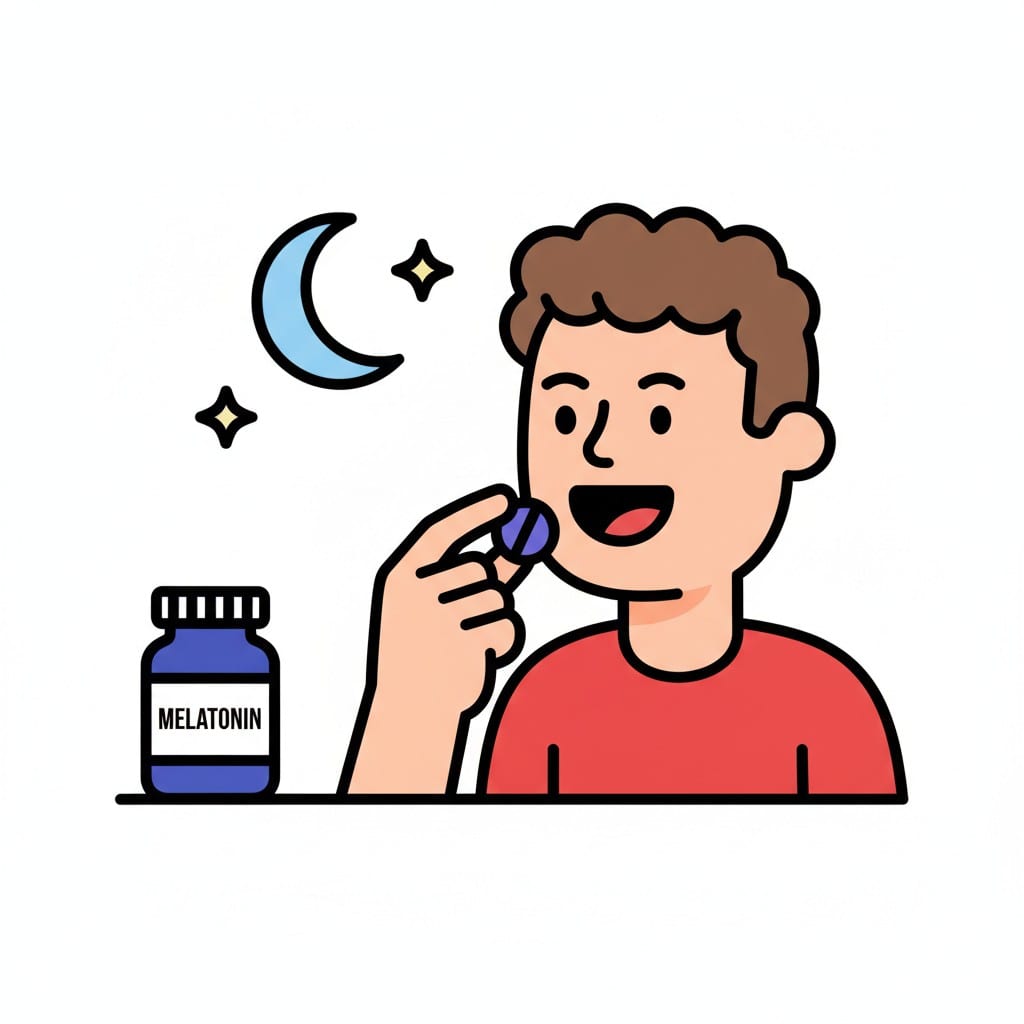 ♂
♂Boy taking melatonin
A boy in a red shirt holds a purple tablet up to his mouth beside a melatonin bottle, with a crescent moon and stars above.
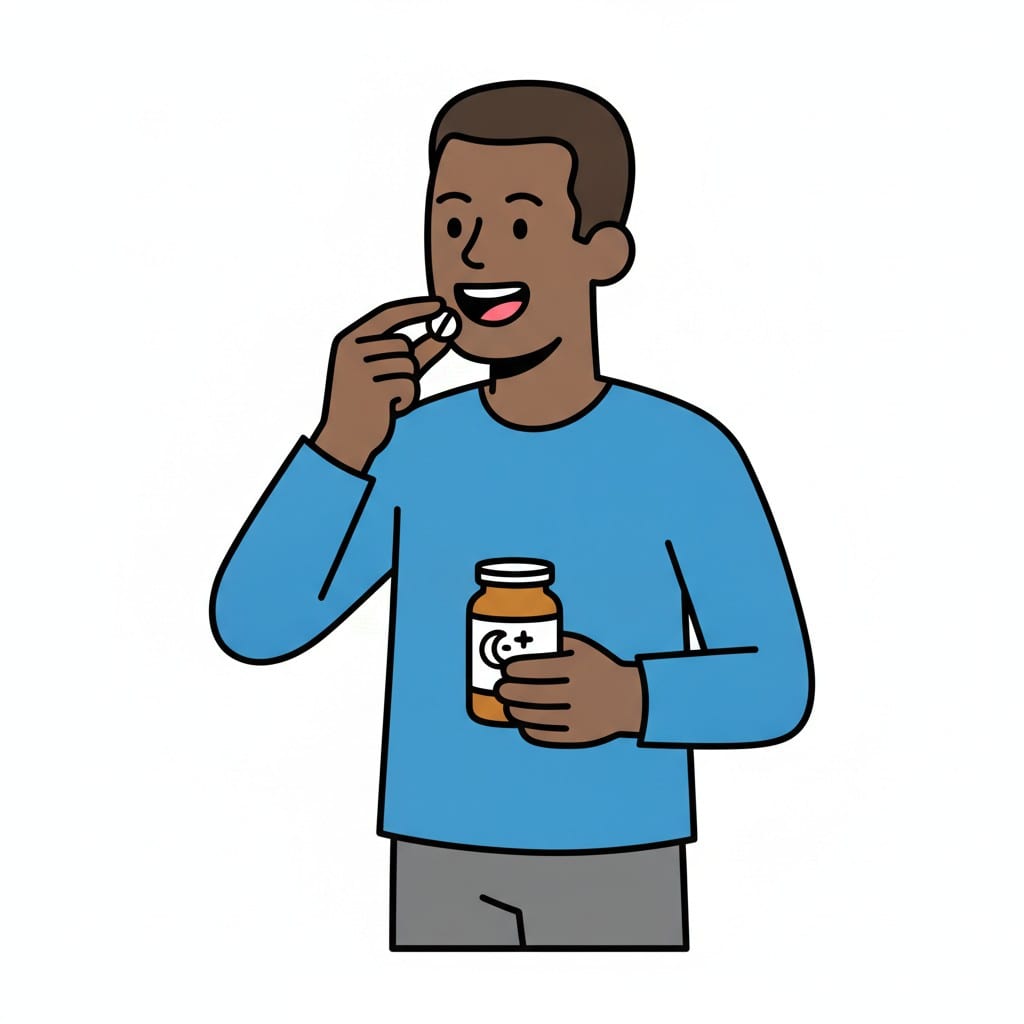 ♂
♂Taking melatonin
A man takes a tablet while holding a jar of melatonin.
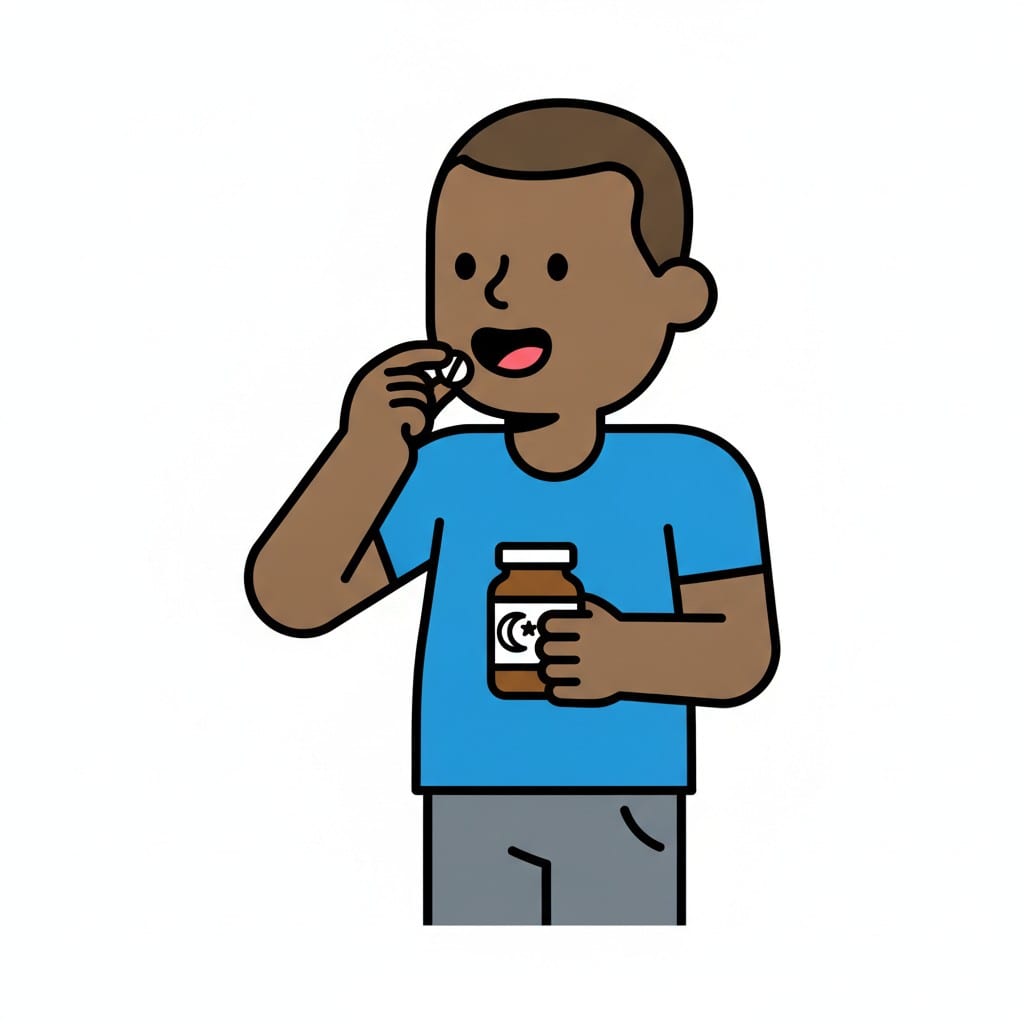 ♂
♂Taking his melatonin
A man puts a tablet in his mouth while holding a jar with a moon symbol.
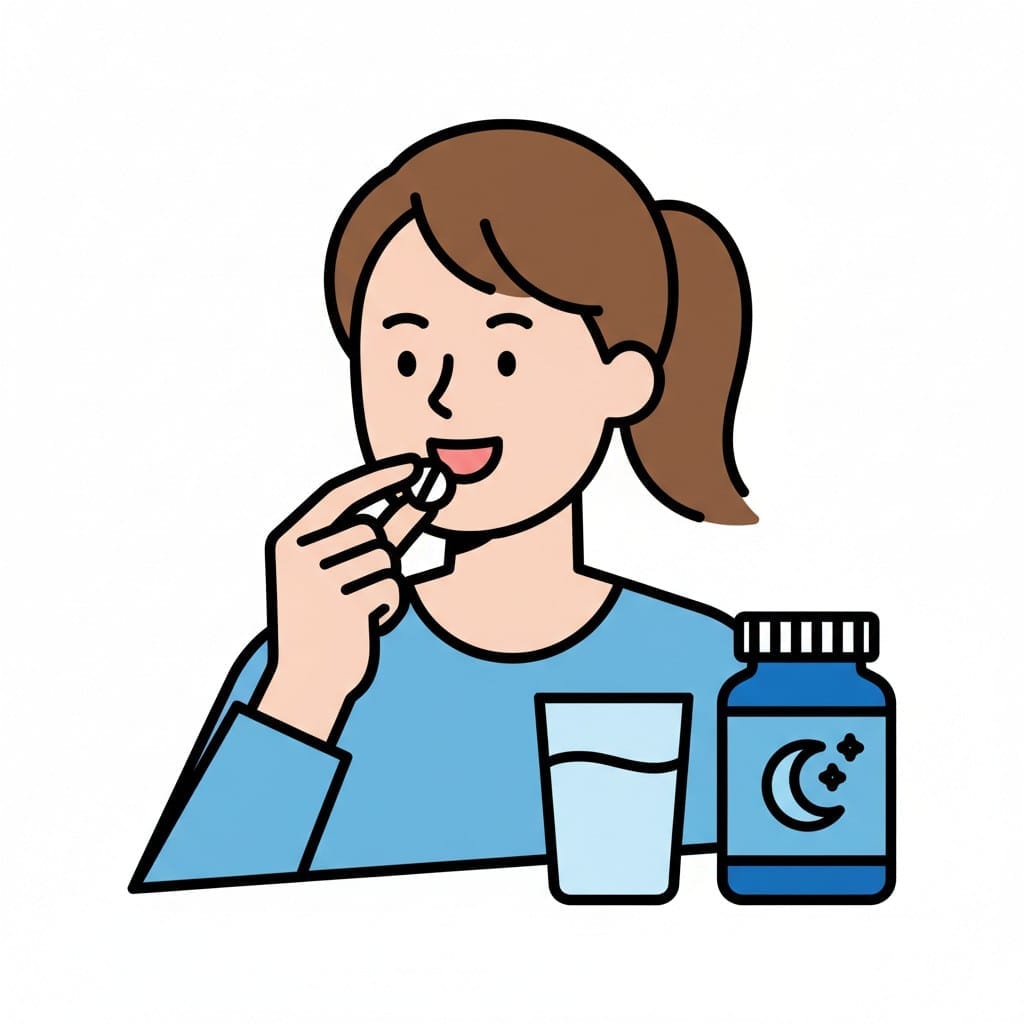 ♀
♀Take melatonin
An illustration of a person taking a melatonin pill with a glass of water next to a bottle of melatonin.
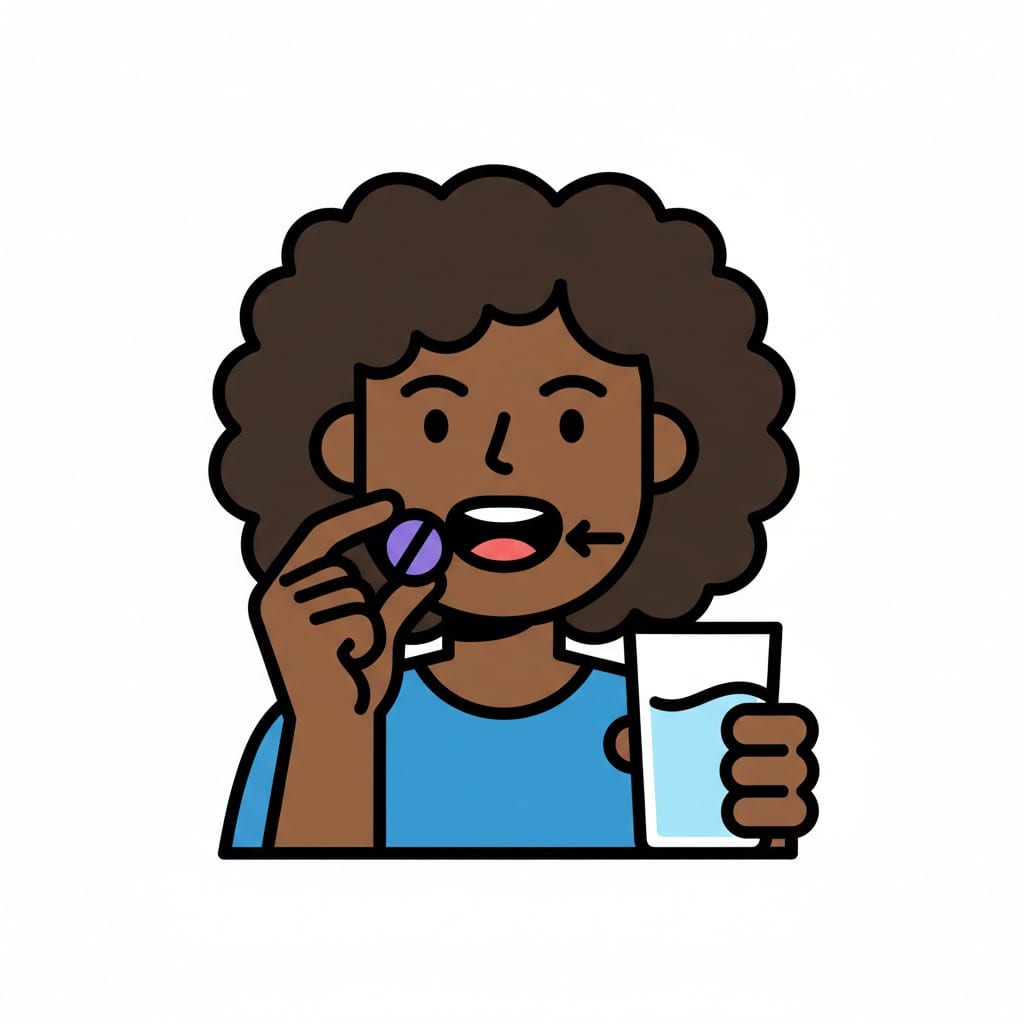 ♀
♀Woman with a melatonin tablet
A woman in a blue top brings a purple tablet to her open mouth while holding a glass of water.
 ♀
♀Taking melatonin with water
A woman with curly hair places a white tablet in her mouth and holds a tall glass of water.
About this visual support
The mismatch is the whole problem: the tablet says sleep, but body and brain don't always agree. That is why melatonin rarely works like an on-off switch – it needs to act as one piece inside a wider wind-down.
Visual support gives the wider frame the pill itself lacks. When the child sees the sequence – dimmed lights, the tablet, pyjamas, reading in bed, lights out – the body receives several signals pointing the same way, not just the chemical one. One concrete tip: take the melatonin exactly 30 minutes before lights out, every evening, and keep those 30 minutes calm with the same kind of activity. Variation inside that window blurs the effect more than most people expect.
Over time the body learns that the whole sequence, not just the pill, means sleep. In Routined you can place melatonin on the right minute of the evening routine and let the app show the calm steps that follow.
Use this image in a schedule
Build your own visual schedule with this image and download it as a print-ready PDF. Completely free.
More similar visual supports

Melatonin
A small vial of purple liquid with a label showing a moon and a star, with a syr...
Take sleep medicine
A woman with a braid places a white pill in her mouth and holds a blue cup of wa...

Read a story
A person in pajamas is sitting in bed, reading a book. A thought bubble with 'zz...
Night medicine
A dark blue medicine bottle marked with a cross sits beside a yellow moon and st...
Hop in bed
A happy girl in pajamas hops into a bed with a red pillow and a yellow blanket.
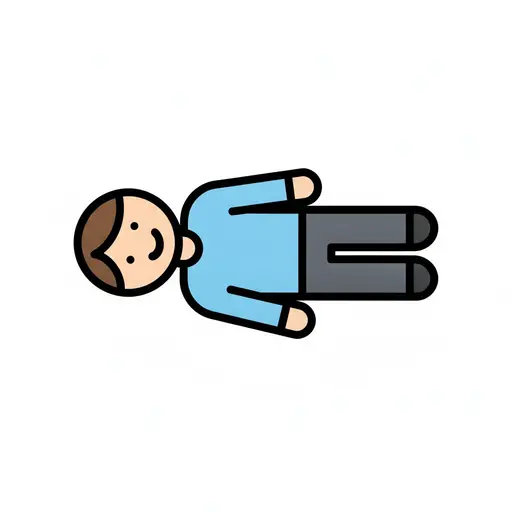
Lie down
A child lies flat on their back.

Night braces
A pair of white leg braces fitted on a child, with a moon and stars showing that...
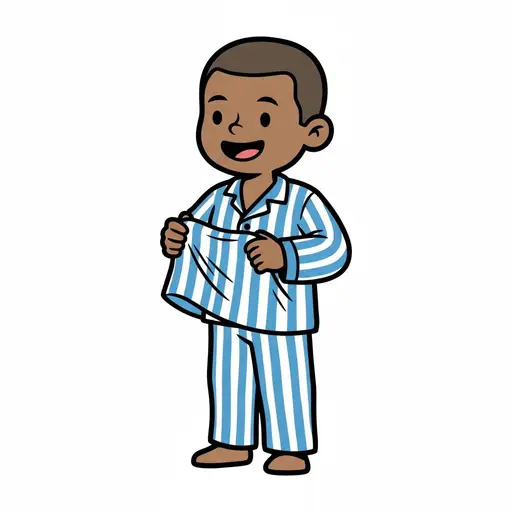
Dress for bed
A smiling boy holds up his blue and white striped pyjama top, ready to put it on...
This visual support in other languages
Take the visual supports with you
In Routined you build schedules from these pictures, add timers and voice instructions, and your child follows the day on their own.


* 14-day free trial, then $2.39 a month or $20.99 a year (US pricing). Cancel anytime.