Take sleep medicine
Sleep medicine is often taken while the brain is still wound up, and then the effect lags. The visual support below builds a short wind-down lane that leads up to the pill, so the body is already drifting when the medicine takes over.
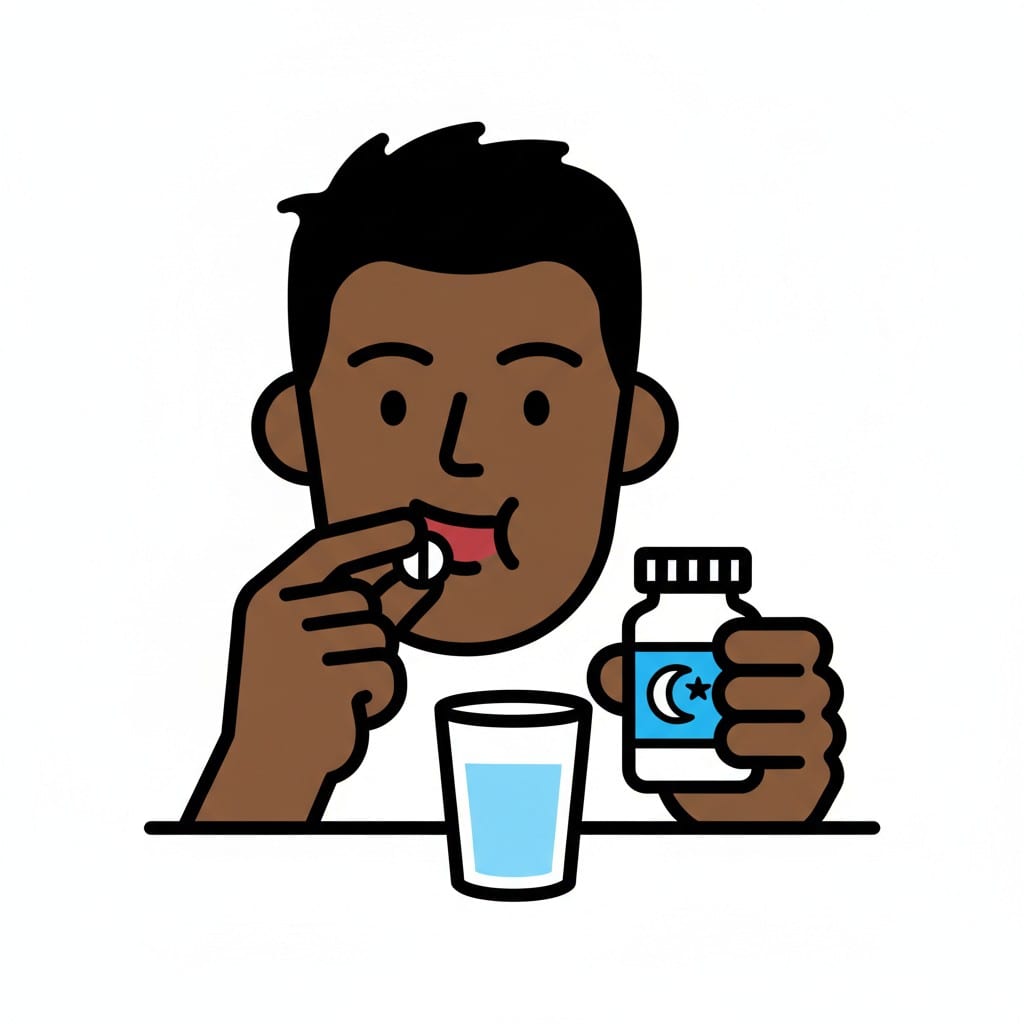 ♂
♂Take sleep medicine
A person taking a pill from a medicine bottle with a glass of water.
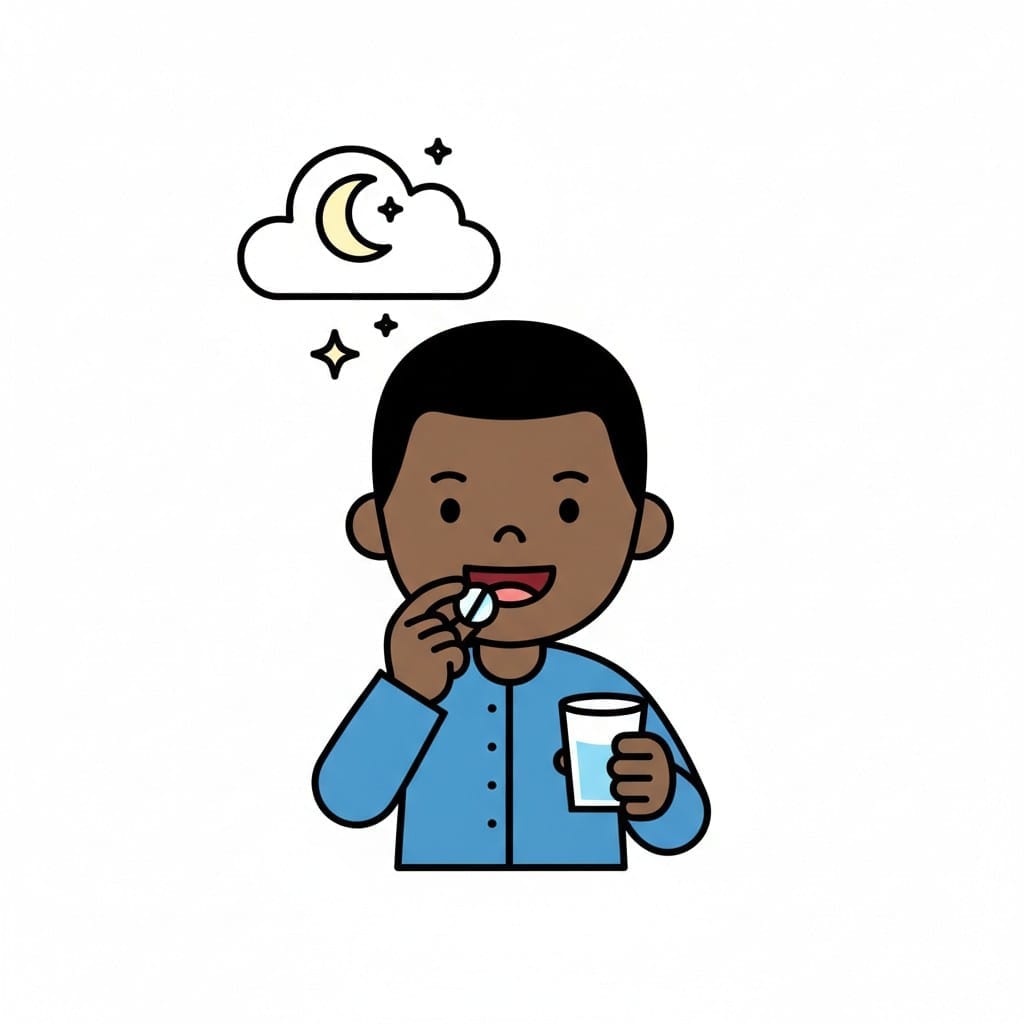 ♂
♂Boy taking a sleep pill
A boy in blue pyjamas lifts a pill to his mouth while holding a glass of water, with a moon in a cloud above him.
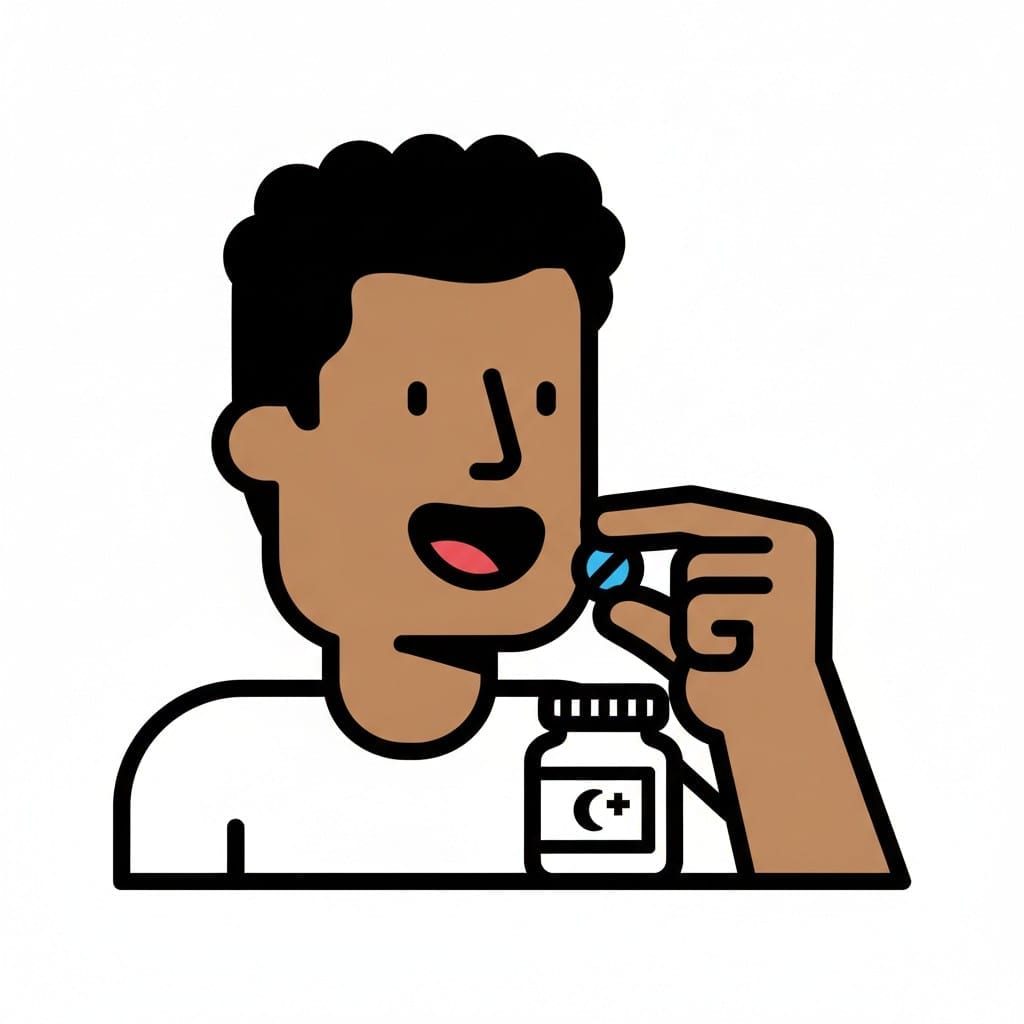 ♂
♂Man with sleep medicine
A man in a white t-shirt holds a blue capsule up to his open mouth, with a bottle marked by a moon symbol on the table.
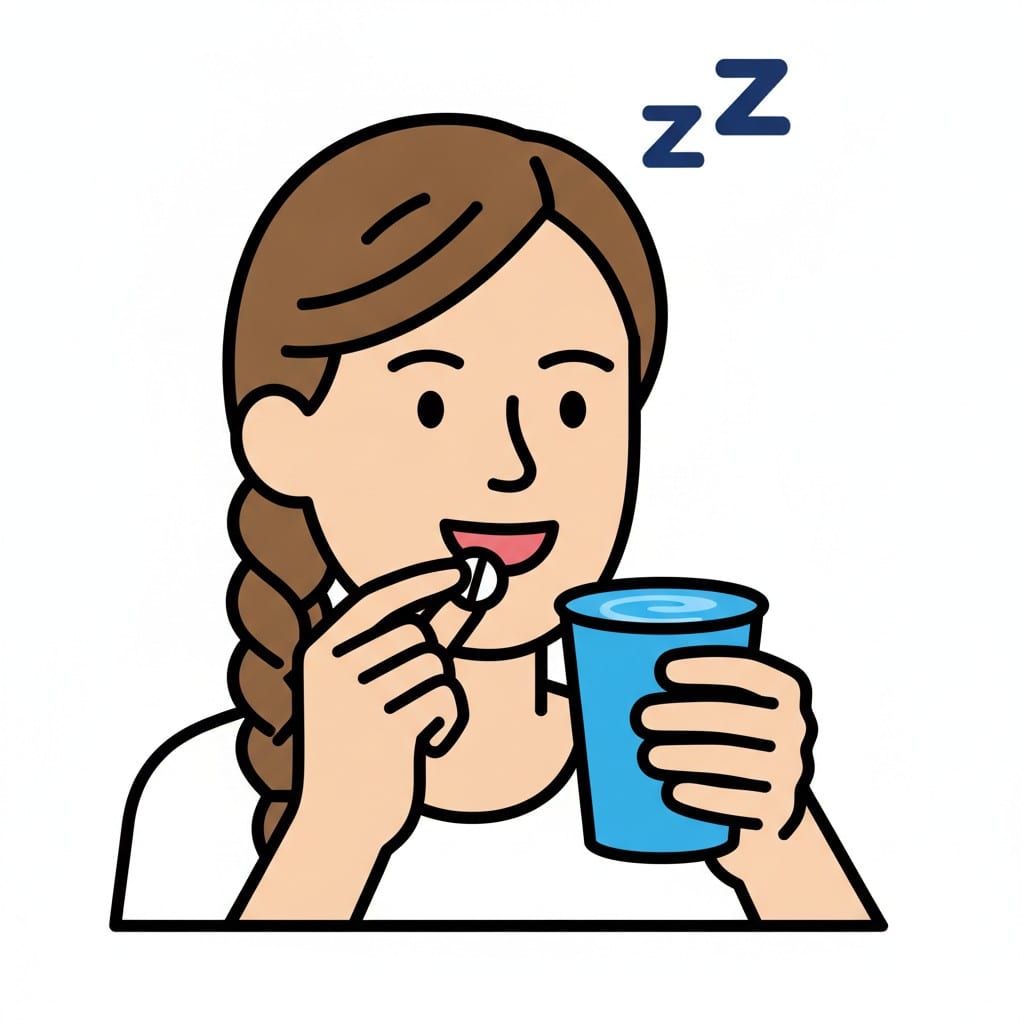 ♀
♀Woman taking a sleep pill
A woman with a braid places a white pill in her mouth and holds a blue cup of water, with sleepy Zz letters above.
About this visual support
It's easy to picture sleep medicine as something you take and then it works. In practice, the drug lands best when the body has already lowered its tempo: lights dimmed, sounds turned down, a body lying flat instead of pacing. When the pill is taken in the middle of full activation, what follows is often a long wait where the child is tired but not sleepy.
Visual support shifts the focus from ”take medicine” to ”come down”. When the steps that should precede the pill — turning off the overhead light, switching to night clothes, going to the toilet, sipping water, lying down — appear as a row of cards, the tablet itself becomes the last calm beat in a sequence, not a sudden act. That's when the dosing moment finally matches the body's state.
One concrete tip: place the medicine as the second-to-last card, not the last. The final card can be ”lie still in bed with eyes closed”. That ties the pill to a body position rather than to standing at the kitchen counter with water in hand. For added timing, a soft countdown in Routined can launch the evening sequence at the same hour every night.
Use this image in a schedule
Build your own visual schedule with this image and download it as a print-ready PDF. Completely free.

More similar visual supports
Night medicine
A dark blue medicine bottle marked with a cross sits beside a yellow moon and st...
Melatonin
A small vial of purple liquid with a label showing a moon and a star, with a syr...
Take melatonin
A woman with curly hair places a white tablet in her mouth and holds a tall glas...
Brush teeth and evening medicine
A boy is brushing his teeth with a toothbrush in his mouth and holding a medicin...
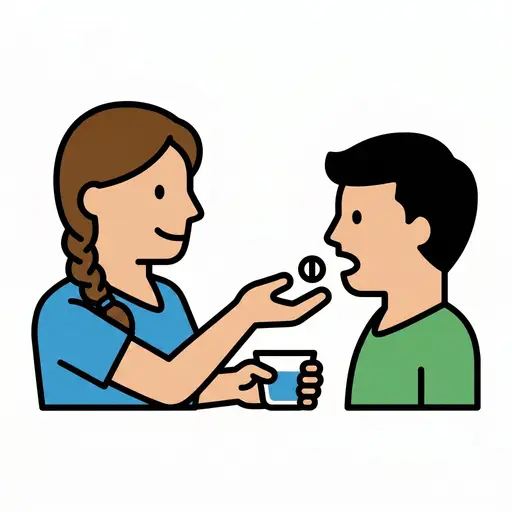
Give medicine
An adult holds out a pill and a glass of water to a child who is opening their m...

Night braces
A pair of white leg braces fitted on a child, with a moon and stars showing that...
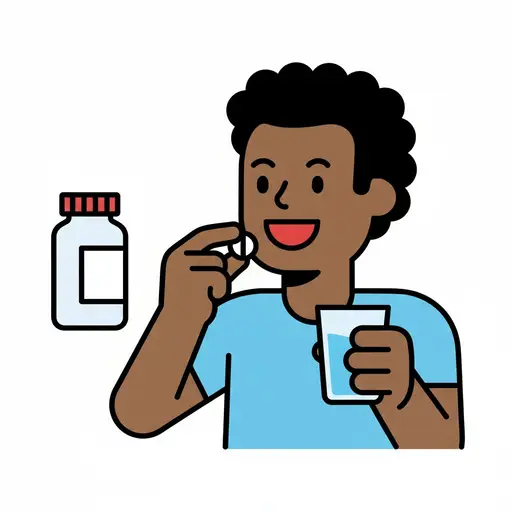
Swallow pills
A boy putting a pill in his mouth, holding a glass of water, with a medicine bot...
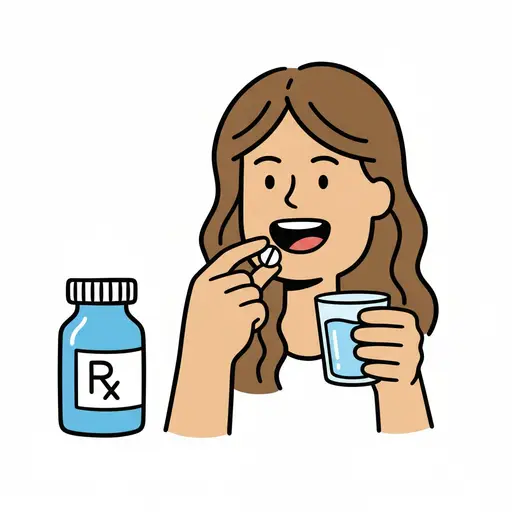
Take Antibiotics
A child holds a pill and a glass of water next to a medicine bottle.
Take the visual supports with you
In Routined you build schedules from these pictures, add timers and voice instructions, and your child follows the day on their own.


* 14-day free trial included for new users.