Take night medicine
It's late, eyes itch, and the child would honestly rather just fall asleep. Adding one more task can feel huge. The visual support below lets the night medicine slip in as part of the routine that's already running.
 ♂
♂Take night medicine
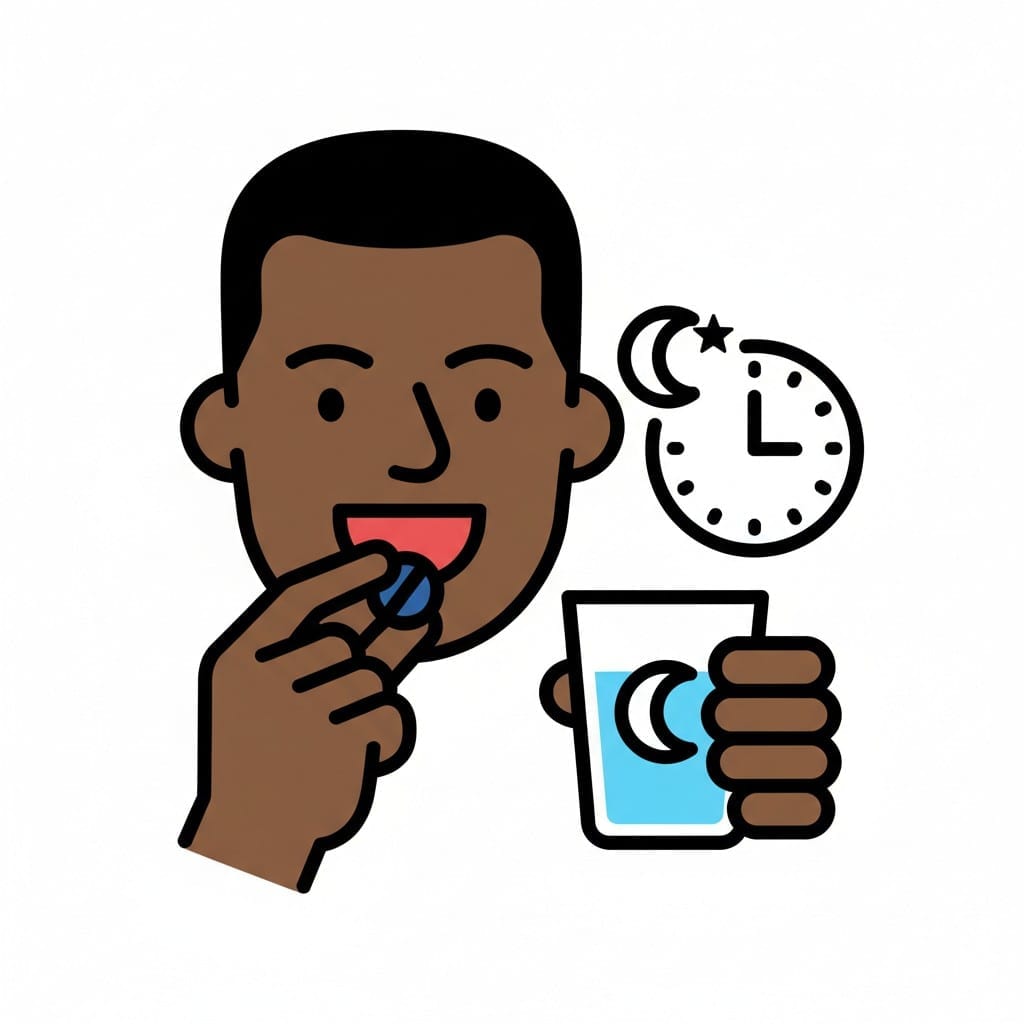
A person taking a pill and holding a glass of water. Next to it is a clock with a moon and stars indicating night.
 ♂
♂Take night medicine
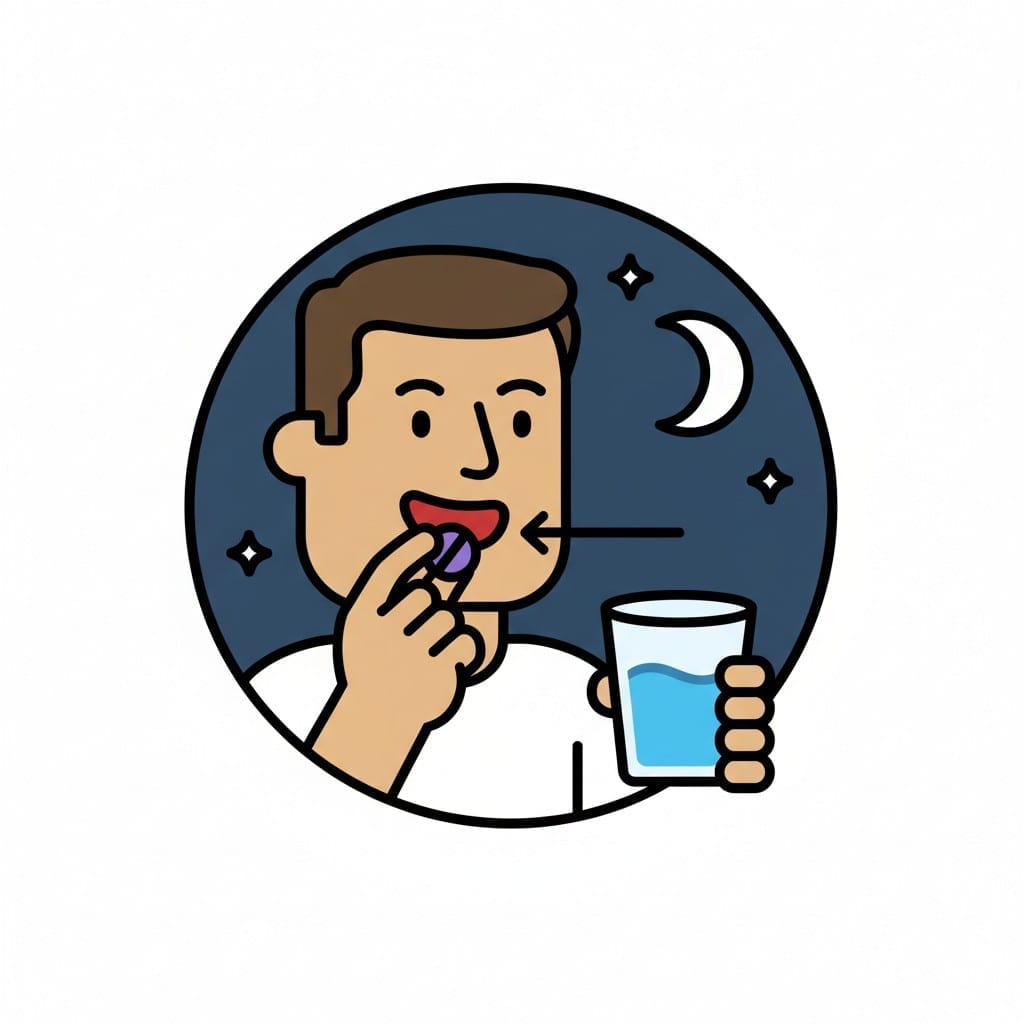
A person taking a pill, indicated by an arrow, and holding a glass of water. The background is dark blue with a moon and stars.
 ♂
♂Take night medicine
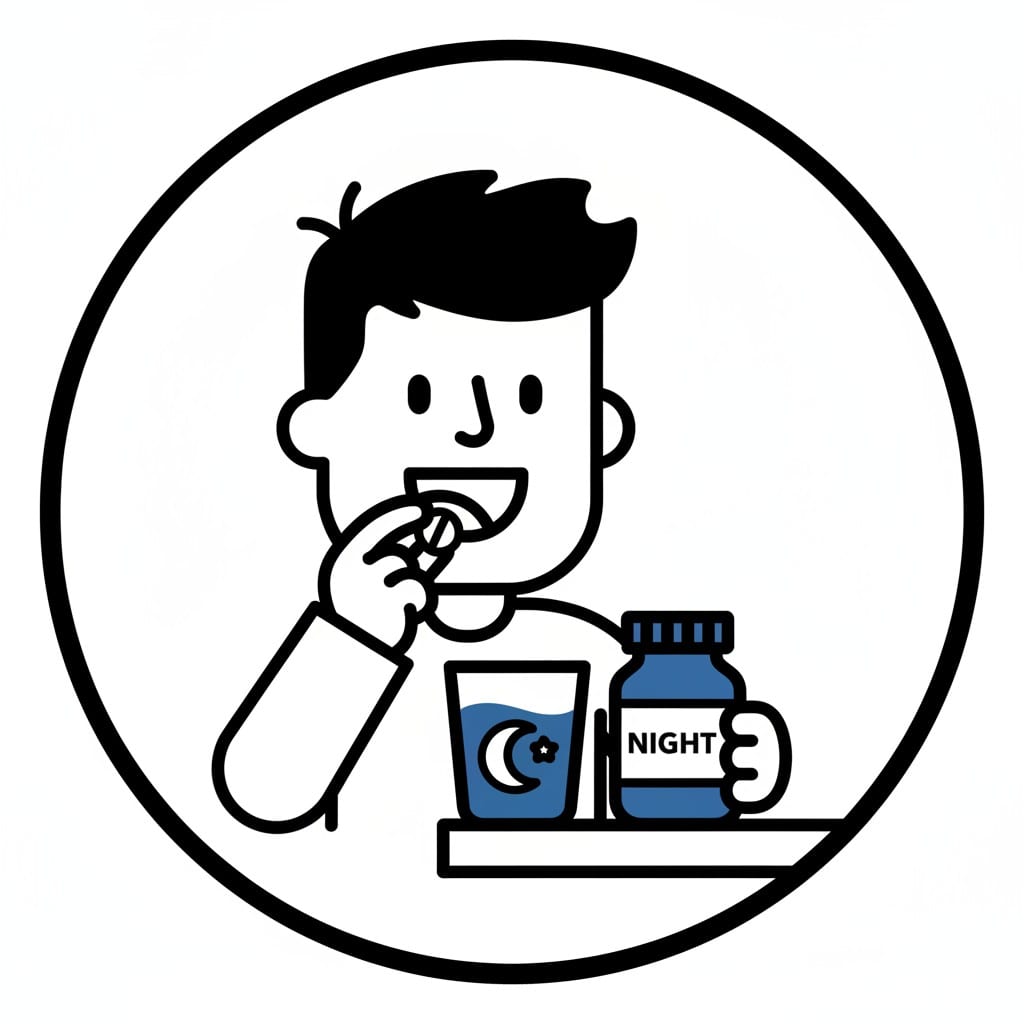
A person taking a pill, holding a glass of water with a moon symbol, and a medicine bottle labeled 'NIGHT' in front of them.
 ♂
♂Take night medicine
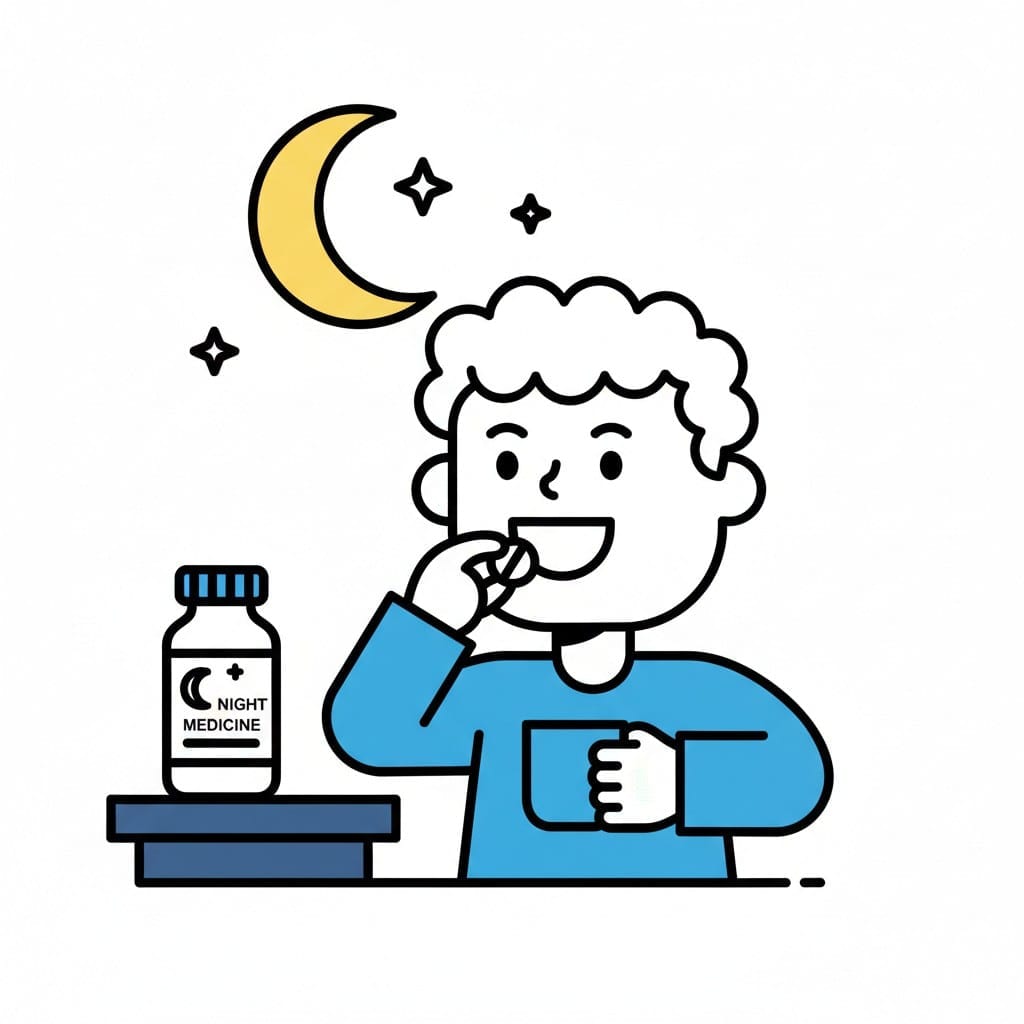
A person taking a pill and holding a cup. In front of the person is a medicine bottle labeled 'NIGHT MEDICINE'. In the background are a crescent moon and stars.
About this visual support
Evenings are when friction hurts most. What is a simple step in the morning can turn into a fight about water, taste, or why tonight at half past eight. Not because the child is being difficult, but because the reserves are gone.
Visual support swaps negotiation for predictability. When the night medicine has its own visible place between teeth and bed, no one has to argue it into being – the picture shows it sitting briefly between two things that are already in place. One concrete tip: put the water glass and the medicine ready earlier in the evening so nothing has to be fetched at the last minute. A walk to the kitchen at bedtime wakes the brain back up just when it was settling down.
The small details decide whether the evening holds. In Routined you can place the night medicine in the evening routine at the exact spot, so it becomes part of the flow rather than an extra item.
Use this image in a schedule
Build your own visual schedule with this image and download it as a print-ready PDF. Completely free.

More similar visual supports
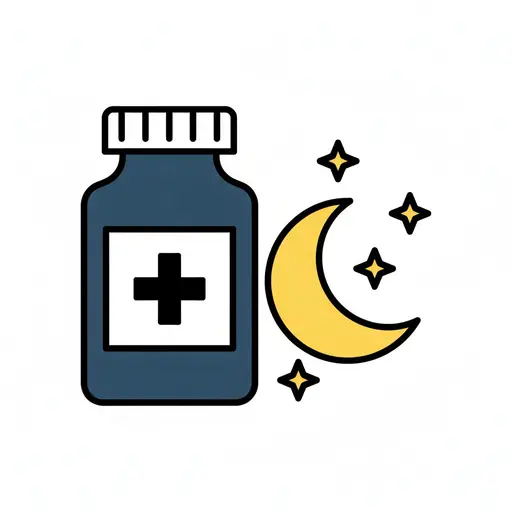
Night medicine
A dark blue medicine bottle marked with a cross sits beside a yellow moon and st...
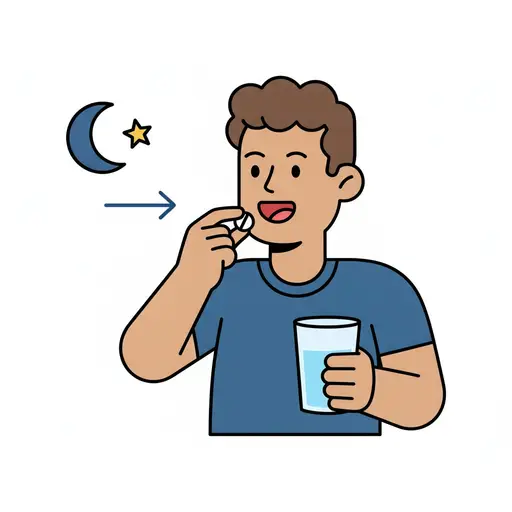
Take evening medicine
A person holds a white tablet up to their mouth and a glass of water in the othe...
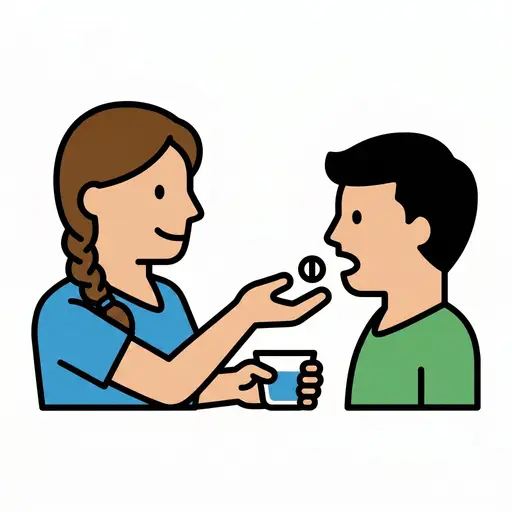
Give medicine
An adult holds out a pill and a glass of water to a child who is opening their m...
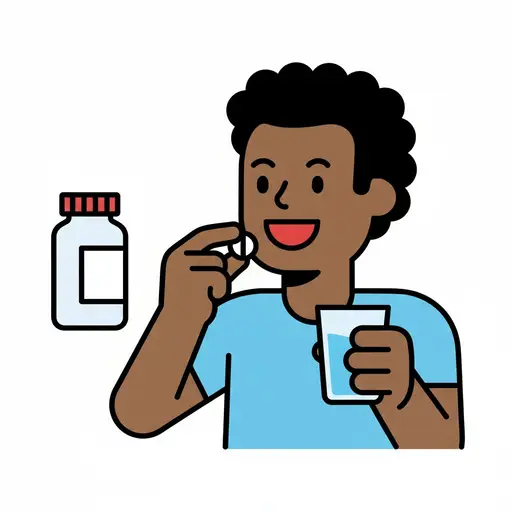
Swallow pills
A boy putting a pill in his mouth, holding a glass of water, with a medicine bot...
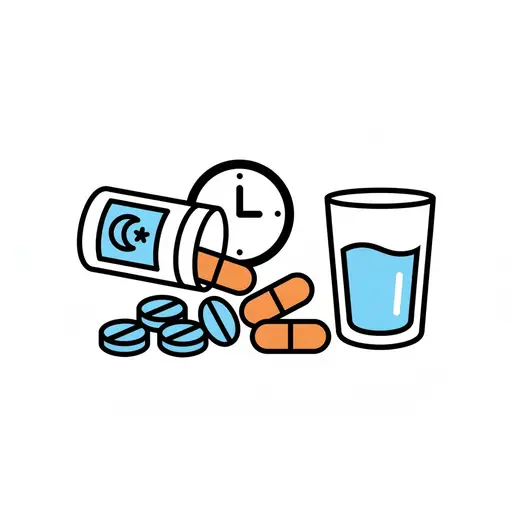
Take evening medicines
A medicine bottle with a moon symbol, tablets and capsules, a glass of water and...
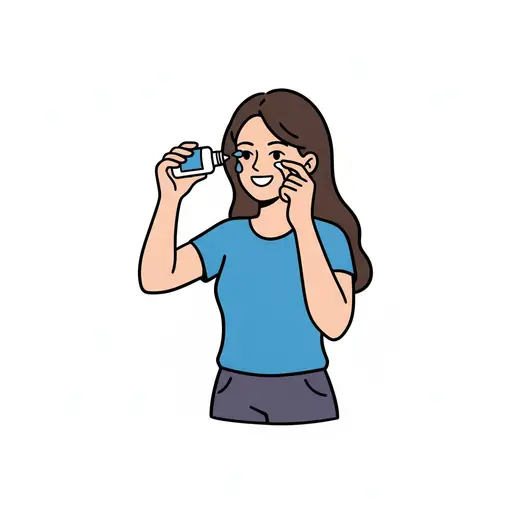
Eye drops
A smiling person holds a small bottle of eye drops above their eye and pulls dow...
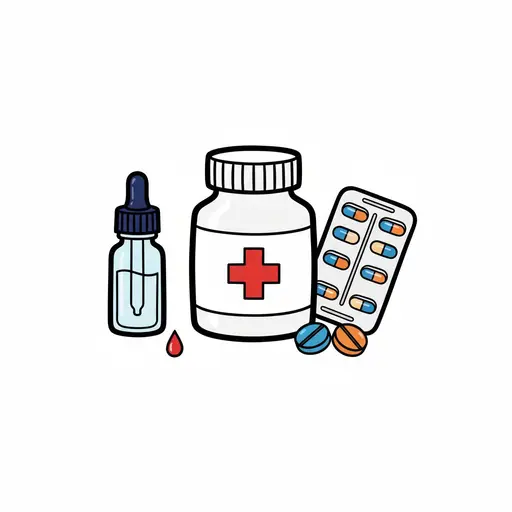
Medicine
A white medicine jar marked with a red cross stands between a dropper bottle and...
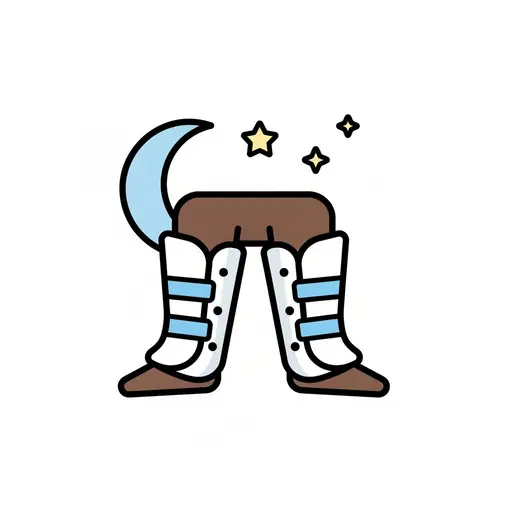
Night braces
A pair of white leg braces fitted on a child, with a moon and stars showing that...
Take the visual supports with you
In Routined you build schedules from these pictures, add timers and voice instructions, and your child follows the day on their own.


* 14-day free trial included for new users.