Take evening medicine
The medicine itself is rarely the problem. The trouble is that it appears in the middle of a game that is not finished, and suddenly the body has to switch from busy to calm. The visual support below lets the transition become visible well in advance.
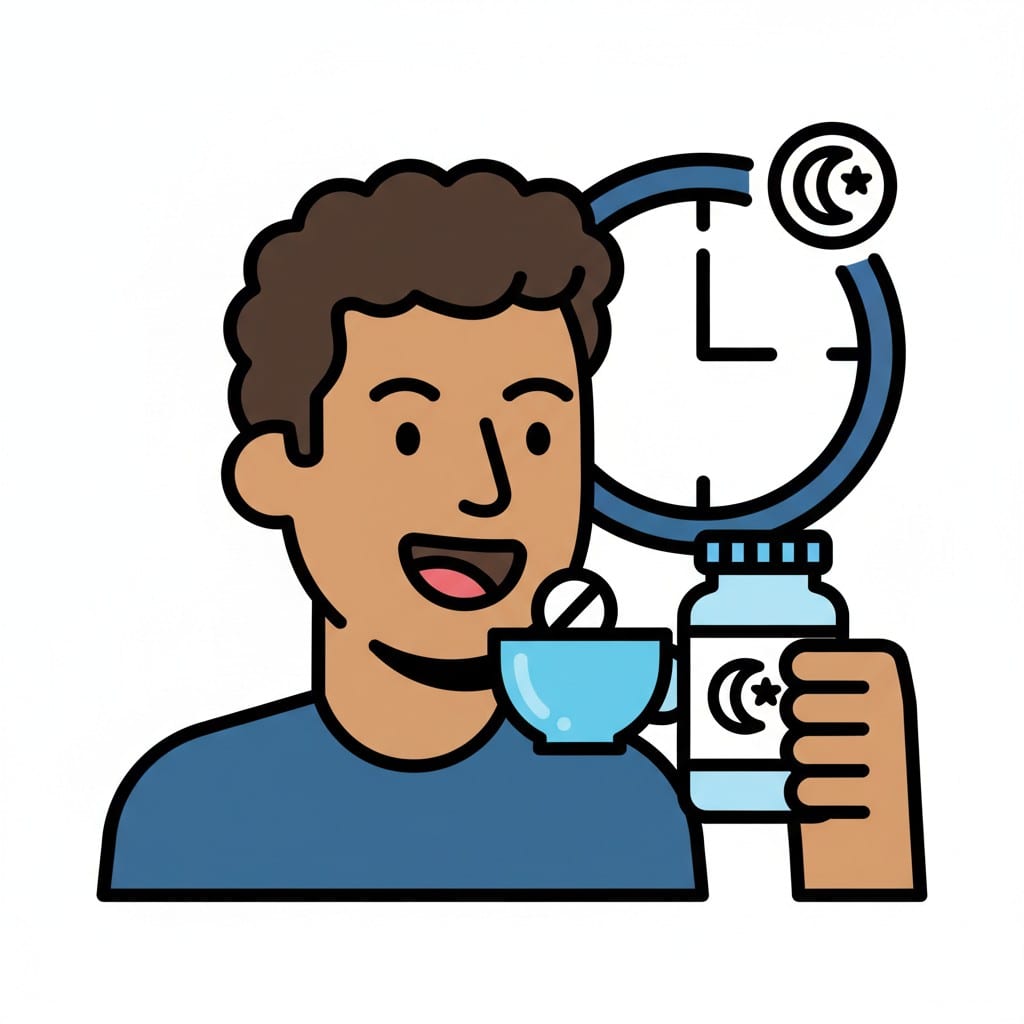 ♂
♂Man taking evening medicine
A man holds a medicine bottle in one hand and a cup with a pill in the other, with a clock showing evening in the background.
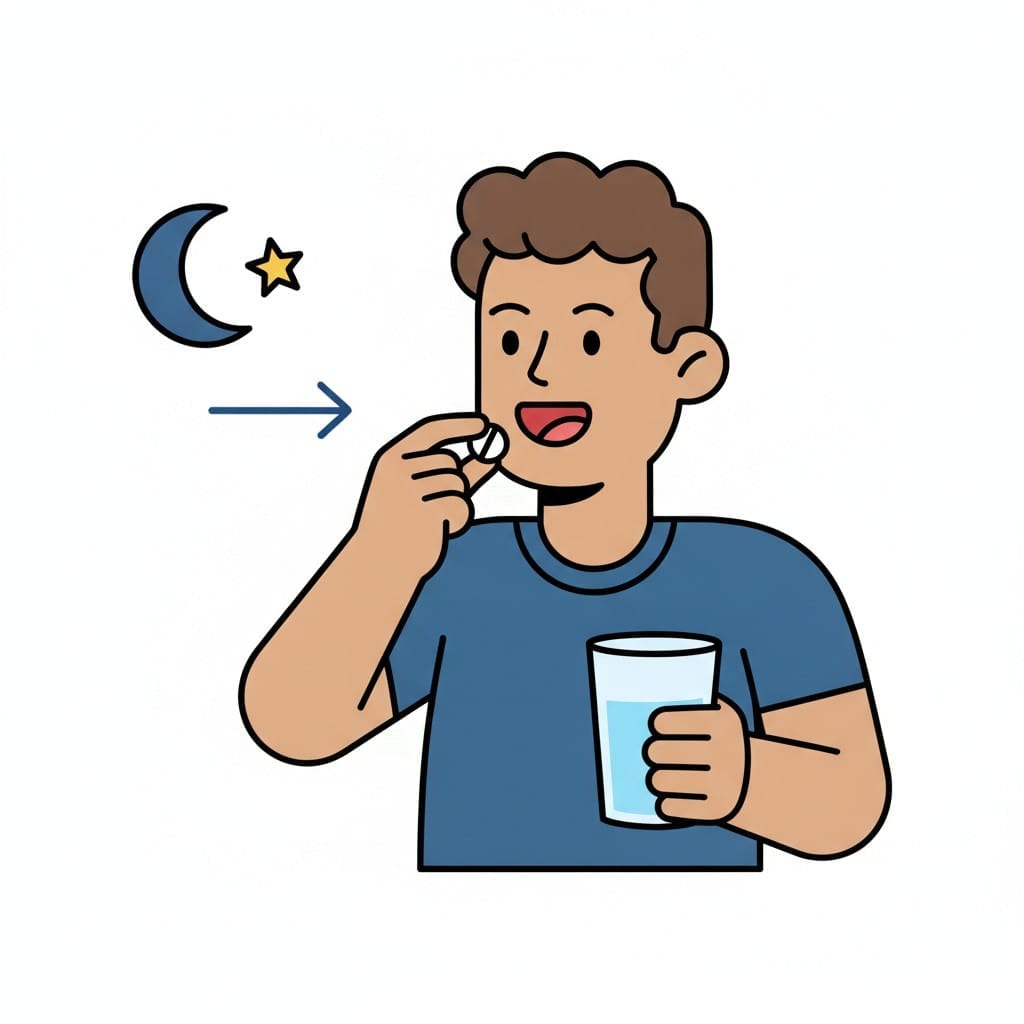 ♂
♂Person taking a tablet with water
A person holds a white tablet up to their mouth and a glass of water in the other hand, with a moon, a star and an arrow beside them.
About this visual support
Evening medicine carries a double role. It treats whatever it is meant to treat, but it also acts as a marker that the day is tipping toward night. That signal can be harder to swallow than the pill or syrup itself. Play is in motion, the body is still revved up, and along comes an action that announces the evening is closing in. It is no wonder the child stalls, forgets or refuses.
Visual support does not erase the resistance, but it makes it less of a surprise. You can show the medicine as a step on the path toward night, not a sudden interruption. Pour the dose, sit in a chosen spot, take the medicine, drink a sip of water, move on to the next evening step. When the child sees the medicine three frames before it is due, the body has time to adjust.
A small trick: keep the medicine in the same physical place every evening, ideally with one thing the child likes seeing there, such as a specific cup or a small lamp. The dose becomes linked to a place rather than to a broken game. In Routined you can schedule the evening medicine with a gentle reminder a few minutes ahead, so the transition begins before you are standing over the child with a spoon.
Use this image in a schedule
Build your own visual schedule with this image and download it as a print-ready PDF. Completely free.

More similar visual supports
Night medicine
A dark blue medicine bottle marked with a cross sits beside a yellow moon and st...
Take evening medicines
A medicine bottle with a moon symbol, tablets and capsules, a glass of water and...
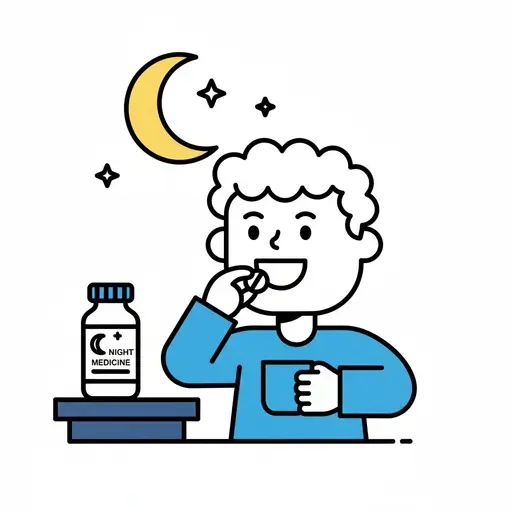
Take night medicine
A person taking a pill and holding a cup. In front of the person is a medicine b...
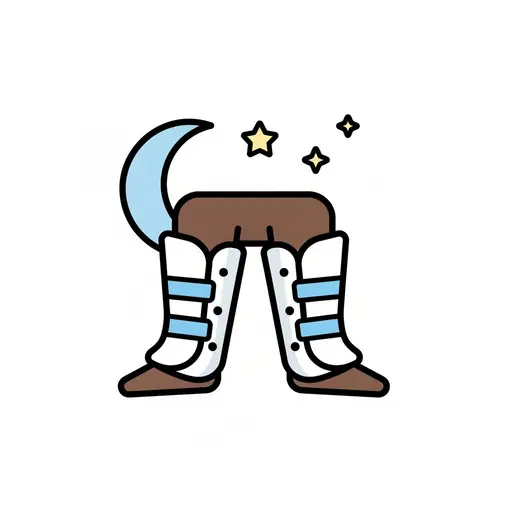
Night braces
A pair of white leg braces fitted on a child, with a moon and stars showing that...
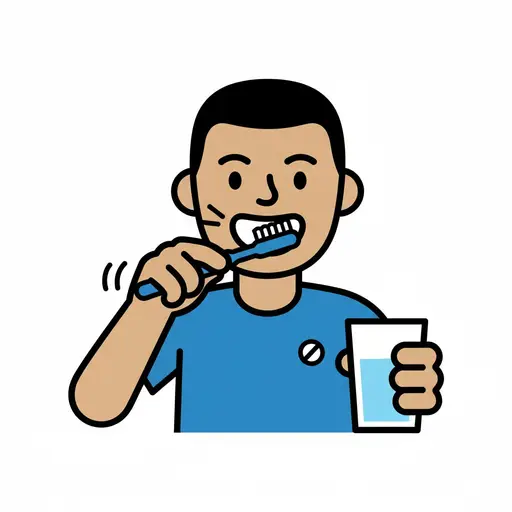
Brush teeth and take medicine
A person in a blue shirt is brushing their teeth with a blue toothbrush while ho...
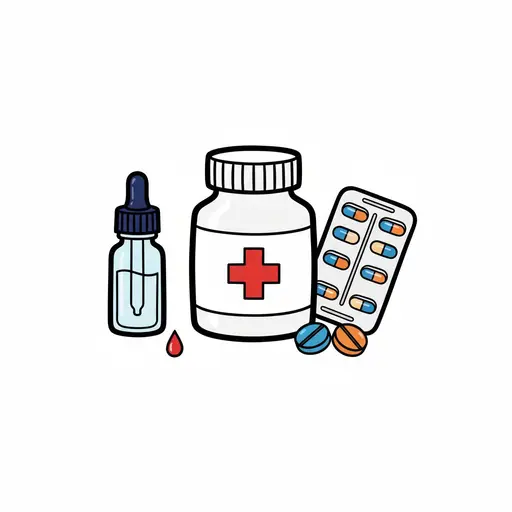
Medicine
A white medicine jar marked with a red cross stands between a dropper bottle and...
Morning medicine
A hand holding a bottle of medicine and pills, with a sun icon.
Allergy medicine
Medicine bottle with a red cross next to a capsule, a leaf, and a cloud.
Take the visual supports with you
In Routined you build schedules from these pictures, add timers and voice instructions, and your child follows the day on their own.


* 14-day free trial included for new users.