Finish up
An ending imposed from outside always collides with work still running inside. The child is mid-build, mid-thought or mid-level, and time runs out at the wrong moment. The pictures below turn the ending into something you see coming rather than something that just happens.
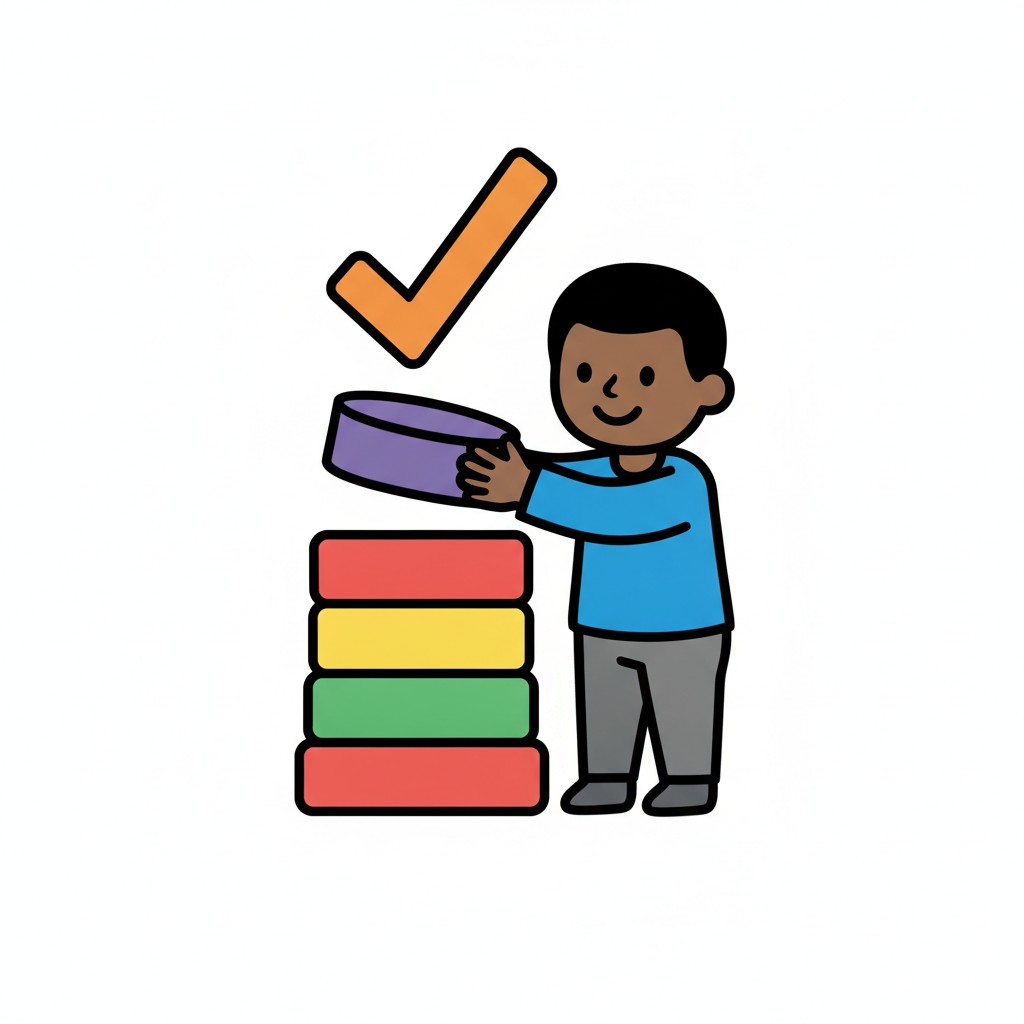 ♂
♂Finish and put the lid on
A child puts a lid on a stack of boxes with a tick above.
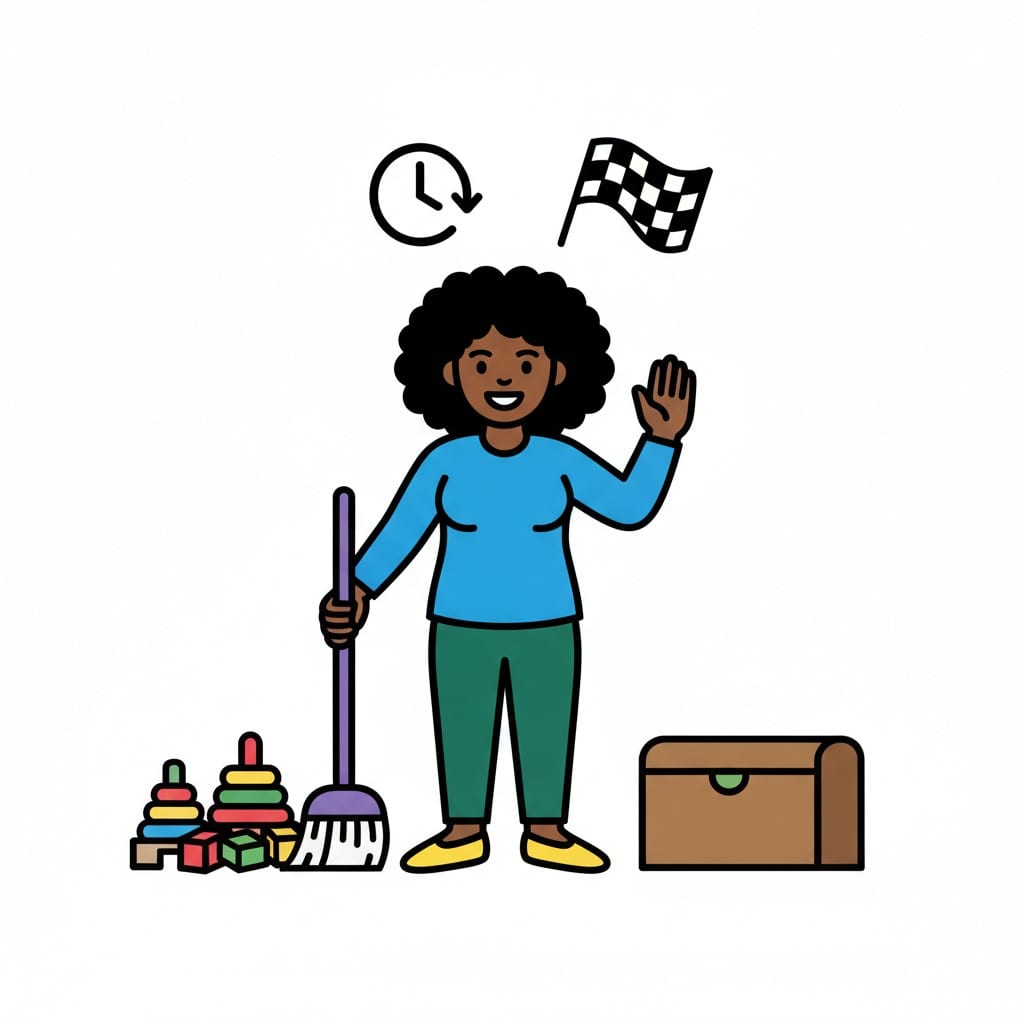 ♀
♀Finish up
An adult with a mop holds up a hand beside a clock and a finish flag, with toys and a toy box on the floor.
About this visual support
Finishing is a skill of its own, separate from starting and from keeping going. It requires letting go of something still running in the head, and that feeling is unpleasant at any age. Adults solve it by saving their work, while a child in the middle of play has no save button. That is why an instruction delivered mid-activity so often triggers the conflict.
Visual support gives the ending a place in advance. One picture for the final step and one for what comes afterwards means the end exists in the plan before it arrives. There is a large difference between being interrupted and reaching the end of a sequence you have seen all along.
A concrete tip is to end at a natural point rather than on an exact minute: after this level, once the tower is standing. The point can be approximate in time but clear in content. In Routined the activity can carry a visible final step, and the app can be tried for fourteen days at no cost.
Use this image in a schedule
Build your own visual schedule with this image and download it as a print-ready PDF. Completely free.
More similar visual supports
Empty bag
A dark blue backpack with red shoulder straps and a large empty grey front pocke...
Put away clothes
Two hands put folded clothes into a wardrobe with hangers and shelves.
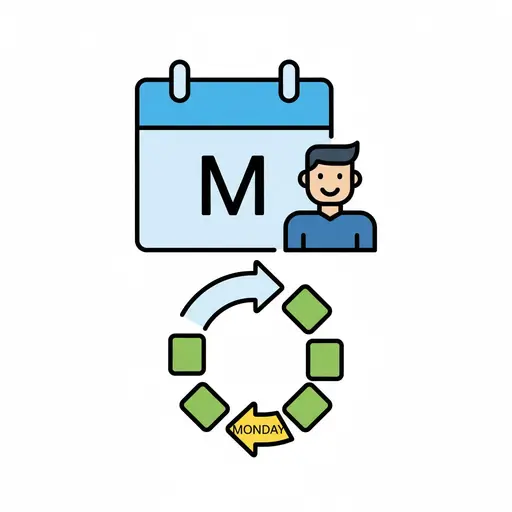
Monday Dad Week
A calendar icon showing the letter M for Monday, an image of a man and a circula...
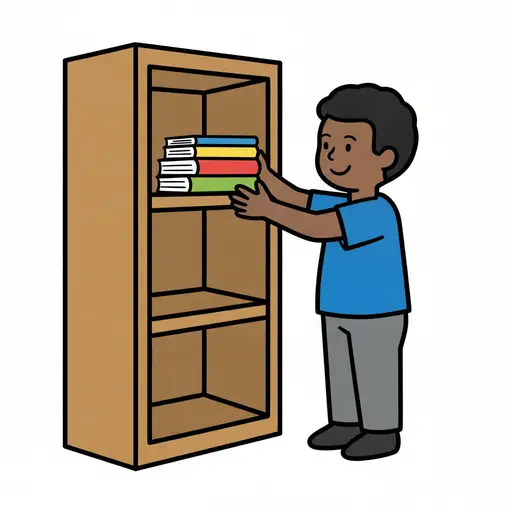
Put away books
A boy puts a stack of books into a bookcase.
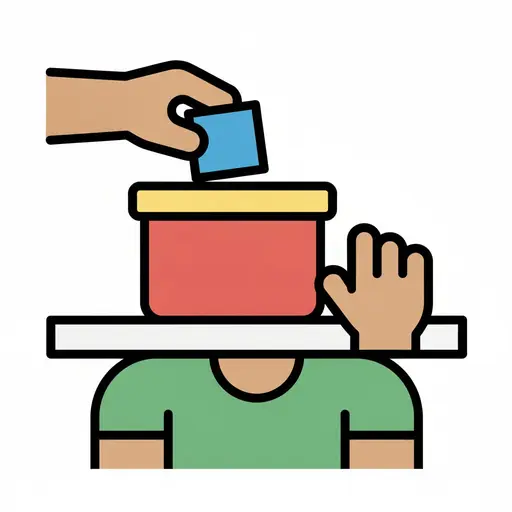
Put away
A hand places a blue block into a red container on a shelf.
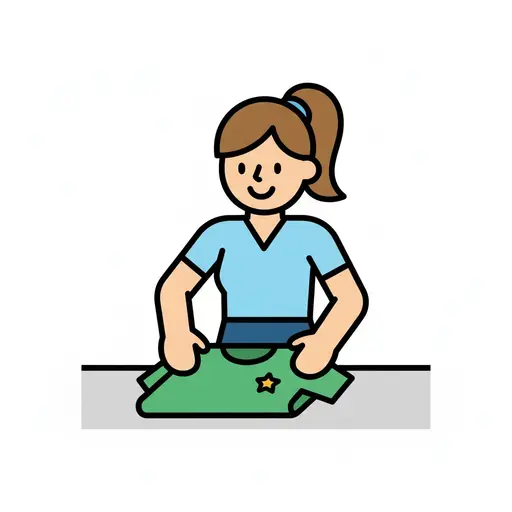
Fold uniform
A woman folding a green uniform t-shirt with a star on it, on a table.
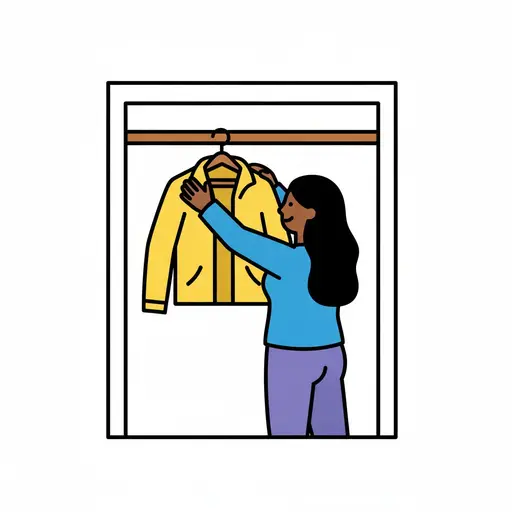
Hang jacket
A woman hangs a yellow jacket in the closet.
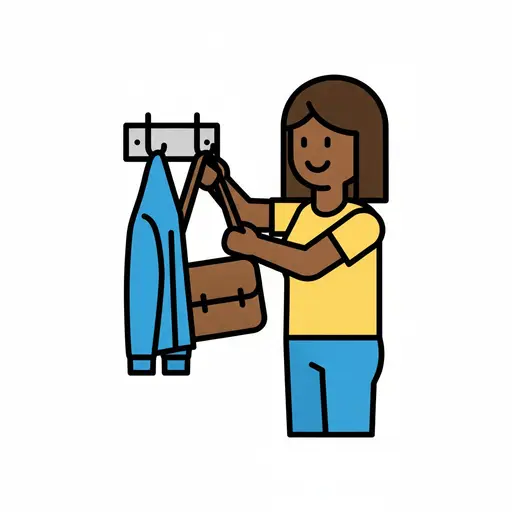
Hang up coat and bag
A smiling person hangs a blue jacket and a brown shoulder bag on a row of hooks ...
This visual support in other languages
Take the visual supports with you
In Routined you build schedules from these pictures, add timers and voice instructions, and your child follows the day on their own.


* 14-day free trial, then $2.39 a month or $20.99 a year (US pricing). Cancel anytime.