Handle returns
A return often sits in the hallway for weeks because the brain cannot tell which step comes first. The visual support below splits the task into concrete decisions, from receipt to counter.
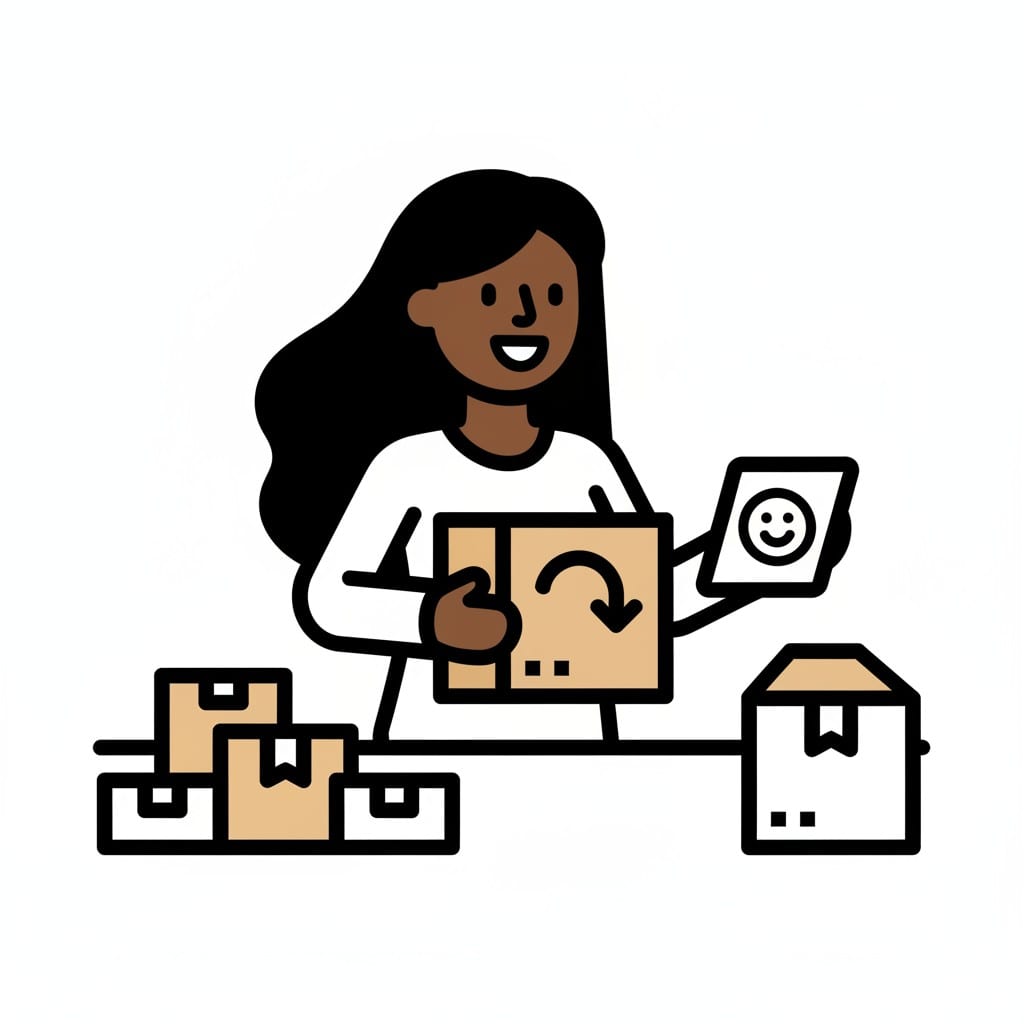 ♀
♀Woman handling returns
A woman holding a package with a return arrow and a tablet with a happy face. Other packages are visible.
About this visual support
Handling a return is not physically heavy but executively expensive: locate the receipt, check how many days are left, find the original box, read the return policy, bring a card, drive the right route, speak to staff who might say no. Many small decisions with uncertain outcomes lead the brain to skip starting, and the parcel just stays put.
The visual support moves each decision from the head onto a card you can point at. Once the next step is already chosen (check receipt, pack in bag, place in hallway, take tomorrow), it stops being a fork in the road and becomes an action.
One practical tip: include a step called worst case – return refused. Write on the back what you do then (keep, resell, donate). When the worst outcome already has a plan, the threshold to even leave the house drops. If you want a reminder before the return window closes, you can try Routined free for fourteen days.
Use this image in a schedule
Build your own visual schedule with this image and download it as a print-ready PDF. Completely free.

More similar visual supports
Get bags
A woman with short dark curly hair and a blue t-shirt leans forward and picks up...
Air out
A boy opens a window to air out the room.
Allowance
One hand passes a banknote and coins to another open hand.

Allowance included
A hand receives a banknote and a coin from a wallet, with an arrow indicating mo...

At home
A simple house with a red roof and a large heart in the middle of the wall.
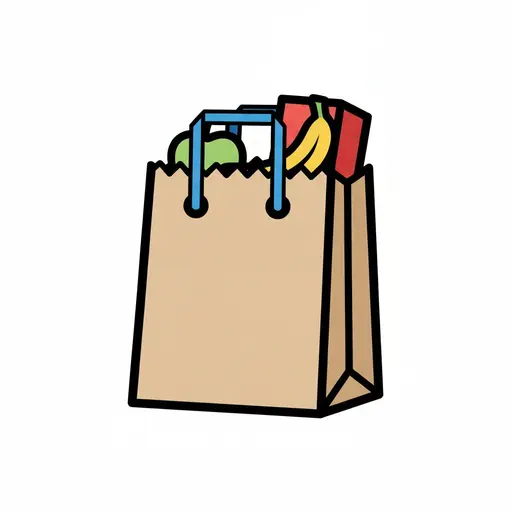
Bag
A brown paper bag with blue handles, filled with groceries such as an apple, a b...
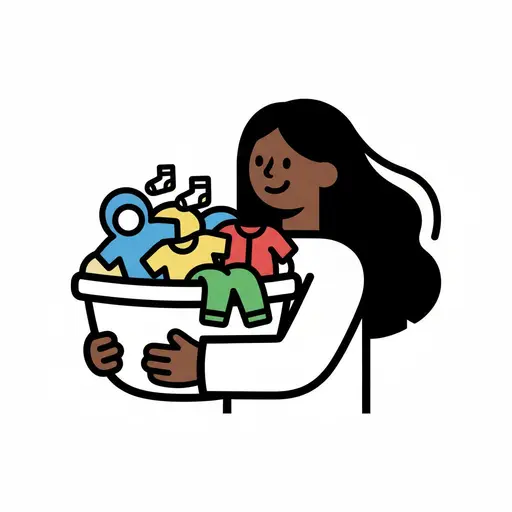
Bring children's clothes
A woman holds a basket filled with colorful children's clothes.
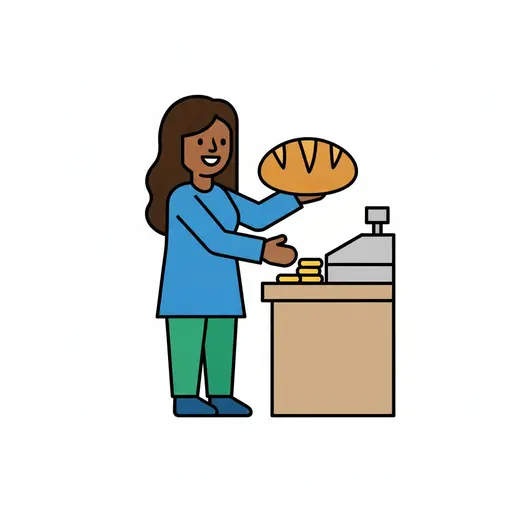
Buy bread
A smiling person holds up a loaf of bread at a checkout counter with coins and a...
Take the visual supports with you
In Routined you build schedules from these pictures, add timers and voice instructions, and your child follows the day on their own.


* 14-day free trial included for new users.