Pick up clothes
The pile bothers you, but to your child it's invisible. Inner drive isn't there, so structure has to come from outside. The visual support below breaks the task into steps that are actually followable.
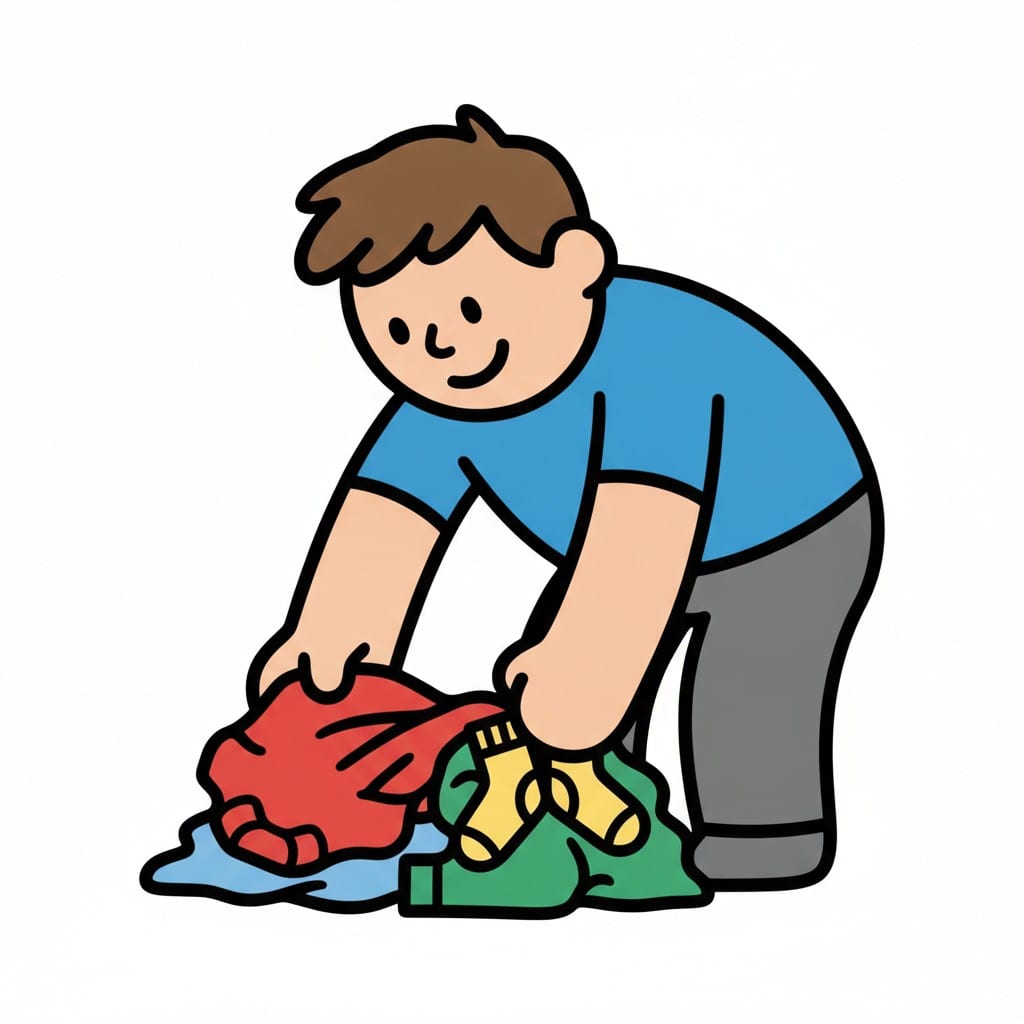 ♂
♂Boy picking up a shirt
A boy in a blue t-shirt bends down and lifts a red garment from a heap of clothes and yellow socks on the floor.
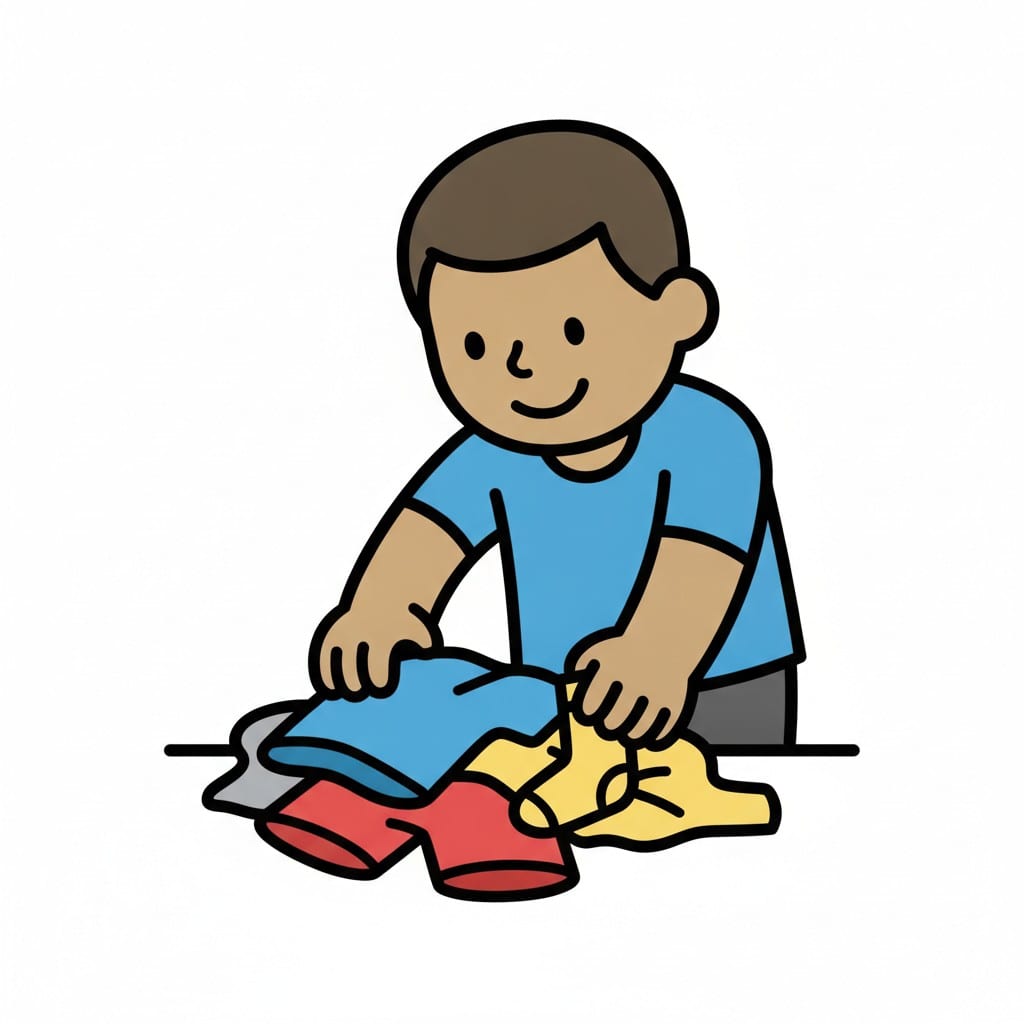 ♂
♂Boy gathering clothes
Leaning forward, a boy grips a blue shirt while red and yellow garments still lie on the floor.
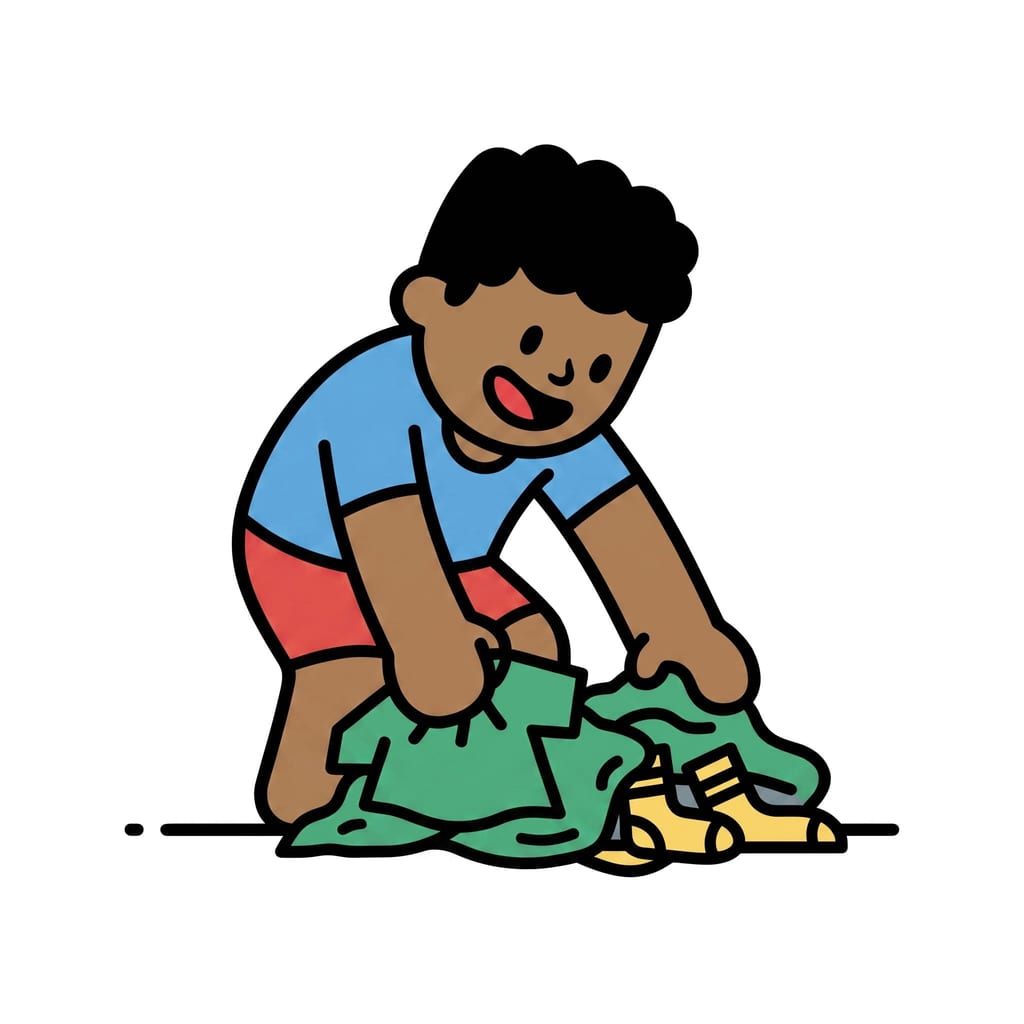 ♂
♂Boy picking clothes off the floor
Crouching low, a boy gathers blue clothes from a pile that also holds red shorts and green and yellow socks.
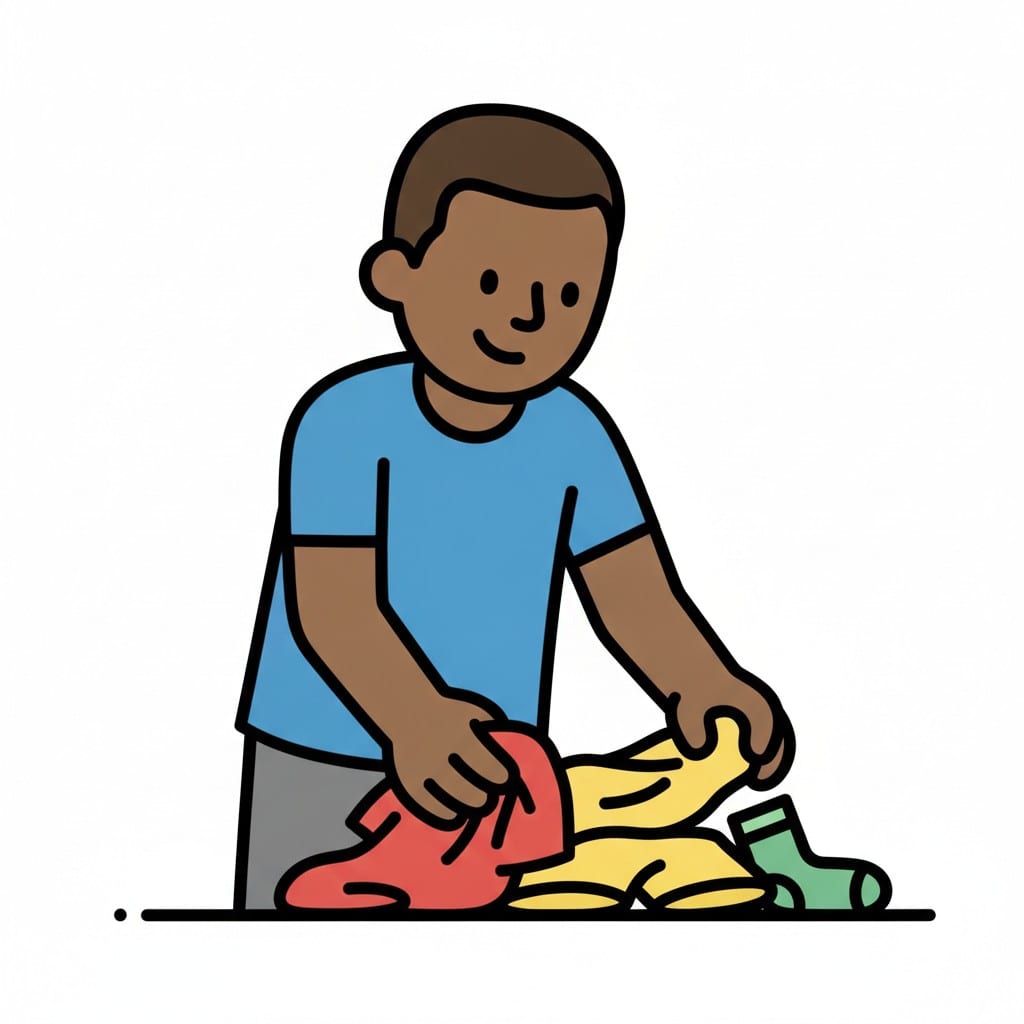 ♂
♂Boy holding up clothes
Bending forward, a boy holds a red garment in one hand and a yellow one in the other, with a green sock still on the floor.
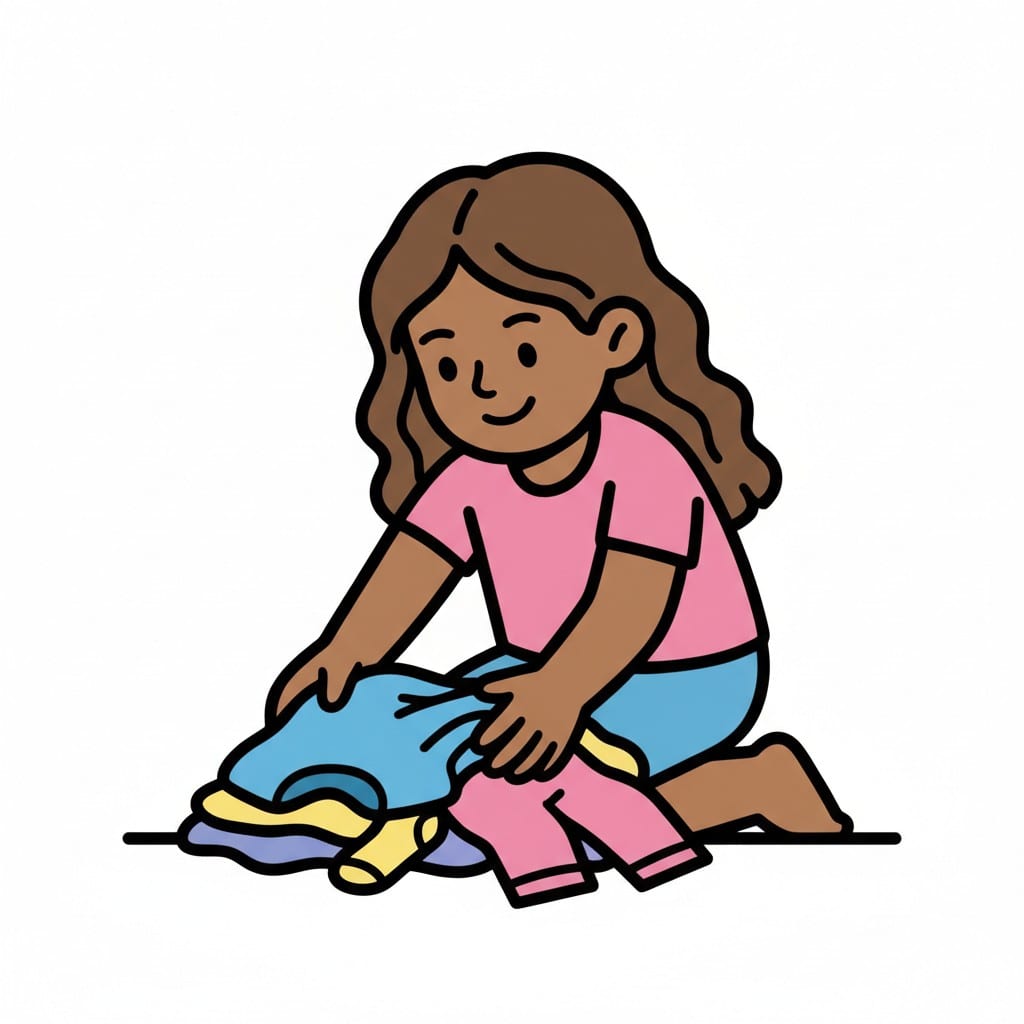 ♀
♀Girl picking up clothes
A girl kneels on the floor, picking up a pile of clothes.
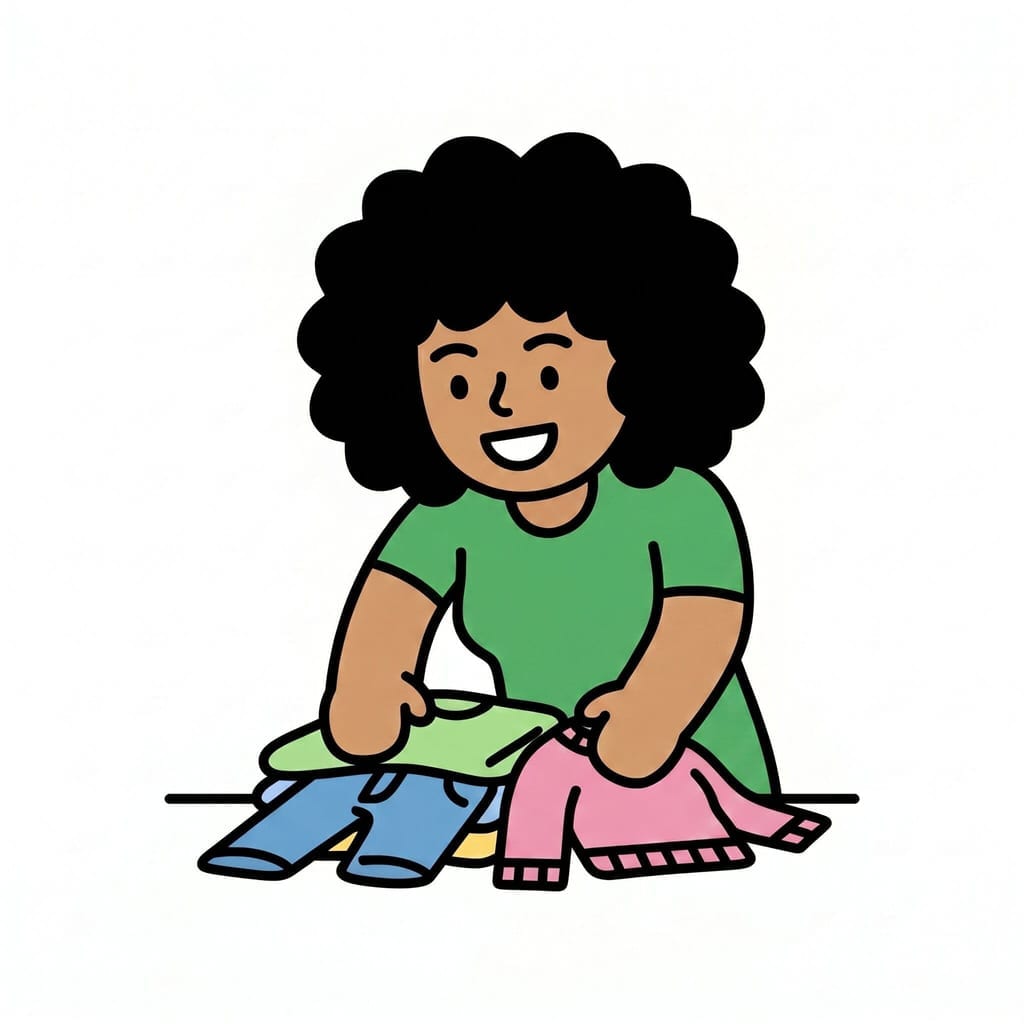 ♀
♀Pick up clothes
A woman picking up a pile of clothes from the floor.
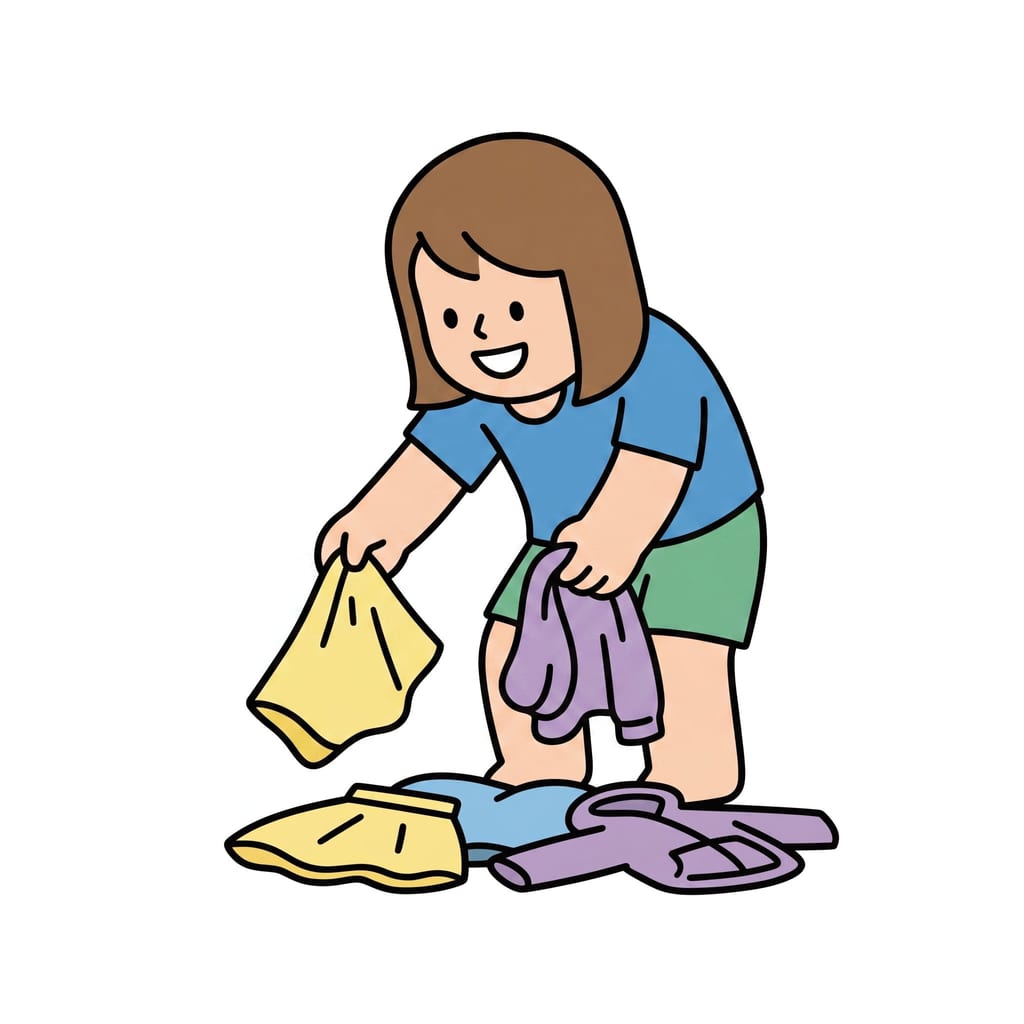 ♀
♀Girl picking up a t-shirt
A girl bends down and lifts a blue t-shirt from a pile of clothes on the floor.
About this visual support
The gap between you and your child here isn't willpower, it's what each of you sees. You see a pile that has to disappear before the evening runs out. Your child sees clothes lying where they happen to lie, no drama attached. Without that inner pull, raising your voice rarely helps. What helps is making the task small and concrete enough to start.
Visual support works because it moves the steering away from your reminders and onto a sequence the child can follow alone. Pick up the shirt. Put it in the basket. Pick up the trousers. Drape them over the chair. When each card shows exactly one action, the child doesn't have to hold the whole pile in their head, and you don't have to repeat yourself.
One tip that often shifts things: place an empty basket in the middle of the room before you bring out the cards. The goal becomes as visible as the steps. In Routined you can pair the visual support with a short timer for the moment, which often turns the task into a quiet challenge of beating the clock. The app is free to try for fourteen days.
Use this image in a schedule
Build your own visual schedule with this image and download it as a print-ready PDF. Completely free.

More similar visual supports
Fold clothes
A person folds a red t-shirt with a stack of folded clothes beside.

Clean clothes
A stack of clean, folded laundry. A light blue shirt, a white shirt, and a yello...
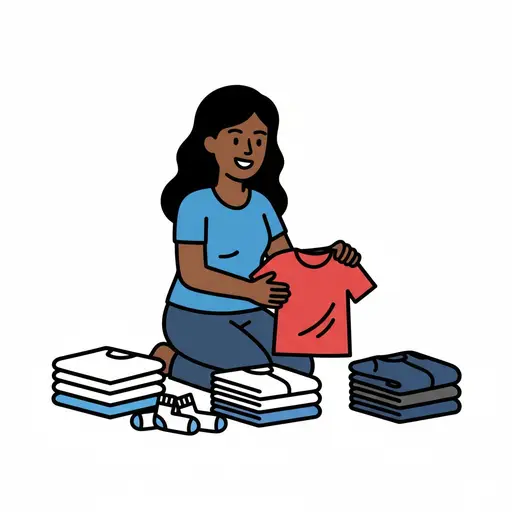
Sort clothes
A person sits on the floor sorting clothes into piles.
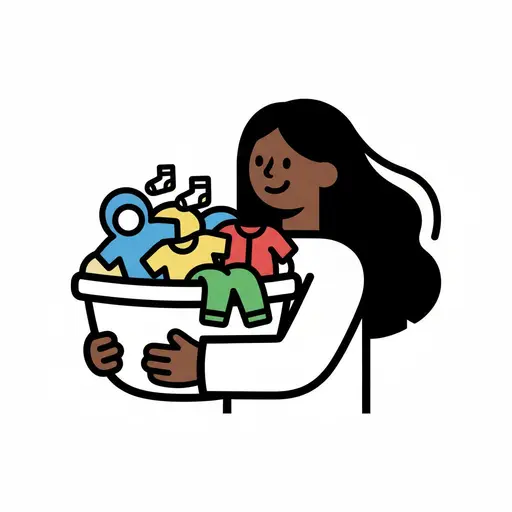
Bring children's clothes
A woman holds a basket filled with colorful children's clothes.

Clean socks
Illustration of two clean socks, a bar of soap, and a water droplet.

Dirty clothes
A pile of dirty clothes and a sock, indicating a bad smell.
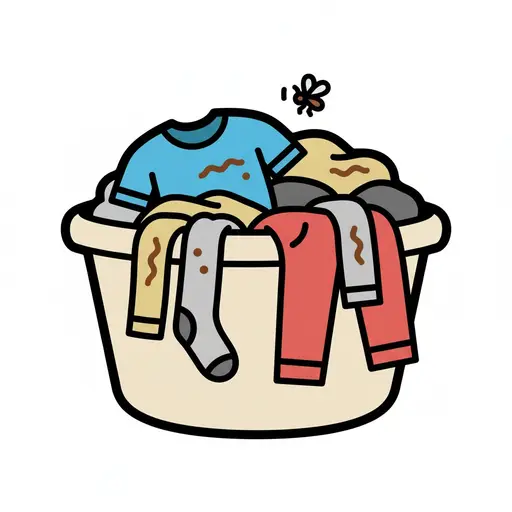
Do laundry
A laundry tub filled with dirty clothes, including a blue shirt with wavy brown ...
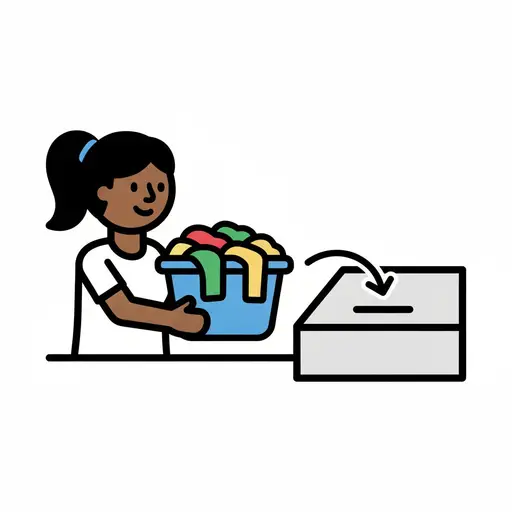
Drop off laundry
A girl with a ponytail holds a blue basket of colourful clothes while an arrow p...
Take the visual supports with you
In Routined you build schedules from these pictures, add timers and voice instructions, and your child follows the day on their own.


* 14-day free trial included for new users.