Vacuum the floor
A whole floor at once is too big in the head — where do you start, and where have you already been? That question is usually what kills the motivation. The steps below split the floor into smaller sections with a clear order.
 ♂
♂Vacuum floor
An illustration of a boy vacuuming the floor with a blue vacuum cleaner.
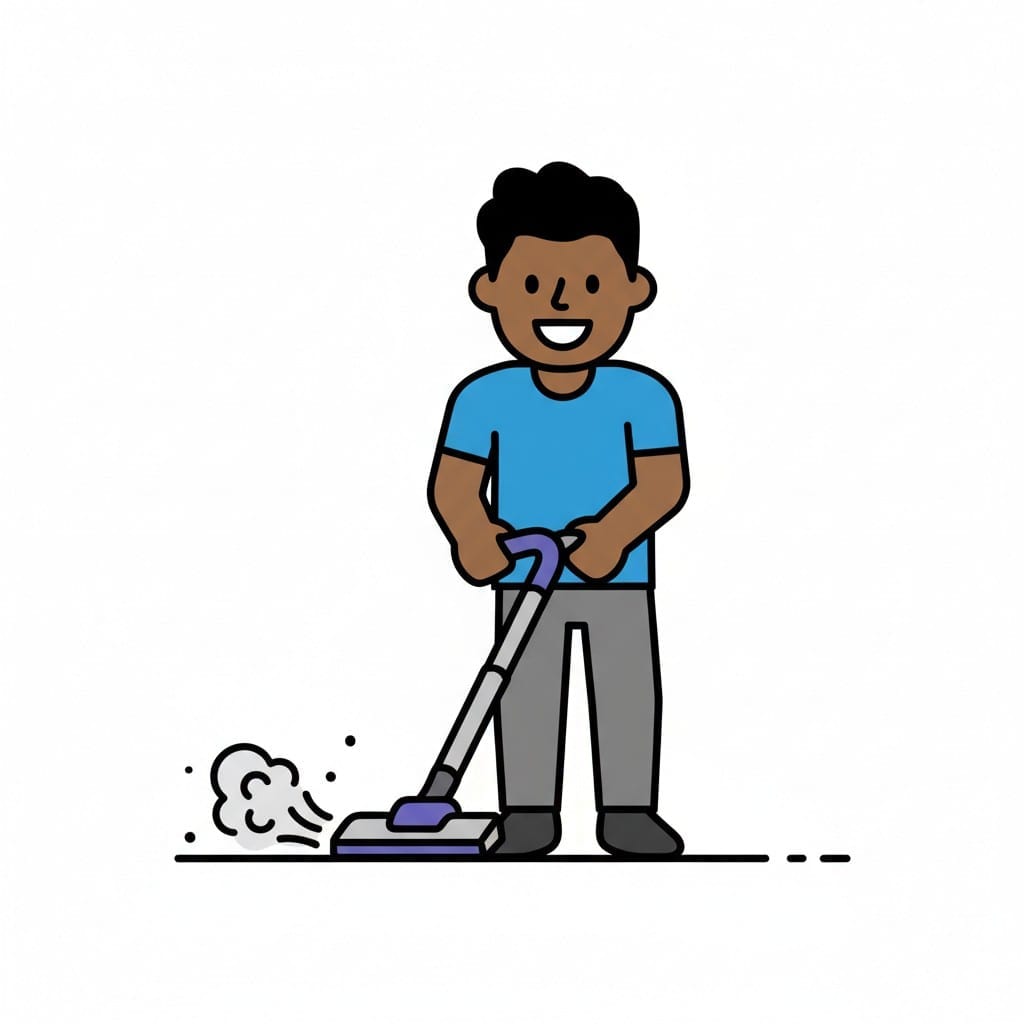 ♂
♂Man vacuums up dust
A man in a blue t-shirt vacuums the floor while a small cloud of dust swirls at the nozzle.
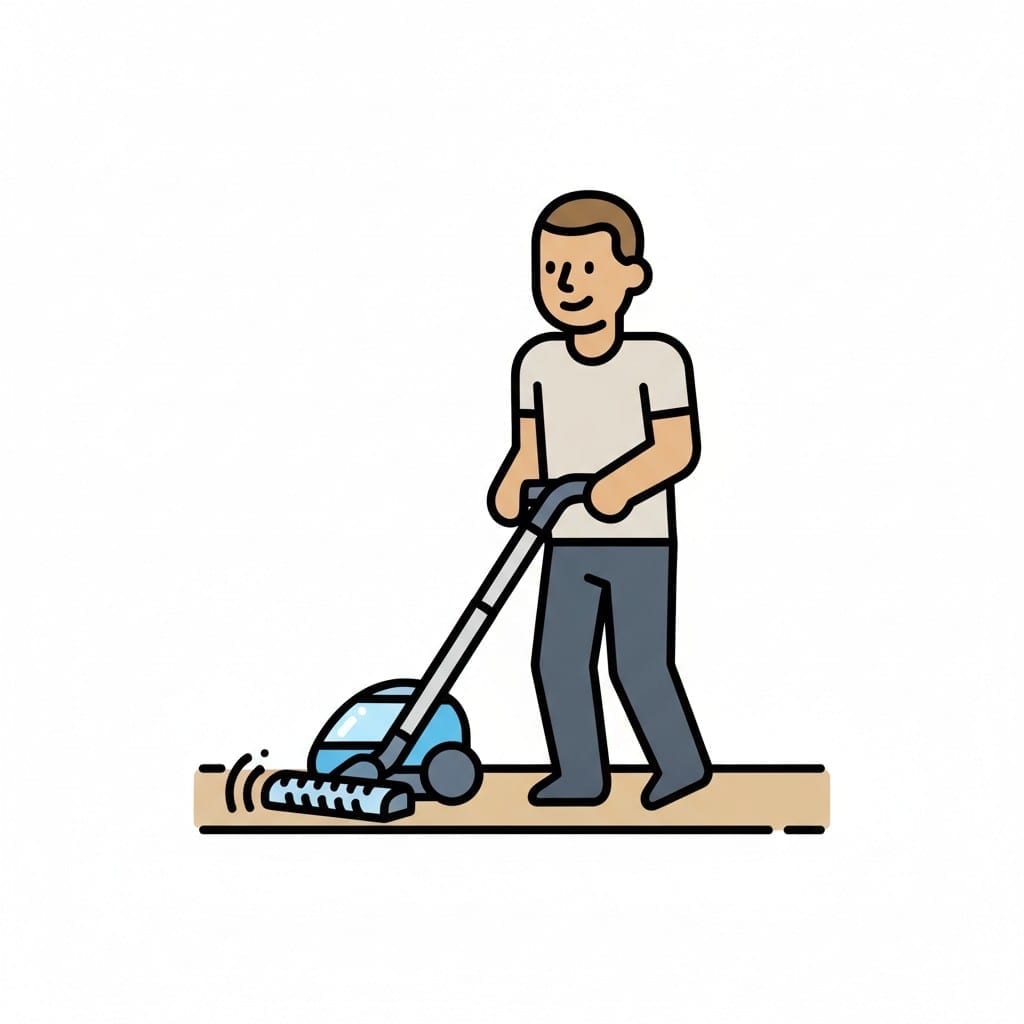 ♂
♂Man vacuums a wooden floor
Pushing a blue vacuum cleaner, a man in a light t-shirt cleans a wooden floor.
 ♂
♂Man with a blue vacuum cleaner
Holding the wand of a dark blue vacuum cleaner, a man draws dirt up from the floor.
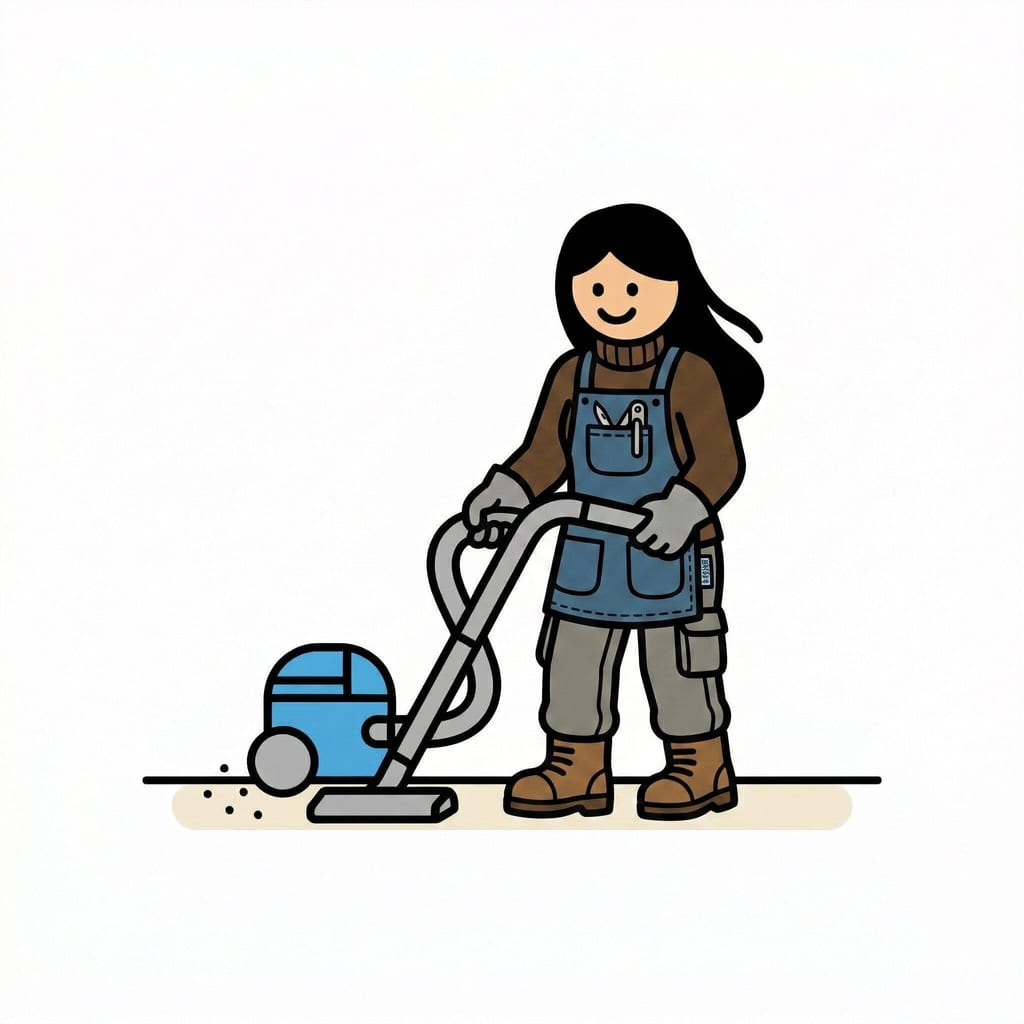 ♀
♀Woman vacuuming
An illustration of a woman vacuuming the floor with a vacuum cleaner.
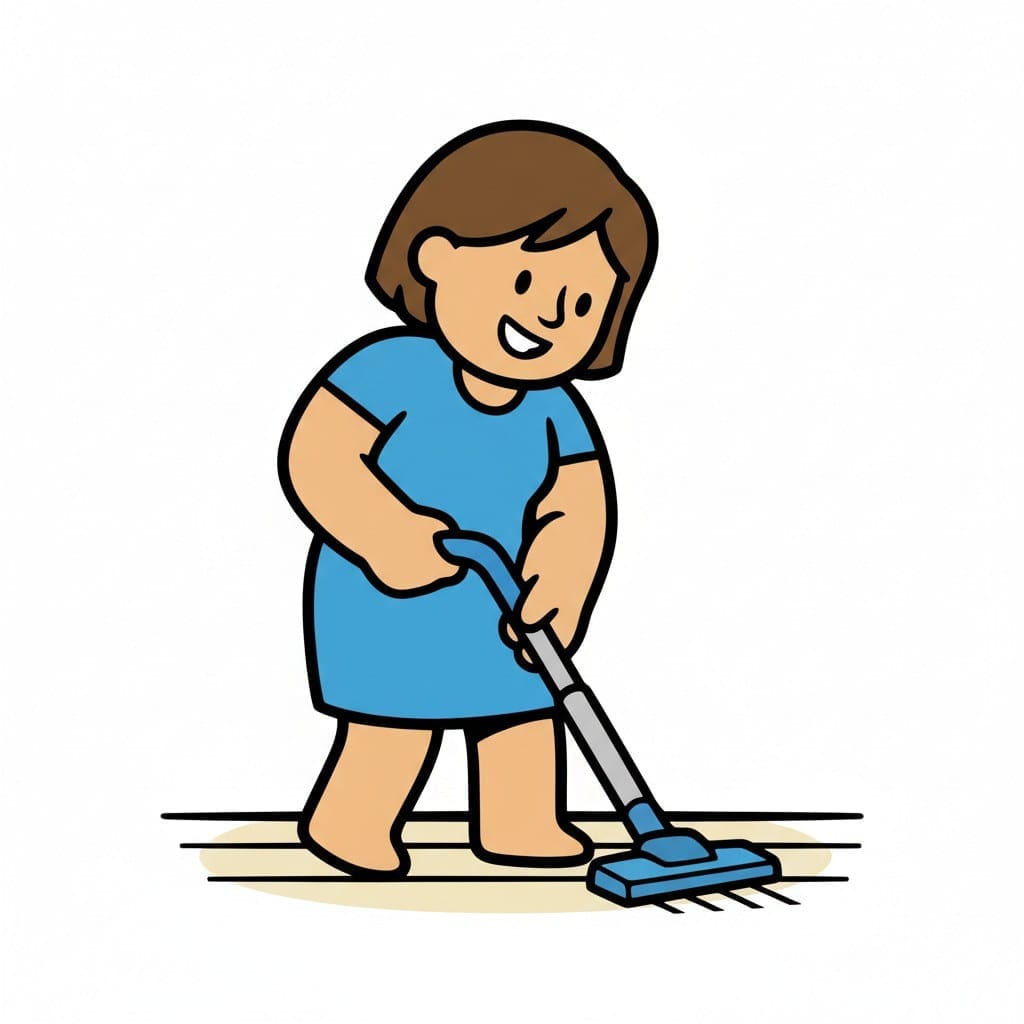 ♀
♀Woman bends down to vacuum
Leaning forward in a blue dress, a woman guides the vacuum nozzle across the floor.
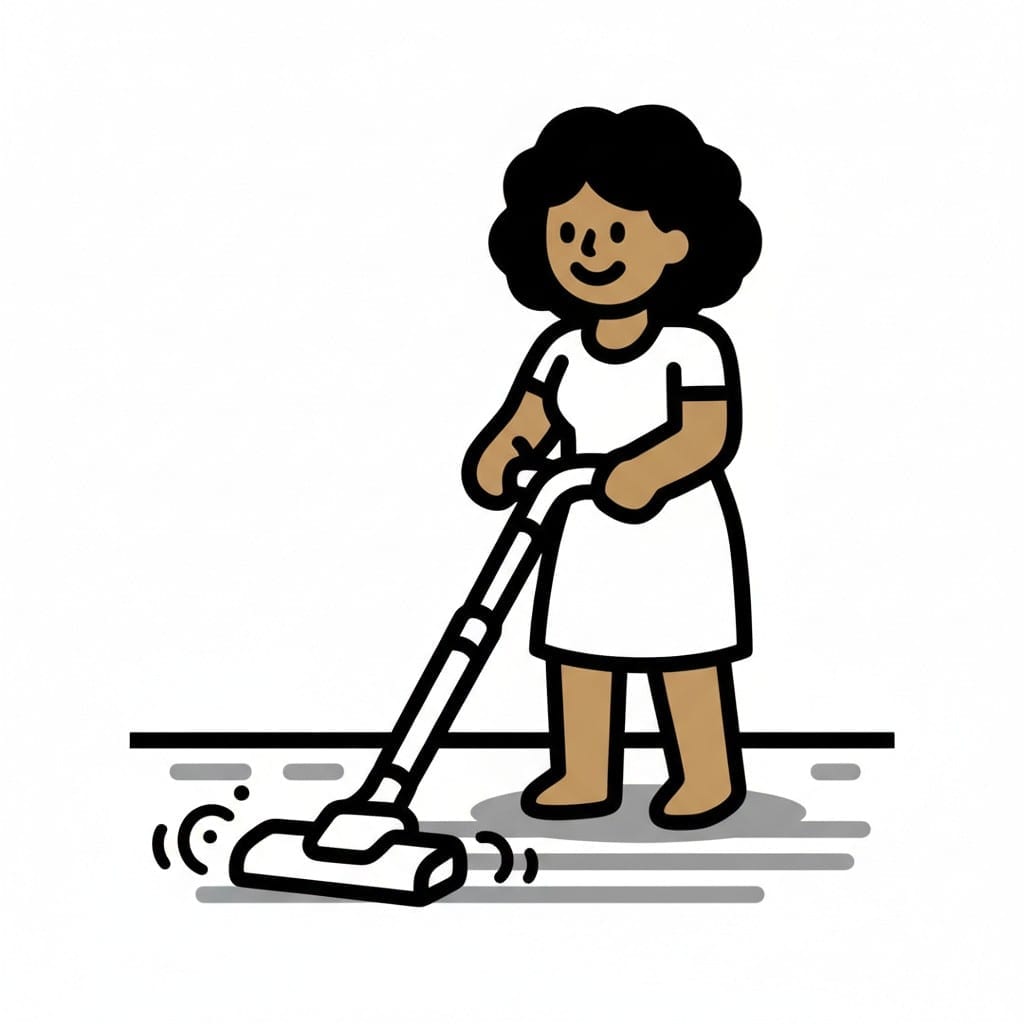 ♀
♀Woman vacuuming in a white dress
A woman in a white dress runs a vacuum cleaner with a long wand across the floor.
About this visual support
The hardest part is not the vacuuming itself, it is the surface. A living room floor has no natural borders, and the child sees only one big zone where the brain has to track what is done and what is left. That is why many give up after a minute — they no longer know if they are making progress.
Visual support gives a start point and a direction. Begin at the window, work toward the door, or split the room into four squares and tick off one at a time. When the eye can see the steps in a row, progress becomes visible even for the child who lost the overview. One concrete tip: place a chair or a toy in the middle as a ‘turn point’ before you begin. That gives a physical marker in the room matching the halfway picture, so the child sees half is done before fatigue sets in.
In Routined you can pair each card with a short timer for that area, so it is clear when one section ends and the next begins.
Use this image in a schedule
Build your own visual schedule with this image and download it as a print-ready PDF. Completely free.

More similar visual supports
Clean the living room
A living room with a blue sofa, floor lamp and side table, with a broom leaning ...
Clean the sink
A girl scrubs a sink with a sponge next to a bucket and a spray bottle.
Clean your room
A child tidies their room, holding up a shirt among toys and boxes.
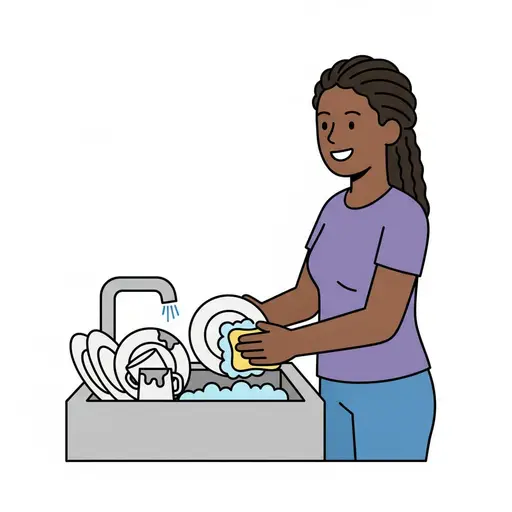
Do dishes
A person washes a plate with a yellow sponge at a sink full of dishes.
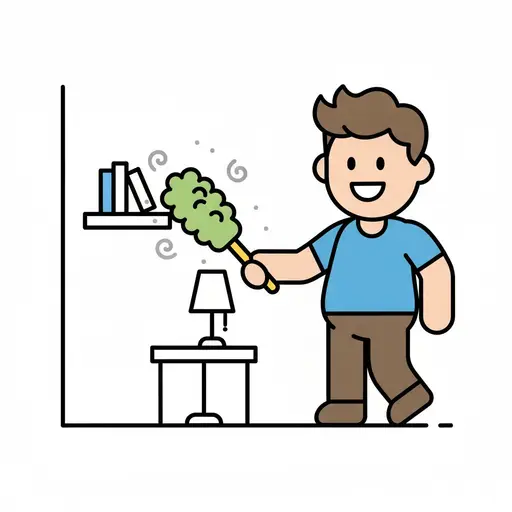
Dust the apartment
A child dusts a bookshelf with a feather duster.
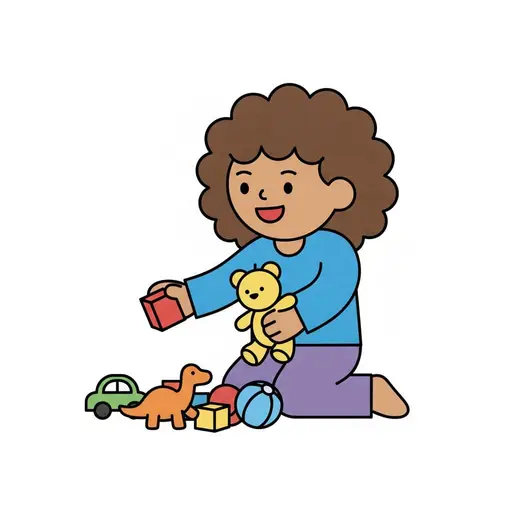
Put away toys
A child kneels holding a yellow teddy and a red block, with toys on the floor.
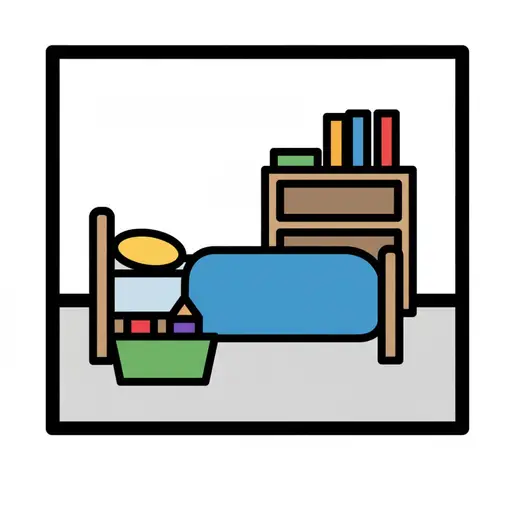
Straighten up the room
An illustration of a tidy room with a bed, a bedside table with books, and a bas...
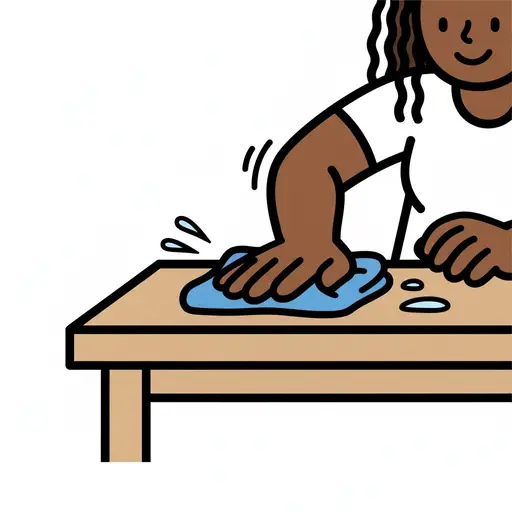
Wipe the desk
A child wipes a wooden desktop with a blue cloth.
Take the visual supports with you
In Routined you build schedules from these pictures, add timers and voice instructions, and your child follows the day on their own.


* 14-day free trial included for new users.