Armband
Something worn around the arm registers every time the sleeve moves, and unlike most clothing it never fades into the background. The steps below turn on and off into a clear routine rather than a daily negotiation.
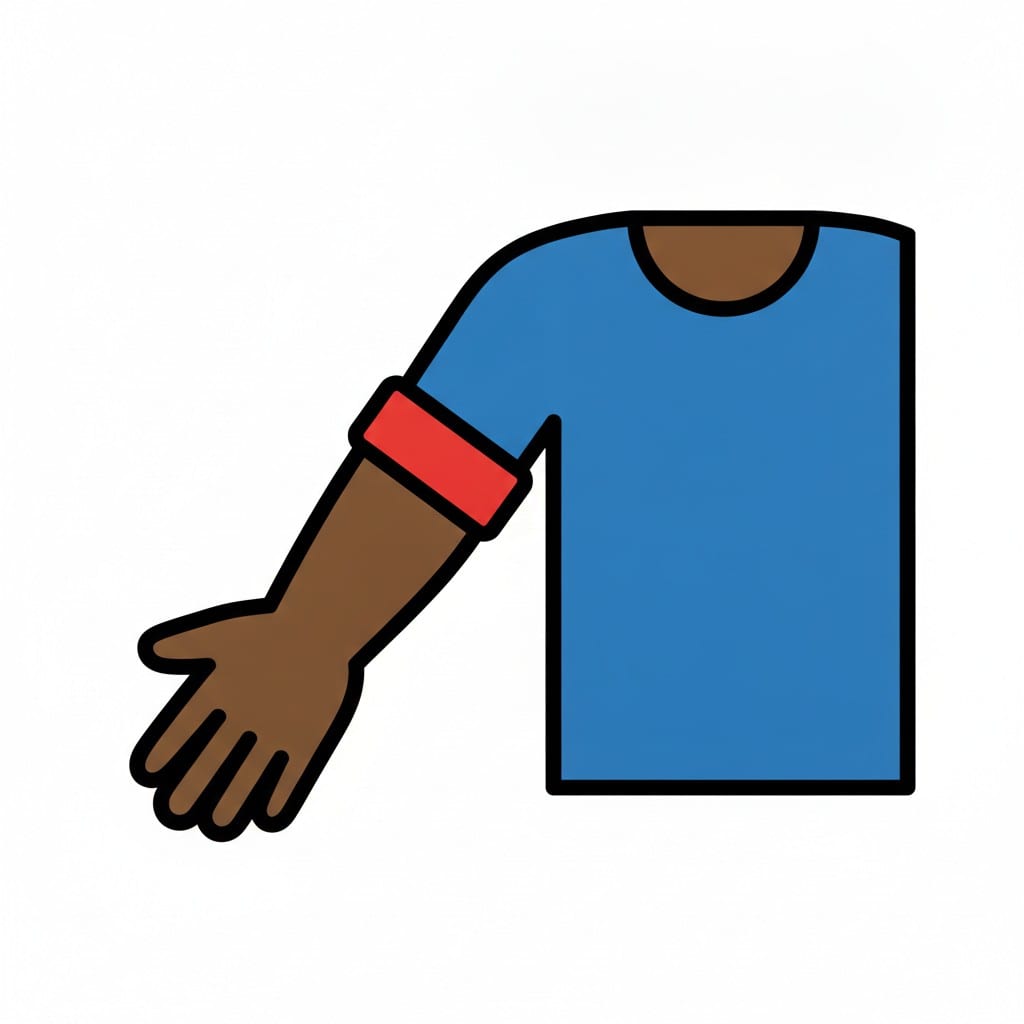
Red armband on the arm
An arm in a blue t-shirt with a red armband around the upper arm.
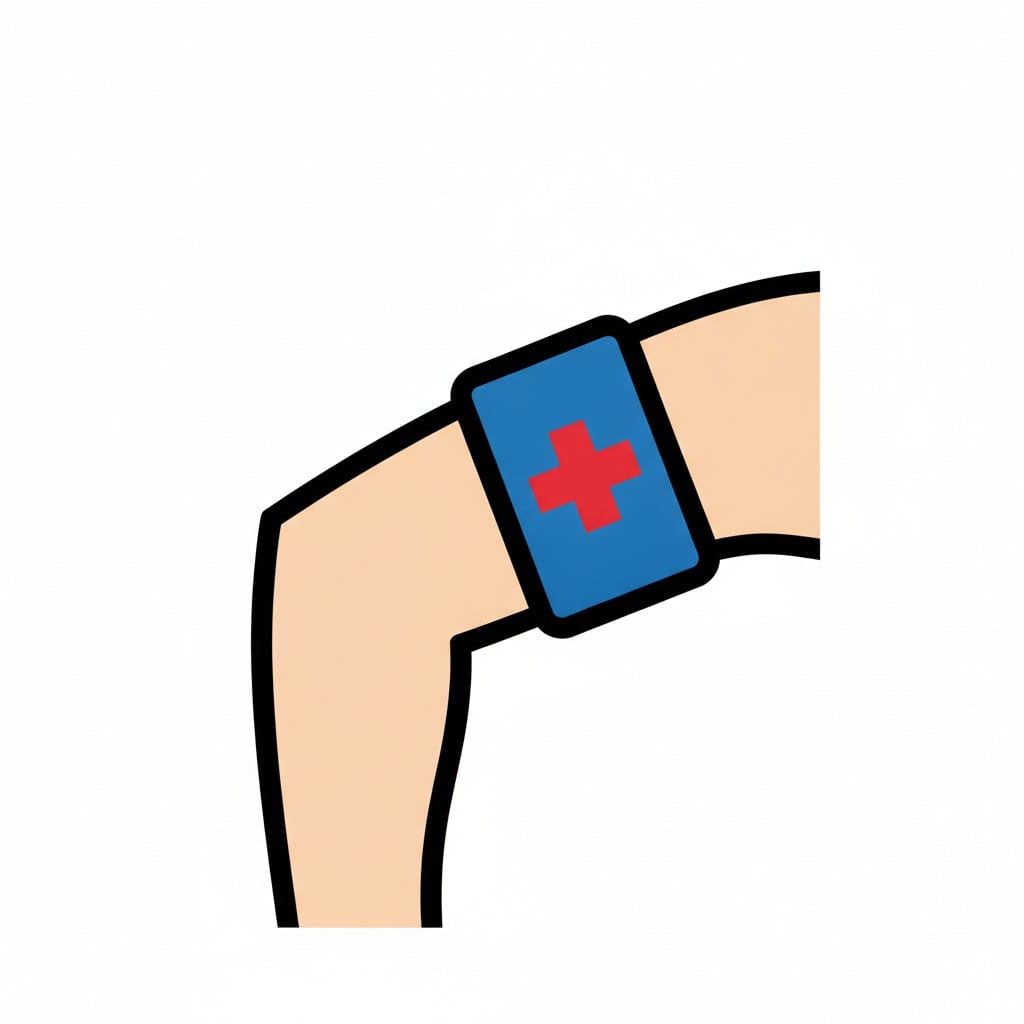
Blue armband with a red cross
A bent arm with a blue armband showing a red cross around the upper arm.

Red armband with a yellow button
A red armband with a dashed edge and a round yellow button, fastened around an arm with a blue top above.
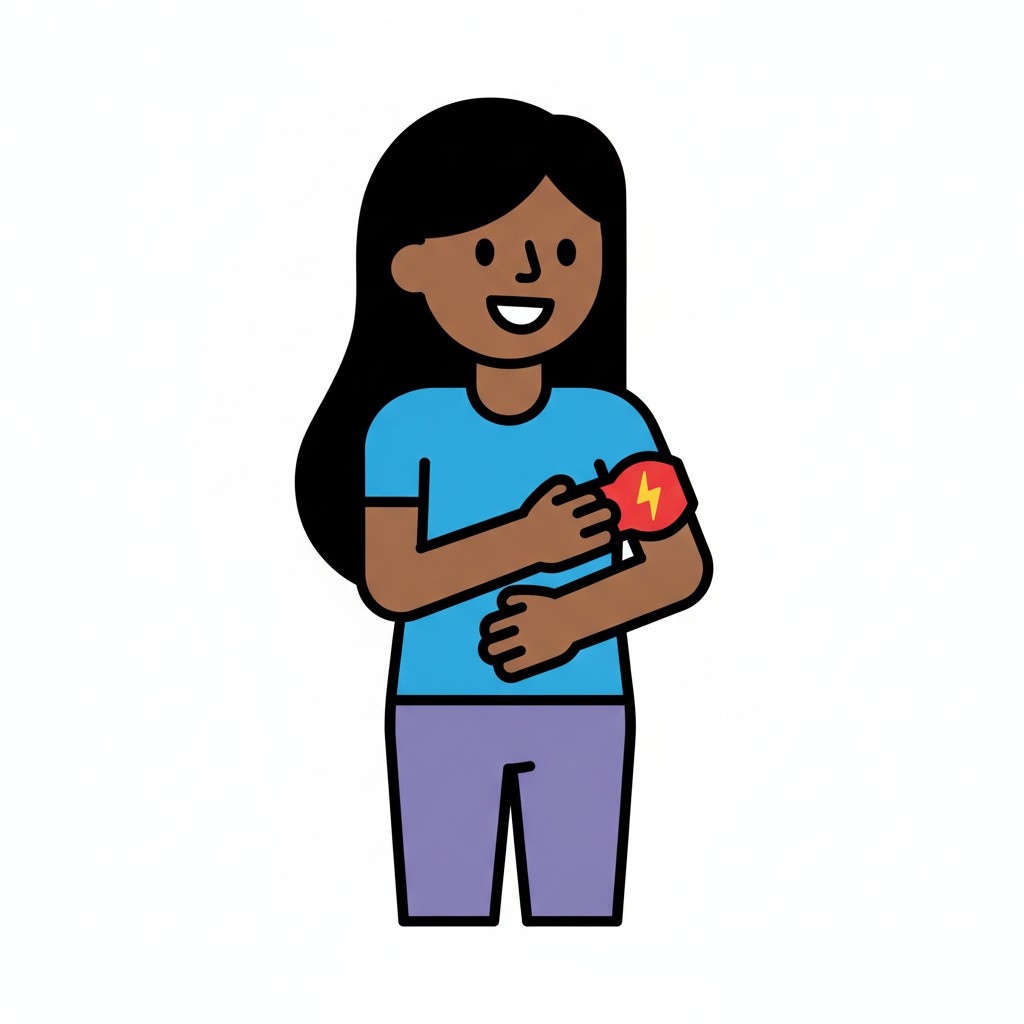 ♀
♀Wear the armband
A person wears a red armband on their upper arm and points at it.
About this visual support
Whatever chafes grows heavier as the day goes on. An armband presses against the skin with every movement, the edge can rub against the sleeve and the material warms up. On top of that comes visibility: other people see it, ask about it, and the child ends up explaining the same thing several times. It is often the combination of these two, rather than the band itself, that triggers the resistance.
Visual support moves the conversation from whether to when. Three pictures are usually enough: put it on, wear it during a marked part of the day, take it off. When the end point is part of the row, the sensation becomes more bearable, because the discomfort has a visible finish.
A concrete tip is to let one picture show how the band should sit, not only that it should be worn. Correct placement reduces the rubbing considerably, and the child can then adjust it alone instead of asking for help. In Routined the step can live inside the morning and evening routine, and the app can be tried for fourteen days at no cost.
Use this image in a schedule
Build your own visual schedule with this image and download it as a print-ready PDF. Completely free.

More similar visual supports

Eye patch
A smiling man wears a black eye patch over one eye.

Take off glasses
A girl takes off her glasses with both hands.

Allergy medicine
Medicine bottle with a red cross next to a capsule, a leaf, and a cloud.
Apply ointment
A woman rubs ointment from a tube onto her hand.

Bring glasses down
A smiling girl adjusts her glasses with both hands.
Check the eyes
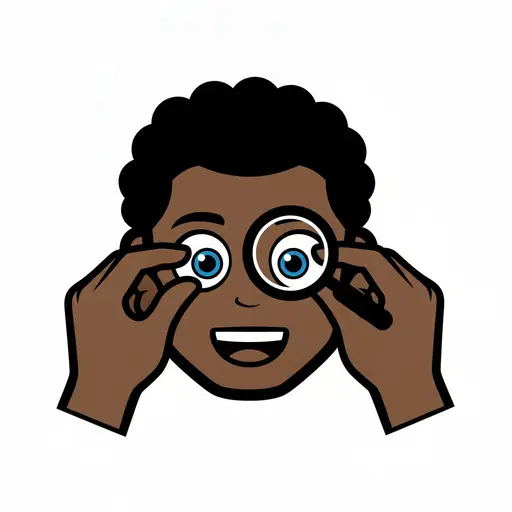
A child holds a magnifier up in front of one eye.

Clean the glasses
A pair of glasses with clean light blue lenses and a black frame.
Eye drops
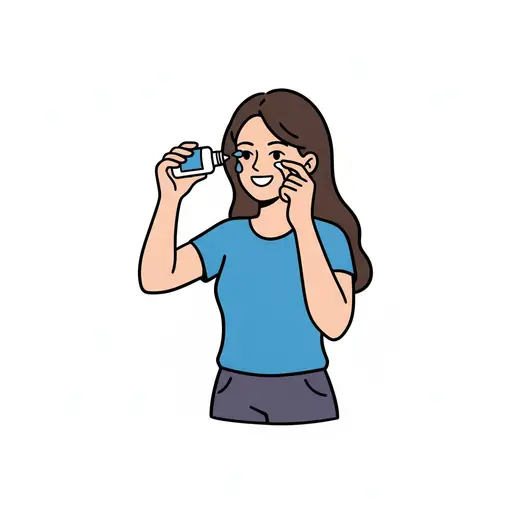
A smiling person holds a small bottle of eye drops above their eye and pulls dow...
Take the visual supports with you
In Routined you build schedules from these pictures, add timers and voice instructions, and your child follows the day on their own.


* 14-day free trial, then $2.39 a month or $20.99 a year (US pricing). Cancel anytime.