Apply ointment
Ointment feels cold, greasy and can sting for a second before it soothes. When the child sees the whole sequence ahead of time, it is easier to stay still and let it be over quickly. The steps are below.
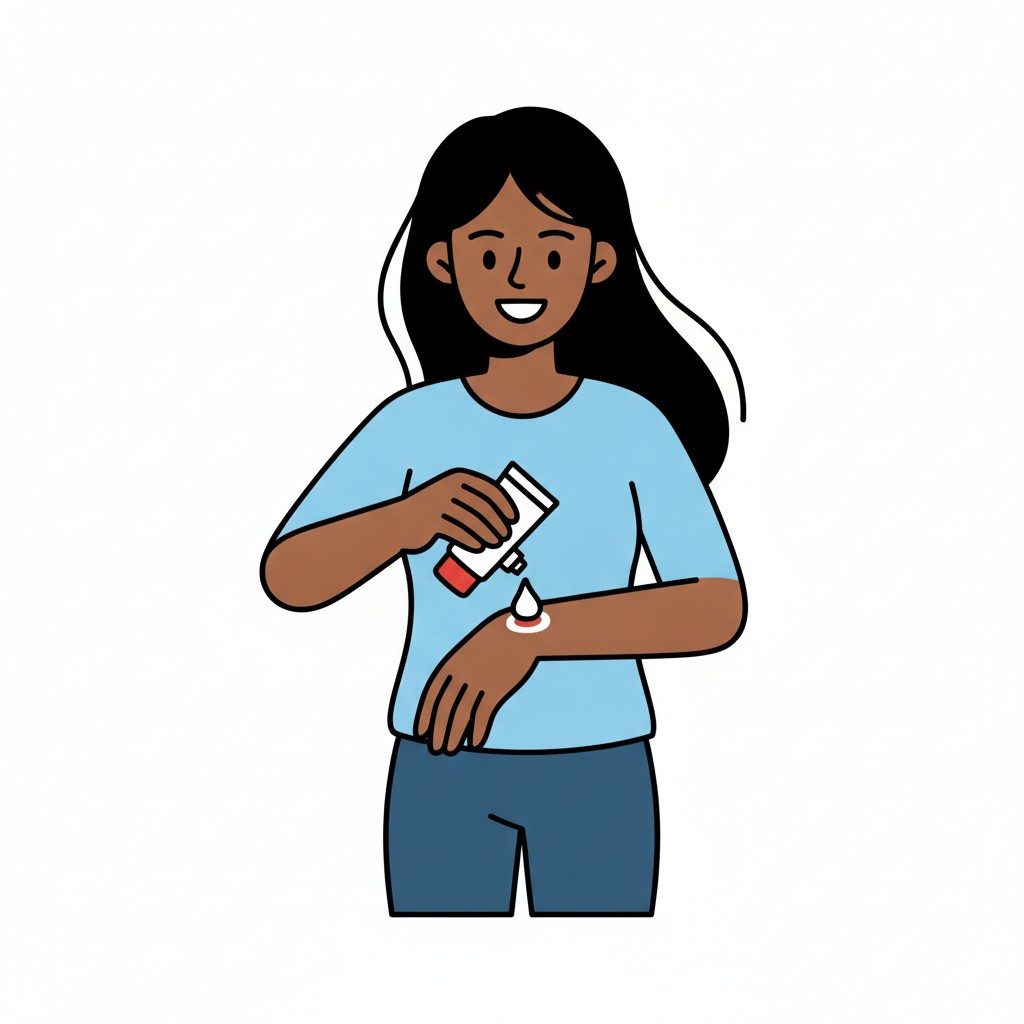 ♀
♀Applying ointment
A woman squeezes ointment from a tube onto her wrist.
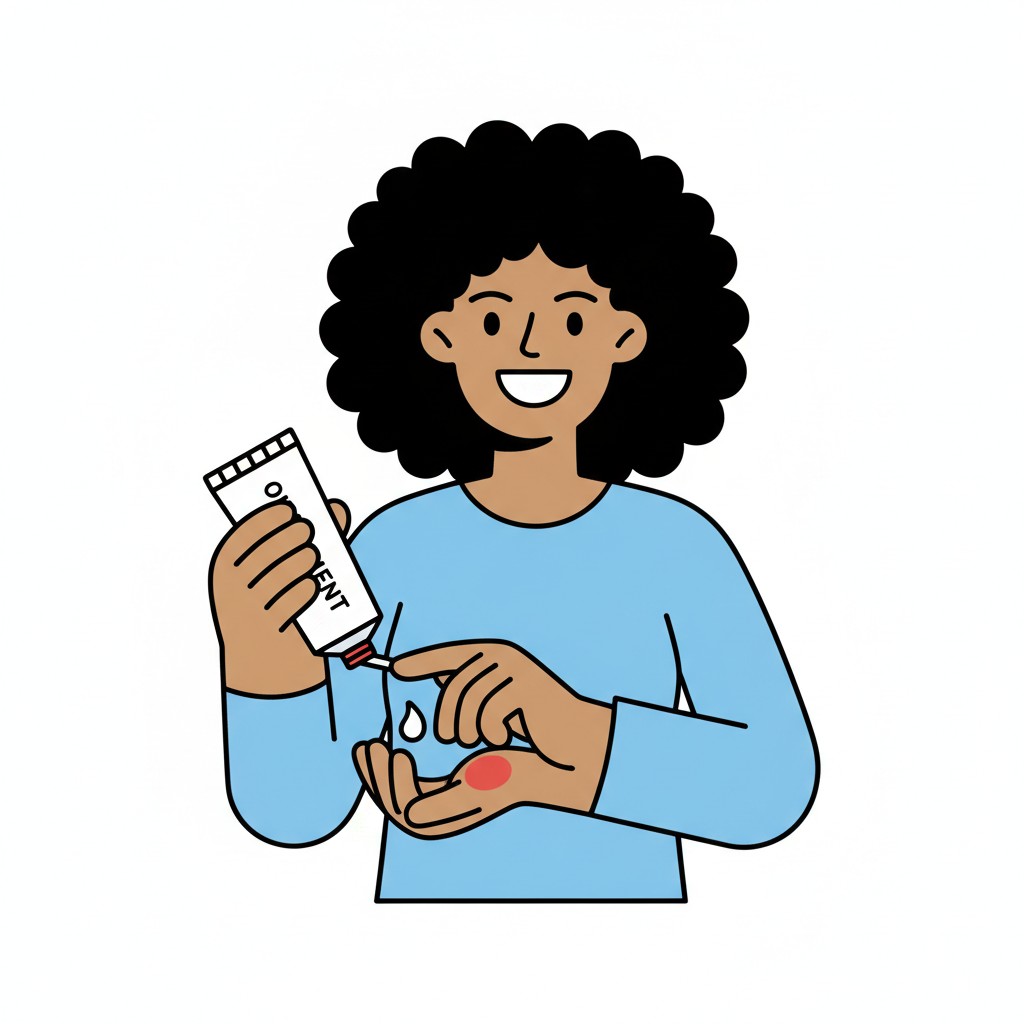 ♀
♀Using ointment
A woman rubs ointment from a tube onto her hand.
About this visual support
What makes ointment hard is rarely the scrape or the rash itself, but the feeling on the skin: something cold and greasy that cannot be wiped off straight away, maybe a short sting, and then a sticky hand the child has nowhere to put. All of it arrives at once if nobody has explained the order.
The visual support breaks the moment into small, clear parts. Wash hands first, then a small dab on the finger, rub it in with light strokes, wait while it soaks in and finally wash hands again. The child can see that there is an end, and that the sticky feeling disappears in the last step. That matters for a child who would rather pull the arm away than stand still and wait.
A practical tip is to let the child squeeze the ointment onto your finger. Having control over the amount reduces the worry that there will be too much. Then count out loud to five while you rub it in. If the ointment is needed several times a day, you can put the visual schedule into Routined and try the app for 14 days at no cost.
Use this image in a schedule
Build your own visual schedule with this image and download it as a print-ready PDF. Completely free.

More similar visual supports
Sunscreen
A smiling girl holds a sunscreen tube marked with a sun and has a dab of white c...

Allergy medicine
Medicine bottle with a red cross next to a capsule, a leaf, and a cloud.
Armband
A person wears a red armband on their upper arm and points at it.

Bring glasses down
A smiling girl adjusts her glasses with both hands.
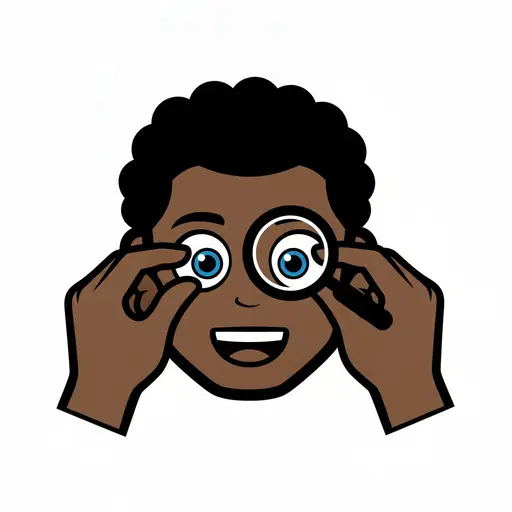
Check the eyes
A child holds a magnifier up in front of one eye.

Clean the glasses
A pair of glasses with clean light blue lenses and a black frame.
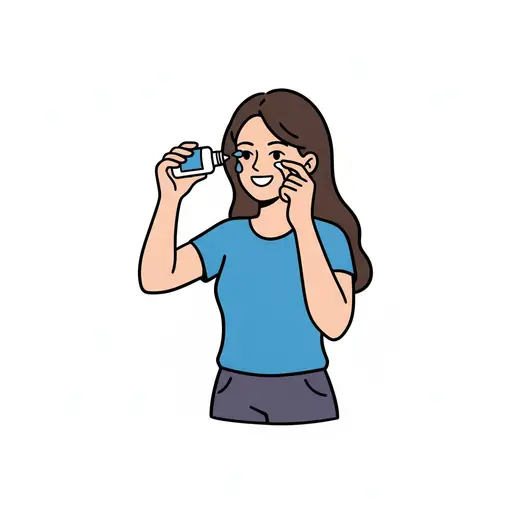
Eye drops
A smiling person holds a small bottle of eye drops above their eye and pulls dow...
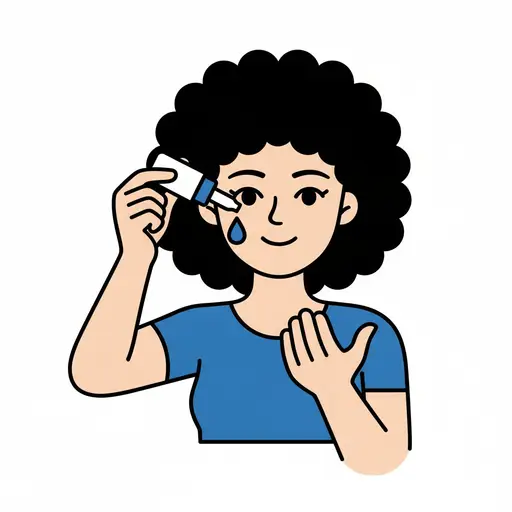
Eye drops and rinse
A smiling person holds a small dropper bottle above their eye as a blue drop fal...
Take the visual supports with you
In Routined you build schedules from these pictures, add timers and voice instructions, and your child follows the day on their own.


* 14-day free trial included for new users.