Breathe
A child who is already wound up finds it hard to believe in an exercise that consists of doing less. The breathing feels wrong, the time feels long, and the mind wants to be elsewhere. The pictures below give the breaths a shape to follow rather than an instruction to listen to.
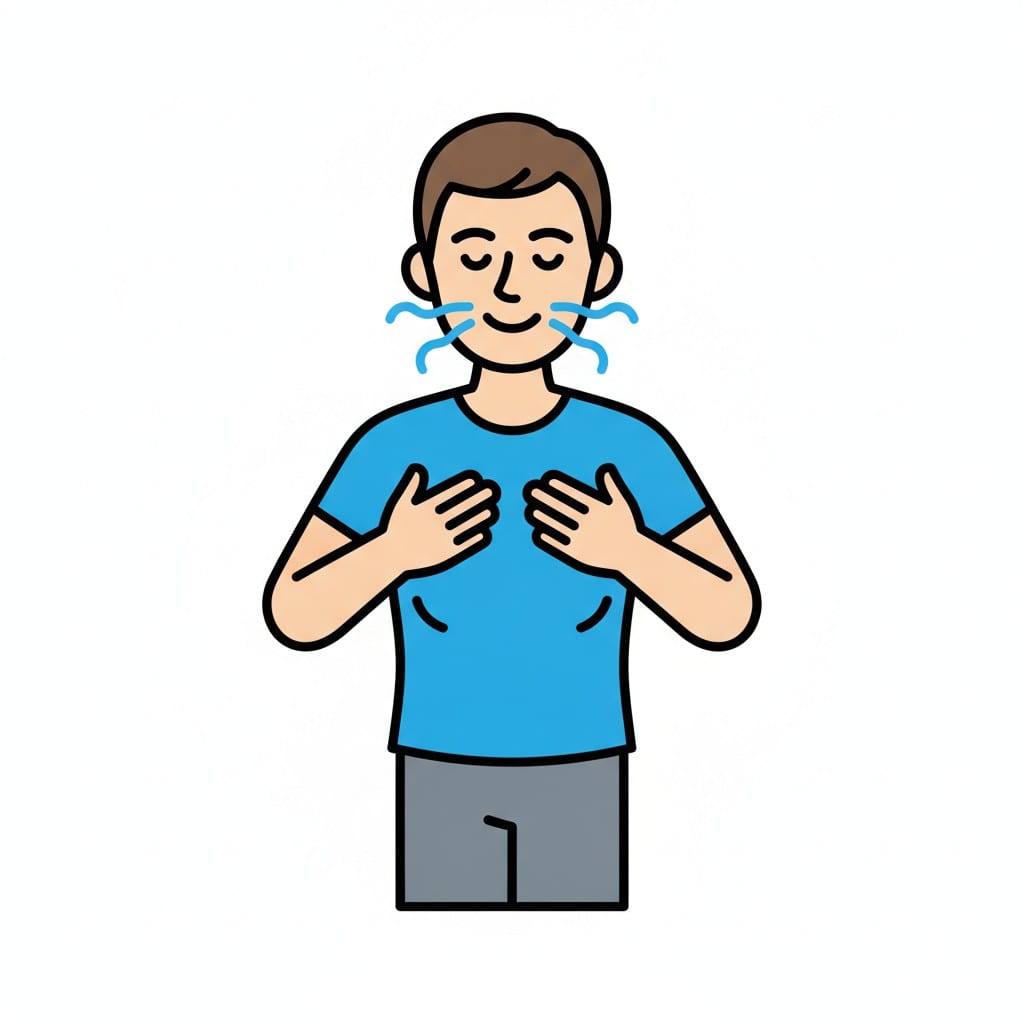 ♂
♂Man breathing calmly
A man closes his eyes and breathes calmly with his hands on his chest.
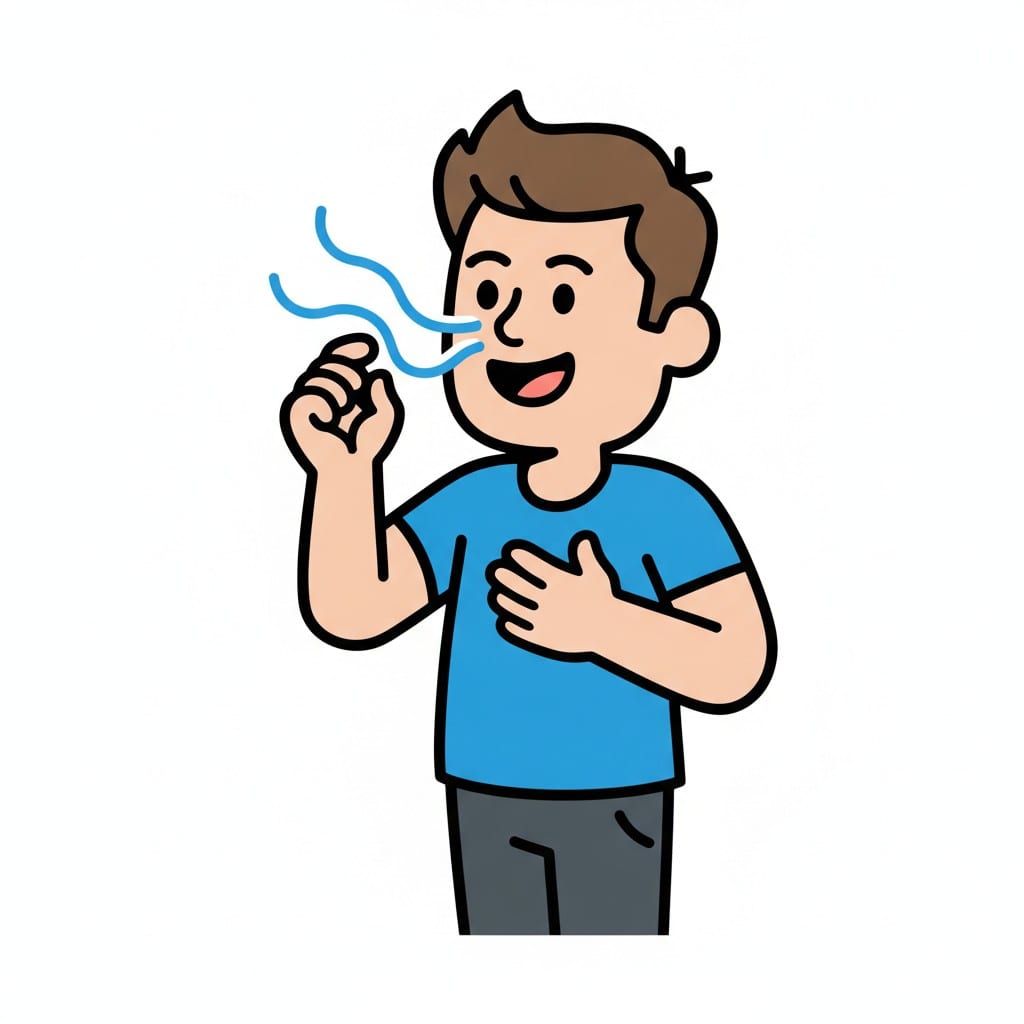 ♂
♂Boy breathing in
A boy breathes in through his nose with one hand on his chest.
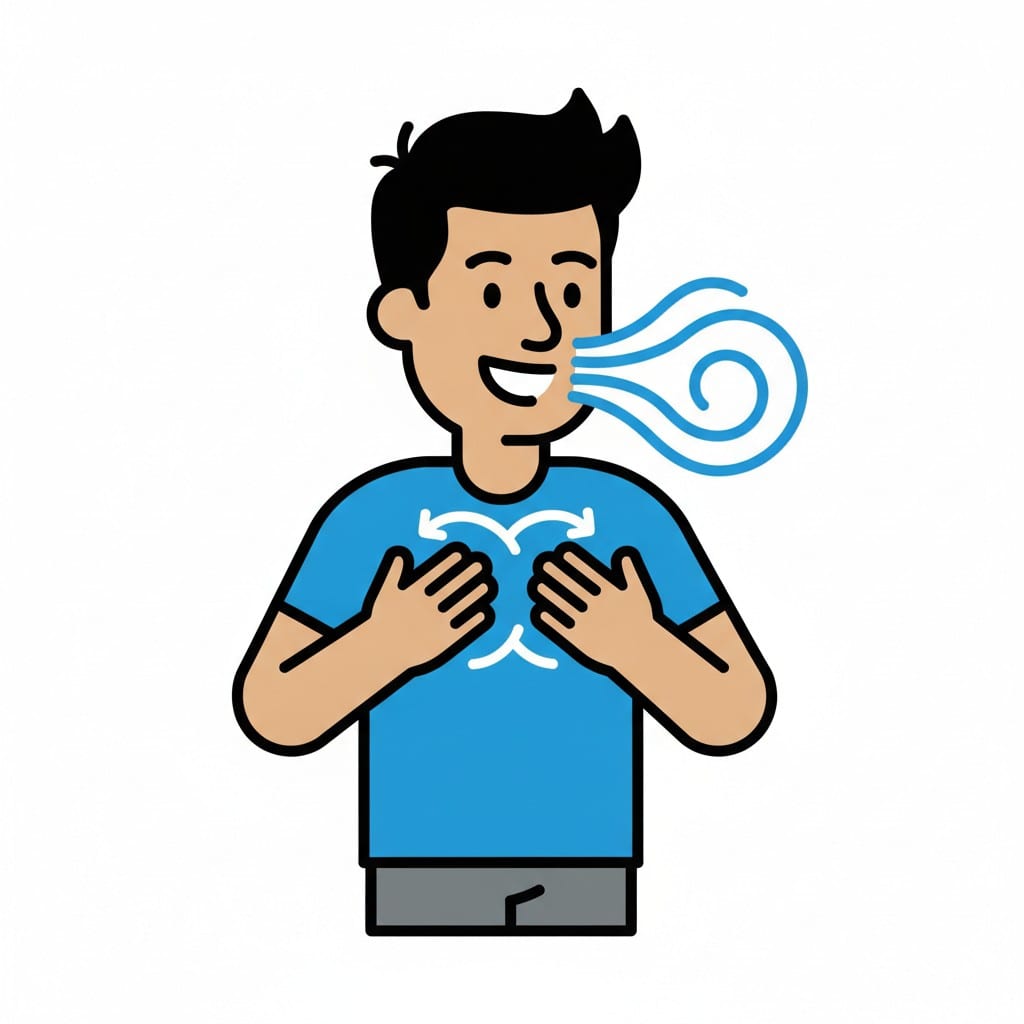 ♂
♂Man breathing out
A man breathes out with both hands on his chest.
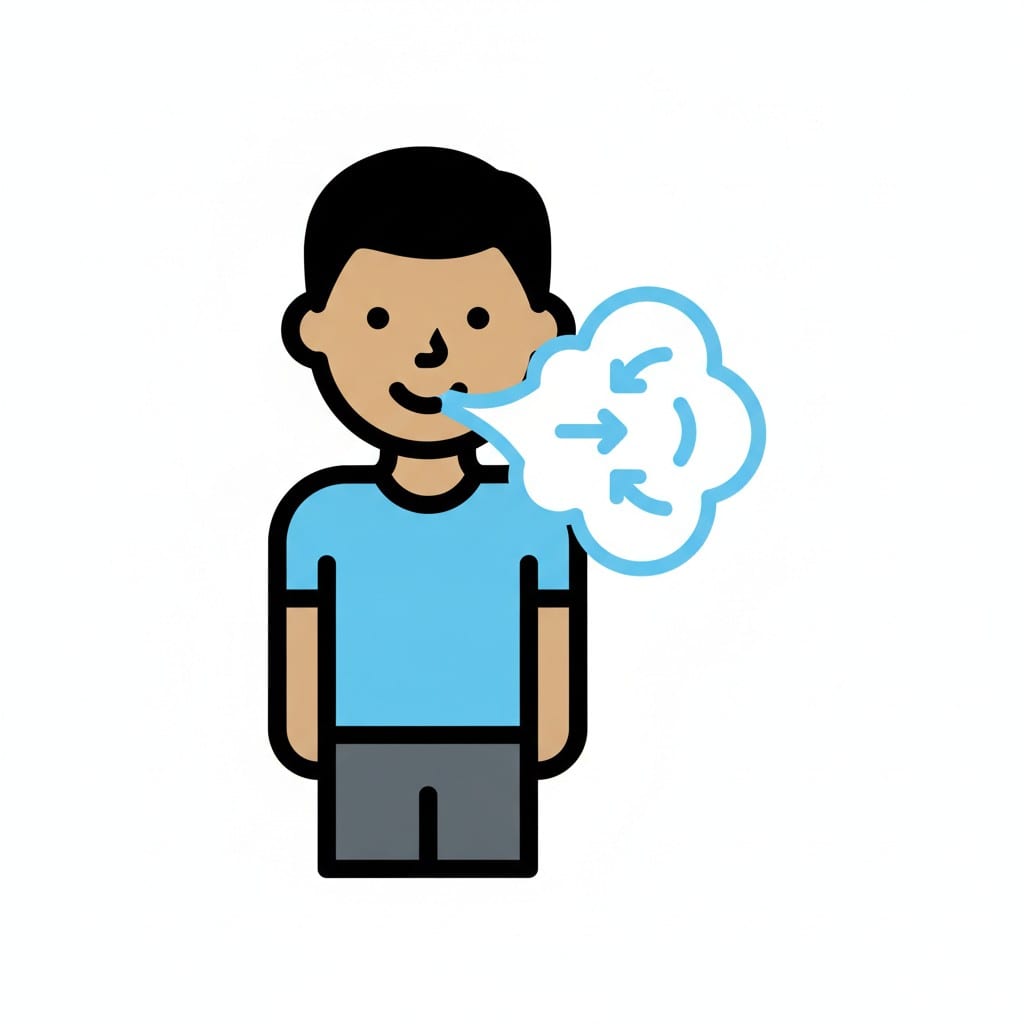 ♂
♂Breathing out
A boy breathes out a breath shaped like a cloud.
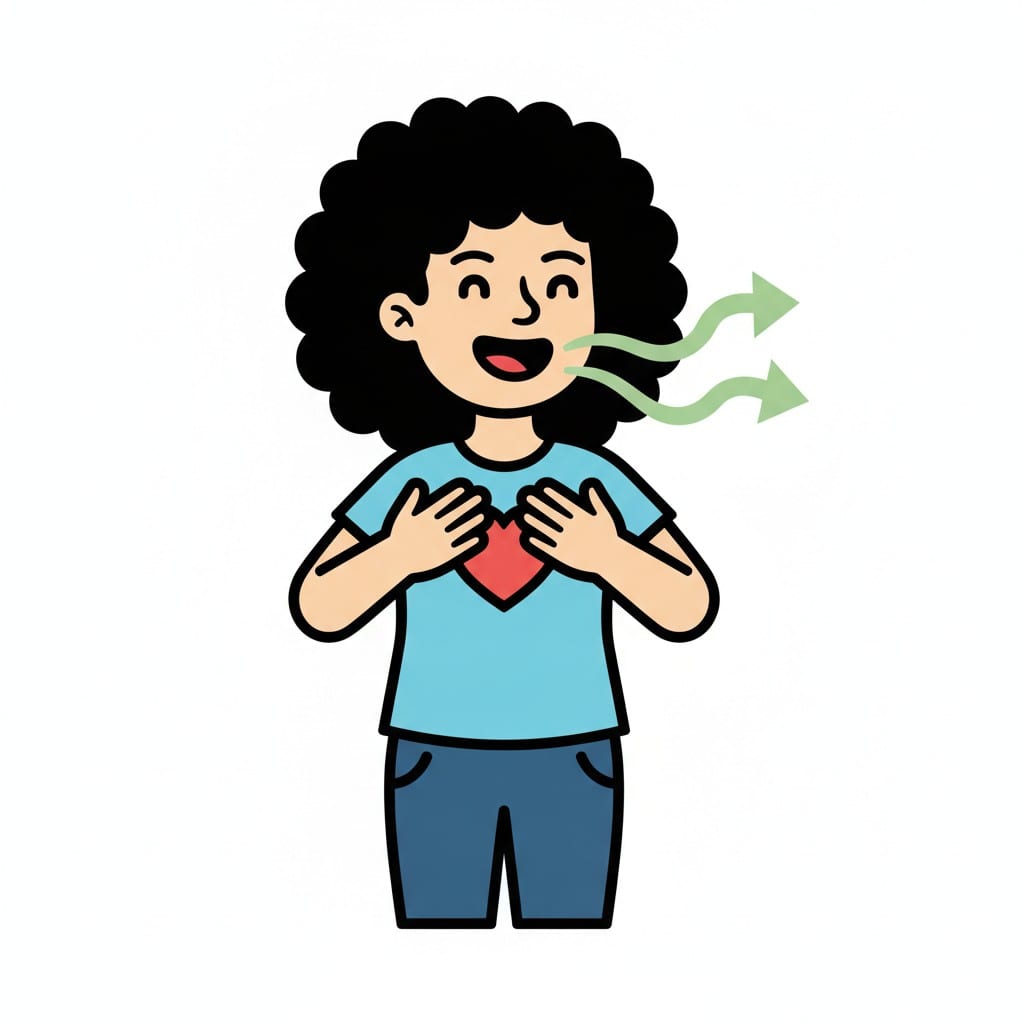 ♀
♀Child breathing out with hands on chest
A child with closed eyes holds both hands to their chest and breathes out, with two green arrows showing the exhale.
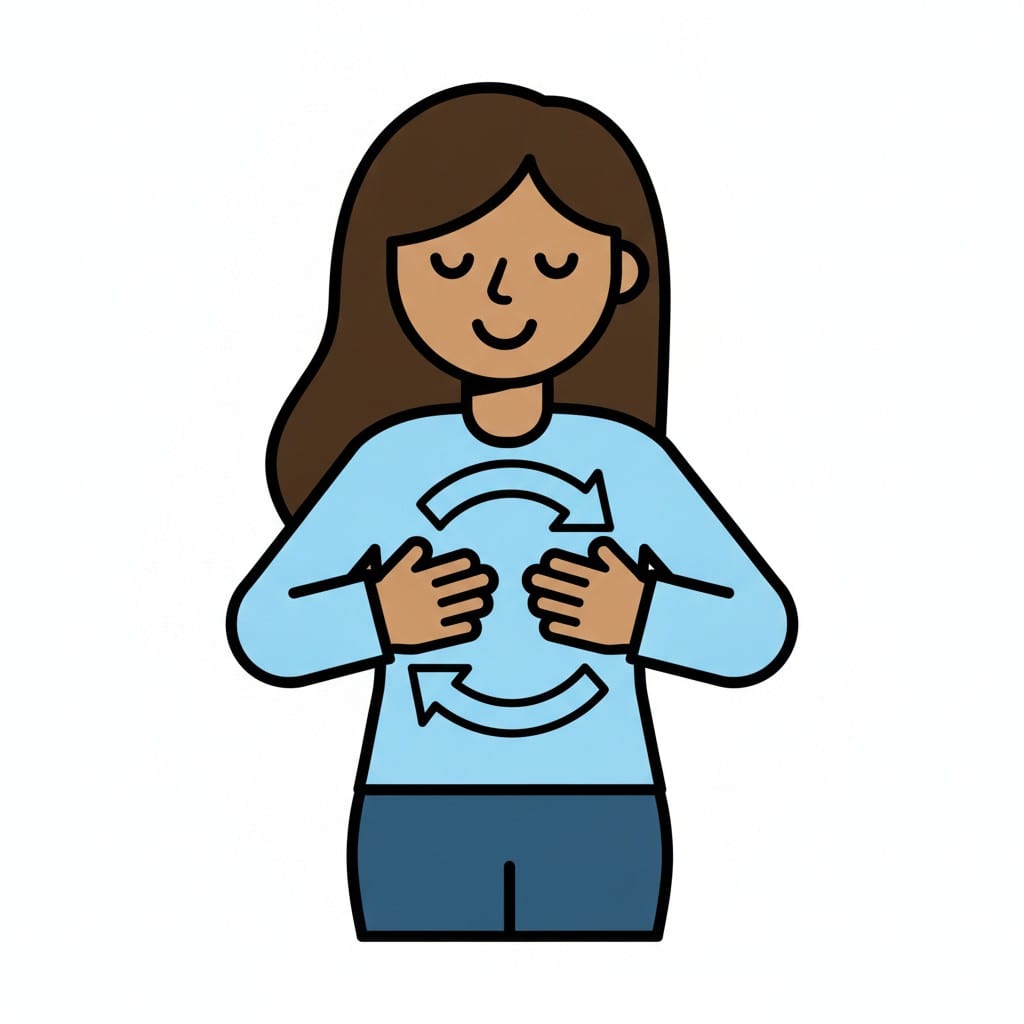 ♀
♀Woman breathing with eyes closed
A woman closes her eyes and breathes calmly with her hands on her chest.
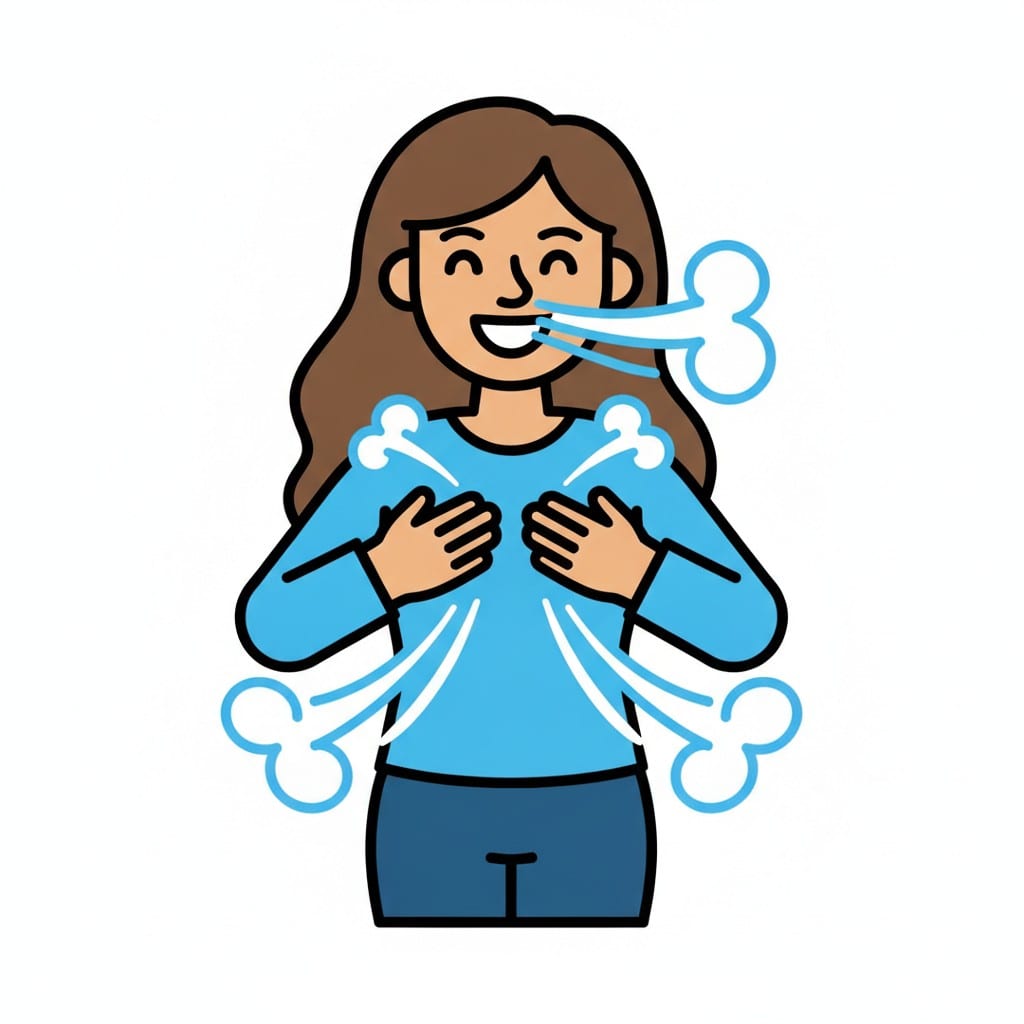 ♀
♀Girl taking deep breaths
A happy girl breathes out deeply with her hands on her chest.
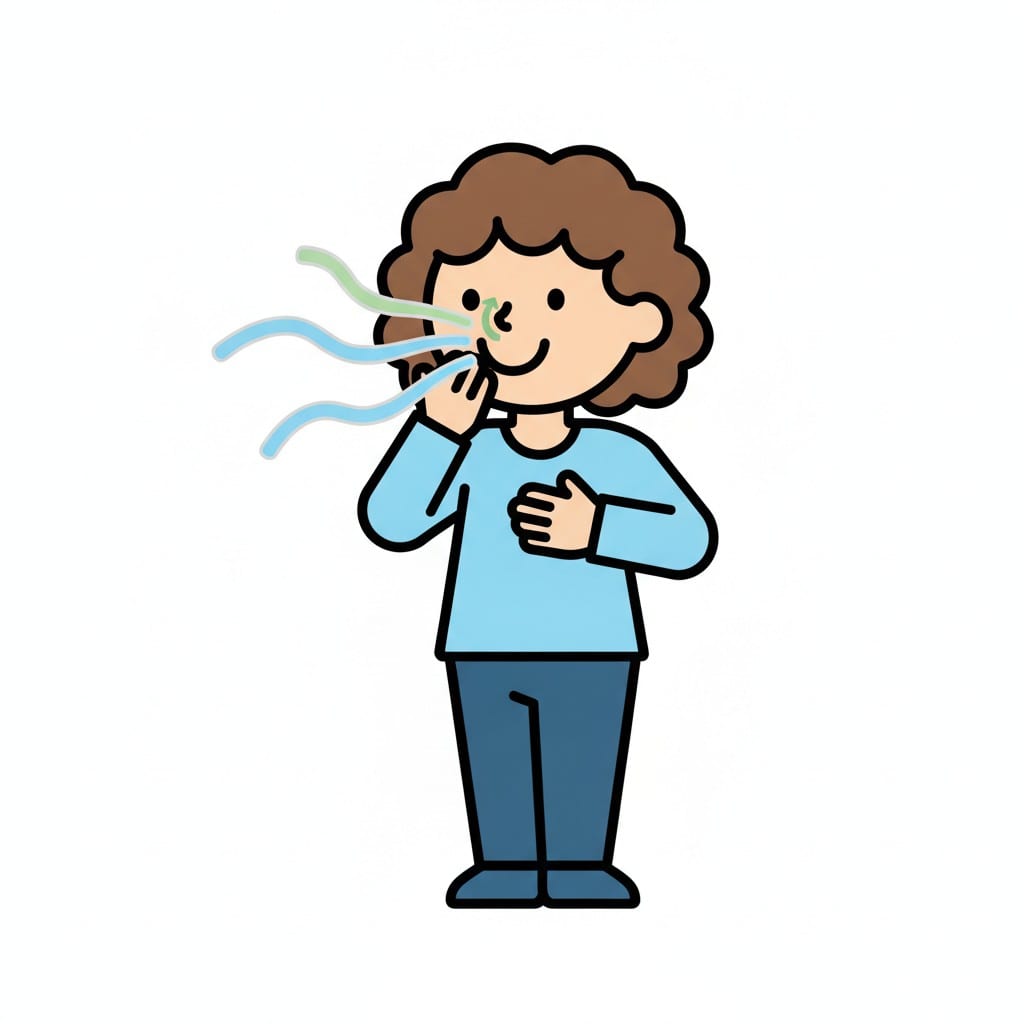 ♀
♀Breathing in through the nose
A girl breathes in through her nose with a hand on her chest.
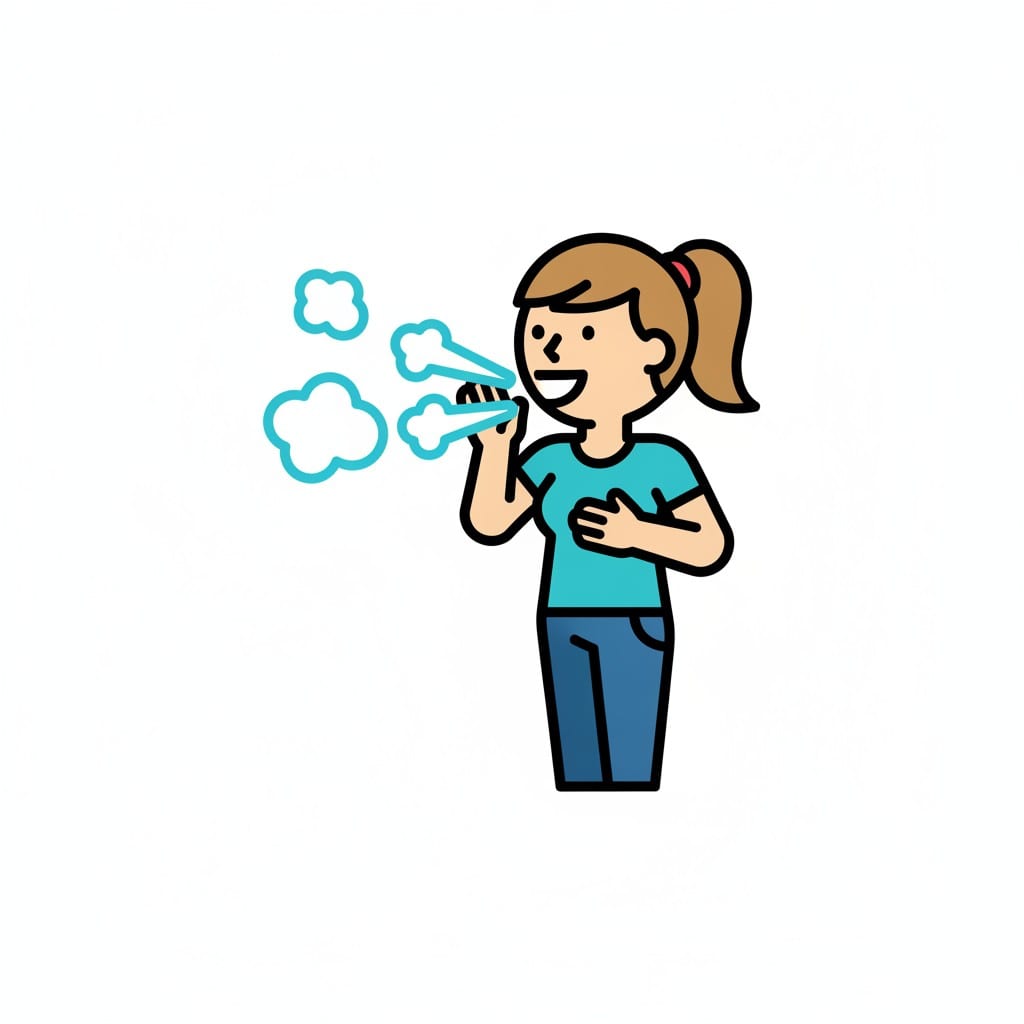 ♀
♀Blowing out air
A girl blows out air with a hand on her chest.
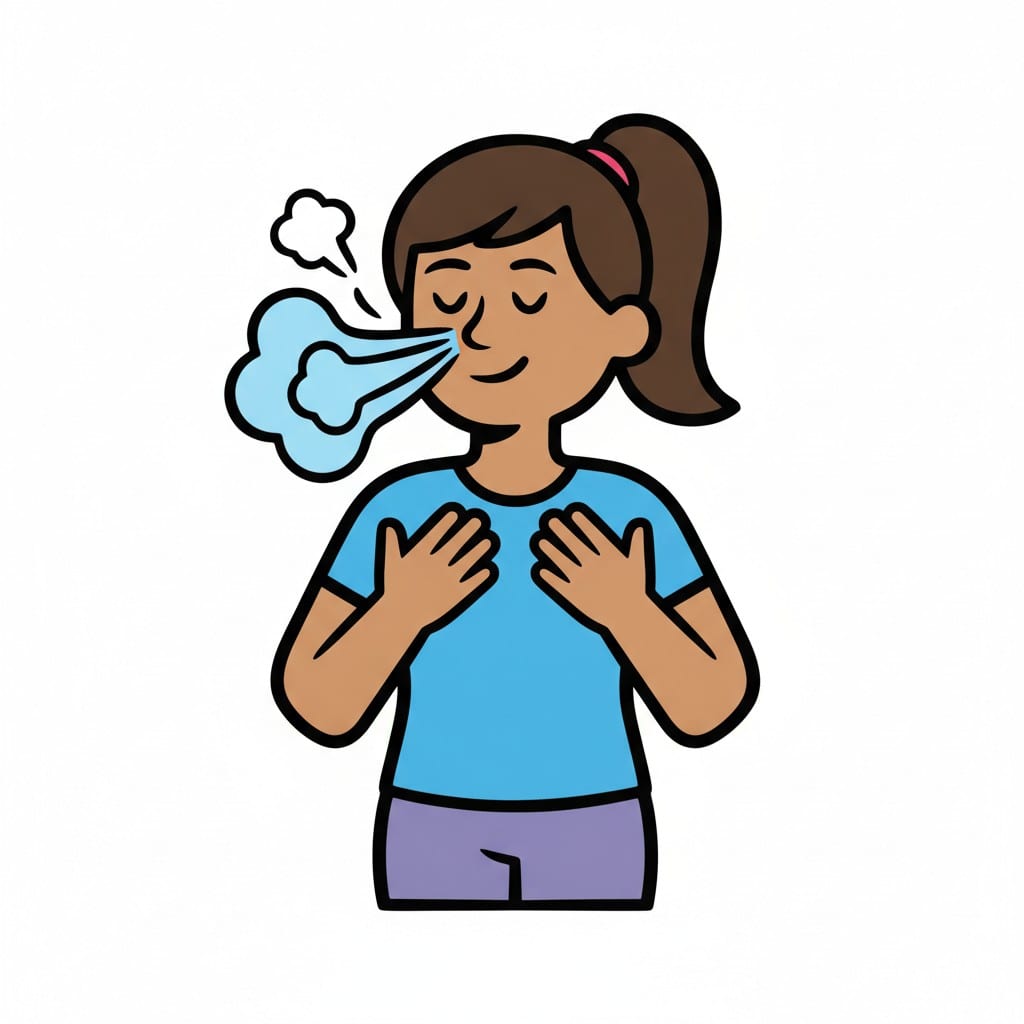 ♀
♀Exhaling calmly
A girl closes her eyes and breathes out with her hands on her chest.
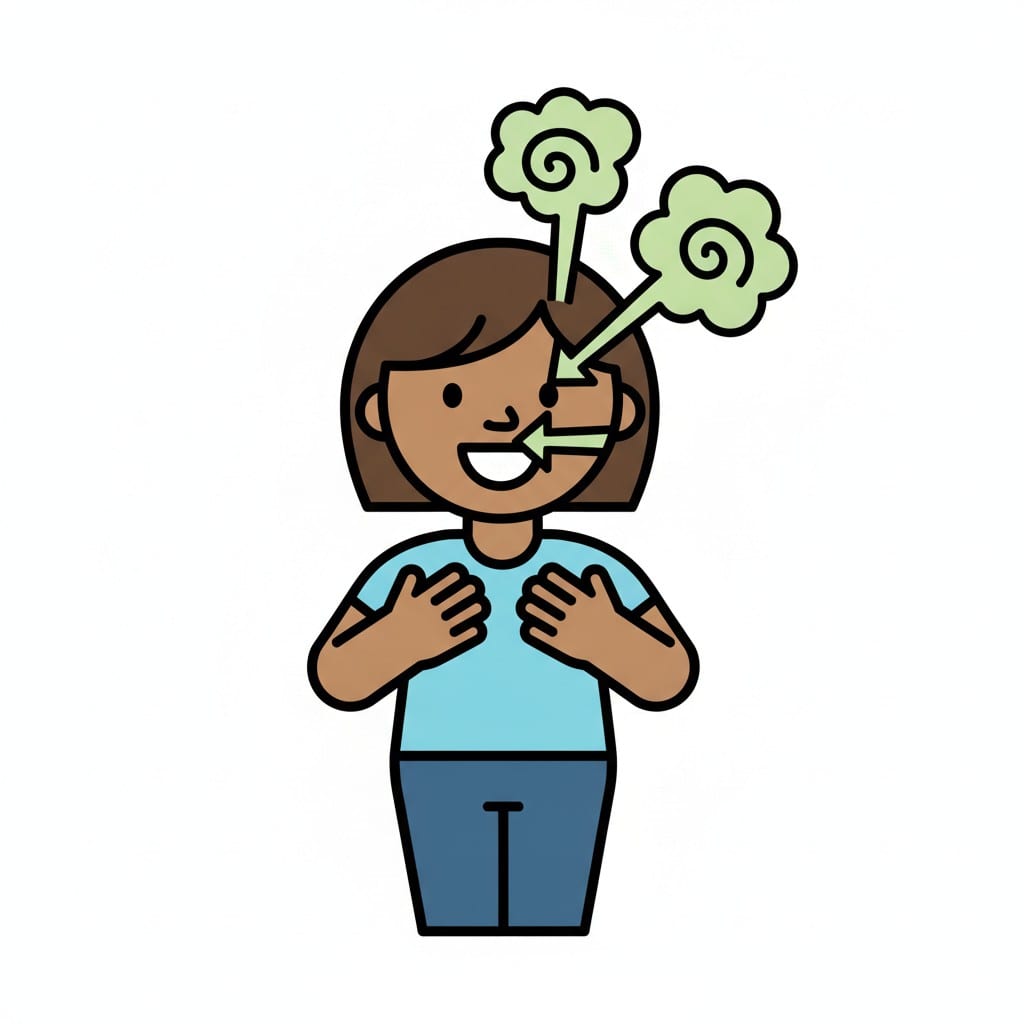 ♀
♀Breathing in and out
A girl breathes with her hands on her chest and arrows showing the air.
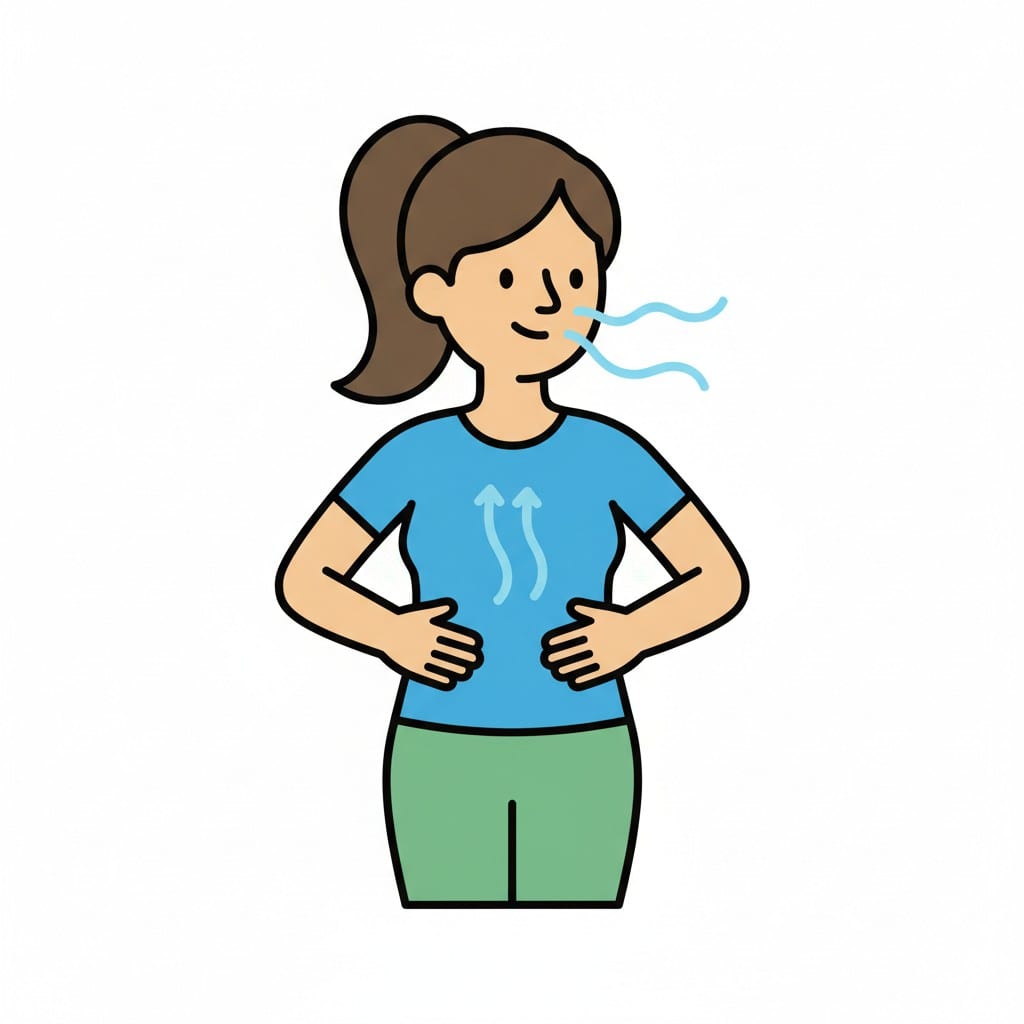 ♀
♀Belly breathing
A girl breathes with her hands on her belly.
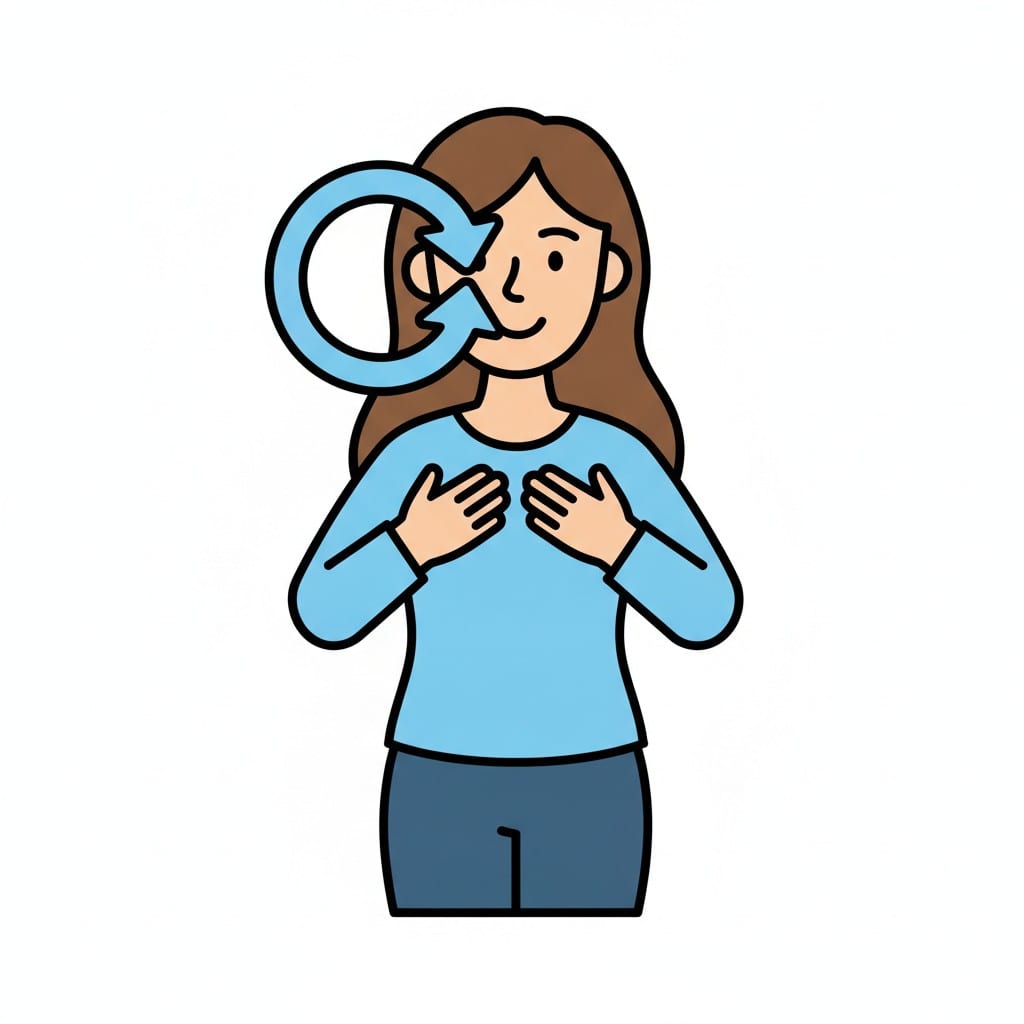 ♀
♀Breathing in a circle
A woman breathes calmly with her hands on her chest and a circular arrow by her face.
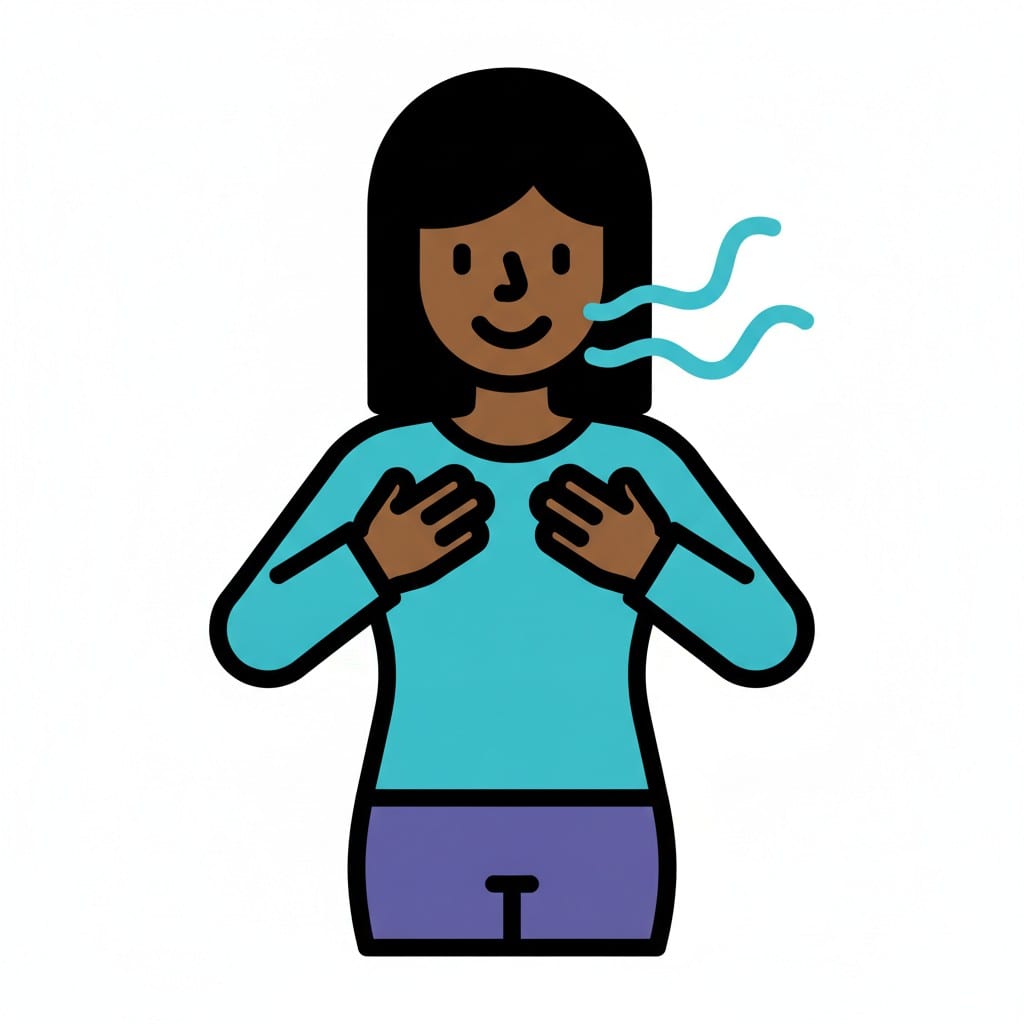 ♀
♀Woman breathing
A woman breathes with her hands on her chest.
About this visual support
Breathing exercises come with built-in resistance. They are usually suggested when the body is at its most wound up, and at that point the message to slow down is about the least credible thing there is. On top of that, breathing is invisible: you cannot see whether you are doing it right, and without feedback most children lose interest after three breaths.
This is where visual support does something unexpectedly useful. A picture showing in through the nose, hold, out through the mouth turns the exercise into something to watch rather than something to succeed at. Many children can follow a shape with their eyes long before they can follow an instruction with their ears, and the number of breaths becomes countable.
One concrete tip is to link the breathing to a movement: hands up as the air comes in, down as it goes out. The body then provides the feedback that is otherwise missing. In Routined a short breathing pause can be placed before homework or bedtime, and the app can be tried for fourteen days at no cost.
Use this image in a schedule
Build your own visual schedule with this image and download it as a print-ready PDF. Completely free.

More similar visual supports
Massage clip
A blue massage clip placed over the neck and shoulders.
Feeling
A happy child with a heart and sound waves above them.
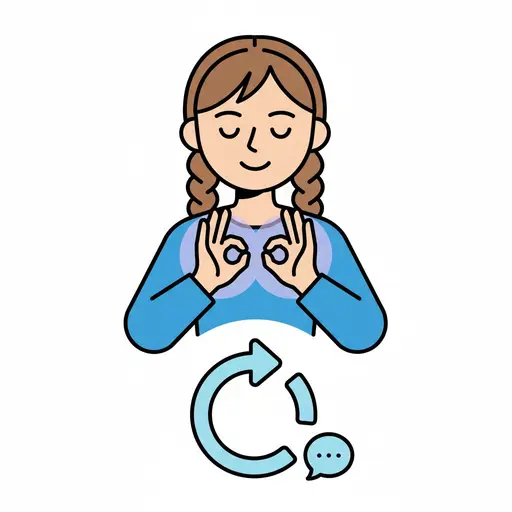
Quiet reset
A girl with closed eyes breathes calmly with her hands at her chest beside a res...
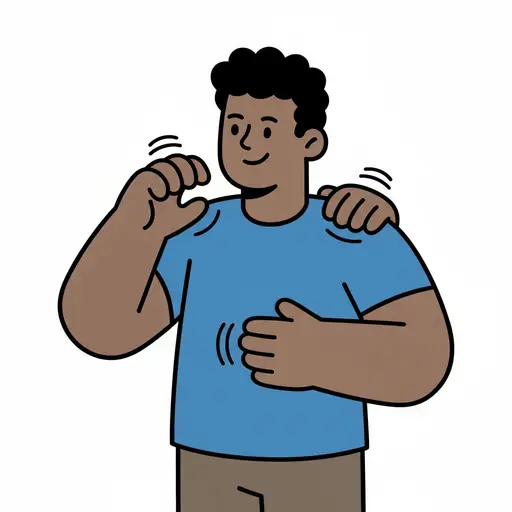
Scratch massage
A person makes scratching and massaging motions on the shoulder and chest.
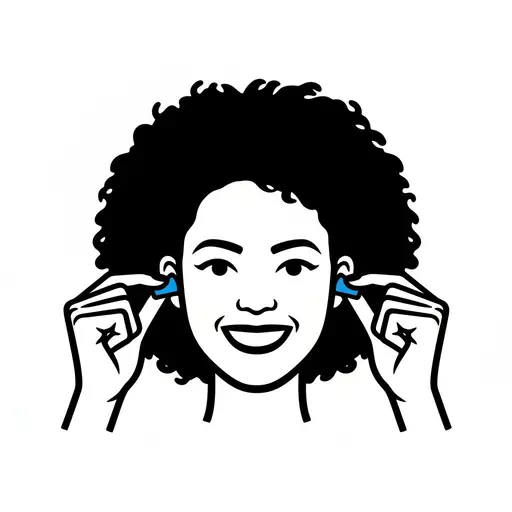
Take out earplugs
A smiling girl with voluminous curly hair removing blue earplugs from both ears ...

Acne spray
A blue spray bottle spraying towards a face with red spots.

Airplane Rest
A blue airplane with sleep symbols and a sleeping cloud below it.

Allergy medicine
Medicine bottle with a red cross next to a capsule, a leaf, and a cloud.
Take the visual supports with you
In Routined you build schedules from these pictures, add timers and voice instructions, and your child follows the day on their own.


* 14-day free trial, then $2.39 a month or $20.99 a year (US pricing). Cancel anytime.