Dentist visit
What unsettles children before a dentist visit is rarely the check-up itself, but all the unknown steps along the way. Seeing the order in advance turns the visit into something you can prepare for, not guess at. The steps are right below.
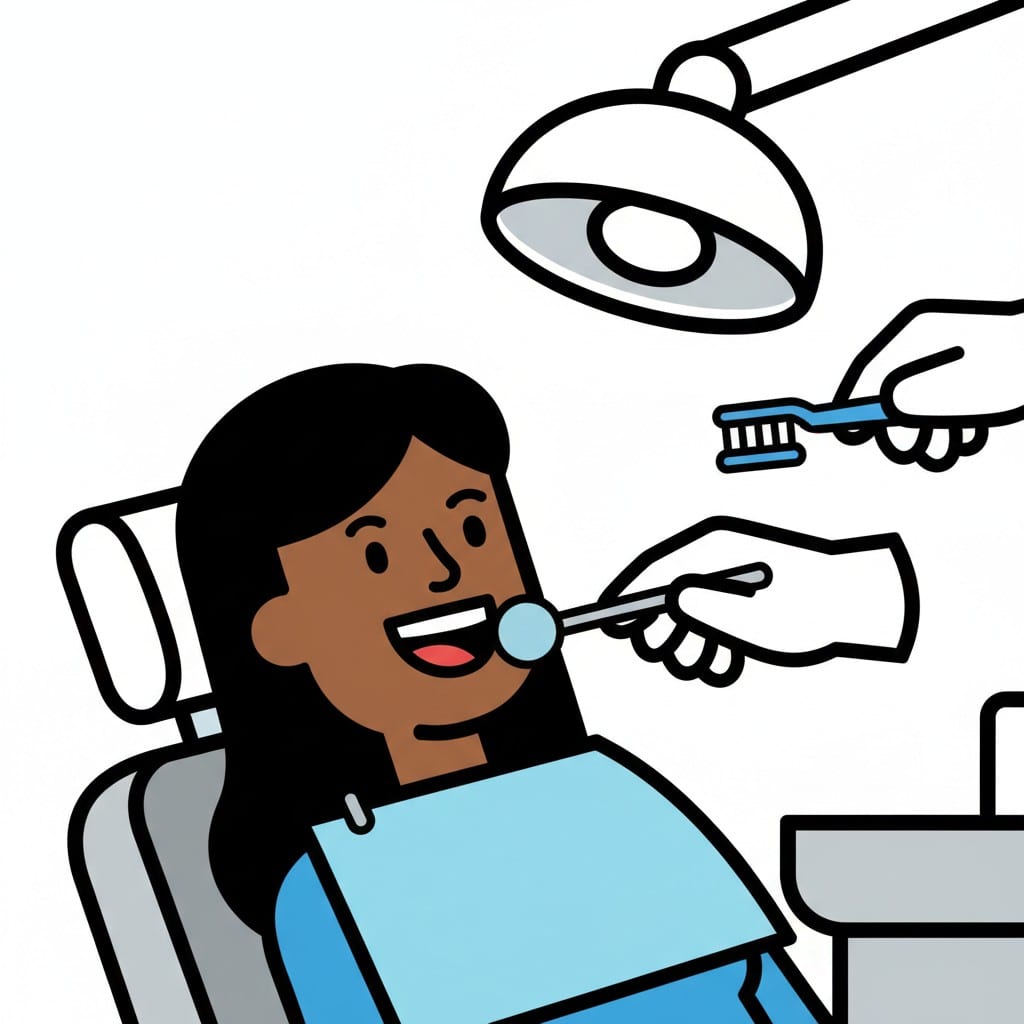 ♀
♀Dentist visit
A person sits in a dentist's chair with an open mouth as a dentist uses a mirror to examine their teeth. A light shines down and a toothbrush is visible.
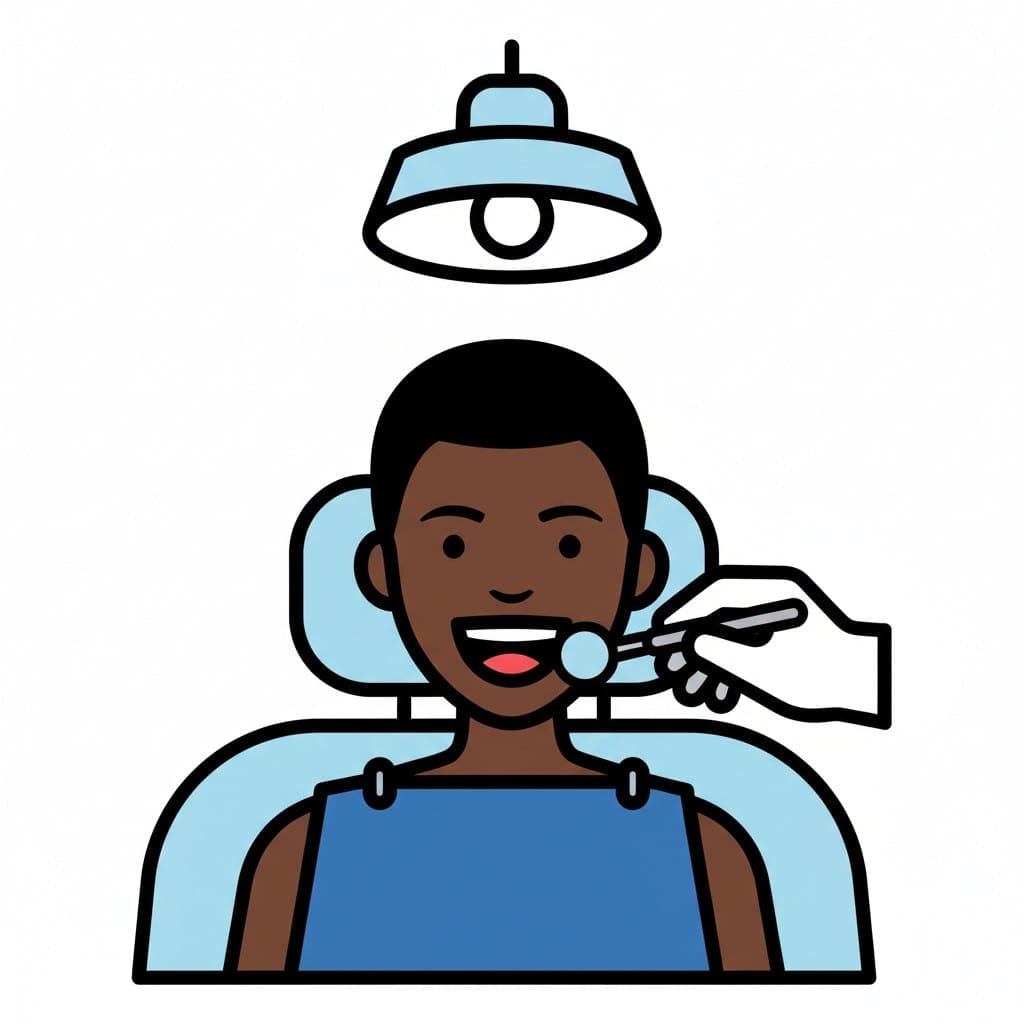 ♀
♀Dental examination
A person with an open mouth sits in a dentist's chair. A hand with a dental mirror is visible near the mouth under a bright light.
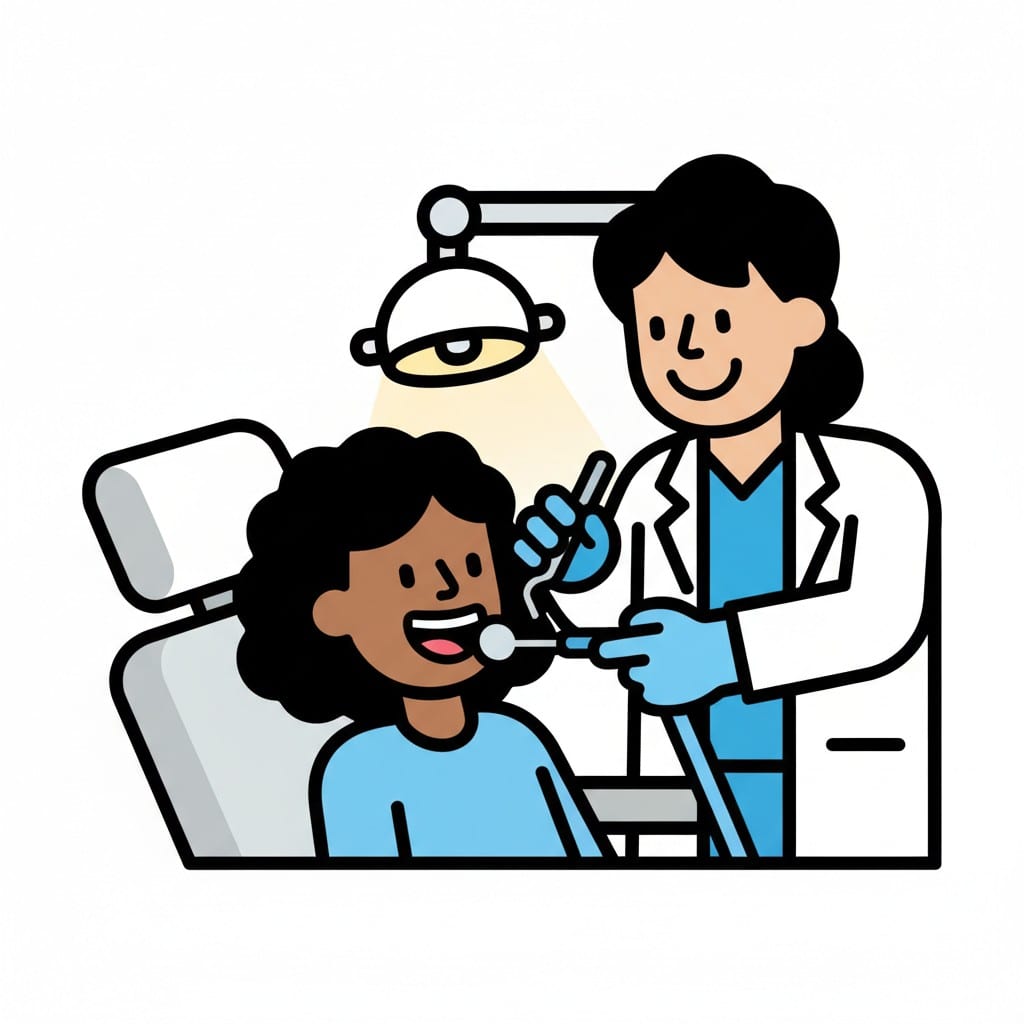 ♀
♀Dentist examining
A dentist wearing gloves examines a patient's teeth with a mirror and an instrument. The patient is seated in the dental chair under a light.
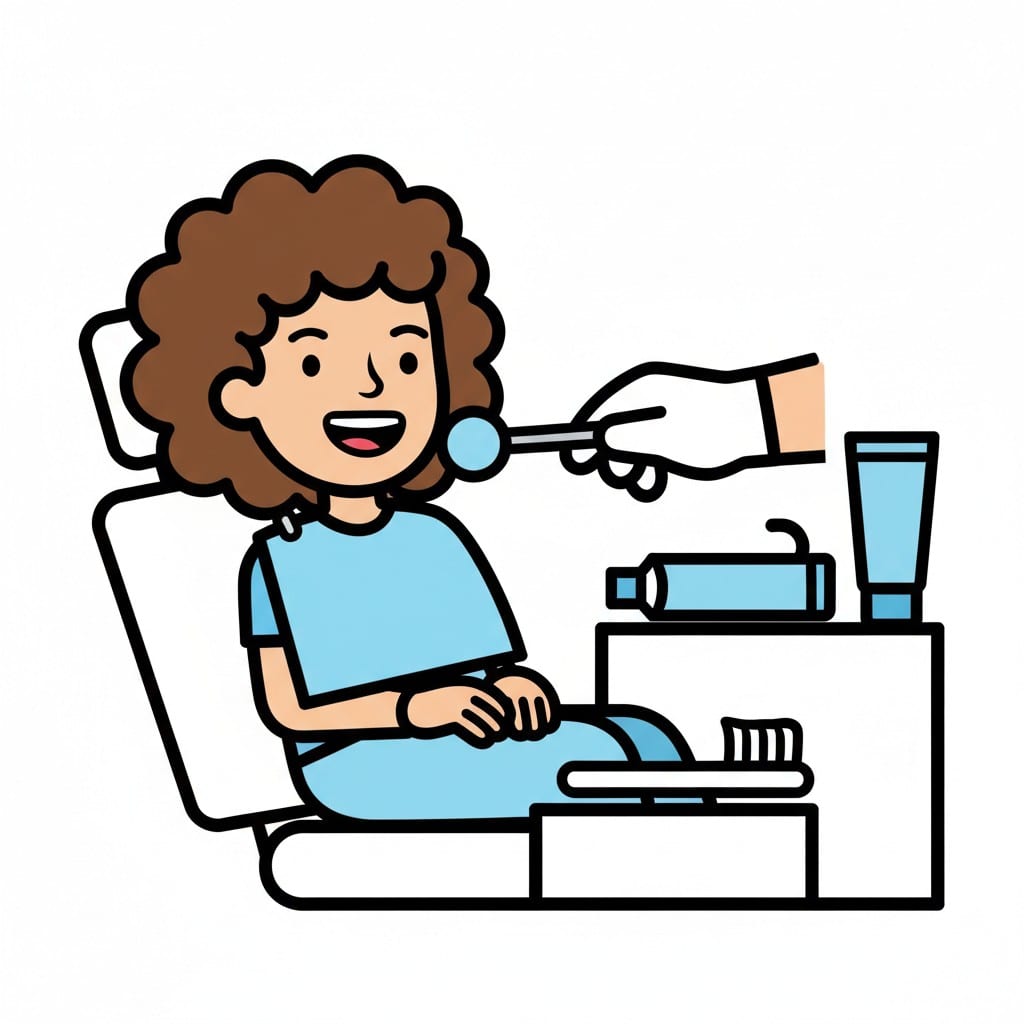 ♀
♀At the dentist
A person sits in a dentist's chair with an open mouth. A hand with a dental mirror is visible, and on a table next to them are a toothbrush and toothpaste.
About this visual support
Predictability is the whole point of a visual support for a dentist visit. The child needs to know what happens in the chair, how long it lasts and what to do if something feels uncomfortable – before it starts, not in the middle. When the questions are answered in advance, the pulse drops already in the waiting room.
The images work as a rehearsal. You go through them at home the night before, once in the morning, and a final time in the car on the way there. Same order every time. By the time the child meets the chair, the lamp and the mirror for real, none of it is new – just bigger.
A concrete tip: agree on a stop signal in advance, for example raising the left hand. Show the picture of the stop signal and explain that the dentist will pause when it appears. Knowing the pause button exists is often enough for the child to dare open their mouth at all.
In the Routined app you can build the picture series into a playable routine with a duration and tick off each step during the visit. Try it free for 14 days.
Use this image in a schedule
Build your own visual schedule with this image and download it as a print-ready PDF. Completely free.

More similar visual supports
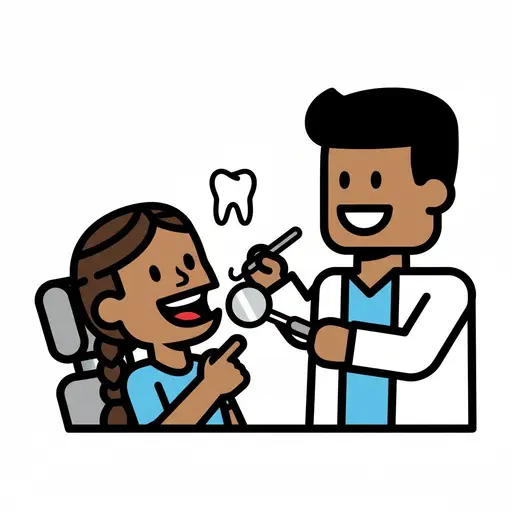
Visit dentist
A child sits in a dentist's chair with an open mouth, pointing to their teeth. A...
Go to the dentist
A smiling man in a blue shirt appears next to an arrow and a pointing hand aimed...
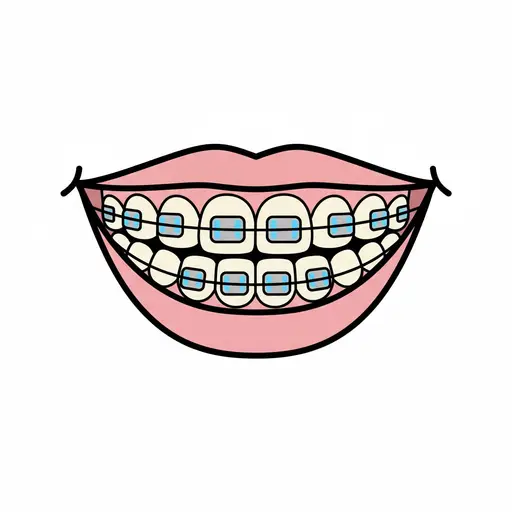
Braces
An illustration of a smiling mouth showing dental braces on the upper and lower ...
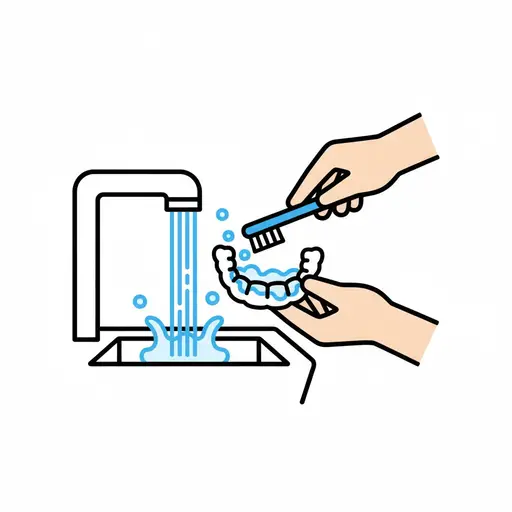
Clean the retainer
Two hands hold a clear retainer and a toothbrush at a sink with the water runnin...
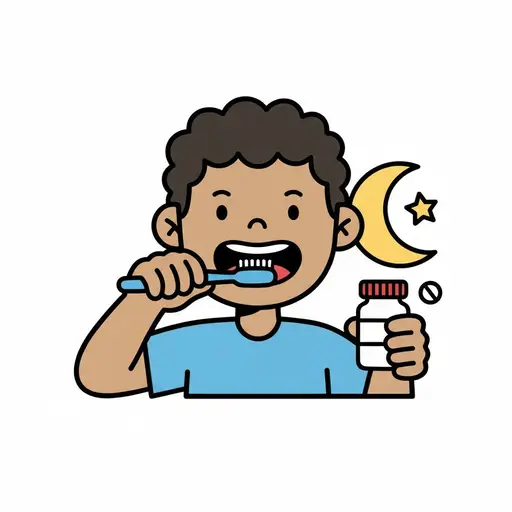
Brush teeth and evening medicine
A boy is brushing his teeth with a toothbrush in his mouth and holding a medicin...

Brush teeth and take medicine
A person in a blue shirt is brushing their teeth with a blue toothbrush while ho...
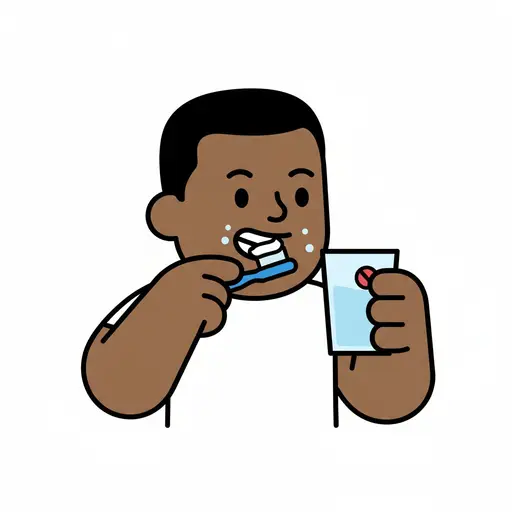
Brush teeth take medicine
A boy brushes his teeth with a blue toothbrush and holds a glass of water with a...
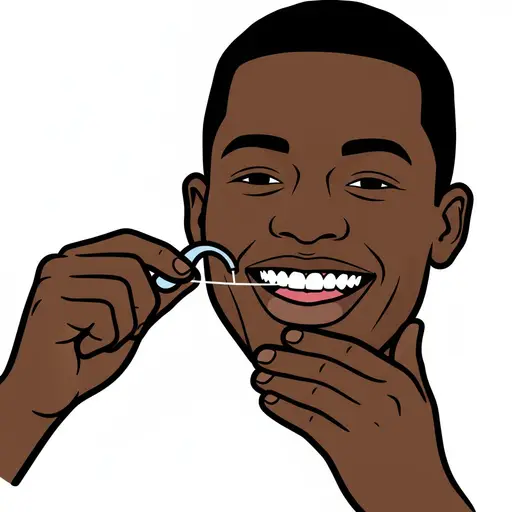
Floss your teeth
A child uses a floss pick to clean between the teeth while smiling.
Take the visual supports with you
In Routined you build schedules from these pictures, add timers and voice instructions, and your child follows the day on their own.


* 14-day free trial included for new users.