Extra socks
Seams, dampness and fit decide whether changing socks feels like relief or just a fresh annoyance. The steps below show how to swap with as little friction against the skin as possible.
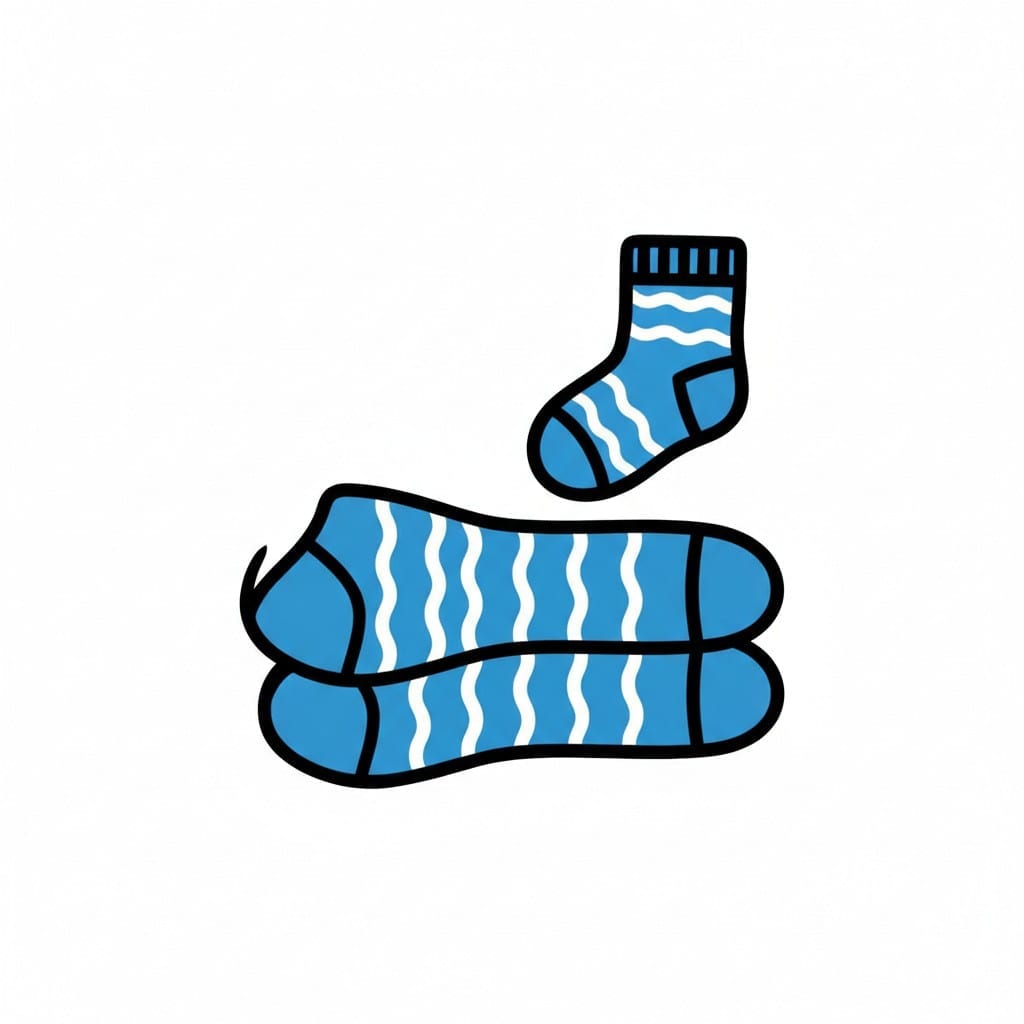
Extra socks
An image of three blue socks with white wavy stripes, two are stacked and a third floats above.
About this visual support
Socks are one of the few garments that touch skin all day, so small details become big. A seam that rubs at the toe, a damp patch that sticks, an elastic that rolls down under the foot, any of it can steal focus from what the child is actually trying to do. Changing socks is therefore not a side issue but a chance to reset the whole body feeling.
With visual support the change becomes a small, clear project: pull off, check the foot, pick new ones, put them on the right way, feel for snags. When each step has its own picture, the child can follow along and point to what is bothering them instead of just saying no. That is the difference between being handled and owning the swap.
A practical tip: keep two pairs of socks in the same material in your bag when you leave the house. That way you avoid the surprise of the spare pair feeling completely different from the first, which is usually what triggers the meltdown at swap time. To weave the sock check into the dressing routine, Routined offers a 14-day trial.
Use this image in a schedule
Build your own visual schedule with this image and download it as a print-ready PDF. Completely free.

More similar visual supports

Socks
Two socks side by side, one blue and one red, both with a white stripe at the to...
Shoes
A pair of blue trainers with white laces and white soles.
Cap
A red and blue baseball cap with the letter A on the front.
Change clothes
An illustration of a person changing clothes, pulling a blue shirt over their he...

Overshirt
A folded blue overshirt with brown buttons.
Pants
Slim blue jeans with front pockets and turned-up cuffs at the ankles.
Pull on socks
A girl is sitting down and putting on a pair of striped socks.
Shorts
A pair of blue shorts with an elastic waistband, a red drawstring and pockets on...
Take the visual supports with you
In Routined you build schedules from these pictures, add timers and voice instructions, and your child follows the day on their own.


* 14-day free trial included for new users.