Wash
Water hits the skin everywhere at once, the temperature shifts, shampoo stings and the noise inside the cabin drowns everything else. The pictures below set an outside tempo that does not rush ahead.
 ♂
♂Boy washing in the bathtub
A boy in the bath scrubs his arm with a soapy sponge.
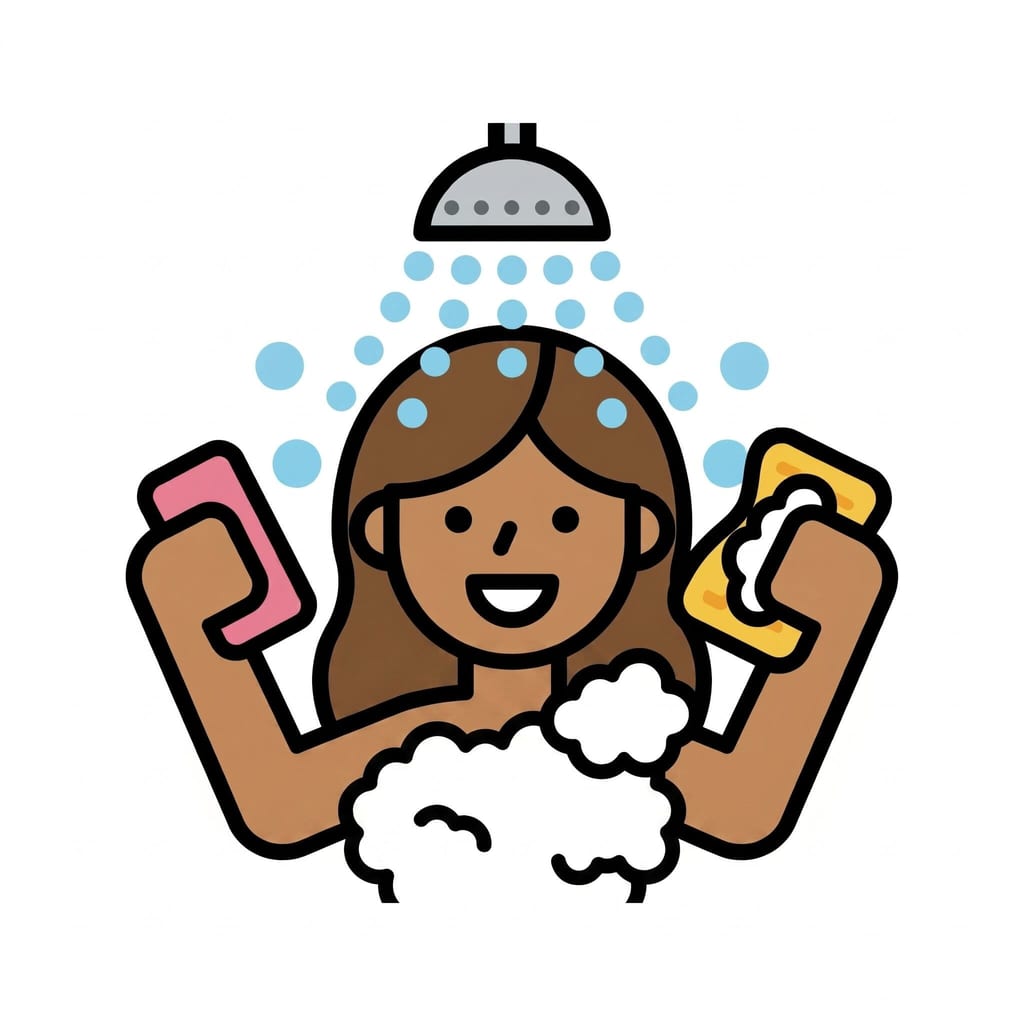 ♀
♀Woman taking a shower
A woman taking a shower. She holds a bar of soap in one hand and a sponge with soap lather in the other, with water droplets from the showerhead.
About this visual support
Showering is one of the most intense sensory events of the day. Skin, hearing, balance and temperature sense all receive input at the same moment, and if any one of them is sensitive it tips quickly into too much. Many children do not resist getting clean as such, they resist the first second when the water comes on.
A visual schedule gives the body a heads-up for each part: wet hair, shampoo, rinse, soap, rinse. The surprise drops, and so does most of the pushback. Children with autistic traits or sensory hypersensitivity rely on this predictability, but younger kids still learning the sequence get the same benefit.
A specific tip: start by wetting feet and arms before the chest and head. That gives the nervous system a few seconds to calibrate temperature and pressure before water hits the face. In Routined the shower sequence can sit as its own block inside the evening routine, with a timer on the parts that tend to stretch out.
Use this image in a schedule
Build your own visual schedule with this image and download it as a print-ready PDF. Completely free.

More similar visual supports
Bath or shower
An illustration of a bathtub with a shower head spraying water and a blue shower...
Freshen up
Holding a yellow bar of soap, a woman works up a lather in her hands while water...
have a shower
A circular icon with a smiling person wrapped in a striped towel washing their a...

Shower
A shower head sprays water into a bathtub.

Shower child
An illustration of a boy with soap on his body, holding a sponge and a towel, st...

Bath towel
A rolled-up blue bath towel.
Bathe
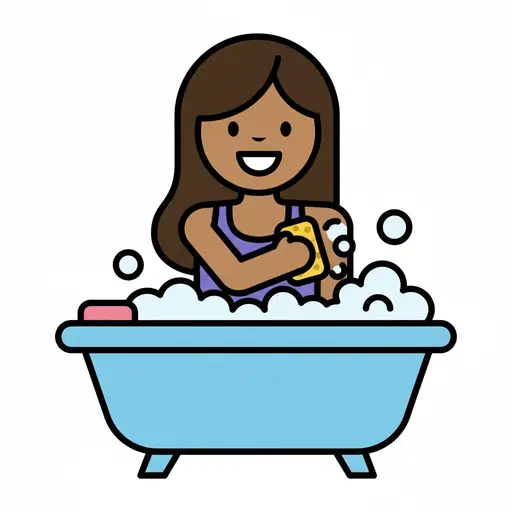
A smiling girl sits in a bathtub full of foam and washes her arm with a yellow s...
Conditioner
A blue bottle of conditioner stands next to a head of long brown hair with a sin...
Take the visual supports with you
In Routined you build schedules from these pictures, add timers and voice instructions, and your child follows the day on their own.


* 14-day free trial included for new users.