have a shower
Spray can feel like pins, steam thickens the air, and tile throws every sound back. When a shower is sensory-loud, knowing exactly how many steps remain helps. The visual support below shows them in order.
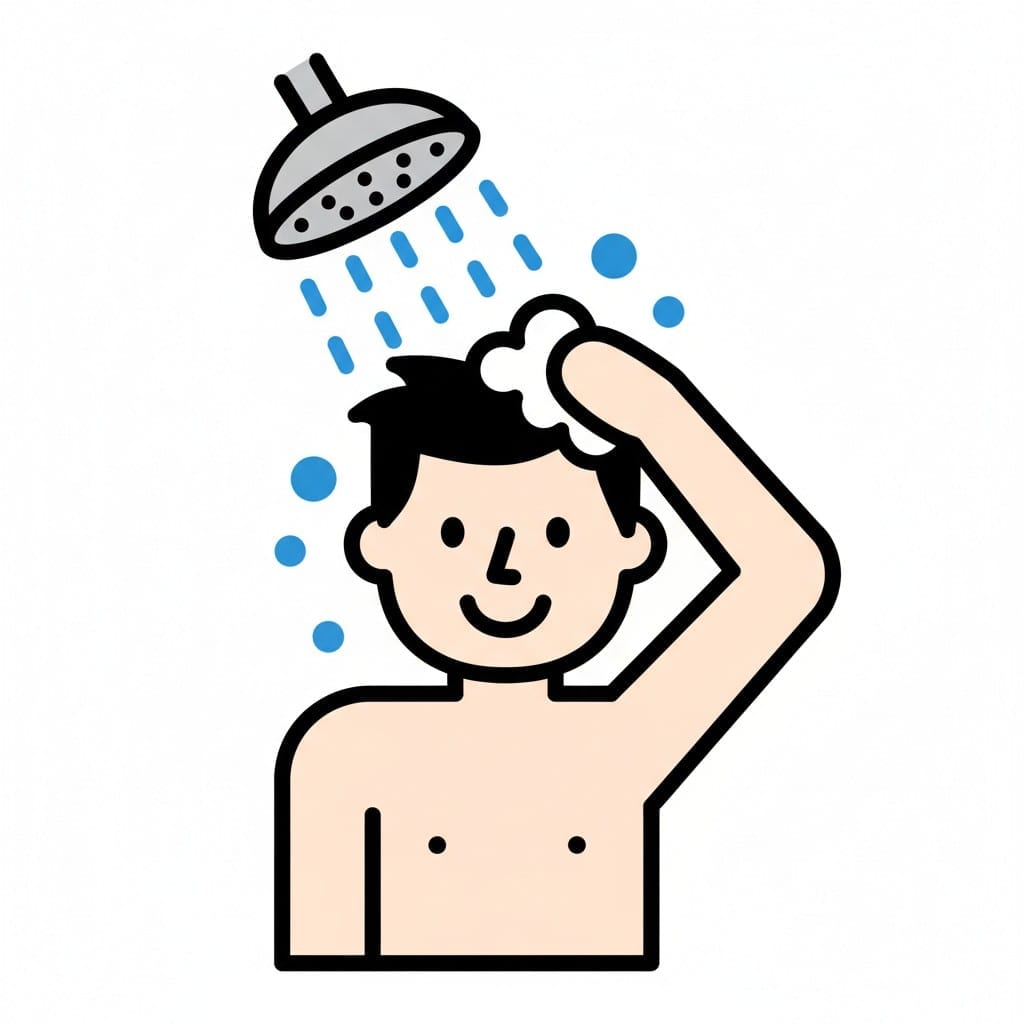 ♂
♂Shower
A person is taking a shower and washing their hair with soap.
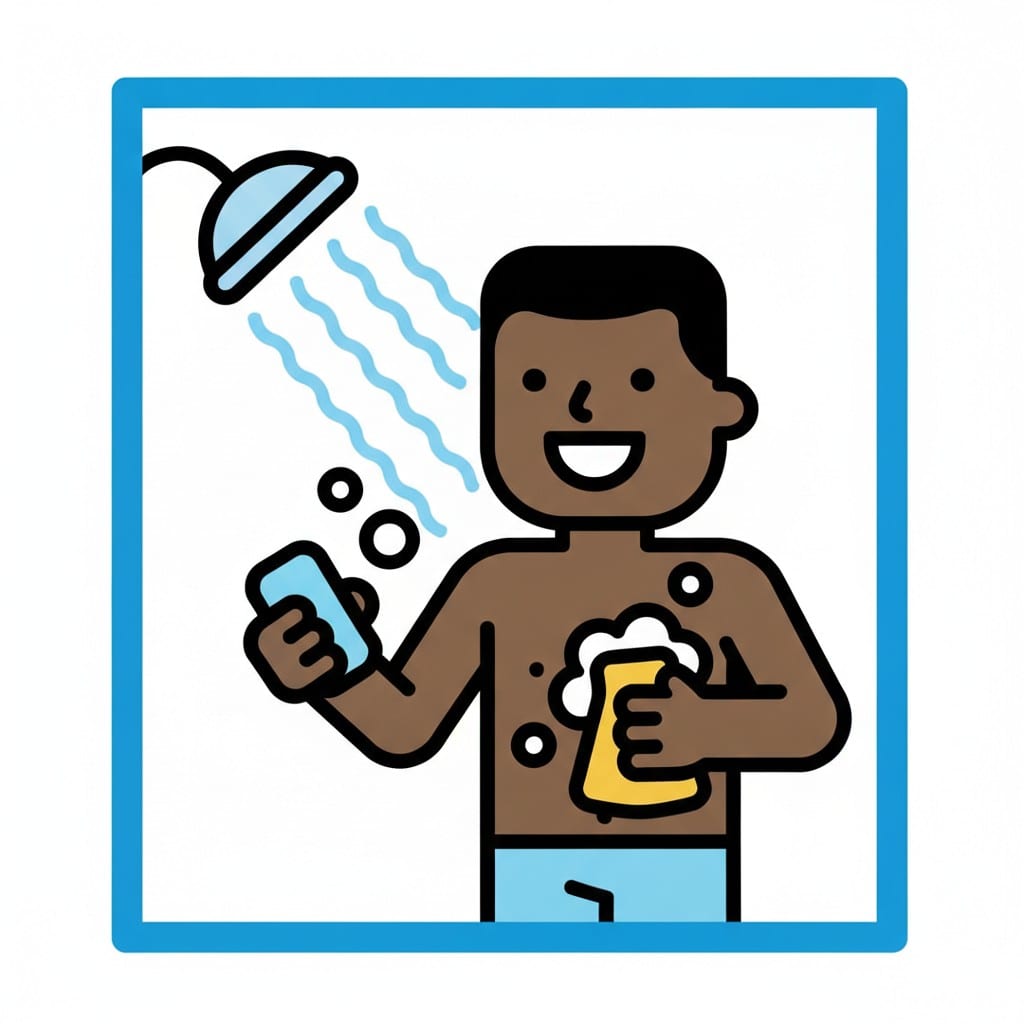 ♂
♂Showering with soap
A man stands under the shower holding a bar of soap in one hand and a foamy sponge in the other.
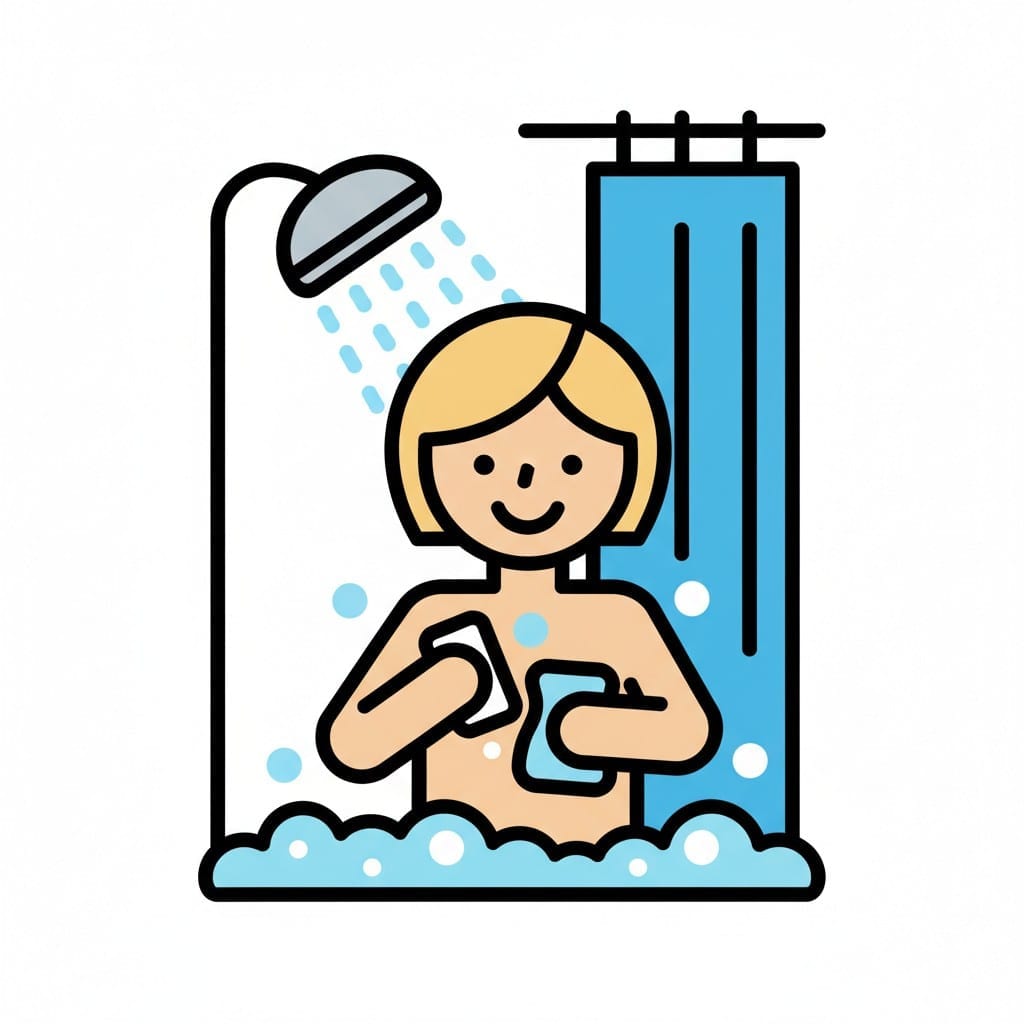 ♀
♀Girl in the shower
A girl with a blonde bob stands in the shower holding soap and a washcloth, with foam bubbling around her.
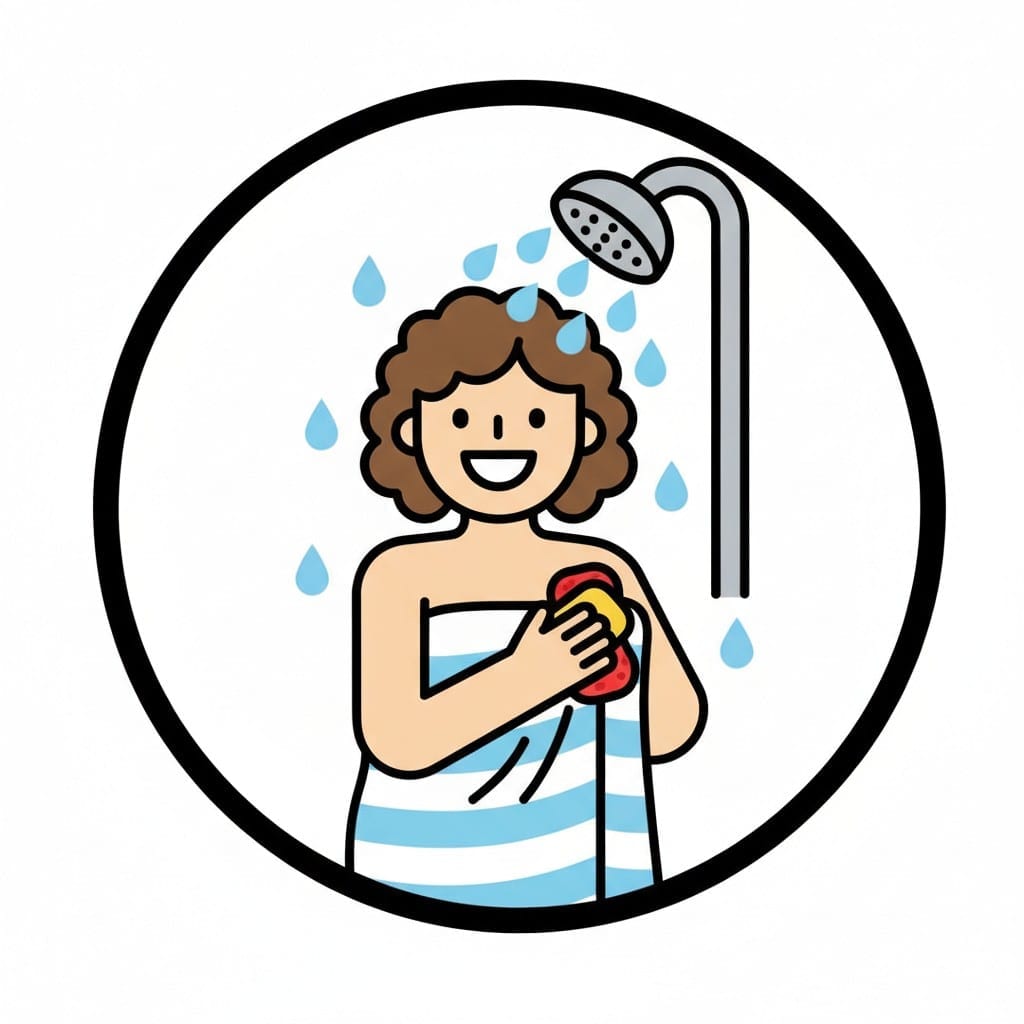 ♀
♀Person showering with a sponge
A circular icon with a smiling person wrapped in a striped towel washing their arm with a sponge under a shower head with water drops.
About this visual support
Inside a shower stall, everything happens at once: temperature swings, droplets hit the skin in uneven rhythms, steam reduces visibility, and every splash of shampoo carries a scent that can't be switched off. For a sensory-sensitive child, this isn't ”just a shower” — it's four or five strong impressions stacked in a tiled echo box.
Visual support helps by lining the impressions up. With cards for ”turn on water”, ”wet hair”, ”shampoo”, ”rinse”, ”body soap”, ”turn off”, ”towel”, the time in the shower becomes finite in a way the body can actually believe. The stress of ”how much longer” eases when the end is visible on the wall.
One concrete tip: laminate the cards and place them at the child's eye level, on the wall the spray doesn't hit. When the child squeezes their eyes shut against the water, they can open them and instantly find which step comes next. To control temperature and time as well, the sequence can sit alongside a gentle timer inside Routined.
Use this image in a schedule
Build your own visual schedule with this image and download it as a print-ready PDF. Completely free.

More similar visual supports
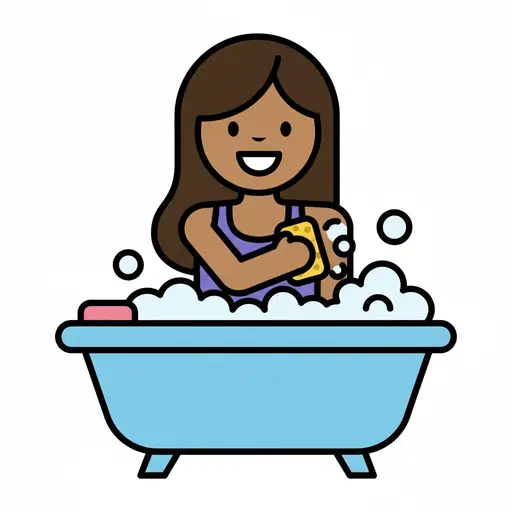
Bathe
A smiling girl sits in a bathtub full of foam and washes her arm with a yellow s...
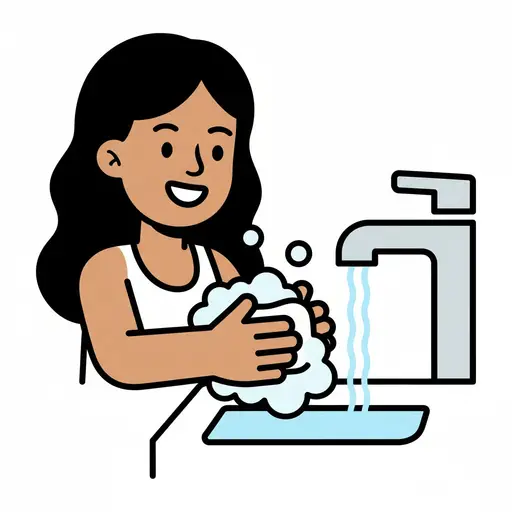
Get clean
Long hair falling loose, a woman works up a lather on her hands under a modern t...
Shower
A shower head sprays water into a bathtub.
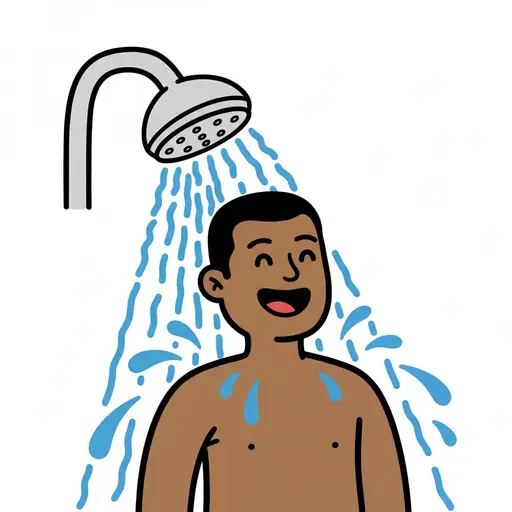
Shower child
An illustration of a boy with soap on his body, holding a sponge and a towel, st...

Wash
A woman taking a shower. She holds a bar of soap in one hand and a sponge with s...
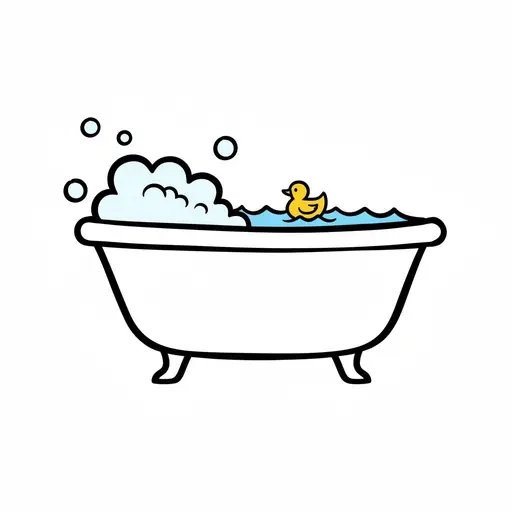
Bath
A white bathtub holds blue water and a big mound of foam, with a small yellow du...
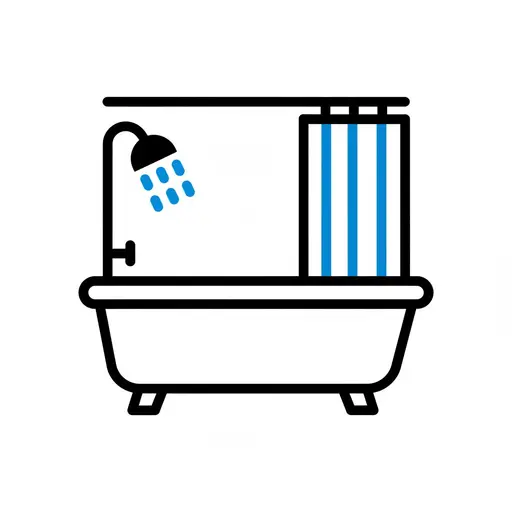
Bath or shower
An illustration of a bathtub with a shower head spraying water and a blue shower...
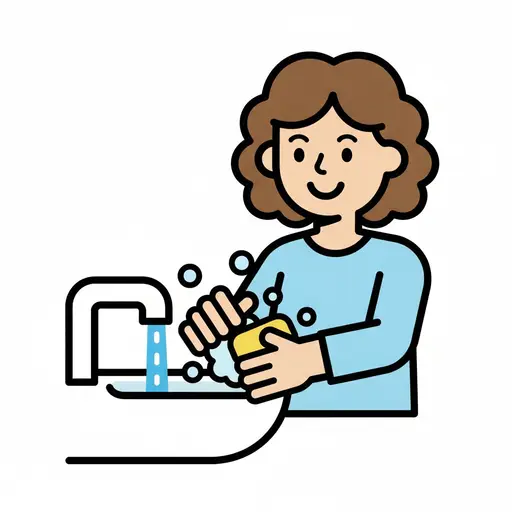
Freshen up
Holding a yellow bar of soap, a woman works up a lather in her hands while water...
Take the visual supports with you
In Routined you build schedules from these pictures, add timers and voice instructions, and your child follows the day on their own.


* 14-day free trial included for new users.