Book
A book gives no flashes, no sound and no external nudge. Every bit of focus has to come from inside the reader, and the first few pages are usually the heaviest. The pictures below break reading into steps that help a child clear that opening threshold.

Book
An illustration of a blue book with an open book icon on its cover.

Open book
An open book with a blue cover and white pages filled with lines of text.
About this visual support
The hard part of reading a book is not the reading itself but holding attention long enough for the story to carry. Screens and toys do the work for the child with sound, light and reward. A book asks the child to generate the pictures internally, and that takes a few pages before it starts paying off.
Visual support helps by making the opening visible: pick the book, find a spot, open at the bookmark, read two spreads, pause if needed. The steps lower the entry threshold, which is where reading usually stalls. Once the child has crossed the first few spreads, the story tends to take over on its own.
One concrete tip: let the child choose a fixed reading spot — the corner of the sofa, the window seat, the bed — and use a picture of that spot as one of the cards. The place itself becomes a starting cue. With Routined you can attach a 10-minute focus window to the sequence, so the child knows there is a clear end rather than an open-ended demand.
Use this image in a schedule
Build your own visual schedule with this image and download it as a print-ready PDF. Completely free.

More similar visual supports

Read
A person holds an open book up in front of them and reads.

Books
A stack of three books in red, blue, and yellow.

Choose book
A happy boy points to a book in a row of books.
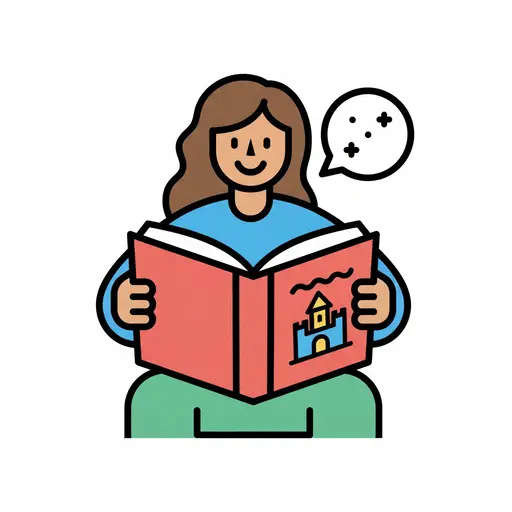
Read story
A girl in a blue shirt reads a red book with a castle on the page, and a thought...
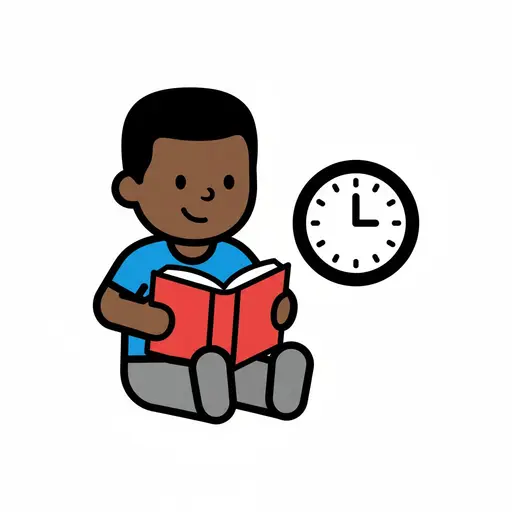
Book time
A boy sits holding a red book, with a clock next to him showing the time as quar...
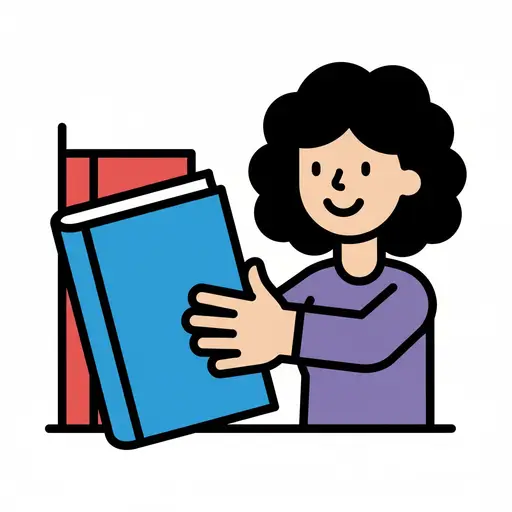
Get a book
A person is selecting a blue book from a stack of books.

Home activities
A man sits on a red sofa inside a stylized house outline, reading a book. A lapt...
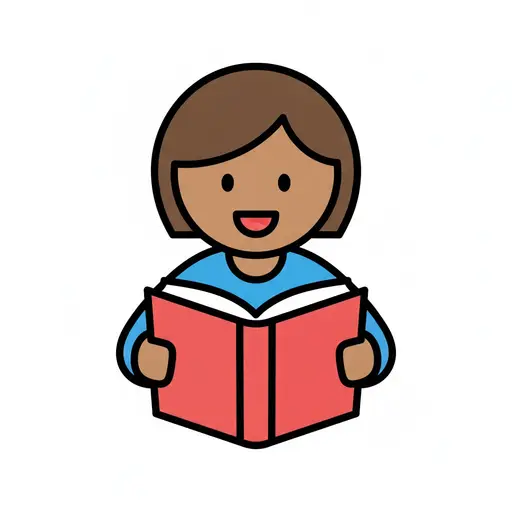
Mom reads
A mother smiles while holding an open red book.
Take the visual supports with you
In Routined you build schedules from these pictures, add timers and voice instructions, and your child follows the day on their own.


* 14-day free trial included for new users.