Creative
The first brushstroke is the hardest. Starting open-ended making means breaking a threshold where everything is still possible and therefore hard to begin. The visual support below breaks the start into one small first step.
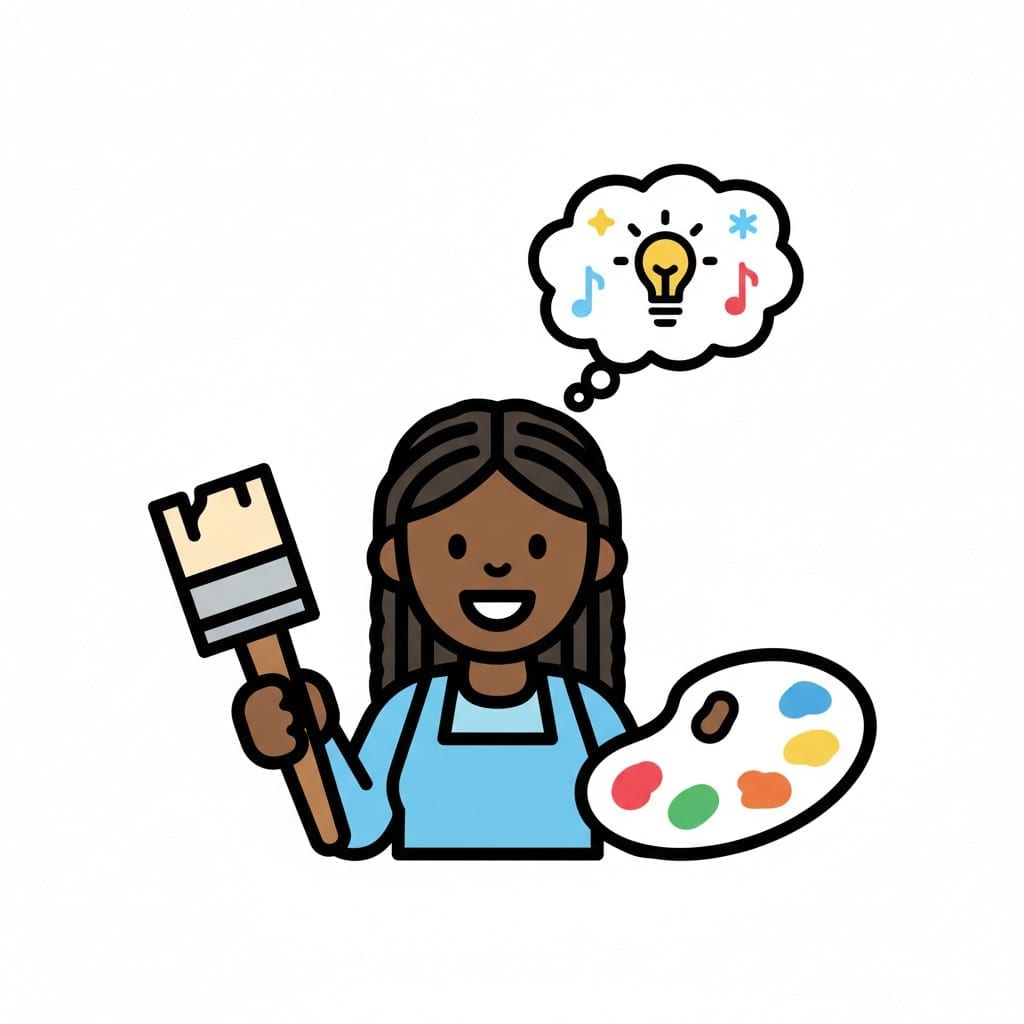 ♀
♀Brush and palette
A girl holds a paintbrush and a paint palette with creative ideas.
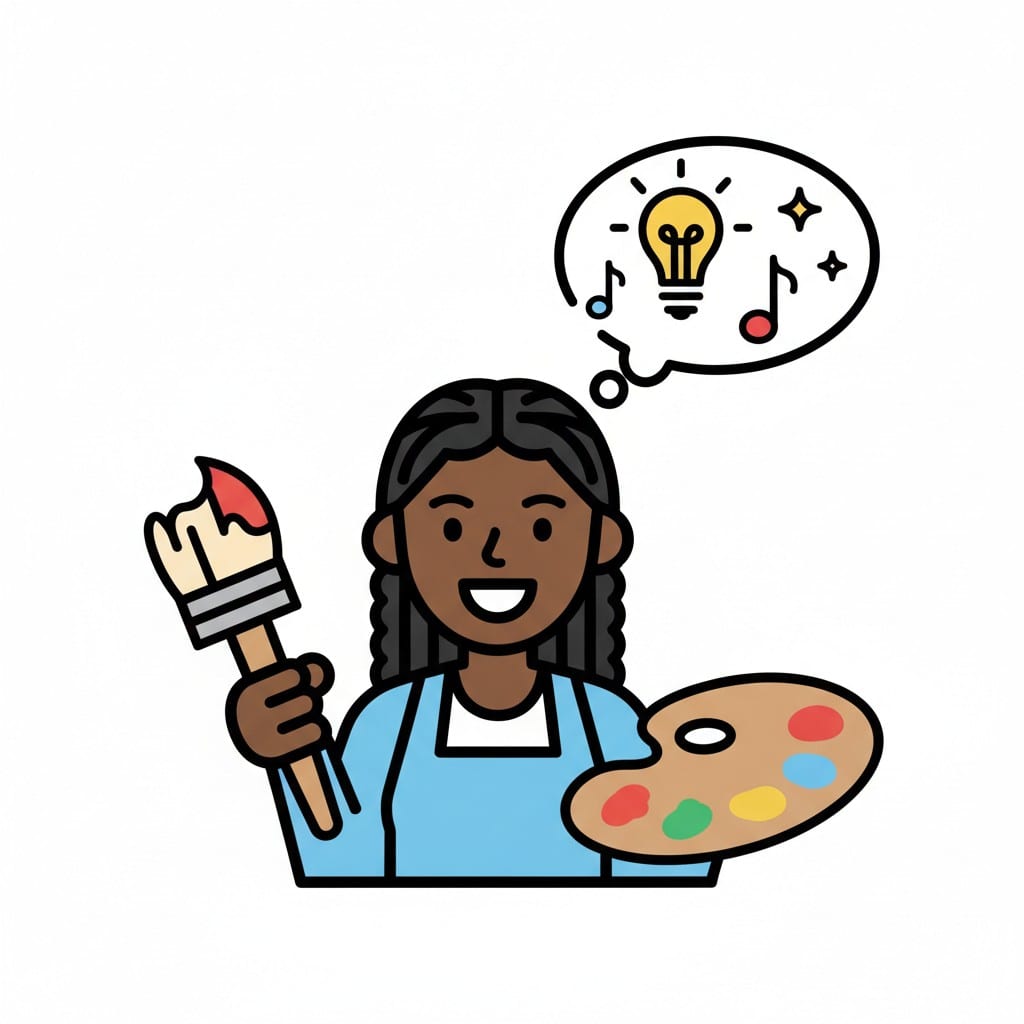 ♀
♀Ready to paint
A girl holds a brush and palette with a thought bubble of ideas.
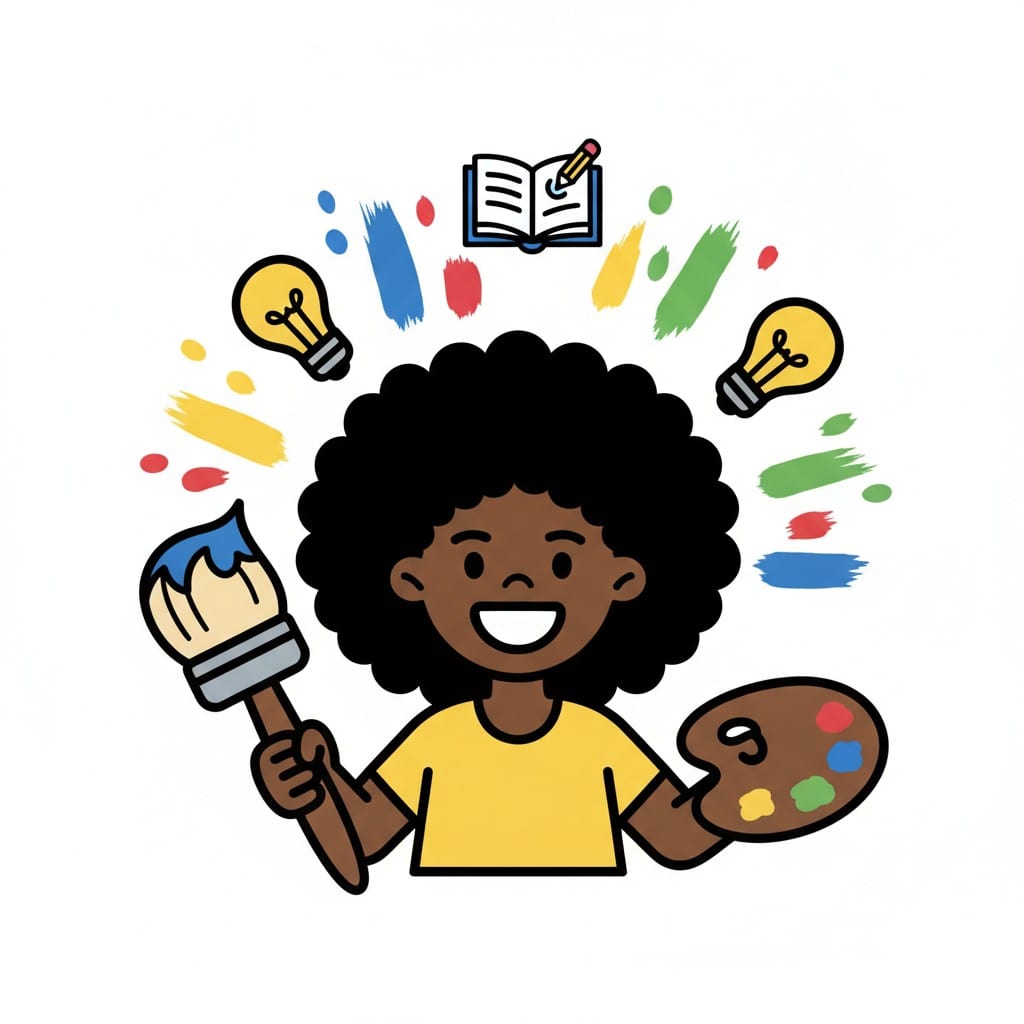 ♀
♀Full of ideas
A girl with brush and palette surrounded by paint splashes and ideas.
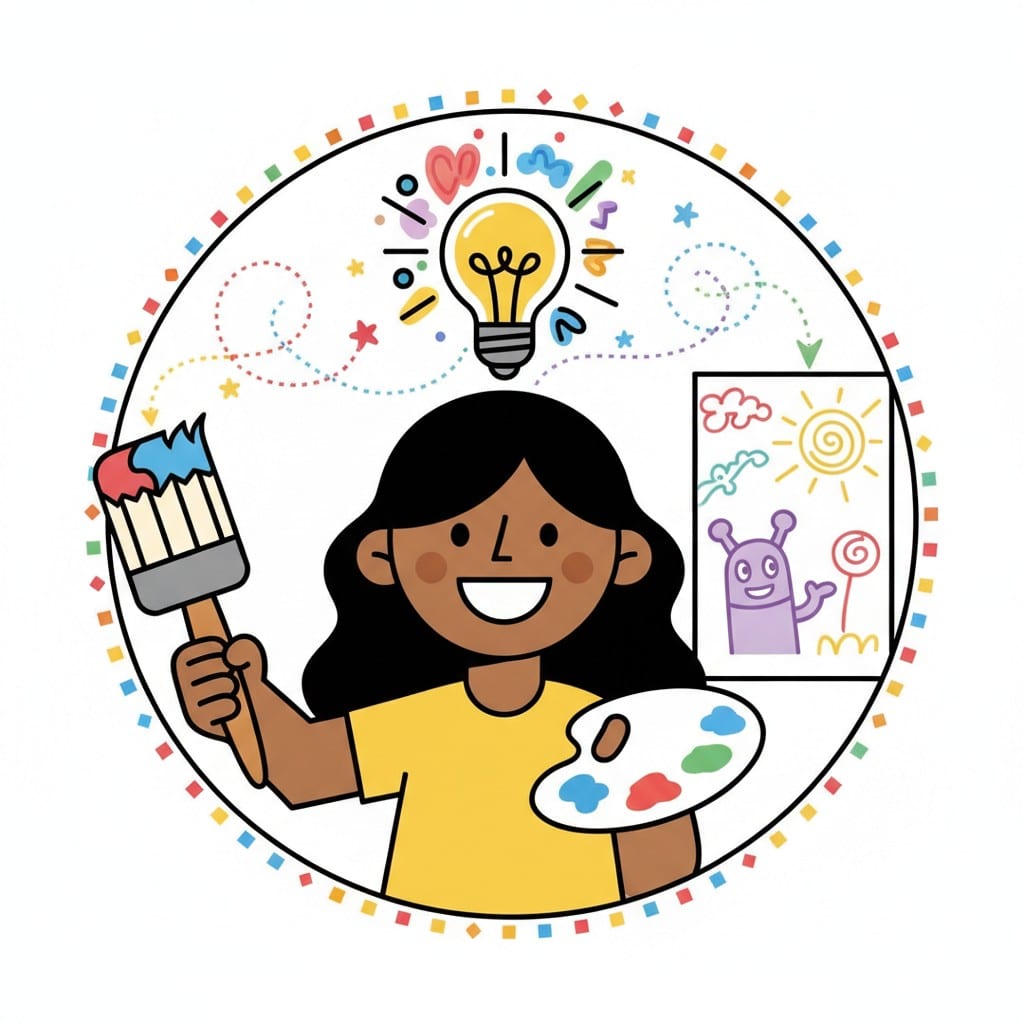 ♀
♀Little artist
A girl holds a brush and palette next to her own drawing.
About this visual support
The threshold to action is often the hardest part of any making. Before the first brushstroke is done, every possibility is open at once, and that openness can weigh more than freedom. Beginning asks the child to break the paralysis and make a first choice, and that very step, from nothing to something, is where many stall the longest.
Visual support lowers the threshold by making the start small and concrete. When the first step appears as a picture, dip the brush, put a dot, draw a line, the child does not have to grasp the whole act of creating at once, only do the first small thing. Once the first mark is made there is something to respond to, and the next stroke often comes by itself. The picture carries the child past the hardest point.
A concrete tip: make the very first step so small it can barely fail, like just choosing a colour or setting the brush against the paper. Once the resistance to starting is gone, the rest tends to flow. In the Routined app you can add that first small action as its own step, so the child has something to tick off even before the making picks up speed.
Use this image in a schedule
Build your own visual schedule with this image and download it as a print-ready PDF. Completely free.

More similar visual supports
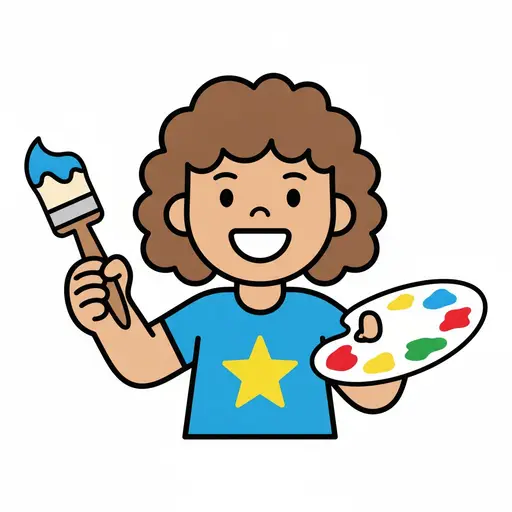
Creative Girl
A girl paints colorful dots on a canvas on an easel while holding a palette.
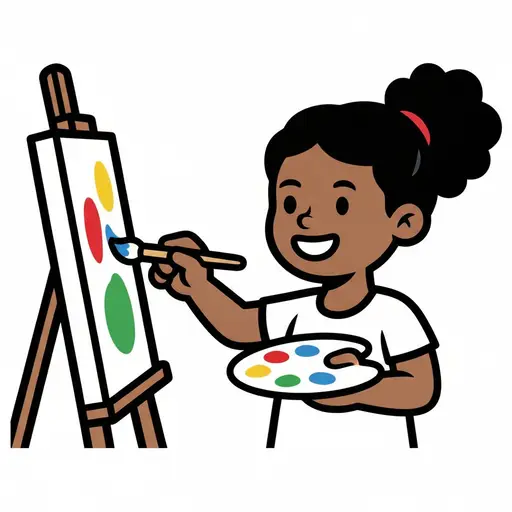
Do Art
A girl paints colorful dots on a canvas on an easel with a brush while holding a...
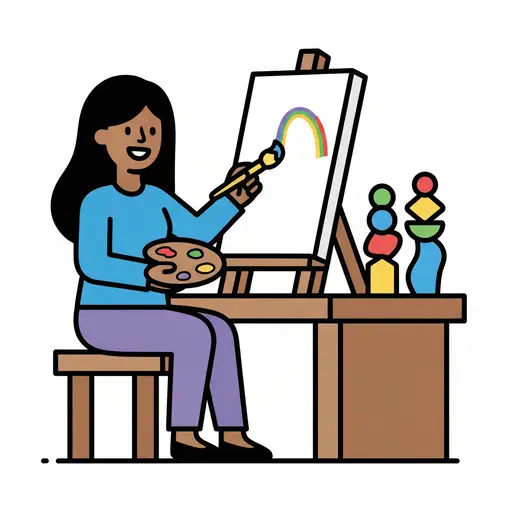
Create
A smiling person sits on a stool holding a paint palette and paints a rainbow on...
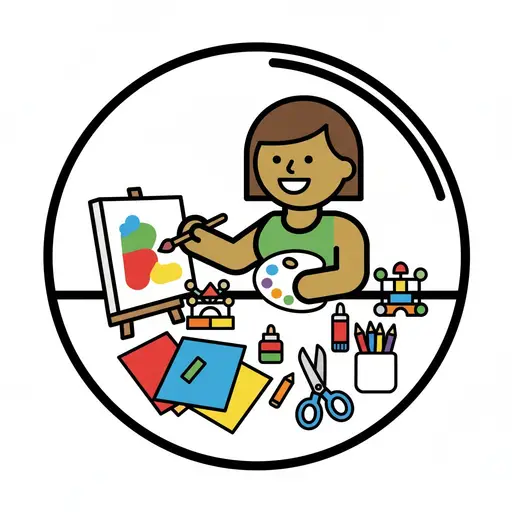
Creative project time
A girl paints on an easel surrounded by craft supplies like scissors, glue and p...
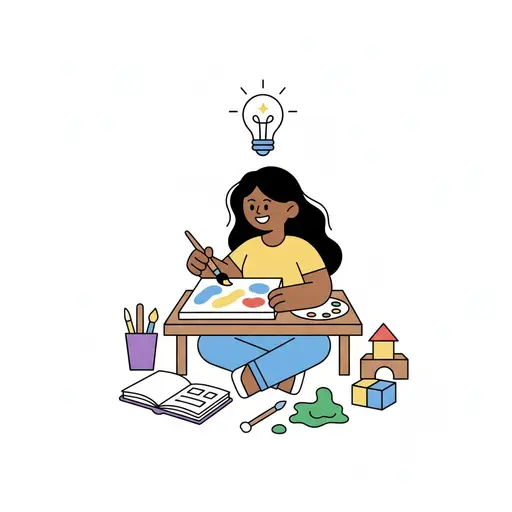
Creative Time
A girl sits at a small table and paints with a brush among craft supplies and bl...
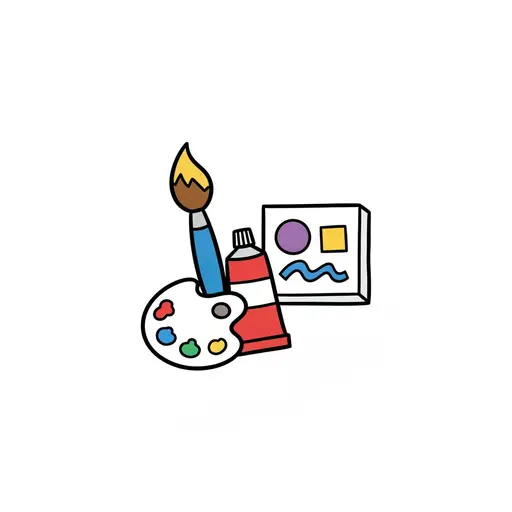
Art
A brush, a palette, a paint tube and a painting with shapes.
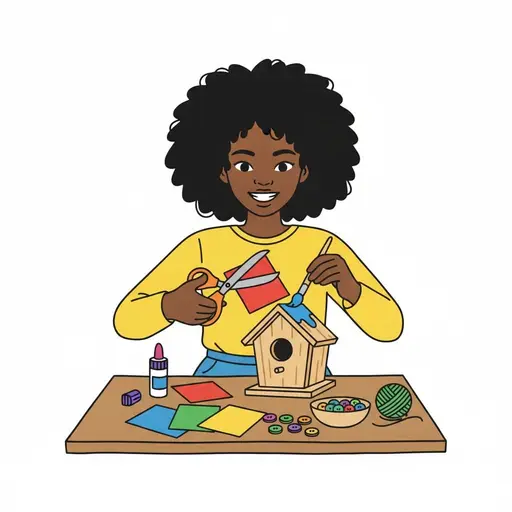
Arts and crafts
A girl cuts red paper and paints a birdhouse at a table with buttons and yarn.
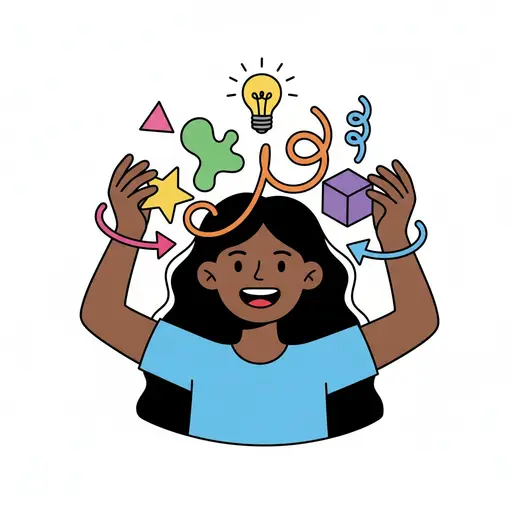
Be Creative
A girl smiles and imagines various colorful shapes and a light bulb.
Take the visual supports with you
In Routined you build schedules from these pictures, add timers and voice instructions, and your child follows the day on their own.


* 14-day free trial included for new users.