Creative Girl
Making only draws a child in if they find something of their own to express. A blank surface without direction can instead stall the urge, and the visual support below offers prompts the child can make their own.
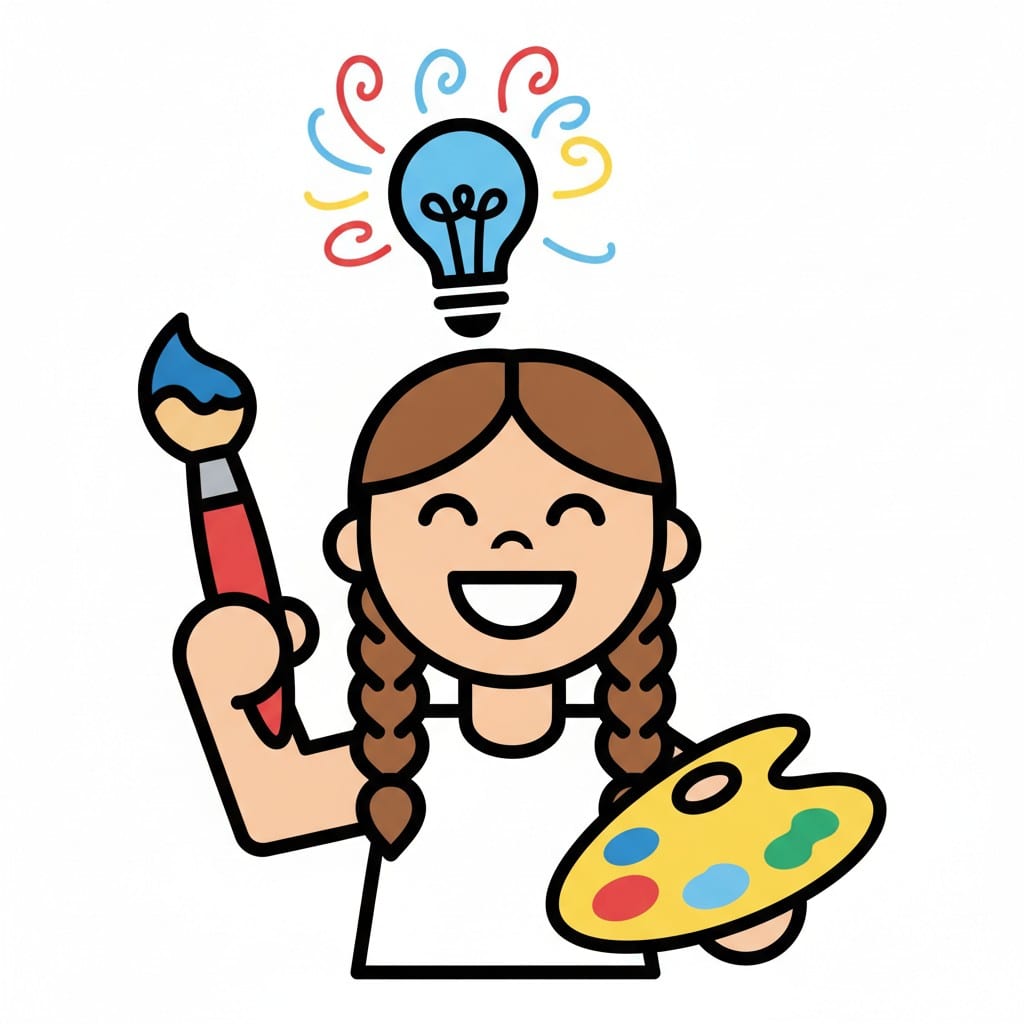 ♀
♀Ideas and pencil
A girl holds a big pencil and a notepad with creative ideas in a thought bubble.
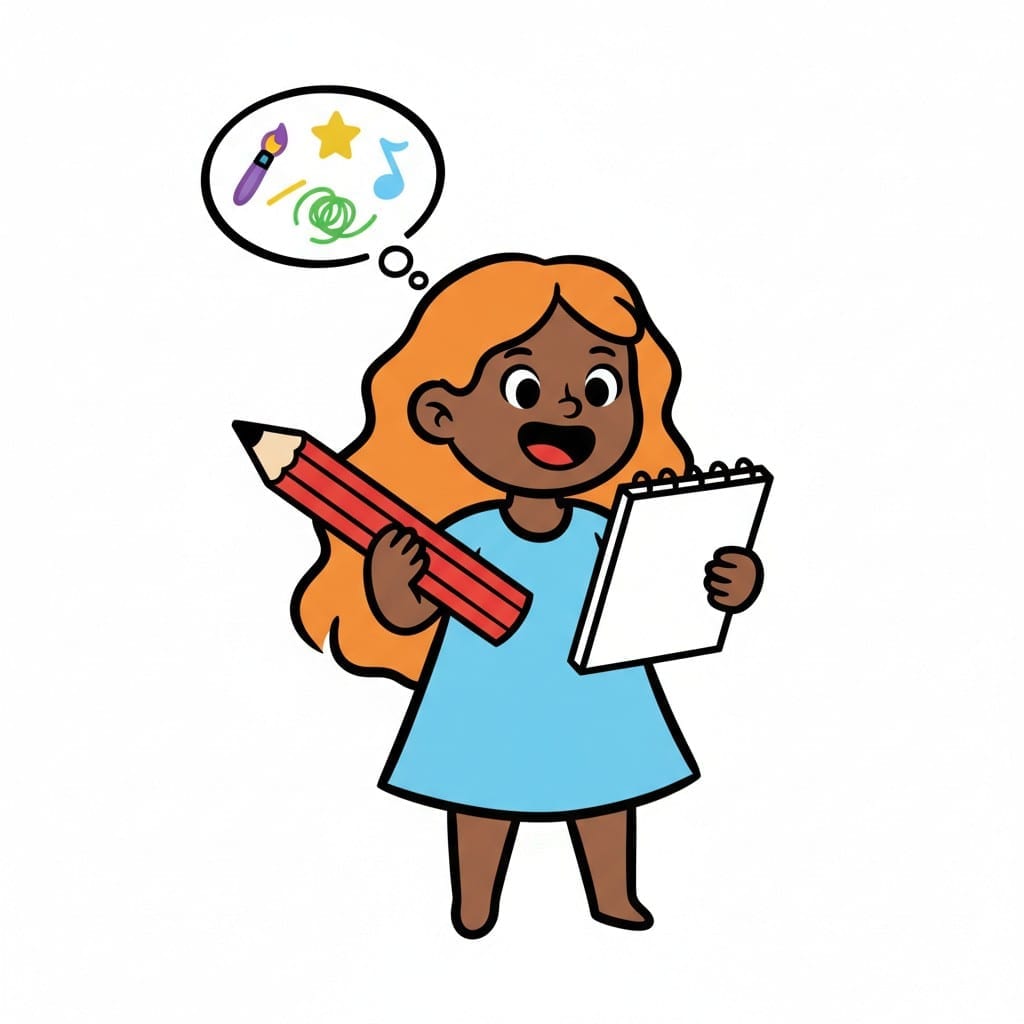 ♀
♀Brush and palette
A girl holds a brush and palette with a star and an idea lightbulb.
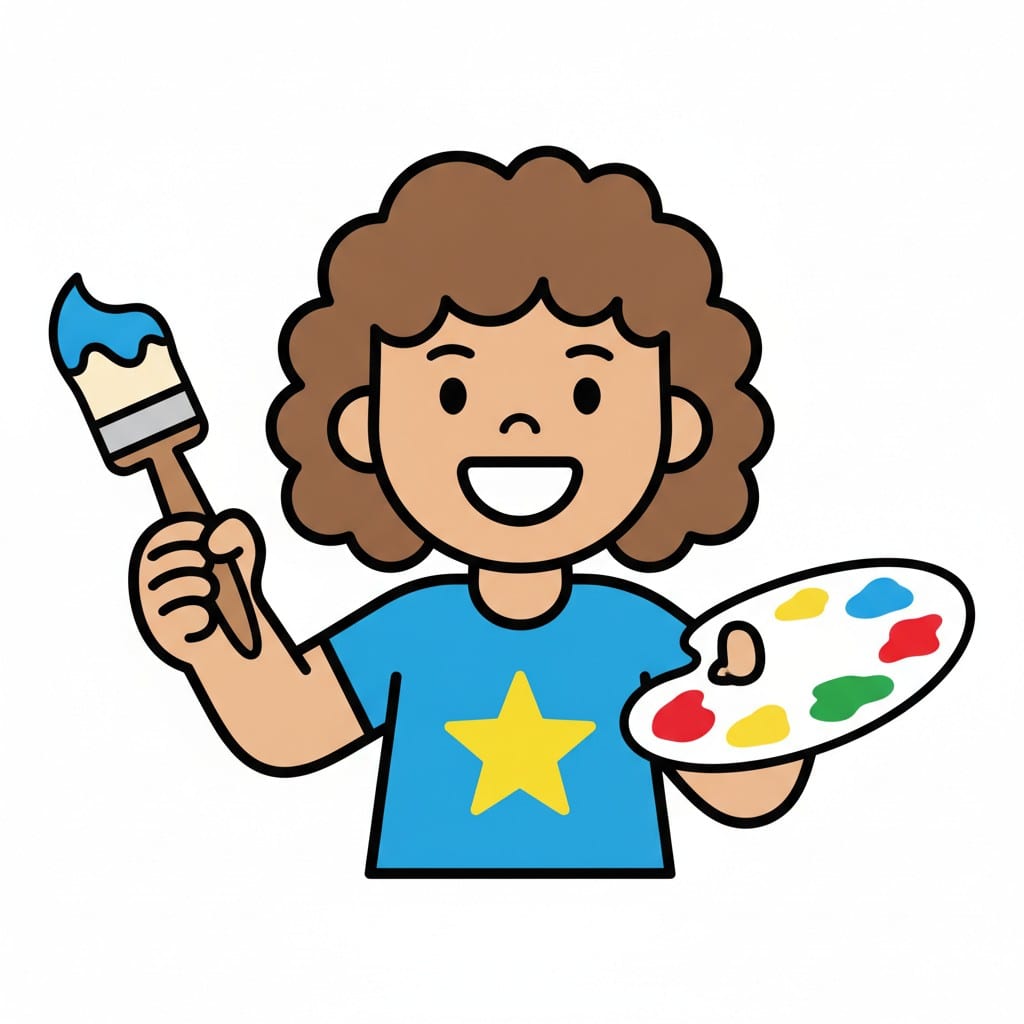 ♀
♀Paint at easel
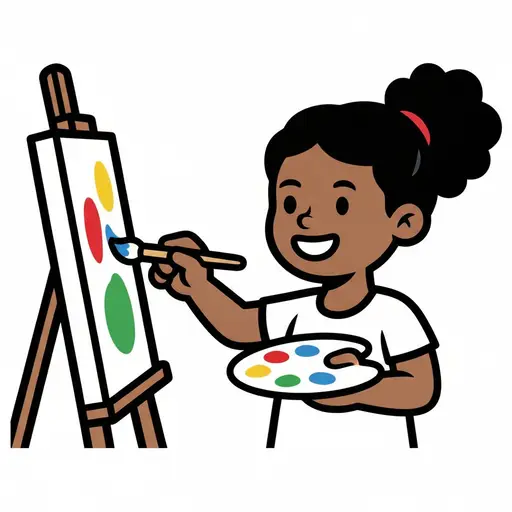
A girl paints colorful dots on a canvas on an easel while holding a palette.
About this visual support
The urge to create lives on having something to say. When a child carries their own image inside, a favourite animal, a feeling, a place, the making almost flows by itself. But when the task is just to create with nothing of their own to anchor it, the blank surface becomes a wall rather than an invitation, and the urge that should be there finds no direction to run in.
Visual support can awaken the personal rather than replace it. When the pictures show prompts, a theme, a shape, a colour world, they work like kindling: the child sees something and immediately feels what they want to do with it, add, change. The picture is not the template for the result but the spark that sets off the child's own idea, and from there the urge takes over.
A concrete tip: show prompts that are easy to twist in one's own direction, like draw your favourite place rather than draw a house, so the personal gets room at once. Ask what the child would change about the prompt, and it becomes theirs straight away. In the Routined app you can gather a small bank of such prompts the child can flip through when their own idea needs something to catch fire from.
Use this image in a schedule
Build your own visual schedule with this image and download it as a print-ready PDF. Completely free.

More similar visual supports
Creative
A girl holds a brush and palette next to her own drawing.
Do Art
A girl paints colorful dots on a canvas on an easel with a brush while holding a...
Create
A smiling person sits on a stool holding a paint palette and paints a rainbow on...
Creative project time
A girl paints on an easel surrounded by craft supplies like scissors, glue and p...
Creative Time
A girl sits at a small table and paints with a brush among craft supplies and bl...
Art
A brush, a palette, a paint tube and a painting with shapes.
Arts and crafts
A girl cuts red paper and paints a birdhouse at a table with buttons and yarn.
Be Creative
A girl smiles and imagines various colorful shapes and a light bulb.
Take the visual supports with you
In Routined you build schedules from these pictures, add timers and voice instructions, and your child follows the day on their own.


* 14-day free trial included for new users.