Cuddle cats
Cats do not negotiate. They decide for themselves when closeness is welcome and when the paw goes up. For a child who wants to cuddle, the hidden rule is what makes the meeting hard, not the fur itself. The visual support below translates the cat's signals.
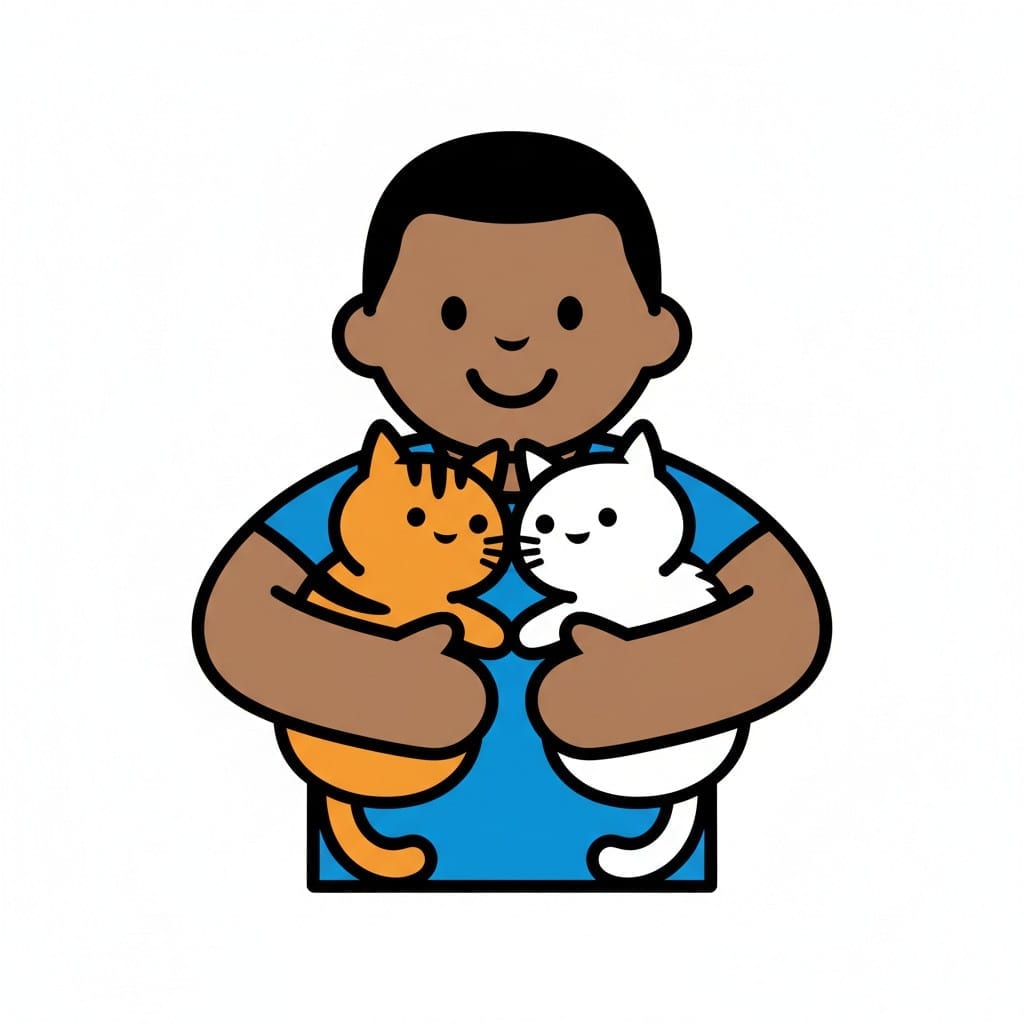 ♂
♂Boy cuddling cats
A boy holding two cats, one orange and one white.
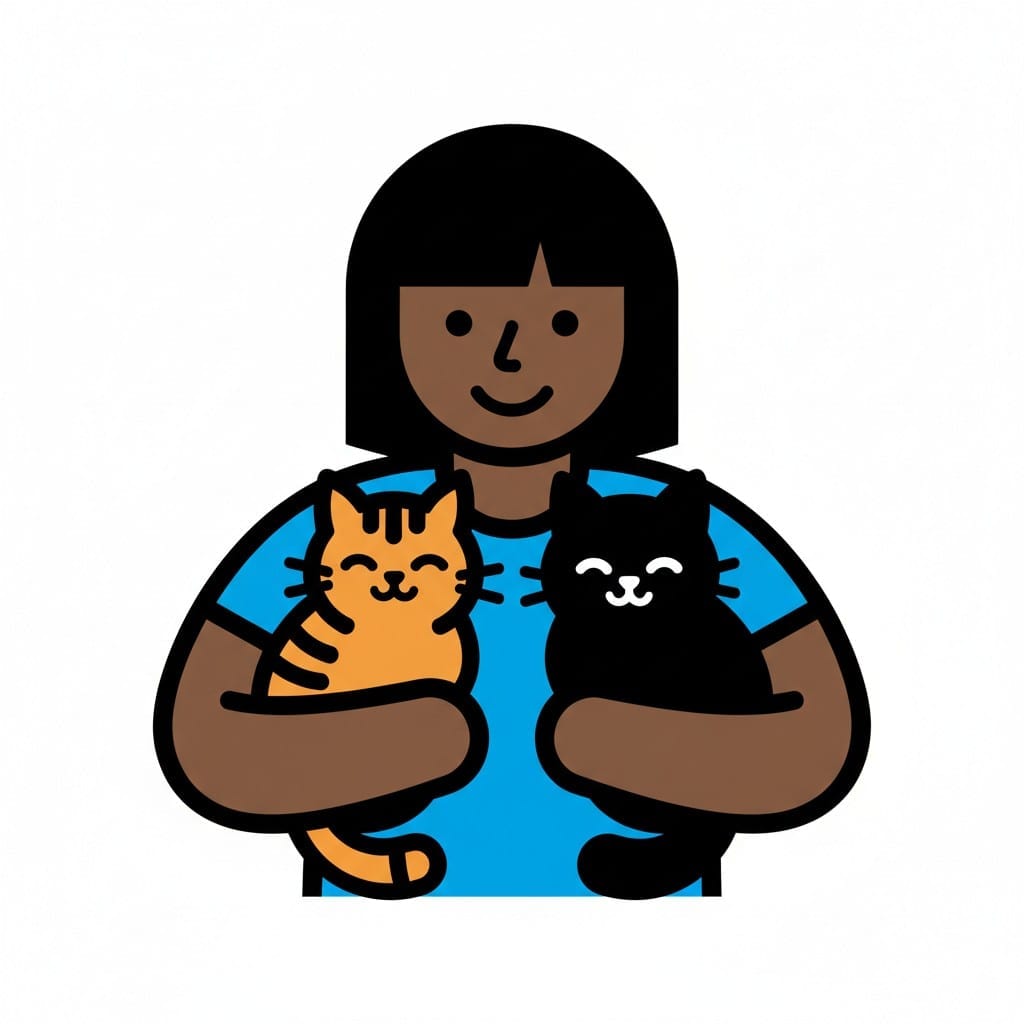 ♀
♀Girl cuddling cats
A girl holding two cats, one orange and one black.
About this visual support
Meeting the cat is a social negotiation where the other party never speaks the child's language. The fur tickles, but that is not what decides whether the cuddle goes well. It is whether the tail is twitching nervously, whether the ears tilt back or whether the cat itself walks forward and arches its back into the hand. The child has to read all of this in real time while their own urge to cuddle pulls the other way.
Visual support lays the signals out as cards that can be studied without time pressure. A picture of the cat leaning in, one of the cat pulling its ears back, one of the hand waiting. Once the child has seen the images in a calm setting, reading the cat's body language in the moment becomes easier, because the signals are already learned as categories.
One concrete tip: ask the child to count three slow strokes along the back, then remove the hand fully, even if the cat looks pleased. That pause is often what makes the cat come back for more instead of walking off. If you want to extend this to other animal encounters, the visual support can be collected in Routined under leisure and play. The app is free to try for 14 days.
Use this image in a schedule
Build your own visual schedule with this image and download it as a print-ready PDF. Completely free.

More similar visual supports
Cats
An orange tabby cat and a calico cat sit side by side.
Pet cat
A person petting a cat.
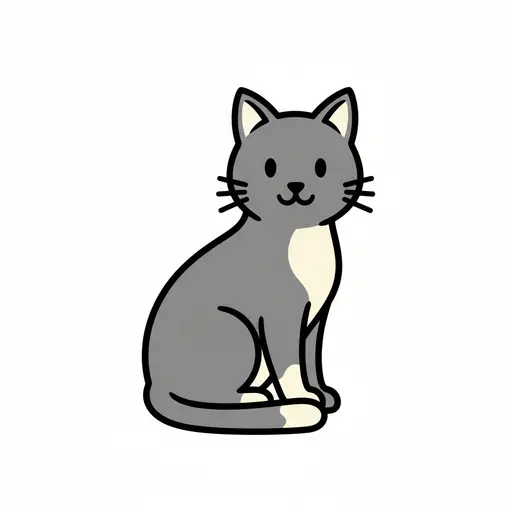
Cat
A grey cartoon cat with a cream chest sits upright with its tail curled in front...
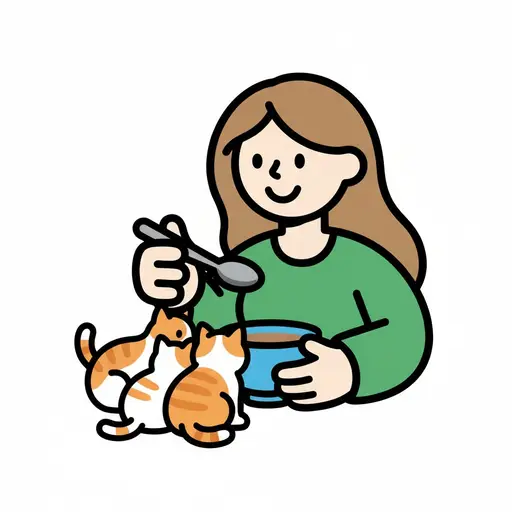
Feed kittens
A woman feeding two small kittens with a spoon from a bowl.
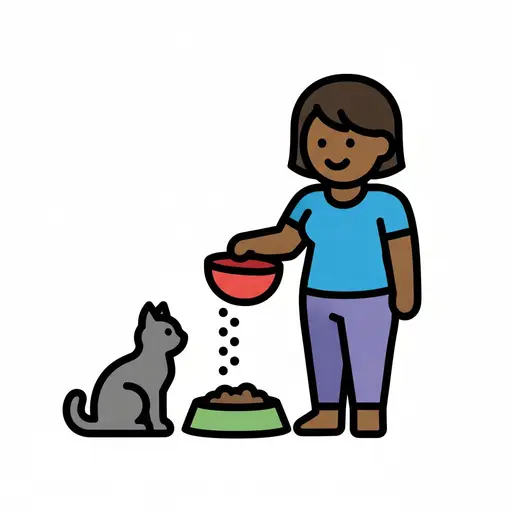
Feed the cat
A smiling person pours dry food from a red bowl into a green feeding dish while ...
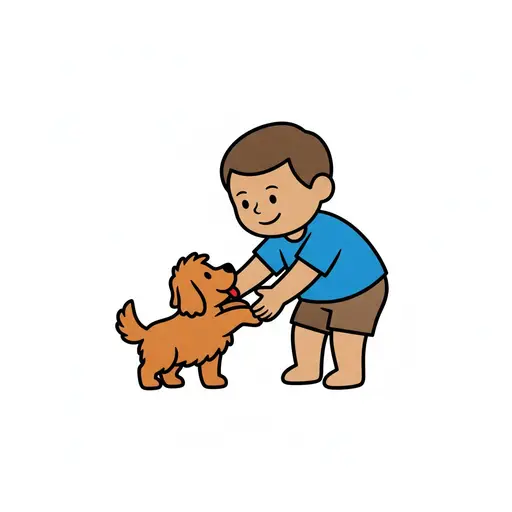
Get Rufus
A child bends down to play with a small brown dog standing on its hind legs.

Hollie dog
A friendly cartoon dog sitting with a green collar and bone tag.
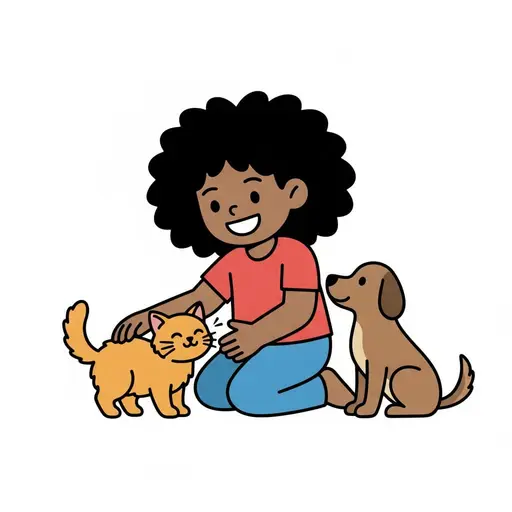
Pet the animal
A girl kneels and strokes an orange cat while a dog stands beside her.
Take the visual supports with you
In Routined you build schedules from these pictures, add timers and voice instructions, and your child follows the day on their own.


* 14-day free trial included for new users.