Day off
A day off sounds like relief, yet it can feel oddly empty when the usual anchors are gone. The clock keeps moving without a classroom or schedule, and suddenly the afternoon has slipped away. The visual support below gives loose shape without locking the day down.
 ♂
♂Man relaxing in hammock
A man is smiling and relaxing in a hammock strung between two palm trees, with a sunset over the water and a calendar with an 'X' indicating a day off in the background.
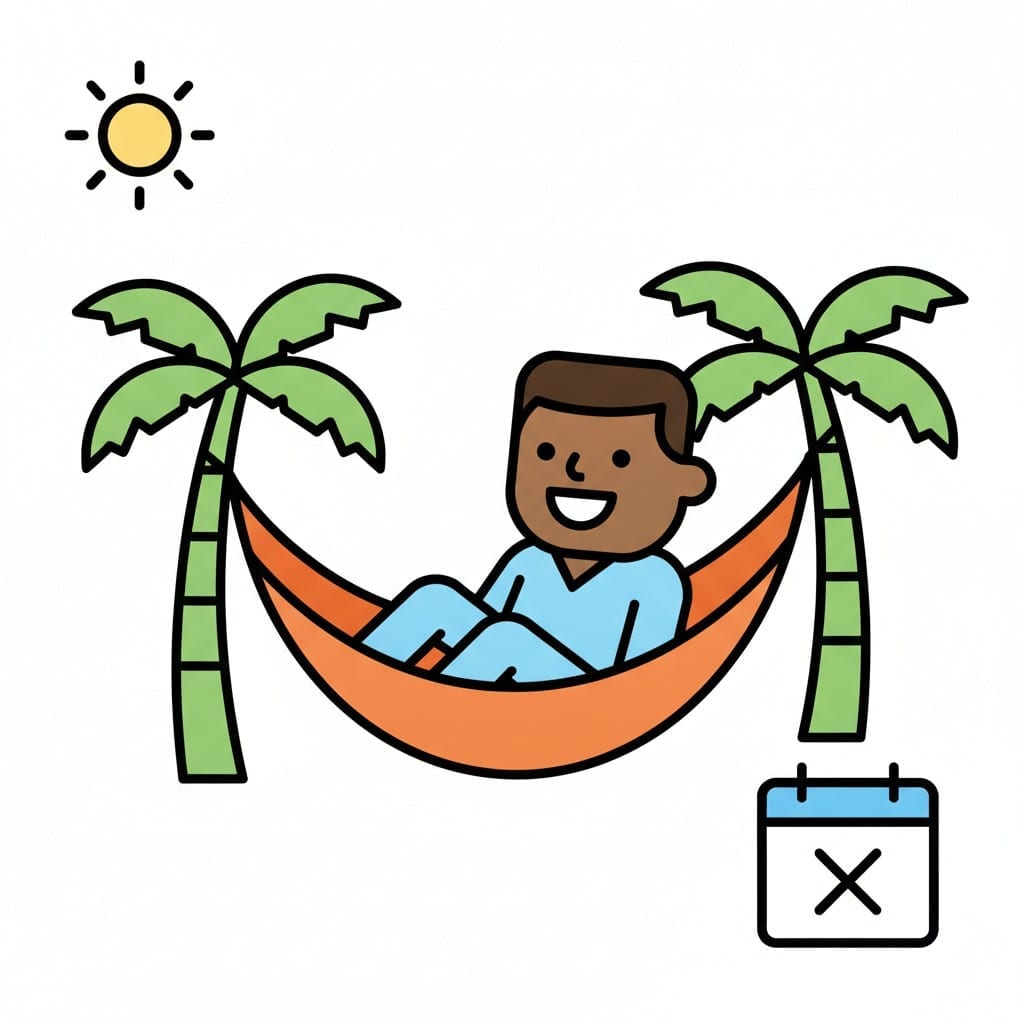 ♂
♂Man resting in a hammock
A man lies back in an orange hammock slung between two palm trees, with the sun above and a calendar marked with a cross.
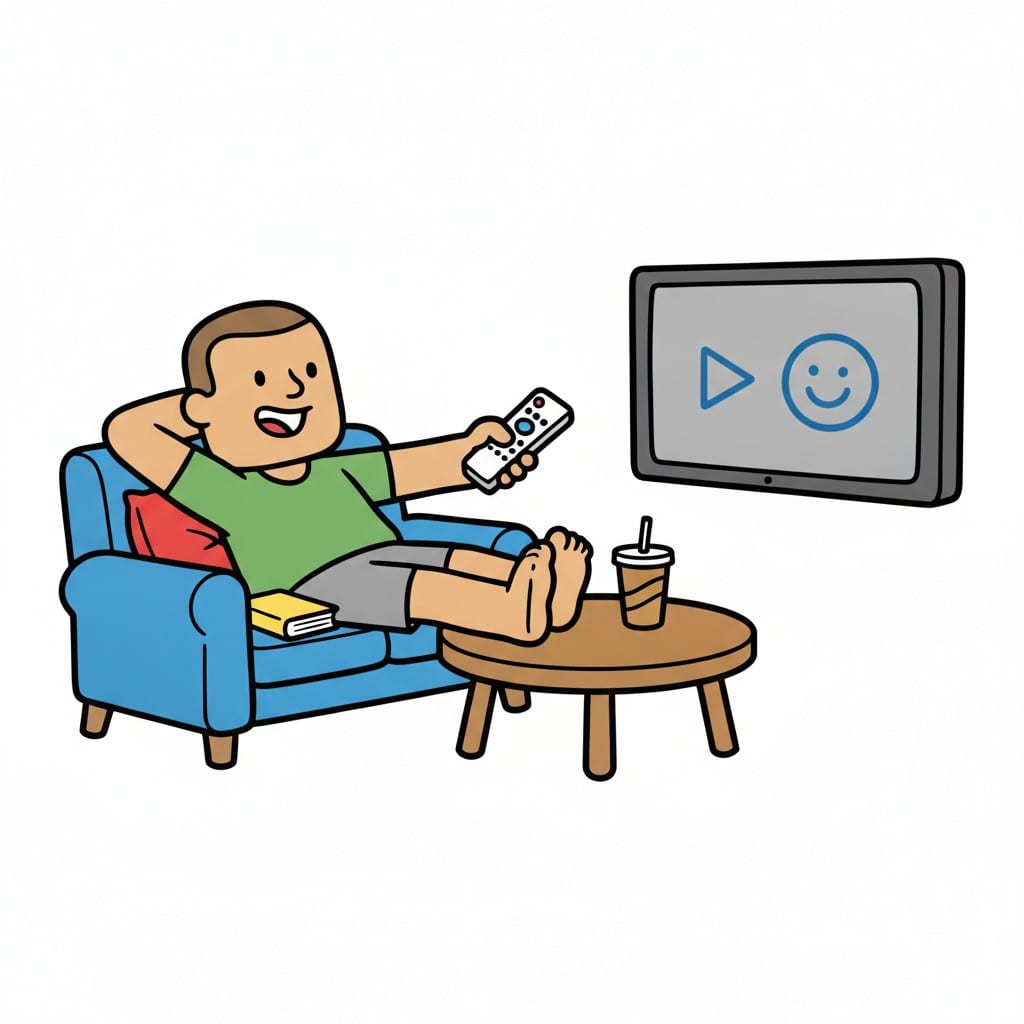 ♂
♂Day off
A person lounges on a blue sofa with feet up, pointing a remote at a TV, a drink on the table.
About this visual support
Days off are often framed as the opposite of a structured day, but for children who thrive on clear edges the absence of structure is precisely the hard part. With no classroom, no lunch bell and no pick-up time, the outer signals that usually keep the day afloat are gone. The result is often a child drifting between the screen and the fridge while the afternoon dissolves, and you trying to rescue the situation around half past three.
The angle of this visual support is therefore soft structure, not a new schedule. Three or four anchors are enough: a late breakfast, something outside, a quiet stretch, something nice in the evening. Between the anchors the child chooses freely. That gives a shape to lean on without booking the whole day. For many children it is enough to see that the evening is coming to allow a moment of boredom in the afternoon.
A concrete tip: let the child choose the order of the anchors the night before. Card by card, so tomorrow is already there when they wake. If you want to attach times to the anchors and copy day-off versions between weekends and holidays, you can build the frame in Routined and try it free for fourteen days.
This image is part of these ready-made schedules
Use this image in a schedule
Build your own visual schedule with this image and download it as a print-ready PDF. Completely free.

More similar visual supports

Holiday
An open suitcase filled with sunglasses, a beach ball, a towel and a book under ...
Quiet time
A boy sits cross-legged, holding an open book and putting a finger to his lips t...
Read and relax
A boy sits comfortably in a red beanbag chair, holding an open blue book. His ey...
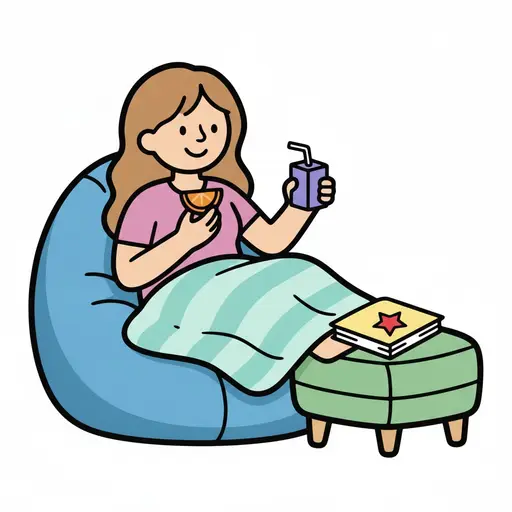
Afternoon Snack And Relax
A girl relaxes in a cozy beanbag chair holding a juice box and a slice of fruit.
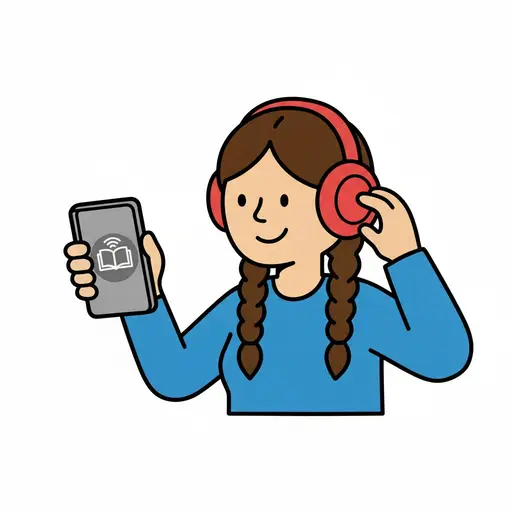
Audiobook time
A smiling girl with braids wears red headphones and holds up a phone showing a b...

Books
A stack of three books in red, blue, and yellow.

Chill
A girl with a braid lies back in a light blue hammock beside a green plant, with...
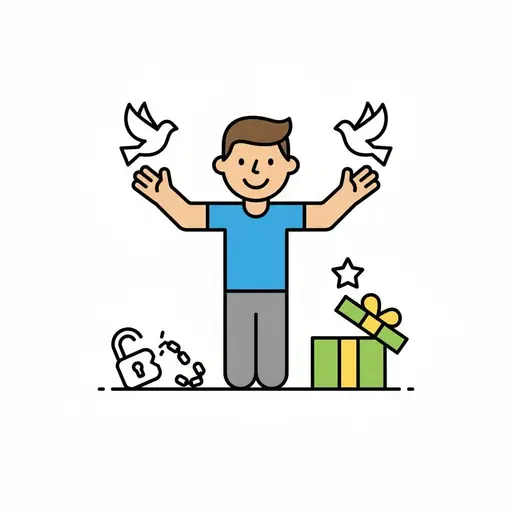
Free
A person stands with arms raised, with two doves, an open padlock and an opened ...
Take the visual supports with you
In Routined you build schedules from these pictures, add timers and voice instructions, and your child follows the day on their own.


* 14-day free trial included for new users.