Play indoors
Same living room, same toys, no clear starting point. That is often when indoor play dissolves before it begins. The visuals below offer a frame.
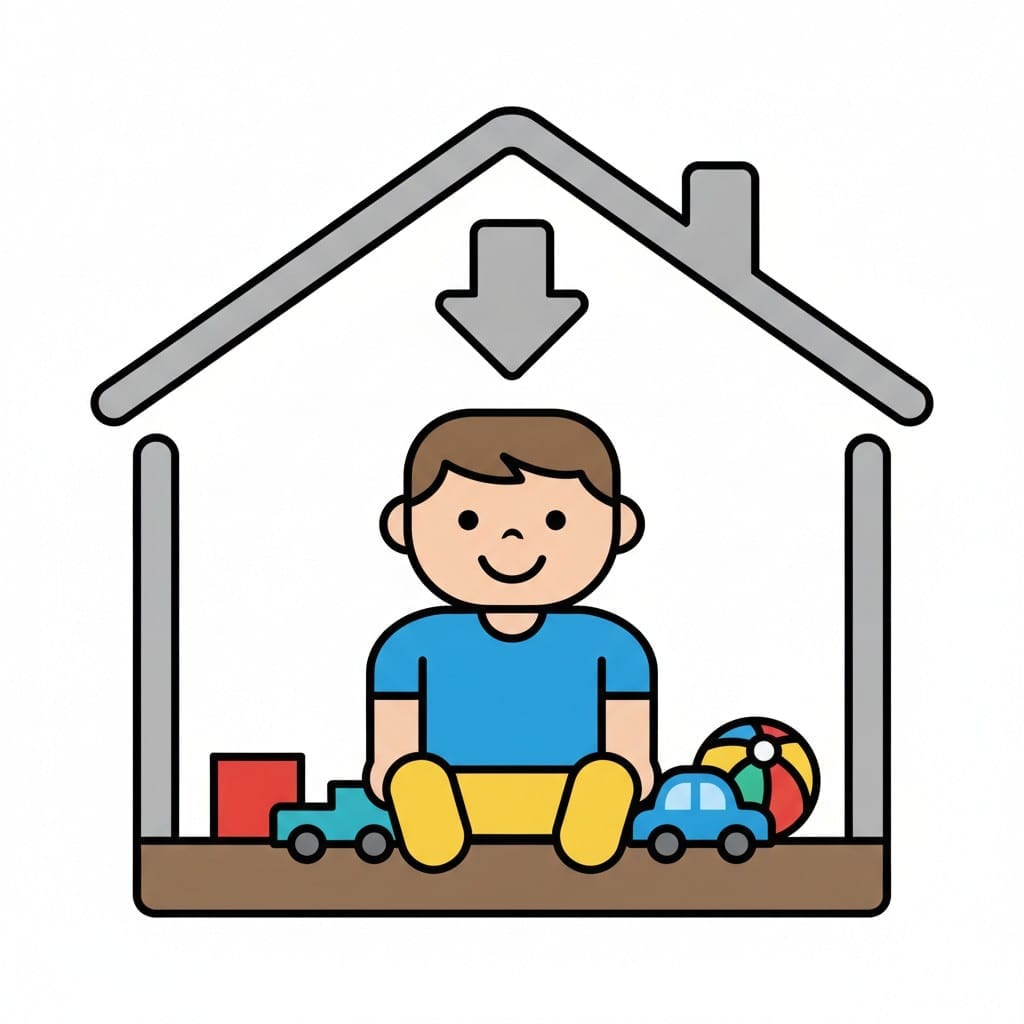 ♂
♂Boy playing indoors
Inside the outline of a house, a boy sits on the floor surrounded by toy cars, a ball and building blocks.
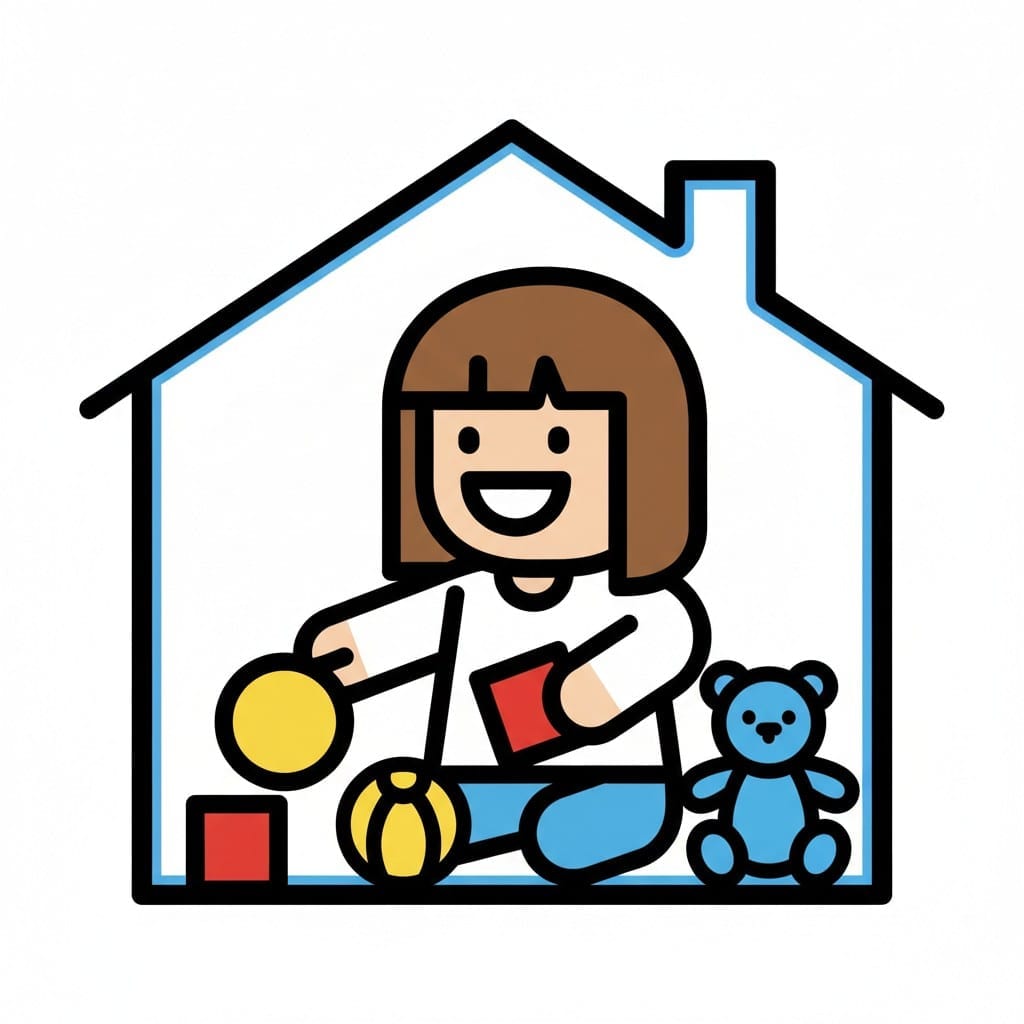 ♀
♀Play indoors
A child sits on the floor inside a house outline, playing with building blocks and a ball.
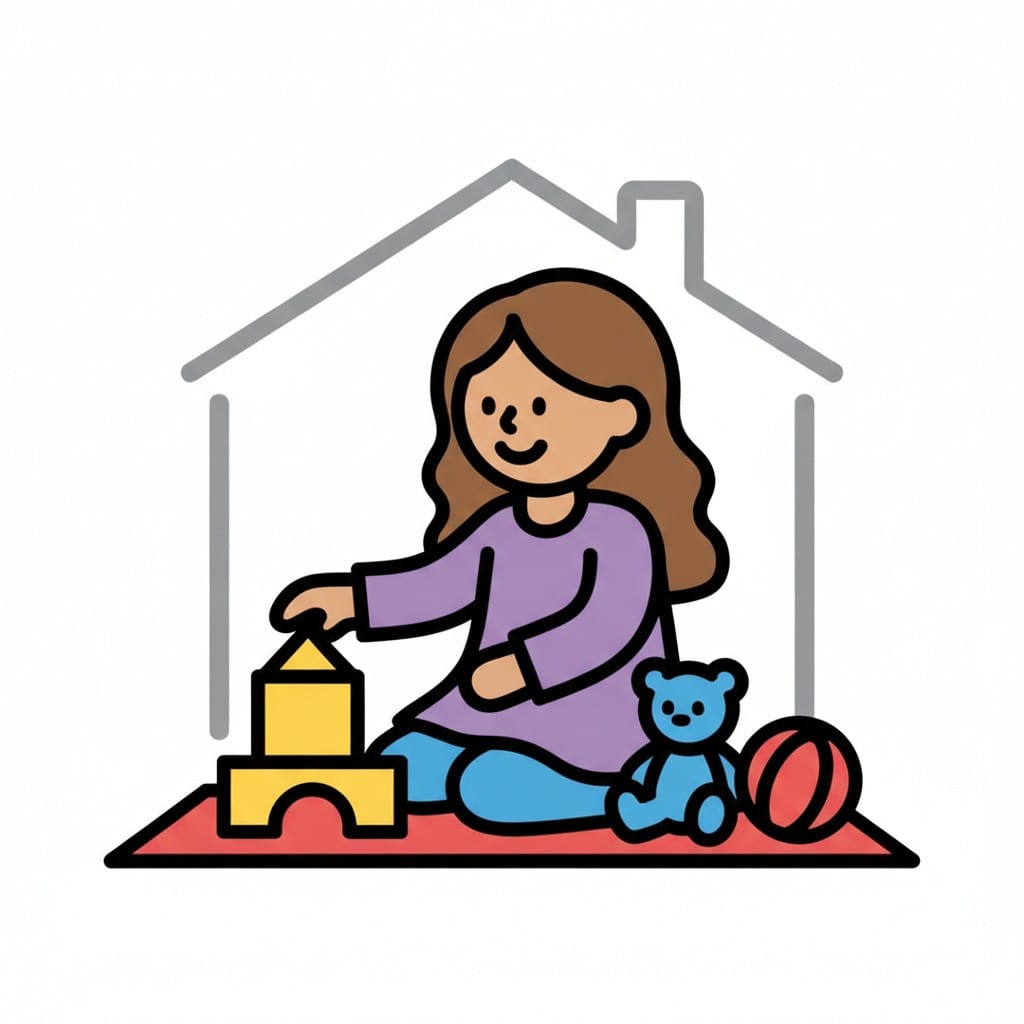 ♀
♀Girl building blocks indoors
Inside a drawn house, a girl sits on a red rug stacking yellow blocks, with a blue teddy bear and a ball beside her.
About this visual support
Indoors lacks what outdoors solves on its own: a new stage. The sofa, the rug and the toy shelf look exactly like yesterday, and without a concrete suggestion the child drifts between half-started games until somebody gets frustrated. It is not a shortage of imagination, it is a shortage of a starting point.
Visual support moves that starting point out of the head and onto the table. When the child sees a card for building a fort, one for dress-up and one for a pillow fight, they can point instead of inventing, and the choice becomes the opening of play rather than another question from an adult. The picture is the external frame the room no longer provides.
A concrete trick: lay out three cards before lunch and leave them there. When the first game runs out, the next one is already in view, and the afternoon turns into three clear blocks rather than one long empty stretch. If you want to add timers and check-offs around those blocks, Routined lets you build it after a 14-day trial.
Use this image in a schedule
Build your own visual schedule with this image and download it as a print-ready PDF. Completely free.

More similar visual supports
Leisure time
A happy boy throws a colourful ball while a toy car and a stacking ring toy sit ...
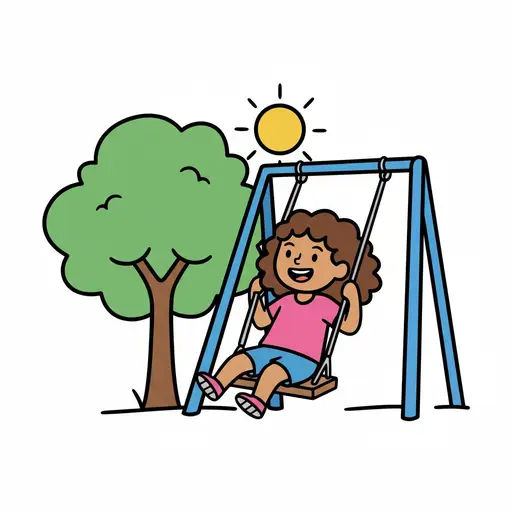
Outdoor Play
A happy girl on a swing in an outdoor setting with a tree and sun.
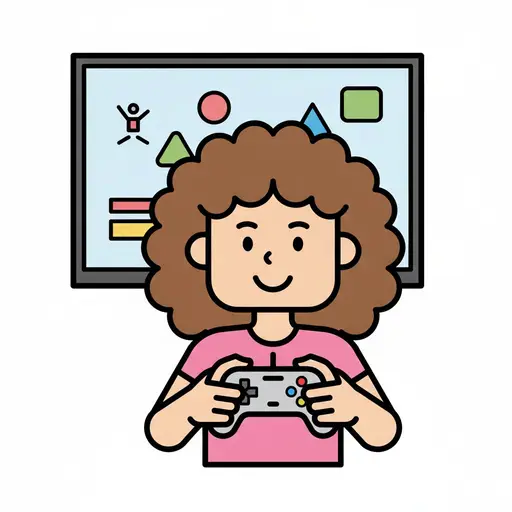
Play games
Holding a controller, a girl with curly hair plays in front of a television show...
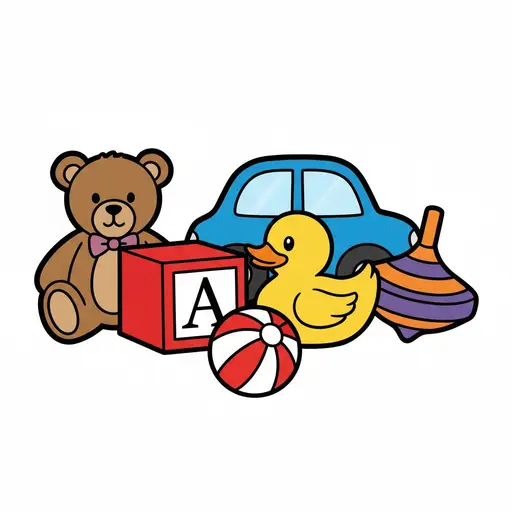
Toys
A collection of toys including a teddy bear, car, duck, block, and ball.

Activities
A child surrounded by icons for a book, paint palette, ball and building block.

Activity
Inside a dashed circle a girl runs along holding a paintbrush in one hand and a ...
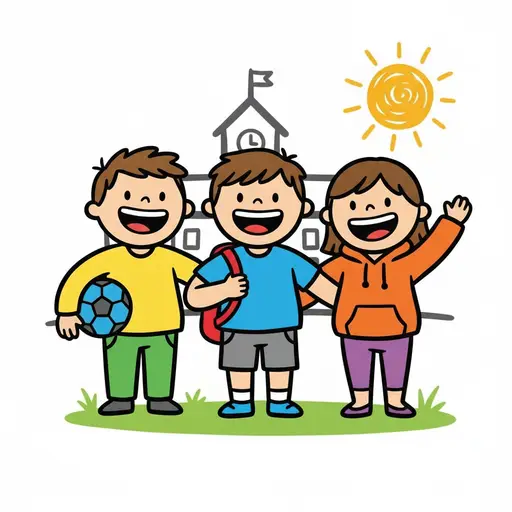
After school friends
Two boys and a girl, all smiling, one boy holding a soccer ball, in front of a s...
Do activities
A happy girl with arms raised surrounded by a ball, a star and a paintbrush, rea...
Take the visual supports with you
In Routined you build schedules from these pictures, add timers and voice instructions, and your child follows the day on their own.


* 14-day free trial included for new users.