Playdate
A playdate has no schedule. Two children have to find a shared idea, negotiate the rules and then agree when it is over, all on their own. The pictures below give the visit a frame without steering the play itself.
 ♂
♂Playdate
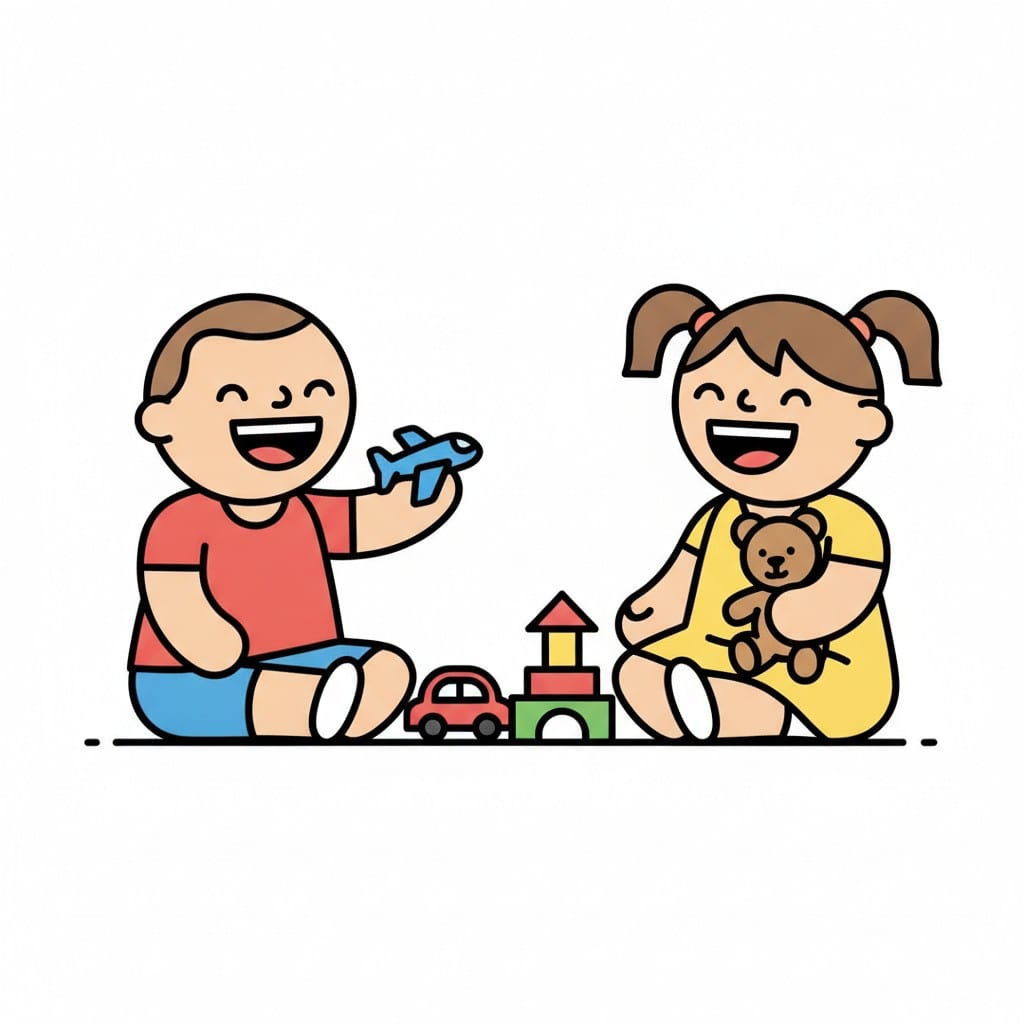
A boy and a girl laugh and play with a toy plane and a teddy.
 ♀
♀Playdate
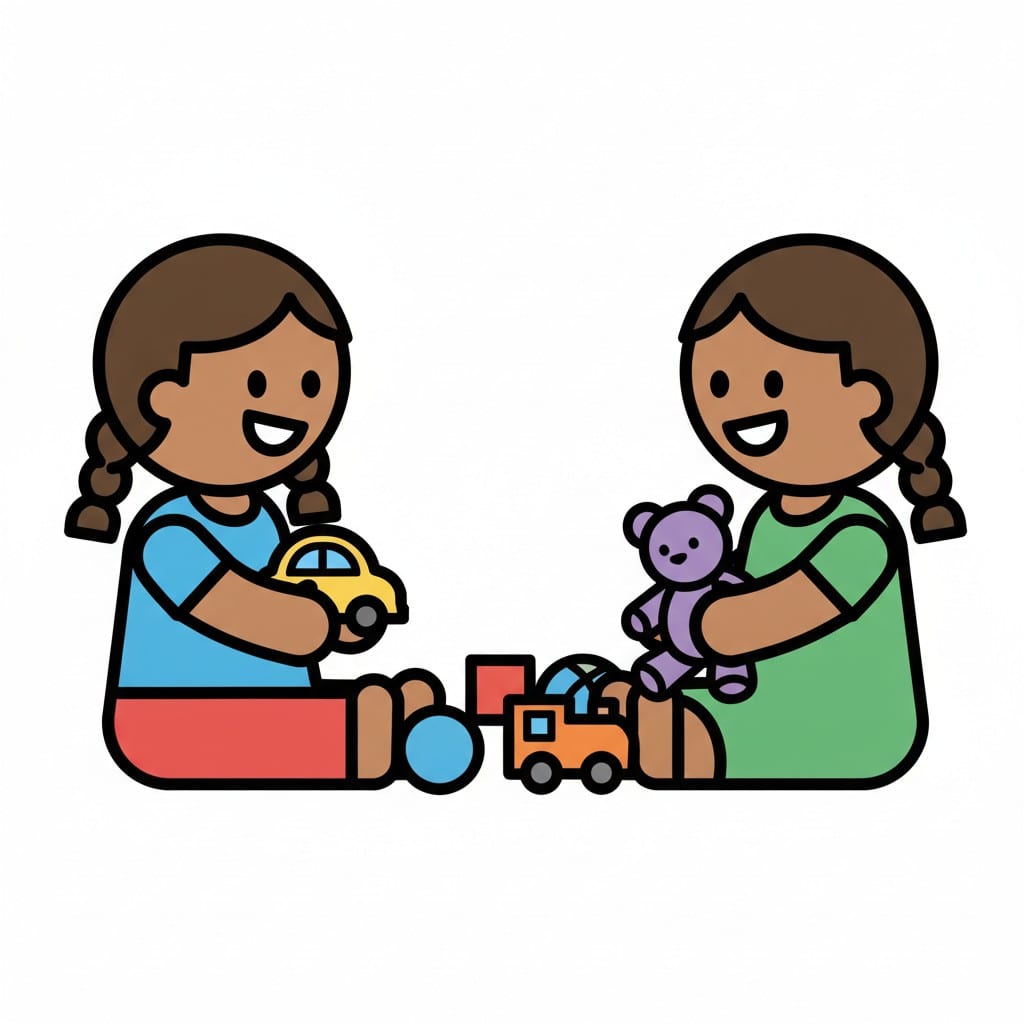
Two girls sit facing each other with a toy car, a teddy and blocks between them.
 ♀
♀Playdate
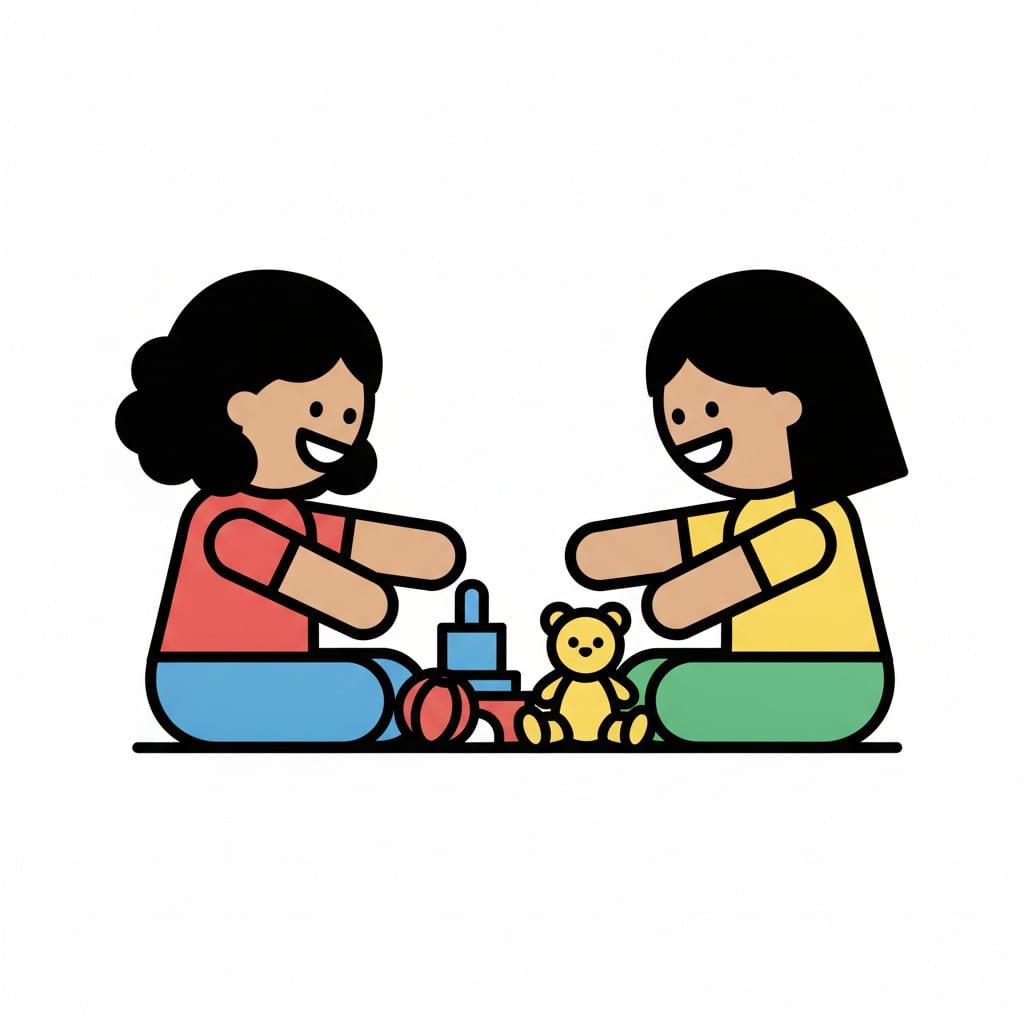
Two children sit playing with a teddy and other toys.
 ♀
♀Playdate
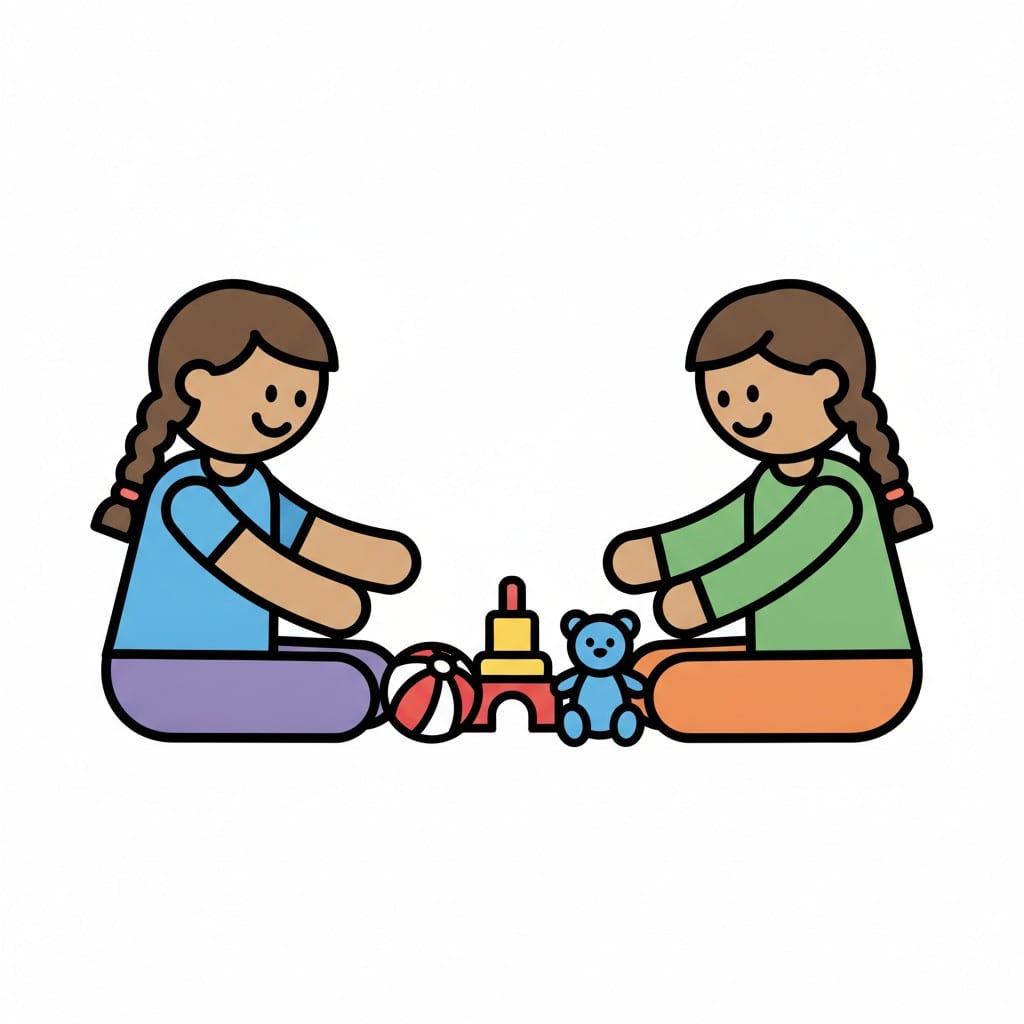
Two girls sit with a ball, a stacking toy and a blue teddy between them.
About this visual support
The hard part of a playdate is rarely the play itself but the negotiations around it. What shall we do, who decides, what happens if we want different things, and how do we know when it is time to stop? No adult is leading, so two children have to find a shared track entirely on their own. When that fails the visit often ends with somebody upset at exactly the point it should have been most fun.
Visual support gives the visit a shape without deciding the content. A row with welcome, choose a game, snack and say goodbye means both children know what is coming and that there is an ending. The goodbye in particular gets easier when it has been visible all along instead of arriving as an interruption.
A concrete tip is to let the children pick two activities in advance, not more. A limited choice makes the decision possible and removes the most common conflict. In Routined the playdate can sit as a simple routine with a few steps, and the app can be tried for fourteen days at no cost.
Use this image in a schedule
Build your own visual schedule with this image and download it as a print-ready PDF. Completely free.
More similar visual supports
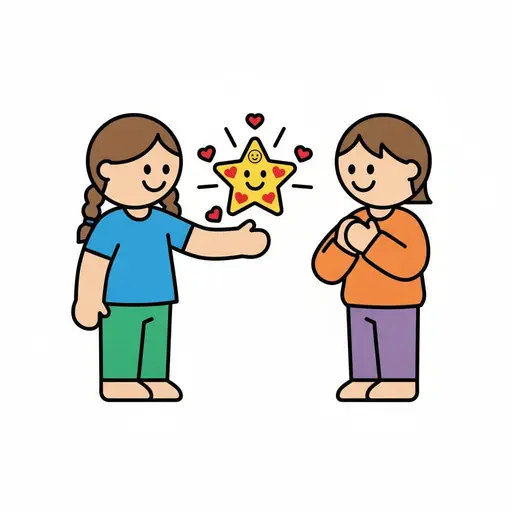
Give a compliment
A girl holds out a smiling star with hearts to a friend, who looks touched.
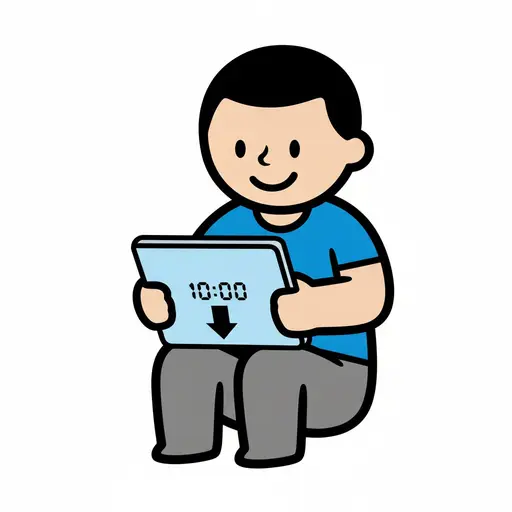
Screen Time Until 10
A boy sits holding a tablet showing 10:00 with a downward arrow, marking the end...
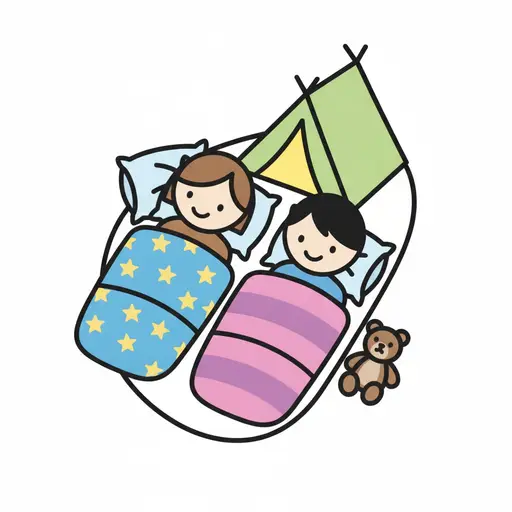
Sleepover
Two children lie in sleeping bags with a teddy bear beside them.
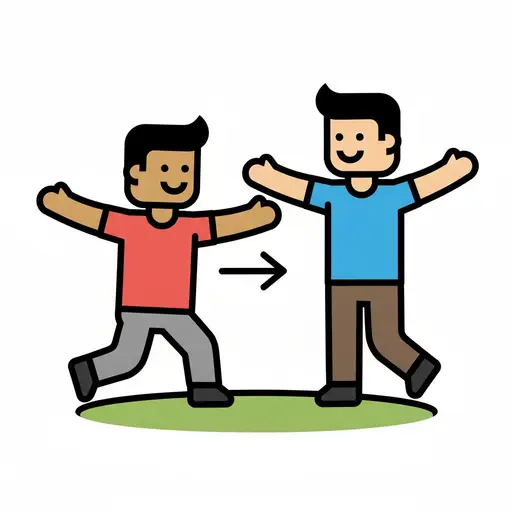
Go to Hugo
Two boys open their arms toward each other on a patch of grass, with an arrow po...
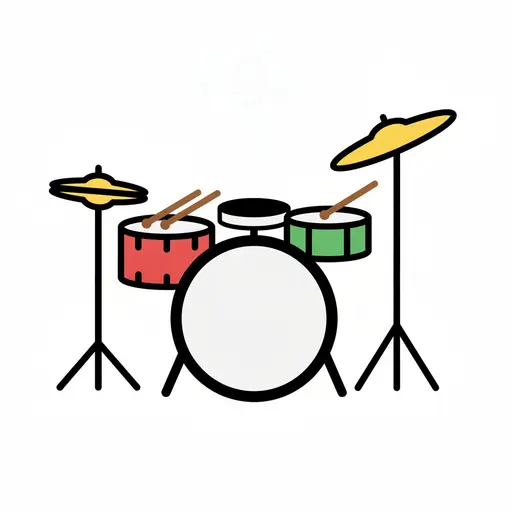
Drums
A drum kit with a large bass drum, a red and a green snare drum, two yellow cymb...
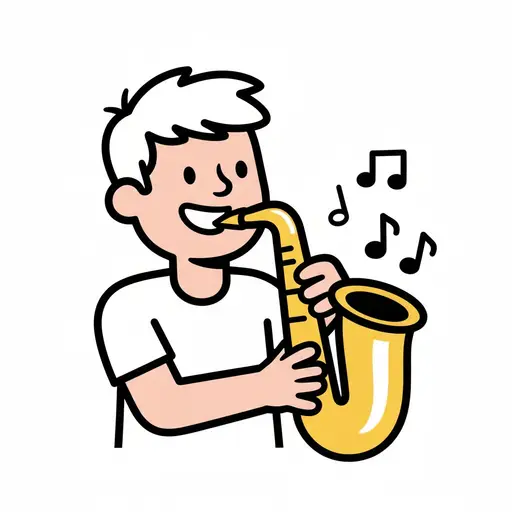
Practise the saxophone
A boy blows into a saxophone while music notes float around him.
Melvin
A smiling boy in a light blue t-shirt is shown from the front in a portrait.
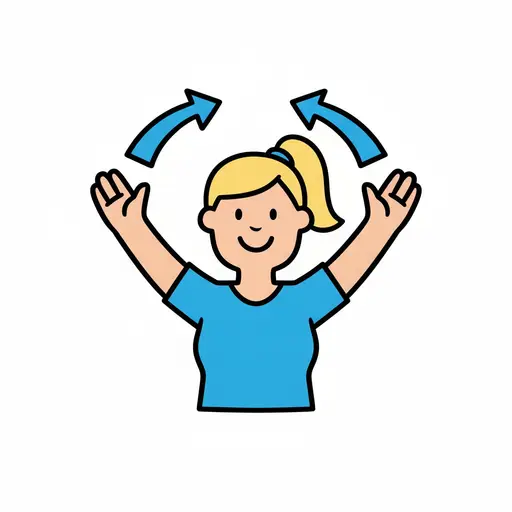
Say hello
A smiling child holds up both hands and waves, with arrows showing the waving mo...
This visual support in other languages
Take the visual supports with you
In Routined you build schedules from these pictures, add timers and voice instructions, and your child follows the day on their own.


* 14-day free trial, then $2.39 a month or $20.99 a year (US pricing). Cancel anytime.